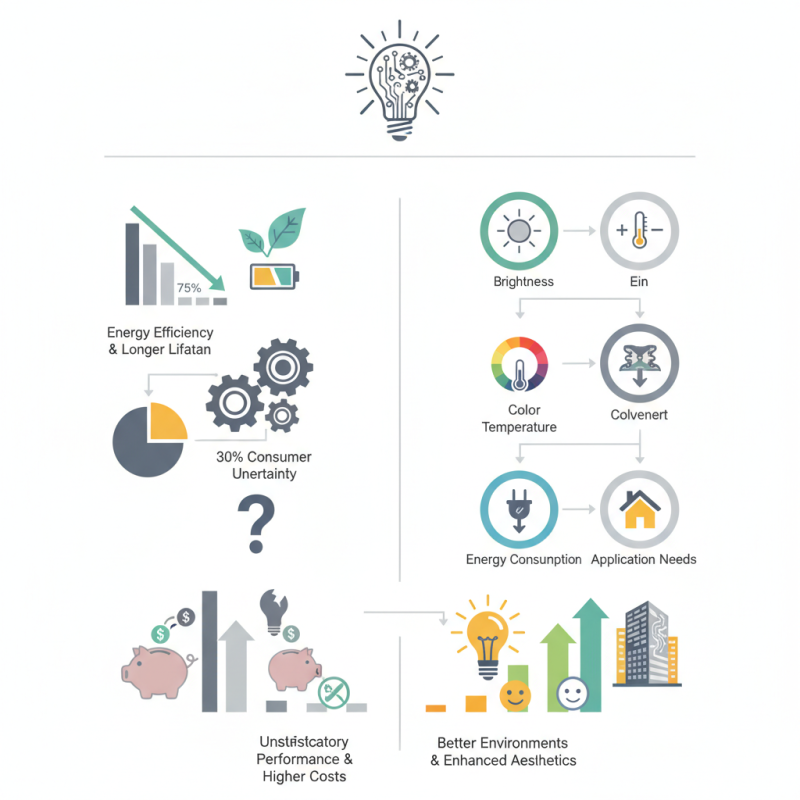
In recent years, the demand for LED Module Light has surged, driven by the need for energy efficiency and longer lifespan. A report by the U.S. Department of Energy revealed that LED lighting can reduce energy consumption by up to 75% compared to traditional lighting. This revolution is reshaping industries and influencing consumer choices.
Selecting the right LED Module Light requires careful consideration of various factors. Not all LED products are created equal. The quality can vary significantly, affecting performance and longevity. Users must evaluate factors like brightness, color temperature, and energy consumption. A mismatch may lead to unsatisfactory performance and higher long-term costs.
Research from industry leaders indicates that about 30% of consumers are uncertain about how to choose the right lighting solution. This indicates a clear need for guidance. Understanding specifications and application needs is essential for making informed decisions. The right choices can result in better lighting environments and enhanced aesthetic values. However, improper selection can be frustrating and wasteful, highlighting the importance of thoughtful consideration in the lighting selection process.
When selecting an LED module light, it's essential to understand the various types available in the market. LED modules can be categorized into several types, including flexible strips, rigid bars, and panel lights. Each type serves distinct purposes based on application and environment. For instance, flexible strips are excellent for accent lighting. They can fit in tight spaces and bend around corners, making them versatile for creative installations. Rigid bars provide strong illumination for larger areas, while panel lights offer a sleek, modern aesthetic for office or retail settings.
Tips: Consider the color temperature of the LED module. It affects mood and ambiance. Warm white (2700K-3000K) creates a cozy feel. Cool white (4000K-5000K) is ideal for work areas. Research suggests that proper color temperature can enhance productivity by up to 15%. Another important factor is lumen output. Higher lumens mean brighter light. Look for products that provide clear information about lumens to ensure adequate lighting for your needs.
Not every LED module suits every situation. For example, outdoor lighting requires modules that can withstand weather conditions. Notably, some LEDs may have lower energy efficiency, leading to higher electricity costs over time. By keeping these considerations in mind, users can make informed choices tailored to their specific lighting requirements.
When selecting LED module lights, several key features deserve attention. Brightness is crucial. It can vary significantly across different products. Measuring brightness in lumens helps you understand how well an LED will illuminate a space. More lumens mean brighter light. However, balance is necessary. Too much brightness can cause glare or discomfort.
Color temperature also plays a vital role. Measured in Kelvins, it affects the mood of a space. Warmer lights, around 3000K, create a cozy atmosphere. In contrast, cooler lights, near 6000K, provide a more energetic environment. Consider the purpose of your lighting carefully. For instance, workspaces benefit from cooler temperatures for alertness.
In addition, energy efficiency is essential. LEDs consume less power, saving on electricity bills over time. Yet, not all LED modules are created equal. Check the wattage and efficiency ratings to ensure you invest wisely. Quality can affect lifespan. Some cheaper options may fail sooner than expected. Research manufacturer reliability before making a decision.
When considering LED modules, assessing your lighting needs is crucial. Different environments demand various lighting solutions. For instance, retail spaces often require bright and even lighting to enhance product visibility. In contrast, residential areas may benefit from warmer tones that create a cozy atmosphere. According to a report by the Department of Energy, implementing LED technology can reduce energy use by 25% to 80%, depending on the application. This substantial efficiency gain emphasizes the importance of aligning your lighting choices with your specific needs.
Understanding the application of LED modules involves multiple factors. For workspaces, color temperature is vital. Studies show that office lighting with a color temperature of around 4000K can increase productivity and reduce eye strain. Conversely, outdoor applications may need higher lumen output to ensure safety and visibility. Additionally, consider the longevity of LED lights; many last up to 25,000 hours or more. However, this can vary based on usage and environmental conditions, making it essential to evaluate your setup carefully.
It's also important to reflect on your long-term goals. Are you focused solely on energy savings? Or do aesthetic and functional aspects hold greater weight? This introspection can guide your decision. Remember, what works for one space might not suit another. Modular systems offer flexibility, but installation can present challenges. Ensuring compatibility with your current infrastructure may require professional advice.
| Property | Description | Recommended Applications |
|---|---|---|
| Lumen Output | The total amount of visible light emitted by the LED module. | Commercial lighting, outdoor signage |
| Color Temperature | Measured in Kelvins (K), it defines the color tone of the light emitted (warm to cool). | Retail displays, residential, offices |
| Wattage | The power consumption of the LED module; impacts energy costs. | Energy-efficient solutions, floodlights |
| Beam Angle | The angle at which light is distributed; affects the coverage area. | Track lighting, street lights |
| Dimmability | Indicates whether the LED module can adjust light output with a dimmer. | Theater lighting, ambient settings |
| IP Rating | Ingress Protection rating; defines dust and water resistance. | Outdoor applications, wet areas |
When selecting an LED module light, energy efficiency and lifespan are crucial factors to consider. Energy-efficient LED modules convert a higher percentage of energy into light, reducing electricity costs over time. They consume less power, making them a smart choice for both residential and commercial spaces. Lifespan matters too; high-quality LEDs can last up to 50,000 hours or more. This longevity means fewer replacements and lower maintenance costs.
Tips: Look for LED options with a higher lumen output per watt. This indicates efficiency. Also, consider the color temperature. Warmer lights are often used in homes, while cooler tones can enhance focus in workplaces.
Not every LED module performs the same way under different conditions. Some may fail sooner than expected. It's important to check the manufacturer's warranty for reliability. Reading reviews can offer insights into real-world performance. User feedback often highlights issues that specs do not reveal. Being aware of potential shortcomings helps in making a better decision.
When budgeting for LED modules, it’s essential to balance cost with quality. Cheaper options may seem enticing. However, they often compromise performance and longevity. Consider how much light output you truly need. It's not always necessary to go for the most expensive model, but paying a bit more can ensure better efficiency.
High-quality modules generally consume less energy and last longer. This can translate to savings over time. Think about the installation and maintenance cost. A low upfront price could lead to higher long-term expenses if frequent replacements are needed.
Reflect on the specific requirements of your space. If you require consistent lighting, investing in reliable options is paramount. Think about whether the light's color accuracy and intensity meet your needs. It's crucial to weigh immediate savings against potential future costs. In the end, sometimes spending a little extra can prove wise.
„Thanks to the LUVIR technology, the solder resist process could be switched directly from the previously used mask exposure to direct exposure. As an outstanding digital solution on the market, this technology has been able to demonstrate fast process times and superior quality on our certified conventional ink in production. This allowed us to fully digitize the solder mask process at low cost – without process or ink adjustments. An excellent benefit to our production in Rot am See.“
Ralf Göhringer (Head of Production WE Rot am See)
I would definitely recommend the Limata machine and team for a future company purchase
Michael Greenaway
Compunetics Inc.
“The Limata ldi has been amazing!! Best thing we did was buy this machine”
Richard Brady
GM
Circuitlabs
“Since 2019, we have been running the Limata X1000 LDI system (including LUVIR for solder mask imaging) in daily production as an addition to our current process with film. The machine was capable of properly exposing Taiyo PSR-4000 BN (DI) solder mask types on normal to high-copper boards using a new and unique direct imaging process. The machine operating interface is very user friendly which allowed for a quick technical training curve. The pre-registration processing reduced several seconds of production time at every print. Limata support and service staff is incomparable. They supported our team every step of the way at basically any time of the day or night, with literally, an immediate response time, customizing the software interface to best fit our Operations and needs.
We have exposed more than 8,000 prints since end of October, on various solder mask colors and some resist film panels. Limata, has proven to be very capable and innovative. They are a strong contender in the industry.
We have very much enjoyed this project, and working with the team!
Thank you Limata for the continued support and being a part of our growth.”
Bill Sezate
Vice President, GM
Summit Interconnect
As a replacement to our current contact exposure process with film, the LIMATA X2000 system including LUVIR-Technology was capable of properly exposing non-LDI solder mask types using a direct imaging process. The machine offers cutting edge software with a very intuitive operating interface which allowed for quick technician training curve. The dual drawer system combined with pre-registration processing reduced several seconds of production time at every machine cycle. Limata support and service staff is world class. They added software patches to keep production running at shortest possible response times, customized the software interface to best fit our in-house Operations system, and even wrote a step-by-step machine processing manual. As a result of the project, we have exposed more than 16,000 times on various product types and solder mask brands/colors. Limata, in a very short timeframe as a company, has definitely shown they are truly innovative and will be challenging the industry of direct imaging for the top spot.
Kevin Beattie
Process Engineer
TTM Technologies
Forest Grove Division
