Choosing the right self tapping round head screws is crucial for various projects. These screws simplify assembly in materials like wood, metal, and plastic. Understanding their unique features can save time and effort.
self tapping round head screws have a specific design that enables them to create their own hole. This feature makes them ideal for quick installations. However, not all projects will benefit from their use. Knowing when to use them requires some expertise.
Consider factors like the material type and screw size before making a choice. It’s vital to match the screw with the right tool as well. Although self tapping screws are efficient, they might not always provide the strongest hold. Sometimes, a thorough assessment of the materials and conditions can lead to better outcomes. Choose wisely for a successful project.
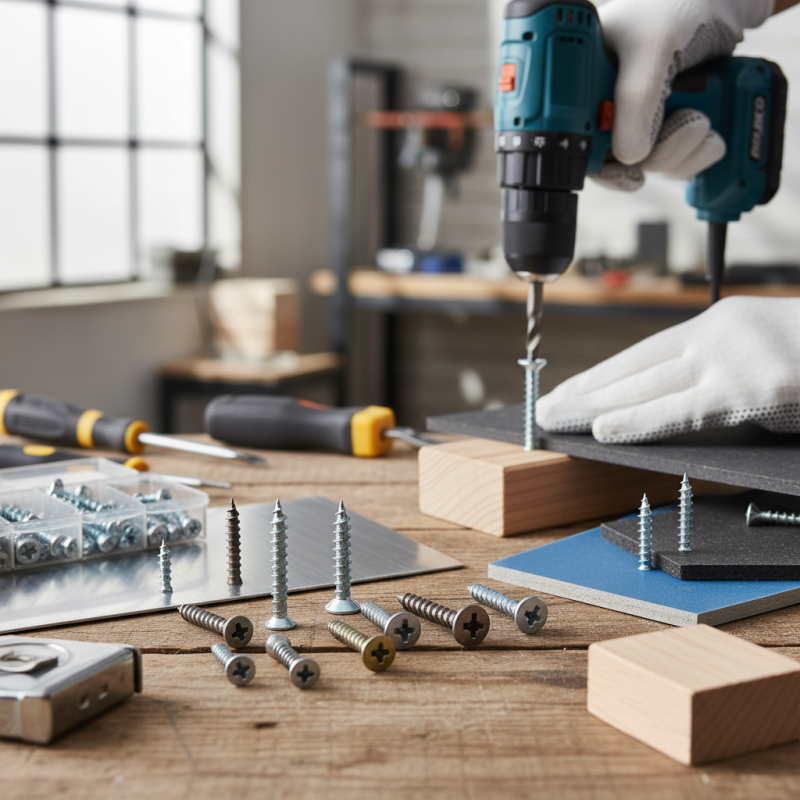
When selecting self-tapping round head screws, it's essential to understand their features and benefits. These screws are designed to create their own hole as they are driven in. This capability saves time and effort in installation. No pre-drilling is required, making them ideal for various materials like wood, plastic, and metal. The round head gives a clean finish and helps distribute pressure evenly.
Their design contributes to superior holding power. The sharp threads grip the material securely, reducing the chances of loosening over time. This feature is particularly beneficial in high-vibration environments. However, some may overlook the importance of screw length and diameter. Choosing the wrong size can lead to weak connections or damage. It's crucial to consider the material's thickness when selecting the screw dimensions.
Additionally, while self-tapping screws can be convenient, they require proper technique. Over-tightening can strip the hole or damage the material. Practicing moderation in force application is key. It might be tempting to apply maximum torque, but this can result in failures. A little caution goes a long way in ensuring a reliable assembly. So, understanding qualities and limitations is vital for making a smart choice.
When selecting self-tapping round head screws, material choice plays a critical role. Common alloys used in these screws include stainless steel and carbon steel. Stainless steel offers corrosion resistance, making it ideal for outdoor applications. This material helps prevent rust and ensures longevity. Carbon steel is strong and cost-effective. However, it can rust without proper coatings.
Each material has its pros and cons. Stainless steel screws can sometimes be softer than carbon steel screws, affecting their durability. On the other hand, carbon steel screws, while robust, may require additional protection from the elements. You might find it hard to choose the right alloy based solely on strength. Factors like environmental conditions and application needs should be considered.
Moreover, not all self-tapping screws are created equal. The coating on these screws can impact their performance. For instance, zinc coatings can enhance corrosion resistance. Still, they may wear off over time. Be mindful of your environment and application to avoid future issues. Understanding the nuances of material selection can lead to better decisions in screw applications.
When choosing self tapping round head screws, the thread design significantly impacts both performance and durability. Thread pitch refers to the distance between each thread. A finer pitch can offer better grip in softer materials. Meanwhile, deeper threads add strength, especially in demanding applications. Poor thread design can lead to stripped screws or weak connections.
Tips: Consider the material you'll be working with. Softer materials may benefit from a finer pitch. In contrast, deeper threads work best in tougher substrates. It's essential to test different designs to find the balance.
Understanding the relationship between thread characteristics is crucial. If a screw has too shallow a thread, it might not hold effectively. On the other hand, overly deep threads can increase resistance during installation. This could lead to stripping or even breaking the screw.
Tips: Always keep a sample of each screw type on hand. This helps identify what works best for your project. Regularly assess your fastening methods. Reflecting on prior mistakes can guide you to better choices in the future.
When deciding on the application of self-tapping round head screws, it’s essential to consider their unique features. These screws create their own threads within materials, reducing the need for pre-drilled holes. This can save time and effort during assembly, making them a popular choice in construction and manufacturing. According to industry reports, the use of self-tapping screws has increased by over 30% in various applications over the past five years.
Understanding when to use these screws is fundamental. They are particularly effective in securing thinner materials like sheet metal or plastic. However, they might not perform well with denser materials, such as hardwoods or heavy metals. Over-tightening can lead to stripped threads or material damage, which is a common issue noted in user feedback.
Moreover, choosing the right size and drill point configuration is crucial. For instance, a wrong length can result in inadequate fastening, while an incorrect head design may not provide the desired aesthetic or finish. Studies reveal that 15% of projects face delays due to improper screw selection. Thoughtful consideration of these factors can enhance performance and reliability in any project involving self-tapping round head screws.
When installing self-tapping round head screws, the technique is critical for ensuring optimal performance. Use a power screwdriver set at a low torque to prevent stripping. It's advised to drill pilot holes, especially in harder materials. According to a study by the Fastener Technology Institute, proper pilot hole sizing can improve screw engagement by up to 30%. This enhances not just strength but also reduces the risk of material splitting.
Selecting the right drill bit is another crucial point. The bit must match the screw diameter to create the perfect fit. An ill-fitting hole can lead to poor anchoring and eventual failure. A report by the International Fasteners Association indicates that 15% of structural failures are attributable to incorrect installation techniques. To safeguard against this, always verify the bit size against the screw.
Lastly, consider the surface preparation. Clean the material where the screw will be installed. Debris can compromise the screw's grip. Inadequate surface prep might diminish the screw’s performance. It's worth noting that a clean surface can boost screw retention by as much as 25%. These practices highlight that thoroughness and attention to detail are vital in achieving reliable, long-lasting results.
„Thanks to the LUVIR technology, the solder resist process could be switched directly from the previously used mask exposure to direct exposure. As an outstanding digital solution on the market, this technology has been able to demonstrate fast process times and superior quality on our certified conventional ink in production. This allowed us to fully digitize the solder mask process at low cost – without process or ink adjustments. An excellent benefit to our production in Rot am See.“
Ralf Göhringer (Head of Production WE Rot am See)
I would definitely recommend the Limata machine and team for a future company purchase
Michael Greenaway
Compunetics Inc.
“The Limata ldi has been amazing!! Best thing we did was buy this machine”
Richard Brady
GM
Circuitlabs
“Since 2019, we have been running the Limata X1000 LDI system (including LUVIR for solder mask imaging) in daily production as an addition to our current process with film. The machine was capable of properly exposing Taiyo PSR-4000 BN (DI) solder mask types on normal to high-copper boards using a new and unique direct imaging process. The machine operating interface is very user friendly which allowed for a quick technical training curve. The pre-registration processing reduced several seconds of production time at every print. Limata support and service staff is incomparable. They supported our team every step of the way at basically any time of the day or night, with literally, an immediate response time, customizing the software interface to best fit our Operations and needs.
We have exposed more than 8,000 prints since end of October, on various solder mask colors and some resist film panels. Limata, has proven to be very capable and innovative. They are a strong contender in the industry.
We have very much enjoyed this project, and working with the team!
Thank you Limata for the continued support and being a part of our growth.”
Bill Sezate
Vice President, GM
Summit Interconnect
As a replacement to our current contact exposure process with film, the LIMATA X2000 system including LUVIR-Technology was capable of properly exposing non-LDI solder mask types using a direct imaging process. The machine offers cutting edge software with a very intuitive operating interface which allowed for quick technician training curve. The dual drawer system combined with pre-registration processing reduced several seconds of production time at every machine cycle. Limata support and service staff is world class. They added software patches to keep production running at shortest possible response times, customized the software interface to best fit our in-house Operations system, and even wrote a step-by-step machine processing manual. As a result of the project, we have exposed more than 16,000 times on various product types and solder mask brands/colors. Limata, in a very short timeframe as a company, has definitely shown they are truly innovative and will be challenging the industry of direct imaging for the top spot.
Kevin Beattie
Process Engineer
TTM Technologies
Forest Grove Division
