Choosing the best Acrylic Topcoat in 2026 is less about picking the glossiest can and more about matching the coating to the job. A sunlit deck, a kitchen cabinet, and a metal handrail face different moisture, abrasion, and UV demands. Small details matter. Start with the substrate, indoor or outdoor exposure, expected wear, and the manufacturer’s preparation instructions. Then compare adhesion, flexibility, dry time, cleanability, and finish.
The market is growing, but that does not make every product suitable. Grand View Research valued the global paints and coatings market at USD 190.1 billion in 2023 and forecast a 4.3% compound annual growth rate from 2024 to 2030. That broad figure covers many coating types; it is not an acrylic-topcoat market estimate. Still, it signals a crowded category where labels can sound more alike than the products perform. A useful paraphrase of USDA Forest Products Laboratory researcher Mark Knaebe’s wood-finishing guidance is: “Match the finish to the substrate and its exposure before judging appearance.” This is a paraphrase, not a verbatim quotation.
This guide will compare water-based and solvent-based options, explain label claims, and show which product traits matter for common surfaces. It will also flag trade-offs: a faster-drying topcoat may leave less working time, while a harder film may not suit every flexible surface. Real projects are rarely perfect test panels. Dust, temperature, and rushed preparation can change the result. No product can fix every mistake. The aim is a choice supported by evidence, clear instructions, and realistic expectations.
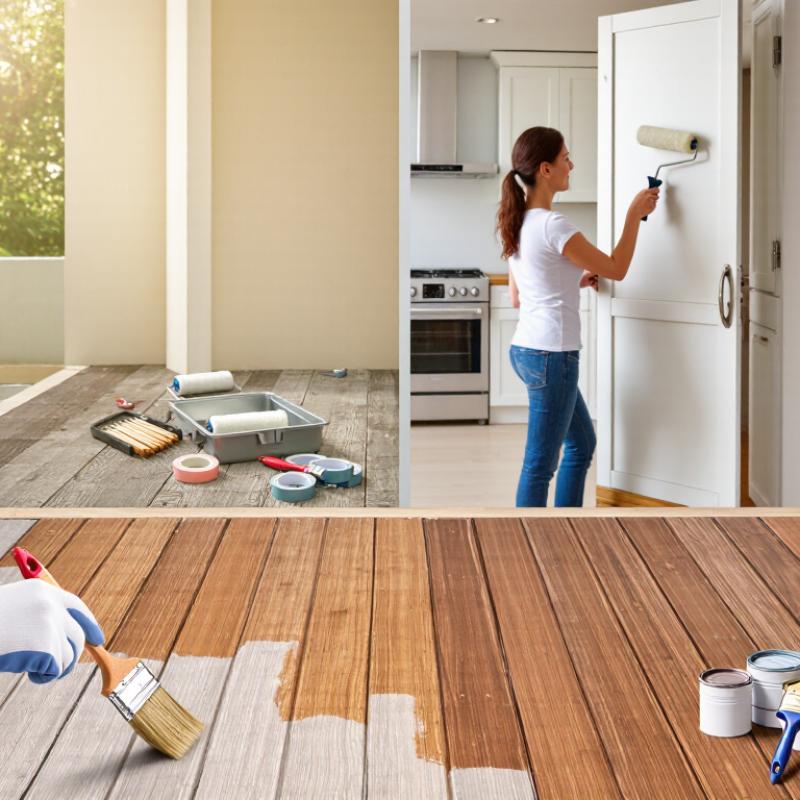
An acrylic topcoat is the exposed finishing layer of a coating system. It forms a continuous film over a prepared surface, helping limit damage from sunlight, moisture, dirt, and everyday abrasion. On a painted door, for example, the right finish can reduce fading and make scuffs easier to clean. It is not a repair product. Peeling paint, rust, or damp substrate can still undermine the layers beneath it.
The protection depends on the full system. Surface preparation, primer compatibility, film thickness, and drying conditions all matter. A coating may look dry while remaining vulnerable to early scratches. Check the technical data sheet for indoor or outdoor use, recommended coverage, recoat time, and cleaning guidance. Small test patches help reveal changes in gloss or color. They are easy to skip.
The stakes are broader than appearance. AMPP’s 2016 IMPACT study estimated that corrosion costs about US$2.5 trillion annually, or 3.4% of global GDP; it also reported that existing corrosion-control practices could save 15–35% of those costs. This figure covers many industries and materials, not acrylic coatings alone. Still, it shows why protective layers deserve careful selection. For 2026, compare the surface’s exposure and maintenance needs rather than choosing by shine alone. A glossy finish is not automatically the tougher one.
Choose a topcoat for the surface, exposure, and cleaning demands—not color alone. On exterior wood, flexibility matters because boards swell and shrink with moisture. The USDA Forest Products Laboratory’s Wood Handbook reports an average fiber saturation point of about 30% moisture content; dimensional movement occurs below that point. Measure wood moisture before coating, and follow the coating system’s specified limits. Wet wood can undermine adhesion. This is easy to overlook.
Concrete and masonry need a different check. Their moisture and alkalinity can interfere with adhesion, so confirm the surface is cured and dry, then choose a coating rated for alkaline substrates. On metal, match the topcoat to the metal and compatible primer; bare or corroded areas need appropriate preparation. Salt air matters. NOAA’s 1991–2020 U.S. Climate Normals provide local temperature and precipitation baselines, useful for anticipating seasonal exposure, but they cannot predict application-day conditions. Follow the product’s temperature and humidity limits.
For existing paint, check for peeling, chalking, or poor adhesion before recoating. A small test patch can reveal incompatibility, though it is not a guarantee. Test a patch. I would not treat a lab rating as a promise of long-term performance outdoors. The ASTM D3273 mold-resistance test, for example, measures performance under controlled conditions, not every shaded, damp wall or changing climate.
When choosing an acrylic topcoat in 2026, compare gloss, color stability, and film protection—not just the label “weather-resistant.” A satin finish can hide small surface flaws, while gloss often makes fading or scratches easier to spot. Check the product’s technical data sheet for test methods, exposure duration, and measured color or gloss change. AAMA 2605, an architectural coatings specification, uses ten years of outdoor exposure in South Florida as a weathering benchmark. It evaluates color retention and chalking; it is not a guarantee for every coating or climate. ASTM D4587 also describes fluorescent UV and condensation testing, which helps compare accelerated weathering results. Real outdoor conditions still vary.
Tips: Match the finish to the surface and local exposure. For a sun-facing railing, ask for UV and moisture test results, plus recommended film thickness. Small details matter. Recoat timing and surface preparation can affect durability, even when the coating performs well in laboratory tests. I would compare results from the same test method; numbers from different methods may not be directly comparable.
Acrylic topcoats vary in resin type, solvent content, gloss, and flexibility. Check the technical data sheet for approved substrates and compatible primers. A coating that bonds well to cured acrylic may still react poorly with an old finish. Look for lifting, softening, or color transfer.
Test a small, hidden area. Clean it as you plan to clean the full surface, apply the topcoat at the stated film thickness, and allow the recommended cure time. Then check adhesion and appearance under normal light. Looks can mislead. A surface may feel dry while the layers beneath remain soft, so avoid rushing the test.
Read the safety data sheet before opening the container. Note ventilation needs, skin and eye protection, and any limits on indoor use. Keep away from ignition sources when the product requires it. Application conditions matter, too: temperature, humidity, airflow, and surface moisture can change drying and leveling. Use the specified brush, roller, or spray method, and do not thin the coating unless the instructions allow it. If the finish wrinkles or stays tacky, stop and reassess; adding another coat may make the problem worse.
Choosing an acrylic topcoat starts with the surface, not the finish name. A coating for a sunlit exterior railing faces different demands from one used on indoor cabinetry. Check the product data sheet for approved substrates, primer compatibility, and exposure limits. If the existing surface is glossy, poorly bonded, or unknown, adhesion may fail even when the topcoat appears suitable.
Match performance specifications to real project conditions. For outdoor wood, review UV resistance, moisture exposure, and recommended film thickness. For a frequently handled tabletop, look for abrasion resistance and the stated cure time, not just a quick dry-to-touch claim. Compare coverage rates with the surface area, and note the permitted application temperature and humidity. These details affect the result.
Test a small, hidden area. Let it dry and cure as directed, then check adhesion, color, and sheen under the room’s actual lighting. A satin sample can look flatter beside a bright window. I would not treat a short test as proof of long-term durability, though; it only catches obvious mismatches. Follow the manufacturer’s technical instructions, and avoid stretching the coating beyond its specified coverage. Less can be more. The right specification is the one that suits the substrate, use, and maintenance expectations—not simply the most impressive number on the label.
„Thanks to the LUVIR technology, the solder resist process could be switched directly from the previously used mask exposure to direct exposure. As an outstanding digital solution on the market, this technology has been able to demonstrate fast process times and superior quality on our certified conventional ink in production. This allowed us to fully digitize the solder mask process at low cost – without process or ink adjustments. An excellent benefit to our production in Rot am See.“
Ralf Göhringer (Head of Production WE Rot am See)
I would definitely recommend the Limata machine and team for a future company purchase
Michael Greenaway
Compunetics Inc.
“The Limata ldi has been amazing!! Best thing we did was buy this machine”
Richard Brady
GM
Circuitlabs
“Since 2019, we have been running the Limata X1000 LDI system (including LUVIR for solder mask imaging) in daily production as an addition to our current process with film. The machine was capable of properly exposing Taiyo PSR-4000 BN (DI) solder mask types on normal to high-copper boards using a new and unique direct imaging process. The machine operating interface is very user friendly which allowed for a quick technical training curve. The pre-registration processing reduced several seconds of production time at every print. Limata support and service staff is incomparable. They supported our team every step of the way at basically any time of the day or night, with literally, an immediate response time, customizing the software interface to best fit our Operations and needs.
We have exposed more than 8,000 prints since end of October, on various solder mask colors and some resist film panels. Limata, has proven to be very capable and innovative. They are a strong contender in the industry.
We have very much enjoyed this project, and working with the team!
Thank you Limata for the continued support and being a part of our growth.”
Bill Sezate
Vice President, GM
Summit Interconnect
As a replacement to our current contact exposure process with film, the LIMATA X2000 system including LUVIR-Technology was capable of properly exposing non-LDI solder mask types using a direct imaging process. The machine offers cutting edge software with a very intuitive operating interface which allowed for quick technician training curve. The dual drawer system combined with pre-registration processing reduced several seconds of production time at every machine cycle. Limata support and service staff is world class. They added software patches to keep production running at shortest possible response times, customized the software interface to best fit our in-house Operations system, and even wrote a step-by-step machine processing manual. As a result of the project, we have exposed more than 16,000 times on various product types and solder mask brands/colors. Limata, in a very short timeframe as a company, has definitely shown they are truly innovative and will be challenging the industry of direct imaging for the top spot.
Kevin Beattie
Process Engineer
TTM Technologies
Forest Grove Division
