Choosing the right Air Compressor can be daunting. There are many options available, each with unique features and specifications. Understanding your specific needs is crucial. Every task, from inflating tires to powering tools, requires a different type of air compressor.
Consider the power source. Electric compressors are quieter and easier to maintain. However, gas-powered models are more portable. Assess the intended use to determine the ideal size and capacity. A small compressor may suffice for light tasks, but heavier jobs need larger models.
Quality matters too. Look for reputable brands. Read reviews and seek expert opinions. Often, the cheapest option may not provide the best long-term value. Investing in a reliable air compressor can enhance productivity and ensure consistent performance. Reflect on your choices before making a decision. It’s an important investment that should meet both current and future demands.
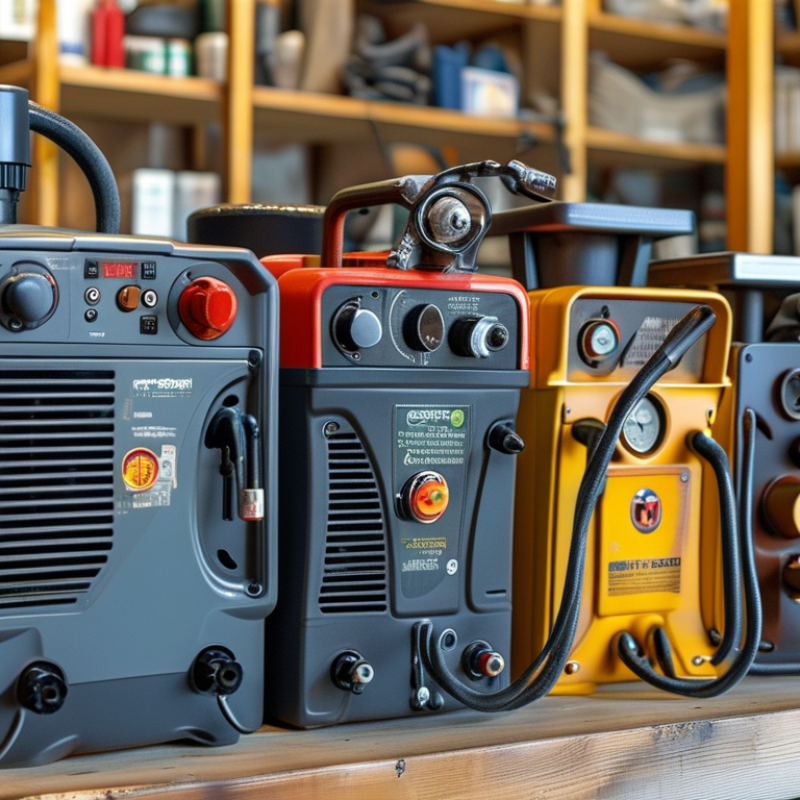
When selecting an air compressor, understanding the different types available is essential. There are mainly three categories: reciprocating, rotary screw, and rotary vane compressors. Reciprocating compressors are most common for home use. They offer affordable options but can be noisy and bulky. Data from the Compressed Air and Gas Institute indicates that about 70% of all air compressors sold are of this type.
Rotary screw compressors provide a continuous flow of air. They are ideal for industrial applications due to their efficiency and reliability. According to a report by Research and Markets, the global market for rotary screw compressors is expected to reach USD 8.5 billion by 2026. These compressors are quieter and require less maintenance, but they typically come with a higher price tag.
Lastly, rotary vane compressors are known for their simplicity and are often used in smaller applications. They are less popular than the first two types, which may raise questions about their practical utility. While providing a compact option, they sometimes struggle with performance under heavy loads. Understanding these nuances can help ensure you select the right air compressor for your specific needs.
Choosing the right air compressor involves understanding key specifications like CFM, PSI, and tank size. CFM, or cubic feet per minute, measures airflow. A higher CFM is essential for tools that require more air, like paint sprayers or nail guns. If you have multiple tools to operate, ensure the CFM meets the combined requirements.
PSI, or pounds per square inch, indicates the pressure level. Most common tools require around 90 to 120 PSI to operate effectively. Always check your tools' specifications to ensure compatibility. Using a compressor with insufficient PSI can lead to poor performance and frustration.
Tank size also plays a crucial role. Larger tanks store more air, allowing for longer tool operation without interruption. However, bigger tanks are heavier and less portable. Think about your workspace limitations before making a decision. Reflecting on your needs is vital; choosing improperly can lead to wasted time and resources. Balancing these specifications will lead to a more efficient compressor tailored to your requirements.
When choosing an air compressor, portability versus stationary models is crucial. Portable compressors allow ease of movement and flexibility for various tasks. They typically weigh less and are compact, fitting into tighter spaces. Ideal for DIY projects, they can handle small jobs like inflating tires or powering nail guns. According to industry reports, portable models have seen a 20% rise in popularity among homeowners.
On the other hand, stationary models are heavier and provide more power. They are permanent fixtures in workshops or garages. These compressors can sustain longer working hours and handle larger tools. They tend to have higher horsepower ratings, averaging between 5 to 10 HP. This capability makes them essential for professional use or extensive home projects. However, they require dedicated space and might not be as user-friendly for beginners.
Both types of compressors come with their own challenges. Portable models may lack power for demanding tasks. Meanwhile, stationary units could overwhelm a casual user. Reflecting on your specific needs, consider how often you'll use the compressor and what tasks are at hand. Take time to evaluate both options. Balancing portability and power can lead to better decision-making for your air compressor selection.
Air compressors have a wide range of applications. In industrial settings, they are vital for powering tools and machinery. They ensure that pneumatic systems run efficiently. Factories rely on them for tasks like spray painting and material handling. Understanding these uses can help you select the right compressor.
DIY enthusiasts also benefit from air compressors. They are great for inflating tires and powering nail guns. This versatility makes them a valuable addition to any workshop. However, choosing the wrong size can lead to frustrations. An underpowered compressor may not meet your needs. On the other hand, an oversized unit can waste energy and space. It's essential to evaluate your specific projects before making a decision.
Beyond industrial and DIY applications, air compressors serve various purposes. They can assist in automotive repairs and perform tasks like sandblasting. However, some projects may require specific compressor types. Researching these nuances can be challenging. Take your time to explore all options to ensure you make the best choice.
When choosing an air compressor, the power source is crucial. Two primary options exist: electric and gas-powered compressors. Electric models are popular for indoor use. They are quieter and often cleaner. You can plug one in and get started quickly. Maintenance is usually straightforward. However, they can struggle in remote areas without power access.
Gas-powered compressors shine in outdoor and heavy-duty scenarios. They offer greater mobility and do not rely on electrical outlets. This can be useful for construction sites or farms. Nevertheless, they require more maintenance. Regular oil changes and fuel considerations can be a hassle. Noise levels tend to be higher, which might not suit every environment.
Deciding between electric and gas comes down to your specific needs. Consider where you’ll use the compressor. Think about maintenance and noise levels, too. By understanding these aspects, you can make a more informed choice. There isn’t a one-size-fits-all solution. Reflect on your requirements to find the best fit.
„Thanks to the LUVIR technology, the solder resist process could be switched directly from the previously used mask exposure to direct exposure. As an outstanding digital solution on the market, this technology has been able to demonstrate fast process times and superior quality on our certified conventional ink in production. This allowed us to fully digitize the solder mask process at low cost – without process or ink adjustments. An excellent benefit to our production in Rot am See.“
Ralf Göhringer (Head of Production WE Rot am See)
I would definitely recommend the Limata machine and team for a future company purchase
Michael Greenaway
Compunetics Inc.
“The Limata ldi has been amazing!! Best thing we did was buy this machine”
Richard Brady
GM
Circuitlabs
“Since 2019, we have been running the Limata X1000 LDI system (including LUVIR for solder mask imaging) in daily production as an addition to our current process with film. The machine was capable of properly exposing Taiyo PSR-4000 BN (DI) solder mask types on normal to high-copper boards using a new and unique direct imaging process. The machine operating interface is very user friendly which allowed for a quick technical training curve. The pre-registration processing reduced several seconds of production time at every print. Limata support and service staff is incomparable. They supported our team every step of the way at basically any time of the day or night, with literally, an immediate response time, customizing the software interface to best fit our Operations and needs.
We have exposed more than 8,000 prints since end of October, on various solder mask colors and some resist film panels. Limata, has proven to be very capable and innovative. They are a strong contender in the industry.
We have very much enjoyed this project, and working with the team!
Thank you Limata for the continued support and being a part of our growth.”
Bill Sezate
Vice President, GM
Summit Interconnect
As a replacement to our current contact exposure process with film, the LIMATA X2000 system including LUVIR-Technology was capable of properly exposing non-LDI solder mask types using a direct imaging process. The machine offers cutting edge software with a very intuitive operating interface which allowed for quick technician training curve. The dual drawer system combined with pre-registration processing reduced several seconds of production time at every machine cycle. Limata support and service staff is world class. They added software patches to keep production running at shortest possible response times, customized the software interface to best fit our in-house Operations system, and even wrote a step-by-step machine processing manual. As a result of the project, we have exposed more than 16,000 times on various product types and solder mask brands/colors. Limata, in a very short timeframe as a company, has definitely shown they are truly innovative and will be challenging the industry of direct imaging for the top spot.
Kevin Beattie
Process Engineer
TTM Technologies
Forest Grove Division
