Selecting the right Autonomous Forklift for your warehouse is crucial for operational efficiency. With advancements in technology, these forklifts offer numerous benefits. They can enhance productivity, reduce labor costs, and improve safety. However, not all models are created equal.
Understanding your warehouse's specific needs is vital. Factors such as the type of merchandise, layout, and workload play a significant role. You might need a forklift that handles various weights or operates smoothly in tight spaces. Assessing these requirements can be challenging. Often, businesses overlook some critical elements that lead to unsatisfactory choices.
Moreover, it is essential to consider manufacturer support and user reviews. Reliable after-sales service can make a significant difference. Trustworthy brands often have a proven track record. However, some companies may make exaggerated claims. Researching thoroughly can help you avoid potential pitfalls. Choosing the right Autonomous Forklift is a decision that can shape your warehouse's future success.
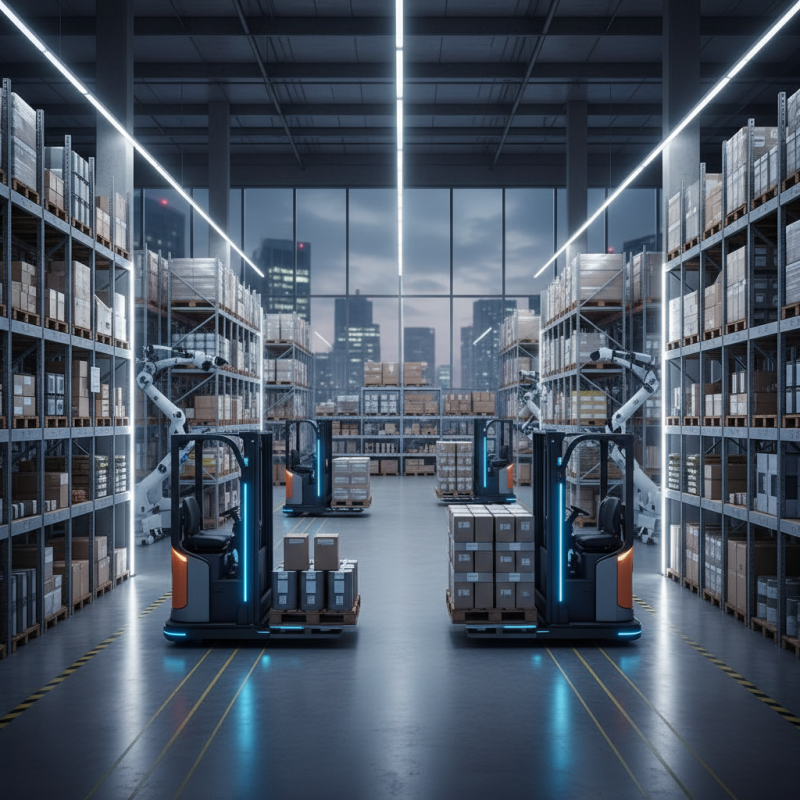
When exploring autonomous forklifts, it’s vital to understand the different types available. The market offers several varieties, each with unique capabilities. For instance, automated guided vehicles (AGVs) excel in repetitive tasks. They follow pre-set paths, making them ideal for streamlined operations.
In contrast, autonomous mobile robots (AMRs) are more versatile. They use sensors to navigate dynamically, adapting to warehouse changes. This flexibility can enhance productivity but may require more complex integration. Furthermore, some forklifts focus on specialized functions, like lifting heavier loads or operating in tight spaces. Each type presents distinct advantages and potential drawbacks.
Moreover, considering the specific needs of your warehouse is crucial. High ceilings may favor reach trucks, while narrow aisles could benefit from compact models. Think about load capacity and battery life as well. Balancing these factors can be challenging but necessary for efficient operations. Selecting the right forklift involves a careful analysis of your environment and operational goals.
When selecting an autonomous forklift, it's crucial to evaluate your warehouse layout and specific requirements. The design of your space directly influences the type of forklift you should choose. According to industry reports, 70% of warehouse inefficiencies stem from poor space management. A detailed analysis of your floor plan can identify potential obstacles and determine whether narrow aisle or large yard forklifts fit best.
Consider the height of your storage shelves. If they reach above 15 feet, a reach truck autonomous forklift might be necessary. Additionally, assess the width of your aisles. For instance, if your aisles are less than eight feet wide, compact models that can navigate tighter spaces are essential. Understanding these parameters shapes your decision and can lead to substantial productivity gains.
Tips: Always engage your team in evaluations. They can provide insights based on daily operations. Conduct trials of different models to observe their performance firsthand. Moreover, think about future growth. Your forklift should adapt to changing demands. Reflecting on these elements creates a strategic framework for making informed choices in your warehouse environment.
When evaluating autonomous forklifts, focus on key features that affect efficiency and safety. Look closely at navigation technology. Advanced systems often use Lidar and cameras to create a detailed map of the warehouse. This enables precise movement and minimizes collisions. However, some systems may struggle with unexpected obstacles, so consider the limitations.
Another vital feature is payload capacity. Forklifts designed for heavy loads offer more productivity but may restrict maneuverability. Assess the type of products stored in your warehouse. If space is tight, a nimble design may be more beneficial. It’s essential to balance capacity and size for optimal performance.
Safety features are equally crucial. Many forklifts deploy sensors and alarms to alert nearby personnel. Some models may even have automated emergency stop functions. Yet, reliance on technology can lead to complacency. Training staff to work alongside these machines is essential. Human oversight remains important, even in automated environments. These considerations can help guide your choice.
When evaluating autonomous forklifts, cost and return on investment (ROI) play crucial roles. Various models exhibit wide-ranging price points, often influenced by factors like technology and payload capacity. According to a recent industry report, the average cost of a robotic forklift can range from $50,000 to $100,000. The specific features and capabilities often dictate these figures, which can become a challenging puzzle for warehouse managers.
ROI analysis is equally vital. In many cases, businesses see a payback period of two to three years post-purchase. A case study showcased a warehouse that reduced labor costs by 20%. Improved efficiency from autonomous forklifts contributed to higher throughput. Yet, managers must navigate potential integration hurdles with existing warehouse systems.
**Tip:** Consider calculating the total cost of ownership (TCO). This includes initial costs, maintenance, and energy consumption. Understanding TCO helps managers make informed decisions.
Not every model will suit your needs. Some may prioritize speed, while others focus on precision. Regular assessments of your setup can reveal gaps and opportunities. Continuous improvements ensure you maximize productivity and ROI.
**Tip:** Testing different models through rentals can provide invaluable insights before making a long-term commitment. Hands-on experience can highlight strengths and weaknesses that data alone might not reveal.
| Model | Cost (USD) | Load Capacity (lbs) | Operational Hours (per Charge) | ROI (Years) |
|---|---|---|---|---|
| Model A | 25,000 | 4,500 | 8 | 3 |
| Model B | 30,000 | 5,000 | 10 | 4 |
| Model C | 27,000 | 6,000 | 9 | 3.5 |
| Model D | 35,000 | 7,000 | 12 | 2.5 |
When selecting an autonomous forklift, safety standards and compliance are paramount. The International Organization for Standardization (ISO) outlines specific guidelines for automated vehicles, including AS/ISO 3691-4. This standard ensures that autonomous systems meet rigorous safety benchmarks. Companies should ensure that their choice of forklifts complies with these established norms to mitigate potential risks in warehouse operations.
Implementing a proactive approach to compliance is crucial. Regular audits of equipment and processes can identify potential safety gaps. According to a recent report from the Occupational Safety and Health Administration (OSHA), facilities using autonomous vehicles saw a 30% decrease in workplace accidents. This statistic underscores the importance of not just adopting automation, but ensuring it aligns with safety standards.
Tips: Always check if the forklift has an emergency stop feature. Additionally, invest in training for staff on safety protocols. This will enhance overall efficiency and further ensure compliance. Remember, prioritizing safety enhances not only worker welfare but also operational productivity.
„Thanks to the LUVIR technology, the solder resist process could be switched directly from the previously used mask exposure to direct exposure. As an outstanding digital solution on the market, this technology has been able to demonstrate fast process times and superior quality on our certified conventional ink in production. This allowed us to fully digitize the solder mask process at low cost – without process or ink adjustments. An excellent benefit to our production in Rot am See.“
Ralf Göhringer (Head of Production WE Rot am See)
I would definitely recommend the Limata machine and team for a future company purchase
Michael Greenaway
Compunetics Inc.
“The Limata ldi has been amazing!! Best thing we did was buy this machine”
Richard Brady
GM
Circuitlabs
“Since 2019, we have been running the Limata X1000 LDI system (including LUVIR for solder mask imaging) in daily production as an addition to our current process with film. The machine was capable of properly exposing Taiyo PSR-4000 BN (DI) solder mask types on normal to high-copper boards using a new and unique direct imaging process. The machine operating interface is very user friendly which allowed for a quick technical training curve. The pre-registration processing reduced several seconds of production time at every print. Limata support and service staff is incomparable. They supported our team every step of the way at basically any time of the day or night, with literally, an immediate response time, customizing the software interface to best fit our Operations and needs.
We have exposed more than 8,000 prints since end of October, on various solder mask colors and some resist film panels. Limata, has proven to be very capable and innovative. They are a strong contender in the industry.
We have very much enjoyed this project, and working with the team!
Thank you Limata for the continued support and being a part of our growth.”
Bill Sezate
Vice President, GM
Summit Interconnect
As a replacement to our current contact exposure process with film, the LIMATA X2000 system including LUVIR-Technology was capable of properly exposing non-LDI solder mask types using a direct imaging process. The machine offers cutting edge software with a very intuitive operating interface which allowed for quick technician training curve. The dual drawer system combined with pre-registration processing reduced several seconds of production time at every machine cycle. Limata support and service staff is world class. They added software patches to keep production running at shortest possible response times, customized the software interface to best fit our in-house Operations system, and even wrote a step-by-step machine processing manual. As a result of the project, we have exposed more than 16,000 times on various product types and solder mask brands/colors. Limata, in a very short timeframe as a company, has definitely shown they are truly innovative and will be challenging the industry of direct imaging for the top spot.
Kevin Beattie
Process Engineer
TTM Technologies
Forest Grove Division
