
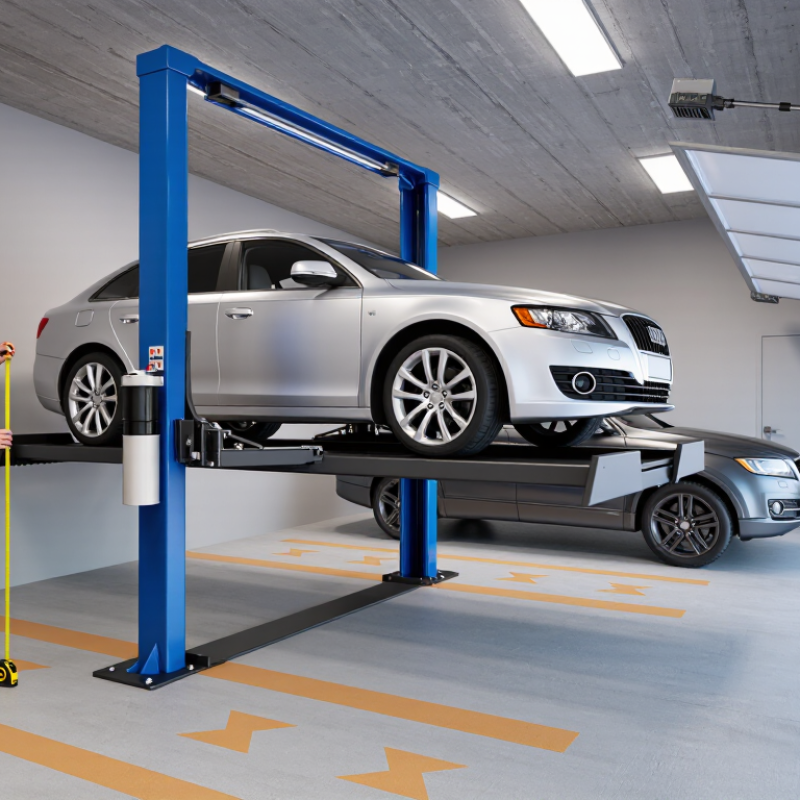
A car parking lift should fit the vehicle you own, not just the space on a floor plan. Measure the garage’s clear length, width, and ceiling height, including beams, pipes, lights, and the open garage door. Then check your vehicle’s height, wheelbase, width, and weight in its owner’s manual. Measure twice. A roof box or tailgate can change the clearance you need.
Capacity deserves careful attention. The U.S. EPA’s 2024 Automotive Trends Report puts the average new vehicle weight for model year 2023 at about 4,329 pounds. That average is only a reference; SUVs, electric vehicles, and loaded work vehicles may weigh considerably more. Choose a lift rated for the actual vehicle, with suitable allowance for cargo, and confirm compatibility with the lift supplier or a qualified installer. Small details matter. Check whether doors can open safely on the platform, and whether the lift’s posts leave room to walk around the car.
Think about how parking works each day. A two-post arrangement may offer easier access underneath, while a platform-style lift can suit storage where quick access is less important. Consider how often you move each vehicle, who operates the equipment, and where power and controls will sit. Paper plans can mislead. A taped outline on the floor can reveal awkward door swings or tight turning space before installation. It may feel fussy, but missing an inch can matter.