Choosing the right Ceramic rubber Hose is crucial for various industrial applications. Recent market studies indicate that the demand for these hoses is projected to grow by 8% annually through 2025. Experts highlight the importance of material durability and flexibility in performance. Dr. Emily Johnson, a specialist in industrial materials, states, "A well-selected Ceramic Rubber Hose can significantly enhance operational efficiency."
When making a choice, consider factors such as temperature resistance and compatibility with chemicals. Ceramic rubber hoses are particularly valued in handling abrasive materials. However, it's essential to note that not all hoses are created equal, leading to potential inefficiencies if the wrong type is chosen. Many users often overlook specific performance criteria, which can lead to unexpected breakdowns or increased maintenance costs.
Moreover, industry feedback suggests that improper selection can result in reduced lifespan. Thorough research is necessary to match your requirements with the hose's specifications. Ultimately, investing time in understanding the nuances of Ceramic Rubber Hoses pays off, ensuring reliability and safety in your operations.
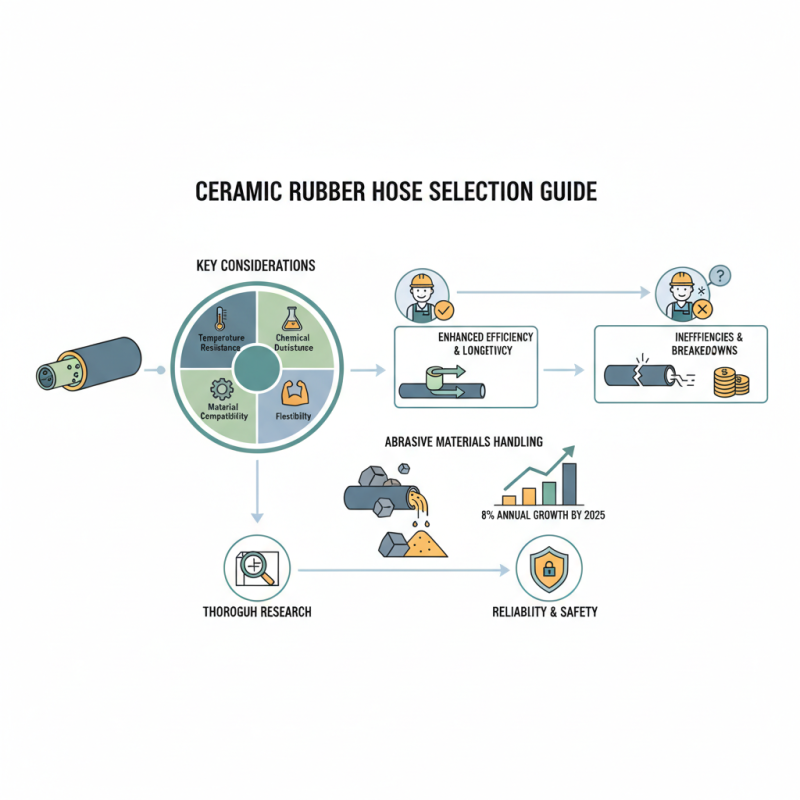
When selecting a ceramic rubber hose, various factors should be thoroughly evaluated. The temperature resistance is vital. Many hoses can withstand temperatures ranging from -30°C to 100°C. However, optimum performance often occurs within a narrower range. Assess the specific temperature requirements of your application.
Another crucial aspect is the material composition. Ceramic rubber hoses typically combine ceramic and rubber materials. This blend affects durability and flexibility. Industry reports indicate that hoses with higher ceramic content offer superior abrasion resistance. This can extend the service life significantly, thereby reducing replacement costs and downtime.
**Tip:** Always review technical specifications before finalizing your choice. A documented performance history could provide insight into longevity and reliability.
The sizing of the hose is equally important. Proper diameter selection minimizes flow restrictions. Inadequate sizing may lead to pressure drops, affecting your system's efficiency. An oversized hose can create turbulent flow, wasting energy.
**Tip:** Conduct pressure testing to determine if the selected hose meets your operational requirements. Adjust the size based on test results to avoid future complications.
| Factor | Description | Importance Level |
|---|---|---|
| Material Quality | Evaluate the quality of ceramic and rubber materials used for durability. | High |
| Temperature Resistance | Determine the maximum and minimum temperatures the hose can handle. | High |
| Pressure Rating | Check the hose's ability to withstand pressure without failing. | Medium |
| Compatibility | Ensure the hose is compatible with the chemicals or materials it will transport. | High |
| Flexibility | Assess the flexibility for easy maneuverability in tight spaces. | Medium |
| Length Options | Consider the available length options to fit your specific applications. | Low |
| Cost | Balance the cost against the features and quality of the hose. | Medium |
When selecting a ceramic rubber hose, understanding the various types available is crucial. Ceramic rubber hoses come in different formulations and constructions, each designed for specific applications. According to industry reports, these hoses can handle extreme temperatures, often exceeding 200°C, and offer excellent resistance to wear and tear. For high-abrasion environments, consider hoses reinforced with ceramic particles for enhanced durability.
One tip is to evaluate the material compatibility. Different applications may require different chemical resistances. For example, hoses might vary in their resistance to acids or solvents. Consulting the technical specifications is essential to avoid costly mistakes.
Think about the flexibility needed for your project. Some hoses are designed to remain flexible at lower temperatures, while others may sacrifice flexibility for higher pressure ratings. According to a recent study, choosing the right balance is key to ensuring both performance and longevity. A hose that is too rigid can lead to installation difficulties and increased stress on joints.
When choosing a ceramic rubber hose, assessing temperature and pressure ratings is crucial. High temperatures can degrade materials. Each application has unique demands. The right hose must withstand specific conditions. Consider both the maximum operating temperature and the pressure ratings.
Too often, users overlook these details. A hose may appear perfect but fail under stress. For instance, if the pressure rating is too low, it might burst. A hose for high-heat applications needs robust insulation. Find the balance between flexibility and durability.
Ensure to check manufacturer specifications diligently. Use this information to determine suitability. Testing hoses under real-life conditions can reveal unexpected issues. Regular maintenance and assessments can help avoid failures. Make informed choices and adapt as necessary.
Choosing the right ceramic rubber hose involves careful evaluation of its compatibility with various chemicals and fluids. Incompatible materials can lead to leaks or failures. It's essential to understand your specific application requirements. Consider the temperature range, pressure conditions, and the types of chemicals the hose will encounter.
One tip is to consult with experts or refer to compatibility charts before making a decision. This can save time and prevent costly mistakes. For instance, some hoses may handle acids well but fail under high temperatures. Testing a sample hose with your chemicals can provide practical insights.
Another point to ponder is the hose's flexibility and durability. A more flexible hose might be easier to install, but it can be less durable than a stiffer model. Assess the trade-offs based on your work environment. Sometimes, an ideal option may not exist, requiring compromises that should be well thought out. Always ensure your choice prioritizes safety alongside performance.
Maintaining your ceramic rubber hose is vital for its longevity. Regular inspection can help identify wear and tear before it becomes serious. Look for cracks or abrasions regularly. Studies indicate that preventative maintenance can extend a product's life by up to 50%. Addressing minor issues early can prevent costly replacements later.
Proper cleaning is crucial. Dirty hoses can degrade faster. Using a gentle detergent with water is often sufficient. Rinsing thoroughly helps remove any residual chemicals or dirt. Additionally, keeping the hose away from extreme temperatures protects its integrity. A report from the Rubber Manufacturers Association highlights that exposure to harsh conditions significantly decreases rubber longevity.
Finally, store the hose properly when not in use. Avoid placing heavy items on it. This prevents deformities that can affect performance. While these steps seem simple, neglecting them can lead to frequent replacements. Many users often underestimate maintenance but realizing the cost of replacements might spur a change in habits. Taking care of your ceramic rubber hose pays off in the long run.
„Thanks to the LUVIR technology, the solder resist process could be switched directly from the previously used mask exposure to direct exposure. As an outstanding digital solution on the market, this technology has been able to demonstrate fast process times and superior quality on our certified conventional ink in production. This allowed us to fully digitize the solder mask process at low cost – without process or ink adjustments. An excellent benefit to our production in Rot am See.“
Ralf Göhringer (Head of Production WE Rot am See)
I would definitely recommend the Limata machine and team for a future company purchase
Michael Greenaway
Compunetics Inc.
“The Limata ldi has been amazing!! Best thing we did was buy this machine”
Richard Brady
GM
Circuitlabs
“Since 2019, we have been running the Limata X1000 LDI system (including LUVIR for solder mask imaging) in daily production as an addition to our current process with film. The machine was capable of properly exposing Taiyo PSR-4000 BN (DI) solder mask types on normal to high-copper boards using a new and unique direct imaging process. The machine operating interface is very user friendly which allowed for a quick technical training curve. The pre-registration processing reduced several seconds of production time at every print. Limata support and service staff is incomparable. They supported our team every step of the way at basically any time of the day or night, with literally, an immediate response time, customizing the software interface to best fit our Operations and needs.
We have exposed more than 8,000 prints since end of October, on various solder mask colors and some resist film panels. Limata, has proven to be very capable and innovative. They are a strong contender in the industry.
We have very much enjoyed this project, and working with the team!
Thank you Limata for the continued support and being a part of our growth.”
Bill Sezate
Vice President, GM
Summit Interconnect
As a replacement to our current contact exposure process with film, the LIMATA X2000 system including LUVIR-Technology was capable of properly exposing non-LDI solder mask types using a direct imaging process. The machine offers cutting edge software with a very intuitive operating interface which allowed for quick technician training curve. The dual drawer system combined with pre-registration processing reduced several seconds of production time at every machine cycle. Limata support and service staff is world class. They added software patches to keep production running at shortest possible response times, customized the software interface to best fit our in-house Operations system, and even wrote a step-by-step machine processing manual. As a result of the project, we have exposed more than 16,000 times on various product types and solder mask brands/colors. Limata, in a very short timeframe as a company, has definitely shown they are truly innovative and will be challenging the industry of direct imaging for the top spot.
Kevin Beattie
Process Engineer
TTM Technologies
Forest Grove Division
