Choosing the right Circular Wood Saw is essential for woodworking projects. The right tool can make a significant difference in the quality of your work. Many options are available, making the decision challenging.
Understanding your specific needs will guide you in selecting the best Circular Wood Saw. Consider the type of wood you'll cut, the thickness, and the frequency of use. Each saw comes with distinct features, from blade size to motor power.
Quality also matters. A durable saw can handle tough jobs without frequent replacements. Take your time to research and compare models. Look for user reviews and expert recommendations. It’s okay to feel overwhelmed by choices. Reflect on your priorities to make a more informed decision.
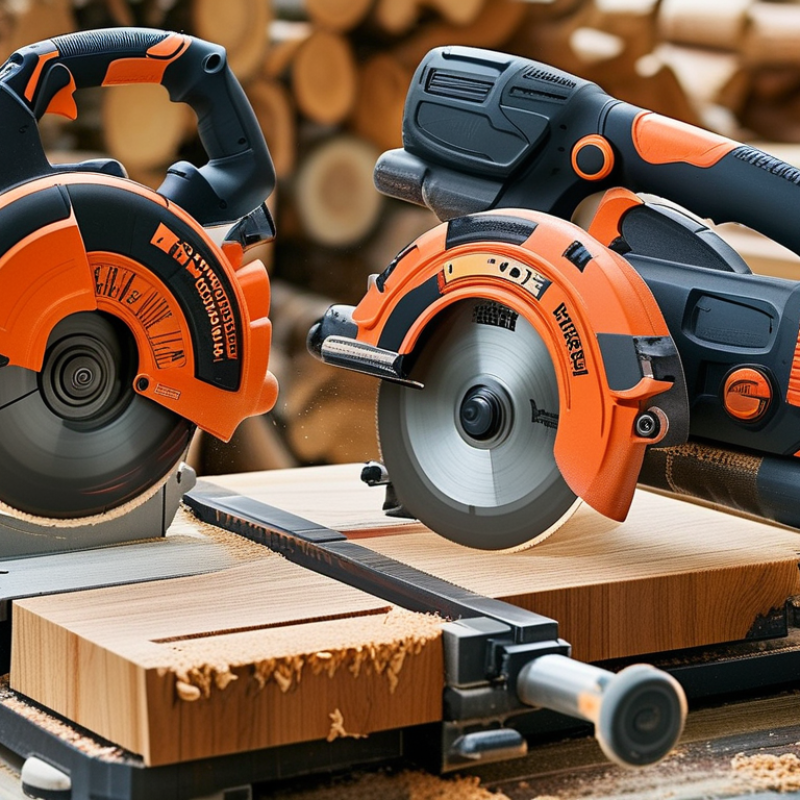
When selecting a circular wood saw, understanding the different types is crucial. The two main categories are corded and cordless saws. Corded models provide continuous power, making them ideal for heavy-duty projects. They are typically more powerful and can cut through tougher materials. However, they require an outlet, which can limit mobility. Meanwhile, cordless models offer portability and convenience. They are perfect for working in various locations or tight spaces.
Consider your project needs. For intricate cuts or smaller jobs, a compact design works best. Look for saws with adjustable cutting depths, as they provide flexibility for different materials. Tips for selecting the right model include checking the blade size. A larger blade can cut thicker materials more effectively. Additionally, prioritize comfort and grip. A comfortable handle can reduce fatigue during extended use.
Take time to assess safety features too. A blade guard is essential for protecting users. Some saws include electric brakes for added safety. If you’re a beginner, start with a basic model before moving to more advanced saws. Recognizing this step can help build confidence and skills. Consider your experience level before making a purchase.
When selecting a circular wood saw, understanding key features is crucial. Blade size is one of the most significant elements. Most saws feature blades ranging from 5 to 7.5 inches. Larger blades can cut through thicker materials. According to recent data, a 7.25-inch blade provides a depth of cut of around 2.5 inches, making it suitable for diverse lumber projects. This flexibility is essential for both amateurs and seasoned carpenters.
Another aspect to consider is the power of the motor. Motors range from 12 to 15 amps, with higher amperage supporting more demanding tasks. A powerful motor translates to efficiency and smoother cuts. A study by the American Woodworking Institute showed that saws with at least 15 amps can handle heavy-duty tasks without overheating. Safety features like electric brakes and laser guides should also be prioritized. These tools can prevent accidents and enhance accuracy, making them valuable additions regardless of skill level.
Weight and ergonomics are often overlooked yet vital. A lightweight saw can help with mobility, especially during extended use. However, it can also compromise stability. Balancing weight and comfort enhances user experience. Many professionals conduct trials to gauge how different saws feel in hand. Using the right circular saw improves performance but also prompts a reflection on individual requirements. Adaptation and learning are part of the journey in woodworking.
When selecting a circular wood saw, understanding your specific cutting needs is crucial. Different saws serve different purposes, influenced by factors like material type and project scale. For instance, according to the U.S. Bureau of Labor Statistics, carpenters often rely on precise cuts for structural integrity. A saw with a higher RPM could be beneficial for thicker woods, ensuring smoother finishes.
Consider the types of cuts you will be performing. Are you making rip cuts, cross cuts, or bevel cuts? Each requires a different approach. The American Forest and Paper Association reports that improper tool choices can lead to inefficiencies and safety risks. Reflecting on past projects can provide insights into which features matter most.
Ergonomics and weight are also essential. A lighter saw might be easier to handle but could compromise power. As reported by the Woodworking Industry Association, user comfort can decrease fatigue, impacting both output and accuracy. It’s important to assess your physical capabilities along with the saw’s specifications. This balance can enhance performance while minimizing the chance of error.
When evaluating circular wood saws, consider power, size, and portability. The power of the saw is crucial for performance. Typically, higher wattage means better cutting ability. Choose a saw that can handle the types of wood you work with frequently. Some users prefer a lightweight saw for easy handling, especially during long projects. However, be cautious; too much emphasis on weight can compromise power.
Size is another critical factor. A larger blade can cut through thicker materials but can be harder to manage. A smaller blade is more nimble but may struggle with heavy-duty tasks. Assess your typical woodworking needs. A medium-size blade might be the most versatile option for various projects.
Tips: Always test the saw before purchase. If possible, hold it to feel its weight and balance. Read reviews to understand real user experiences. Portability is vital if you’ll move frequently between job sites. Look for saws with features like carrying handles or compact designs. The trade-off between power and convenience is something to ponder. Choose what aligns best with your workflow and personal comfort.
Budgeting for a circular wood saw involves understanding both upfront costs and ongoing maintenance. Start by estimating the price range of the saw that suits your needs. A reliable saw can be an investment but won't break the bank. Consider your usage frequency. If you plan to use it daily, allocate more budget for a durable model.
Maintenance costs are often overlooked. Regular blade changes and proper storage can ensure longevity. Factor in the cost of blades, ensuring you have quality replacements. Always set aside a portion of your budget for unexpected repairs. This can prevent a financial strain later on. Think about your workspace too; proper organization may save replacement costs.
Reflect on your experience level. Beginners might spend less on a basic model but might face more repairs. Consider investing more if you use your saw frequently. Learning to maintain your equipment helps reduce these costs. A careful approach can lead to smarter budgeting choices in the long run.
„Thanks to the LUVIR technology, the solder resist process could be switched directly from the previously used mask exposure to direct exposure. As an outstanding digital solution on the market, this technology has been able to demonstrate fast process times and superior quality on our certified conventional ink in production. This allowed us to fully digitize the solder mask process at low cost – without process or ink adjustments. An excellent benefit to our production in Rot am See.“
Ralf Göhringer (Head of Production WE Rot am See)
I would definitely recommend the Limata machine and team for a future company purchase
Michael Greenaway
Compunetics Inc.
“The Limata ldi has been amazing!! Best thing we did was buy this machine”
Richard Brady
GM
Circuitlabs
“Since 2019, we have been running the Limata X1000 LDI system (including LUVIR for solder mask imaging) in daily production as an addition to our current process with film. The machine was capable of properly exposing Taiyo PSR-4000 BN (DI) solder mask types on normal to high-copper boards using a new and unique direct imaging process. The machine operating interface is very user friendly which allowed for a quick technical training curve. The pre-registration processing reduced several seconds of production time at every print. Limata support and service staff is incomparable. They supported our team every step of the way at basically any time of the day or night, with literally, an immediate response time, customizing the software interface to best fit our Operations and needs.
We have exposed more than 8,000 prints since end of October, on various solder mask colors and some resist film panels. Limata, has proven to be very capable and innovative. They are a strong contender in the industry.
We have very much enjoyed this project, and working with the team!
Thank you Limata for the continued support and being a part of our growth.”
Bill Sezate
Vice President, GM
Summit Interconnect
As a replacement to our current contact exposure process with film, the LIMATA X2000 system including LUVIR-Technology was capable of properly exposing non-LDI solder mask types using a direct imaging process. The machine offers cutting edge software with a very intuitive operating interface which allowed for quick technician training curve. The dual drawer system combined with pre-registration processing reduced several seconds of production time at every machine cycle. Limata support and service staff is world class. They added software patches to keep production running at shortest possible response times, customized the software interface to best fit our in-house Operations system, and even wrote a step-by-step machine processing manual. As a result of the project, we have exposed more than 16,000 times on various product types and solder mask brands/colors. Limata, in a very short timeframe as a company, has definitely shown they are truly innovative and will be challenging the industry of direct imaging for the top spot.
Kevin Beattie
Process Engineer
TTM Technologies
Forest Grove Division
