Choosing the right crushing screening plant is critical for any construction project. Industry reports indicate that improper selection can lead to inefficiencies and increased operational costs. According to John Smith, a leading expert in crushing technology, "Selecting the right equipment is the backbone of effective material processing." This statement emphasizes the importance of making informed decisions.
With the global market for crushing screening plants projected to grow by 5.3% annually through 2027, the stakes are high. Companies must evaluate their specific needs meticulously. Various factors influence this choice, including material type, plant capacity, and site conditions. A well-chosen plant can enhance productivity and minimize waste.
Despite the wealth of information available, many still choose equipment impulsively. This tendency can result in mismatched capabilities and operational struggles. Buyers should consider detailed specifications and prioritize reputable brands. An informed choice can significantly impact project outcomes and profitability. Therefore, careful examination and expert advice are essential in this complex decision-making process.
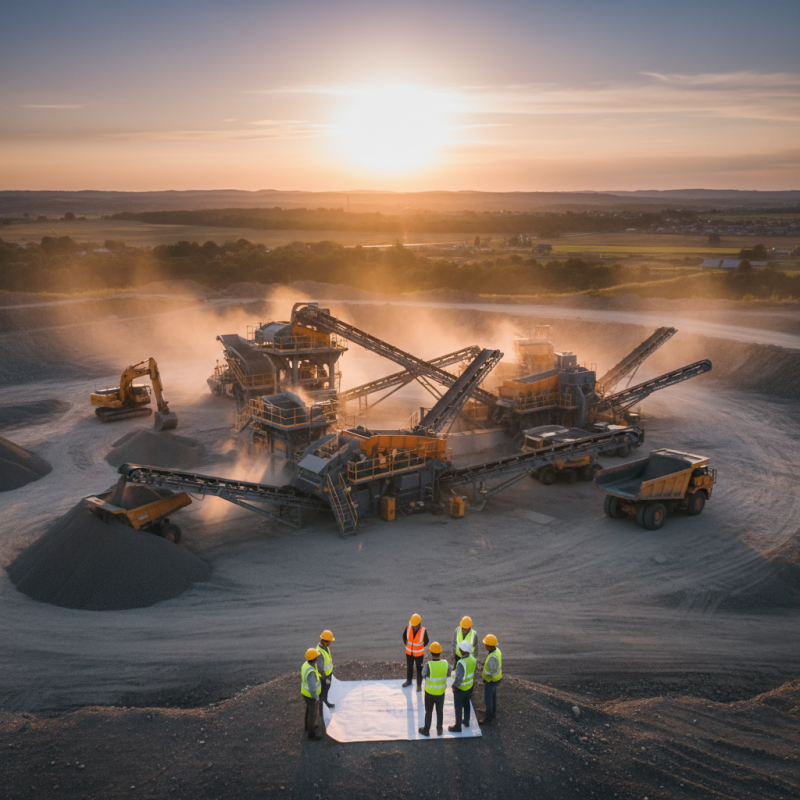
Choosing the right crushing screening plant can significantly impact your project. Understanding project requirements is vital. Various factors should guide your decision-making process.
Evaluate the material type you will be processing. Different materials require distinct machinery capabilities. For instance, harder materials might need more robust machines. The desired output size and volume are also crucial. Identify the productivity requirements to ensure the plant meets your goals.
**Tips:** Consider the plant’s mobility. Do you need a stationary setup or a portable one? This can influence your logistical costs. Additionally, assess the site conditions. Is there enough space for operation and maintenance? Understanding these elements will lead to better choices.
Examine the quality and durability of the equipment. Not all plants are built equally. Many options exist, but some may require more frequent repairs. This can affect your budget and timeline. Reflect on your long-term needs versus immediate ones. Investing in more efficient equipment might save costs over time.
Choosing the right crushing and screening equipment is crucial for any operation. Different types of machinery have distinct advantages and limitations. For instance, jaw crushers are known for their robustness and high throughput. Cone crushers offer versatility for various materials. According to a recent industry report, nearly 40% of companies prioritize cost-efficiency when selecting equipment, highlighting the need for strategic choices.
Consider the material type and site conditions. For instance, if you are primarily dealing with gravel or recycled materials, impact crushers might be ideal. Their ability to handle less abrasive debris while maintaining a good production rate can be advantageous. Statistics show that using the wrong equipment can lead to a 25% reduction in operational efficiency.
Tips: Set clear objectives before purchasing. Evaluate your specific needs. Conduct thorough research on operational costs and maintenance requirements. It's essential to consider both immediate and long-term impacts on productivity and profit margins. Balancing quality with price often results in difficult decisions. Regularly reassess your equipment as project needs evolve, ensuring that your choices remain relevant.
When selecting a crushing and screening plant, performance and efficiency are paramount. One critical feature to assess is the plant's throughput capacity. This determines how much material can be processed in a given time. A higher capacity may reduce processing time, but it may also impact the quality of the crushed materials. Balance is key.
Another important consideration is the flexibility of the plant. Can it handle various materials? Different rock types require different approaches. The adaptability of the screens and crushers can significantly affect operational efficiency. Finding the right combinations often requires trial and error, leading to some learning curves.
Energy efficiency is a vital aspect that should not be overlooked. A more efficient machine reduces operational costs but may have a higher initial investment. Assessing the total cost of ownership, including maintenance and power consumption, can provide clearer insights. It's worth noting that not every plant operates optimally under the same conditions. Regular performance reviews can help identify areas for improvement and ensure the plant meets industry standards.
When selecting a crushing screening plant, budget is a key factor. Analyze upfront costs, maintenance, and operational expenses. This allows for a clearer picture of what you can afford. Don't forget to consider hidden costs. Installation and transportation can add up quickly.
Evaluate the total cost of ownership over time. While a cheaper option may seem tempting, it could lead to higher maintenance costs later. Assess the plant's fuel efficiency and lifespan. Investing in a robust model might save money in the long run.
Seek multiple quotes and compare features. Each plant offers different technologies and capabilities. Beware of overspending on unnecessary features. Focus on your project’s specific needs and circumstances. Prioritize efficiency and reliability over brand prestige. A thoughtful approach can yield a suitable solution that fits your budget and operational requirements.
Choosing the right crushing and screening plant involves understanding the importance of maintenance and support. Regular upkeep ensures optimal performance and longevity of your equipment. Neglecting this aspect can lead to unexpected breakdowns, halting operations. A well-maintained plant not only increases efficiency but also reduces overall costs.
Consider the availability of support services. Reliable manufacturers often provide training, technical assistance, and spare parts. This support is crucial in minimizing downtime. A solid warranty can also signal a commitment to quality. Look for a plant that offers comprehensive service agreements, as these can simplify your maintenance efforts and guarantee that skilled technicians are available when needed.
Pay attention to the local service infrastructure as well. If technicians are far away, response times may suffer. It’s vital to evaluate the proximity and reputation of available service. Reflecting on these factors can lead to better decision-making. Selecting a plant with strong maintenance support can save time and resources in the long run.
„Thanks to the LUVIR technology, the solder resist process could be switched directly from the previously used mask exposure to direct exposure. As an outstanding digital solution on the market, this technology has been able to demonstrate fast process times and superior quality on our certified conventional ink in production. This allowed us to fully digitize the solder mask process at low cost – without process or ink adjustments. An excellent benefit to our production in Rot am See.“
Ralf Göhringer (Head of Production WE Rot am See)
I would definitely recommend the Limata machine and team for a future company purchase
Michael Greenaway
Compunetics Inc.
“The Limata ldi has been amazing!! Best thing we did was buy this machine”
Richard Brady
GM
Circuitlabs
“Since 2019, we have been running the Limata X1000 LDI system (including LUVIR for solder mask imaging) in daily production as an addition to our current process with film. The machine was capable of properly exposing Taiyo PSR-4000 BN (DI) solder mask types on normal to high-copper boards using a new and unique direct imaging process. The machine operating interface is very user friendly which allowed for a quick technical training curve. The pre-registration processing reduced several seconds of production time at every print. Limata support and service staff is incomparable. They supported our team every step of the way at basically any time of the day or night, with literally, an immediate response time, customizing the software interface to best fit our Operations and needs.
We have exposed more than 8,000 prints since end of October, on various solder mask colors and some resist film panels. Limata, has proven to be very capable and innovative. They are a strong contender in the industry.
We have very much enjoyed this project, and working with the team!
Thank you Limata for the continued support and being a part of our growth.”
Bill Sezate
Vice President, GM
Summit Interconnect
As a replacement to our current contact exposure process with film, the LIMATA X2000 system including LUVIR-Technology was capable of properly exposing non-LDI solder mask types using a direct imaging process. The machine offers cutting edge software with a very intuitive operating interface which allowed for quick technician training curve. The dual drawer system combined with pre-registration processing reduced several seconds of production time at every machine cycle. Limata support and service staff is world class. They added software patches to keep production running at shortest possible response times, customized the software interface to best fit our in-house Operations system, and even wrote a step-by-step machine processing manual. As a result of the project, we have exposed more than 16,000 times on various product types and solder mask brands/colors. Limata, in a very short timeframe as a company, has definitely shown they are truly innovative and will be challenging the industry of direct imaging for the top spot.
Kevin Beattie
Process Engineer
TTM Technologies
Forest Grove Division
