Choosing the right Electric Pallet Jacks can shape daily productivity, safety, and long-term warehouse costs. A suitable model should move loads smoothly through narrow aisles, loading bays, and crowded storage areas. However, the strongest-looking machine is not always the best fit. Real performance depends on your floor conditions, load sizes, travel distance, and operator habits.
Experienced warehouse managers usually examine capacity, fork dimensions, battery type, charging time, turning radius, and control layout. A 4,500-pound capacity may sound impressive, but it offers little value if the jack struggles on ramps or cannot fit your pallets. Watch how the handle responds. Check whether the emergency reverse button is easy to reach. Small details matter during a rushed shift.
Reliable selection also requires evidence beyond advertising claims. Review manufacturer specifications, service coverage, warranty terms, and feedback from comparable workplaces. Ask whether replacement batteries and wheels are readily available. This can prevent a simple repair from becoming a costly delay. Still, no guide can replace an on-site trial. Warehouse traffic changes, and operator feedback may reveal weaknesses that a product sheet hides.
The best choice balances power, control, comfort, maintenance, and total ownership cost. It should support your team without creating unnecessary strain or complexity. Some assumptions may prove wrong after real testing. That is worth discovering early. This guide explains the practical criteria that help buyers compare Electric Pallet Jacks with greater confidence and fewer expensive surprises.
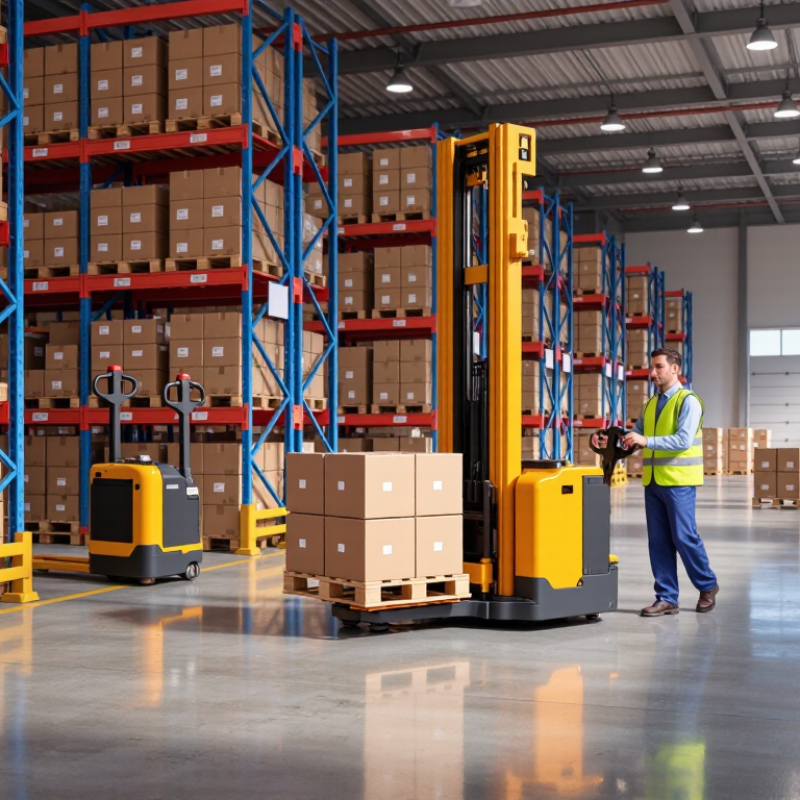
An electric pallet jack is a powered machine for moving palletized loads across warehouses, stores, and loading areas. It lifts the forks with a hydraulic system and moves them with an electric traction motor. A rechargeable battery supplies power to both functions. When the operator turns the tiller, the control system adjusts speed and direction. Pressing the lift button raises the forks under the pallet. Releasing the controls normally slows or stops the machine.
That sounds simple. In practice, floor condition and load balance affect its response. Most electric pallet jacks include a tiller, drive wheel, load wheels, forks, battery, and emergency stop control. The rated capacity matters because overloaded forks can reduce stability and braking performance. Fork length should also match the pallets used daily. A few extra centimeters may create awkward contact in tight spaces.
Choose a model after observing real work conditions, not only catalog figures. Measure aisle width, ramp angles, travel distance, and charging access. Operators should test the handle position and speed control with work gloves. A comfortable control layout can reduce mistakes during repeated movement. Noise level matters in busy indoor areas. Battery charging time deserves attention, too. A machine that looks powerful may still disappoint during long shifts. The most useful evaluation includes a loaded trial, although this step is often skipped.
Choosing the best electric pallet jack starts with load capacity, not motor power. A 2,000-pound rating may look sufficient, but uneven loads can shift weight toward the fork tips. Add the pallet, packaging, and possible moisture. Leave a practical safety margin.
OSHA safety data estimates about 34,900 serious forklift injuries occur annually in the United States. Electric pallet jacks are smaller, yet poor load assessment still creates crush and tip-over risks.
Select a truck rated above your heaviest routine load, not your average one. For example, a 1,600-pound shipment may justify a 2,000-pound model. That choice feels conservative. It is usually cheaper than a damaged pallet or injured worker.
Fork dimensions must match the pallet closely. Standard pallets commonly use 48-inch forks, while narrow pallets may need shorter forks. Fork length should support most of the pallet without extending unnecessarily beyond it.
Fork width also matters: overly narrow forks can concentrate pressure, while overly wide forks may not enter the pallet openings.
ANSI/ITSDF B56.1 emphasizes following rated capacity and manufacturer specifications, including load placement.
Measure your pallets, aisle width, dock plates, and storage clearances before buying. A 27-inch overall width may suit a narrow aisle, but turning space can still be inadequate. This is where many selection guides oversimplify. Test the actual route with a loaded pallet, because warehouse drawings rarely show every obstruction.
Choosing an electric pallet jack starts with understanding its battery, not just its lifting capacity.
Lead-acid batteries usually cost less and suit steady, planned shifts. They need regular charging, water checks, and a ventilated charging area.
Lithium-ion batteries charge faster and support opportunity charging during short breaks. They also require less routine maintenance. However, their higher purchase price may challenge smaller operations.
Operating time depends on more than the advertised battery rating. Heavy loads, ramps, cold rooms, rough floors, and frequent starts consume energy quickly. A pallet jack used for six hours may not deliver six hours under demanding conditions.
I once underestimated travel distance in a busy warehouse. The battery reached its limit earlier than expected. That mistake changed the buying process.
Tips: Record daily travel distance, load weight, and break periods. Compare usable operating time, not only charging speed. Check whether the battery can be removed easily. Confirm charger compatibility and charging location requirements. Ask for tested cycle data under realistic loads. Leave a practical reserve. Running a battery completely flat can interrupt work and increase replacement costs. Also, consider operator habits. Gentle acceleration helps, but constant stopping can still drain power. A slightly larger battery may reduce downtime, although excessive capacity adds weight and expense.
Choosing an electric pallet jack starts with the operator’s daily reality. I have learned that safety features matter most when attention drops during a busy shift. A responsive emergency reverse button can prevent a crushing incident near racking. A clear horn helps warn pedestrians before the machine enters a shared aisle. Check the load rating, braking response, and handle position before purchase. These details are easy to overlook.
Control should feel predictable, not overly sensitive. Look for gradual acceleration, adjustable travel speed, and an accessible emergency stop. Operators should move the tiller without stretching or twisting their wrists. A battery indicator should remain readable in dim warehouse light. I once assumed higher speed meant better productivity. That assumption was wrong. Smooth control often saves more time than sudden movement.
Tips: Test the pallet jack with a realistic load, not an empty unit. Drive through a narrow aisle and make a full turn. Notice the turning radius, handle resistance, and stopping distance. Check whether the forks enter pallets cleanly and stay stable on uneven flooring. Ask operators to try it for several minutes. Their feedback may reveal awkward controls that specifications do not show. Also inspect charging access and wheel protection. Small design flaws become tiring after hundreds of daily movements.
How to Choose the Best Electric Pallet Jacks?
How Can You Compare Durability, Maintenance, and Total Cost?
Durability begins with the working environment, not the sales brochure. Check the rated capacity, frame construction, fork thickness, and wheel material. A pallet jack used on rough concrete needs stronger wheels than one used on smooth warehouse floors. Ask operators about daily impacts, tight turns, and ramp use. Their experience often reveals weaknesses that specifications miss. Look for sealed electrical components and protected controls. These details can reduce failures caused by dust, moisture, and accidental contact.
Maintenance should be practical for the people doing it. Inspect battery connectors, wheels, forks, brakes, and emergency controls on a fixed schedule. Record unusual noise, slower lifting, and shorter travel distance. Small changes matter. Easy access to service points can reduce labor time and unnecessary downtime. However, maintenance estimates are rarely perfect. Operators may skip inspections during busy shifts, so a realistic plan should allow for human mistakes.
Total cost includes more than the purchase price. Compare energy use, battery replacement, service labor, spare parts, training, and lost productivity. A lower-priced unit may become expensive after repeated wheel changes or long charging periods. Calculate cost over several years, not several weeks. Test the equipment with actual loads before deciding. A spreadsheet helps, but it may undercount disruption during peak seasons. Also check whether technicians can obtain parts quickly and follow clear service procedures.
„Thanks to the LUVIR technology, the solder resist process could be switched directly from the previously used mask exposure to direct exposure. As an outstanding digital solution on the market, this technology has been able to demonstrate fast process times and superior quality on our certified conventional ink in production. This allowed us to fully digitize the solder mask process at low cost – without process or ink adjustments. An excellent benefit to our production in Rot am See.“
Ralf Göhringer (Head of Production WE Rot am See)
I would definitely recommend the Limata machine and team for a future company purchase
Michael Greenaway
Compunetics Inc.
“The Limata ldi has been amazing!! Best thing we did was buy this machine”
Richard Brady
GM
Circuitlabs
“Since 2019, we have been running the Limata X1000 LDI system (including LUVIR for solder mask imaging) in daily production as an addition to our current process with film. The machine was capable of properly exposing Taiyo PSR-4000 BN (DI) solder mask types on normal to high-copper boards using a new and unique direct imaging process. The machine operating interface is very user friendly which allowed for a quick technical training curve. The pre-registration processing reduced several seconds of production time at every print. Limata support and service staff is incomparable. They supported our team every step of the way at basically any time of the day or night, with literally, an immediate response time, customizing the software interface to best fit our Operations and needs.
We have exposed more than 8,000 prints since end of October, on various solder mask colors and some resist film panels. Limata, has proven to be very capable and innovative. They are a strong contender in the industry.
We have very much enjoyed this project, and working with the team!
Thank you Limata for the continued support and being a part of our growth.”
Bill Sezate
Vice President, GM
Summit Interconnect
As a replacement to our current contact exposure process with film, the LIMATA X2000 system including LUVIR-Technology was capable of properly exposing non-LDI solder mask types using a direct imaging process. The machine offers cutting edge software with a very intuitive operating interface which allowed for quick technician training curve. The dual drawer system combined with pre-registration processing reduced several seconds of production time at every machine cycle. Limata support and service staff is world class. They added software patches to keep production running at shortest possible response times, customized the software interface to best fit our in-house Operations system, and even wrote a step-by-step machine processing manual. As a result of the project, we have exposed more than 16,000 times on various product types and solder mask brands/colors. Limata, in a very short timeframe as a company, has definitely shown they are truly innovative and will be challenging the industry of direct imaging for the top spot.
Kevin Beattie
Process Engineer
TTM Technologies
Forest Grove Division
