Choosing the best Ev Fast Charger can greatly enhance your electric vehicle experience. With a variety of options available, it's crucial to consider your needs. Different chargers vary in speed, efficiency, and compatibility. Understanding these differences will help you make an informed decision.
Ev Fast Chargers can significantly reduce charging time. Some can power up your vehicle in under an hour. However, not all fast chargers are the same. Factors such as your vehicle's charging capacity and the type of installation are essential. You may face limitations based on your location and budget. Research can provide valuable insights.
While many chargers promise rapid charging, read reviews and check reliability. Personal experiences reveal that some chargers may underperform over time. Seek out reputable brands with established track records. Making the right choice will ultimately support your driving needs and enhance your EV journey.
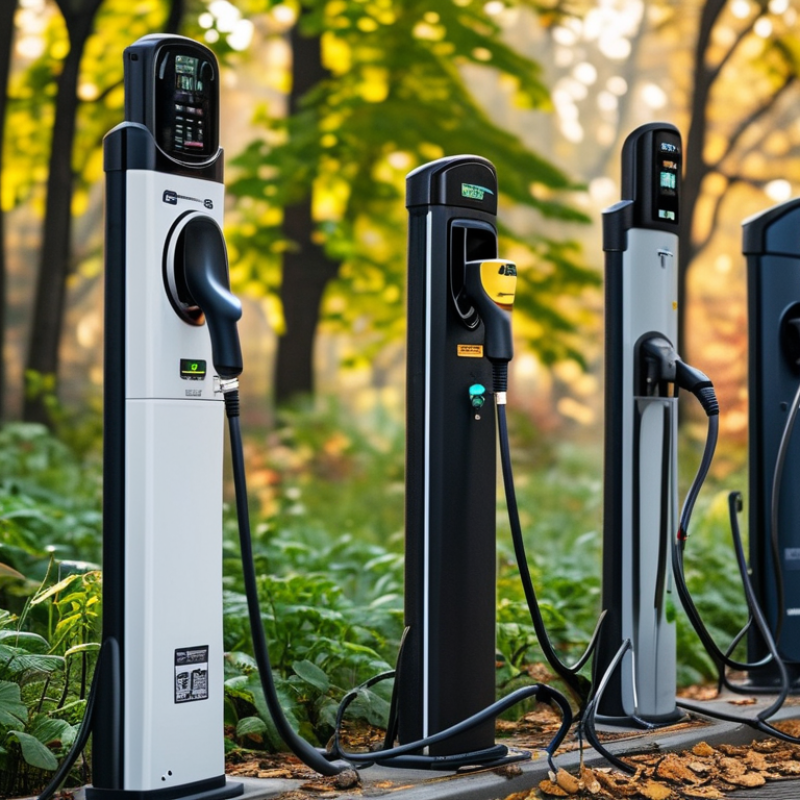
Understanding electric vehicle (EV) charging basics is essential for anyone considering an EV. The types of chargers vary significantly. Level 1 chargers are the simplest, using a standard household outlet. They charge slowly, typically offering 3-5 miles of range per hour. This is often sufficient for daily driving needs, but it might leave some drivers anxious about long trips.
Level 2 chargers are more commonly used for home and public charging. They provide a quicker charge, delivering 10-20 miles of range per hour. Many EV owners find this suitable for overnight charging. DC fast chargers, however, are where the speed impresses. These can add 60-100 miles of range in just 20 minutes. They are ideal for road trips and charging stations along highways.
Understanding your daily driving habits is crucial. If you only drive short distances, a Level 1 charger may suffice. However, for those with longer commutes or frequent road trips, investing in a Level 2 charger is wise. Reflecting on these details can help you make an informed decision about your charging needs. Each option has its pros and cons, so assess your situation carefully.
When choosing the right EV fast charger, understanding the different types is crucial. Level 1 chargers use standard outlets. They are the slowest option, taking hours to charge. Ideal for home use, they provide convenience but lack speed for urgent needs. Level 2 chargers are more common. They connect to dedicated circuits and can fully charge most EVs in about four to six hours. This type often appears in public charging stations and residential setups.
Choosing the right EV fast charger involves careful assessment of both charging speed and compatibility. Fast charging rates vary significantly. Some chargers deliver up to 350 kW, allowing for rapid charging in under 30 minutes. Others may only offer slower options. Consider your daily driving habits. If you frequently undertake long trips, a faster charger would be beneficial. Otherwise, a moderate-speed option could suffice for your needs.
Compatibility plays a crucial role as well. Not every charger works with every electric vehicle. Many charging stations offer universal connectors, but it's essential to ensure your vehicle's charging port aligns with the charger type. This can sometimes be an oversight. Some drivers find themselves at a station only to discover their vehicle isn’t supported. It's wise to research your EV’s specifications and the types of chargers available in your area. Having a reliable charger that fits perfectly with your EV signal boosts convenience.
Keep in mind that charging infrastructure is diverse and evolving. New technologies emerge regularly, and older chargers may become obsolete. Reflect on how your charger will adapt to future changes. Anticipating these shifts might save you from needing upgrades soon. The trend towards smarter chargers also means integrating features like mobile app connectivity. Such capabilities can enhance your charging experience, making it more efficient and user-friendly.
This chart compares the charging speeds of various EV fast chargers. Each charger is represented by its maximum output in kilowatts (kW), which is crucial for assessing compatibility with different electric vehicles and understanding how quickly they can recharge. Choose a charger that meets your specific needs based on these speeds.
When choosing an EV fast charger, installation requirements and costs are critical factors. Proper evaluation of your location is essential. For instance, a Level 2 charger typically requires a dedicated 240-volt circuit. This might mean upgrading your electrical panel. Such upgrades can range from $500 to $3,000, depending on existing infrastructure.
The cost of installation also varies by region. For example, urban areas might average higher labor costs. According to a recent industry report, the average installation cost ranges between $800 and $2,500. Consider permitting, which can add additional fees and delays. Some local regulations require inspections, which complicate matters further.
While cost is a major factor, think about future proofing. As technology evolves, you might need chargers with higher amperage. In some cases, opting for a slightly more expensive model could save money later. Additionally, home accessibility can impact where you install the charger. Avoid corners or tight spaces to ensure ease of use. Balancing upfront and future costs requires careful thought and planning.
When selecting a fast charger for electric vehicles (EVs), portability and user-friendly features are essential. In a recent report from the International Energy Agency, portable chargers are becoming increasingly popular. These chargers are lighter and easier to transport, making them ideal for users who travel often or have limited garage space. A portable charger typically weighs under 10 pounds and can be easily stored in your vehicle.
User-friendly features significantly enhance the charging experience. For instance, a simple interface with clear LED indicators is critical. Many users report frustration with complicated setups. According to surveys, 78% of EV owners prefer chargers that offer one-click operations. Quick-connect plugs and automatic cable management also help reduce hassle. Some chargers now include mobile app support, enabling users to monitor charging times and track usage analytics.
However, some chargers may lack essential features. Users often find that not all fast chargers can be used in different locations or climates. Furthermore, battery management systems can vary greatly. An EV charger should have smart technology that ensures compatibility with different vehicle models. If the charger is not versatile, it may limit your charging options.
„Thanks to the LUVIR technology, the solder resist process could be switched directly from the previously used mask exposure to direct exposure. As an outstanding digital solution on the market, this technology has been able to demonstrate fast process times and superior quality on our certified conventional ink in production. This allowed us to fully digitize the solder mask process at low cost – without process or ink adjustments. An excellent benefit to our production in Rot am See.“
Ralf Göhringer (Head of Production WE Rot am See)
I would definitely recommend the Limata machine and team for a future company purchase
Michael Greenaway
Compunetics Inc.
“The Limata ldi has been amazing!! Best thing we did was buy this machine”
Richard Brady
GM
Circuitlabs
“Since 2019, we have been running the Limata X1000 LDI system (including LUVIR for solder mask imaging) in daily production as an addition to our current process with film. The machine was capable of properly exposing Taiyo PSR-4000 BN (DI) solder mask types on normal to high-copper boards using a new and unique direct imaging process. The machine operating interface is very user friendly which allowed for a quick technical training curve. The pre-registration processing reduced several seconds of production time at every print. Limata support and service staff is incomparable. They supported our team every step of the way at basically any time of the day or night, with literally, an immediate response time, customizing the software interface to best fit our Operations and needs.
We have exposed more than 8,000 prints since end of October, on various solder mask colors and some resist film panels. Limata, has proven to be very capable and innovative. They are a strong contender in the industry.
We have very much enjoyed this project, and working with the team!
Thank you Limata for the continued support and being a part of our growth.”
Bill Sezate
Vice President, GM
Summit Interconnect
As a replacement to our current contact exposure process with film, the LIMATA X2000 system including LUVIR-Technology was capable of properly exposing non-LDI solder mask types using a direct imaging process. The machine offers cutting edge software with a very intuitive operating interface which allowed for quick technician training curve. The dual drawer system combined with pre-registration processing reduced several seconds of production time at every machine cycle. Limata support and service staff is world class. They added software patches to keep production running at shortest possible response times, customized the software interface to best fit our in-house Operations system, and even wrote a step-by-step machine processing manual. As a result of the project, we have exposed more than 16,000 times on various product types and solder mask brands/colors. Limata, in a very short timeframe as a company, has definitely shown they are truly innovative and will be challenging the industry of direct imaging for the top spot.
Kevin Beattie
Process Engineer
TTM Technologies
Forest Grove Division
