Choosing the right IR Filters is crucial for various applications, from photography to scientific research. These filters help block unwanted wavelengths and enhance image quality. Due to the wide range of IR filters available, making a choice can be overwhelming. Understanding your specific needs will guide you in selecting the best filter.
Different types of IR filters serve distinct purposes. Some are designed to capture infrared light in photography, while others protect sensors in scientific instruments. Not all filters offer the same level of performance. Quality can vary widely among brands and models. It is essential to read reviews and consult experts when possible.
In some cases, the most expensive option may not be the ideal choice. Your project’s requirements and budget should shape your decision. Take time to reflect on the specific qualities that matter most. This careful consideration can lead to more satisfactory results in your work with IR filters.
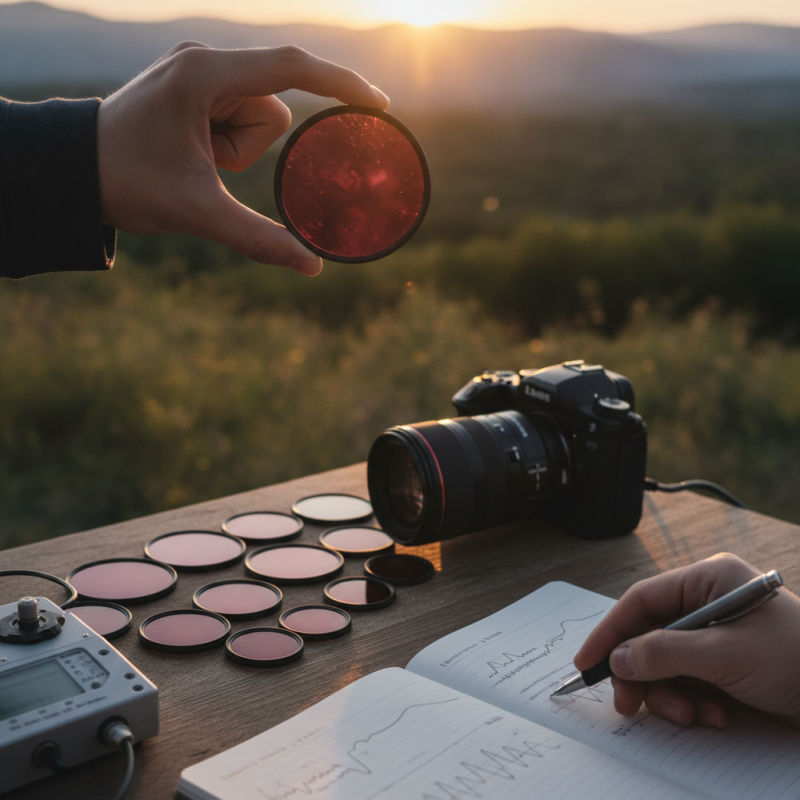
When selecting the right infrared (IR) filter, understanding the various types available is key. Many filters differ based on their intended use. For example, some filters are designed primarily for photography. These filters can enhance contrast and reveal details in infrared photography. Other filters are aimed at scientific applications, such as environmental monitoring or medical imaging.
Not all filters are created equal. Some may block certain wavelengths more effectively than others. This can affect the clarity and richness of the captured images. Enthusiasts might find specific filters that meet their artistic vision, while professionals often need filters that provide precise data integrity. It’s essential to evaluate each type based on your needs and goals.
Finding the perfect IR filter can be challenging. An optimal choice should complement your equipment and intended outcomes. Consider experimenting with various filters to better understand their effects. Sometimes, a less expensive filter can yield surprisingly good results. Embrace the learning curve in this selection process, as it can lead to unexpected advantages. Balancing quality and cost remains crucial in this journey.
Choosing the right IR filter can significantly impact your imaging results. When making your selection, consider key features that suit your specific needs. One important aspect is the wavelength range. Different filters cater to different applications. If you need high-pass filters, ensure they block visible light effectively while allowing IR light to pass through.
Another essential feature is the filter's optical density. Filters with high optical density provide better protection against unwanted light. This is crucial for accurate imaging in low-light environments. Pay attention to the material used in the filter. Glass filters often provide better durability and reliability than plastic ones. However, they may be heavier and more expensive.
Tips: Evaluate your specific needs before purchasing. Think about how you'll use the filter. If you work in variable weather conditions, consider filters that withstand harsh environments. Also, read reviews from professionals. Their experiences can offer valuable insights. Don't rush your decision; sometimes, a lower-cost solution may meet your requirements. Experimenting with different filters can lead to better understanding and improved results.
When choosing an IR filter, compatibility with your imaging system is crucial. Each imaging system has specific spectral sensitivity. Understanding this can help narrow down your options. Not all filters work well with every camera sensor. It’s vital to check the wavelengths each filter transmits and blocks.
Consider the application. A filter suitable for night vision may not be appropriate for thermal imaging. Evaluating how the filter interacts with your setup can reveal potential issues. Look for any reflections or distortions caused by the filter in your imaging system. These might be subtle yet significantly affect image quality. Testing different filters can provide insights into what performs best.
Reflect on the limitations of your current setup. Some systems may not have sufficient sensitivity across the IR spectrum. This might restrict your choice of filters. It’s worth exploring what adjustments can be made, if needed. Balancing the specific filter characteristics against your imaging goals will lead to better results. In the end, the perfect filter might require some compromises.
When selecting infrared (IR) filters, cost-effectiveness becomes a significant factor. Understanding your specific needs is essential. Some filters offer high performance but come with a steep price. Others provide adequate results at a more affordable cost. Balancing your budget with the required quality is crucial.
Tips: Consider the specific applications you have in mind. Are you focused on photography, night vision, or scientific research? Each use case demands different characteristics from an IR filter. Research various options and read user reviews to gauge performance and longevity.
Inexpensive filters may not always meet your needs. Users often discover they must replace these filters sooner than expected. This leads to additional costs over time. Evaluate your options carefully to choose wisely. Aim for filters that balance initial price and durability.
Having the right filter can enhance image quality and color accuracy. Take the time to understand the specifications of each filter you are considering. Investing more upfront can sometimes save money in the long run. Your choices today shape your results tomorrow.
Infrared (IR) filters are essential for capturing stunning images. However, maintaining these filters is equally important. Regular cleaning ensures optimal performance. Dust and smudges can degrade image quality. Use a soft brush or lens cloth. Avoid harsh chemicals. This protects the filter’s coating and longevity.
Environmental factors also play a role in filter care. Extreme temperatures and humidity can cause damage. Store filters in cases to prevent scratches. A climate-controlled environment is ideal for long-term storage. Avoid direct sunlight exposure for extended periods. UV light can negatively affect some filter materials.
Finally, regular inspection is crucial. Check for any signs of wear or damage. Cracks or fogging indicate it might be time for a replacement. Some reports suggest that 25% of photographers neglect filter maintenance, impacting their image quality. Staying vigilant can enhance the overall lifespan and effectiveness of your IR filters.
| Filter Type | Wavelength Range (nm) | Application | Key Features | Care Tips |
|---|---|---|---|---|
| Standard IR Filter | 700 - 1100 | Photography and Thermal Imaging | High sensitivity, good transmittance | Clean with soft cloth, avoid direct sunlight |
| Narrowband IR Filter | 850 - 900 | Spectroscopy and Remote Sensing | High selectivity, reduces background noise | Store in a case, handle with care |
| Longpass IR Filter | 950 - 1600 | Medical Imaging, Night Vision | Blocks short wavelengths, durable | Avoid scratches, use lens cleaning solution |
| Bandpass IR Filter | 1100 - 1400 | Industrial Applications, Temperature Measurement | Selects specific wavelength ranges | Use protective filters, regular inspections |
„Thanks to the LUVIR technology, the solder resist process could be switched directly from the previously used mask exposure to direct exposure. As an outstanding digital solution on the market, this technology has been able to demonstrate fast process times and superior quality on our certified conventional ink in production. This allowed us to fully digitize the solder mask process at low cost – without process or ink adjustments. An excellent benefit to our production in Rot am See.“
Ralf Göhringer (Head of Production WE Rot am See)
I would definitely recommend the Limata machine and team for a future company purchase
Michael Greenaway
Compunetics Inc.
“The Limata ldi has been amazing!! Best thing we did was buy this machine”
Richard Brady
GM
Circuitlabs
“Since 2019, we have been running the Limata X1000 LDI system (including LUVIR for solder mask imaging) in daily production as an addition to our current process with film. The machine was capable of properly exposing Taiyo PSR-4000 BN (DI) solder mask types on normal to high-copper boards using a new and unique direct imaging process. The machine operating interface is very user friendly which allowed for a quick technical training curve. The pre-registration processing reduced several seconds of production time at every print. Limata support and service staff is incomparable. They supported our team every step of the way at basically any time of the day or night, with literally, an immediate response time, customizing the software interface to best fit our Operations and needs.
We have exposed more than 8,000 prints since end of October, on various solder mask colors and some resist film panels. Limata, has proven to be very capable and innovative. They are a strong contender in the industry.
We have very much enjoyed this project, and working with the team!
Thank you Limata for the continued support and being a part of our growth.”
Bill Sezate
Vice President, GM
Summit Interconnect
As a replacement to our current contact exposure process with film, the LIMATA X2000 system including LUVIR-Technology was capable of properly exposing non-LDI solder mask types using a direct imaging process. The machine offers cutting edge software with a very intuitive operating interface which allowed for quick technician training curve. The dual drawer system combined with pre-registration processing reduced several seconds of production time at every machine cycle. Limata support and service staff is world class. They added software patches to keep production running at shortest possible response times, customized the software interface to best fit our in-house Operations system, and even wrote a step-by-step machine processing manual. As a result of the project, we have exposed more than 16,000 times on various product types and solder mask brands/colors. Limata, in a very short timeframe as a company, has definitely shown they are truly innovative and will be challenging the industry of direct imaging for the top spot.
Kevin Beattie
Process Engineer
TTM Technologies
Forest Grove Division
