Choosing the right Large Tractor is crucial for effective farming. Renowned agricultural expert John Harrison once said, "A well-chosen large tractor can transform your farming efficiency." This statement emphasizes the importance of making an informed decision. Large tractors are an investment that can either enhance productivity or become a burden.
Understanding your farming needs is vital. Consider factors like soil type, field size, and task requirements. Each farm is unique, and what works for one may not work for another. The right large tractor should align with specific operational demands. Think about the horsepower, versatility, and attachments available. Getting it wrong can lead to inefficiency and increased costs.
Selecting a large tractor also requires reflecting on maintenance and support options. A reliable after-sales service can prevent headaches down the road. Additionally, test driving models can provide valuable insights. Be mindful—sometimes, the most expensive option is not the best fit. Careful analysis of all elements can lead to better decisions and increased agricultural success.
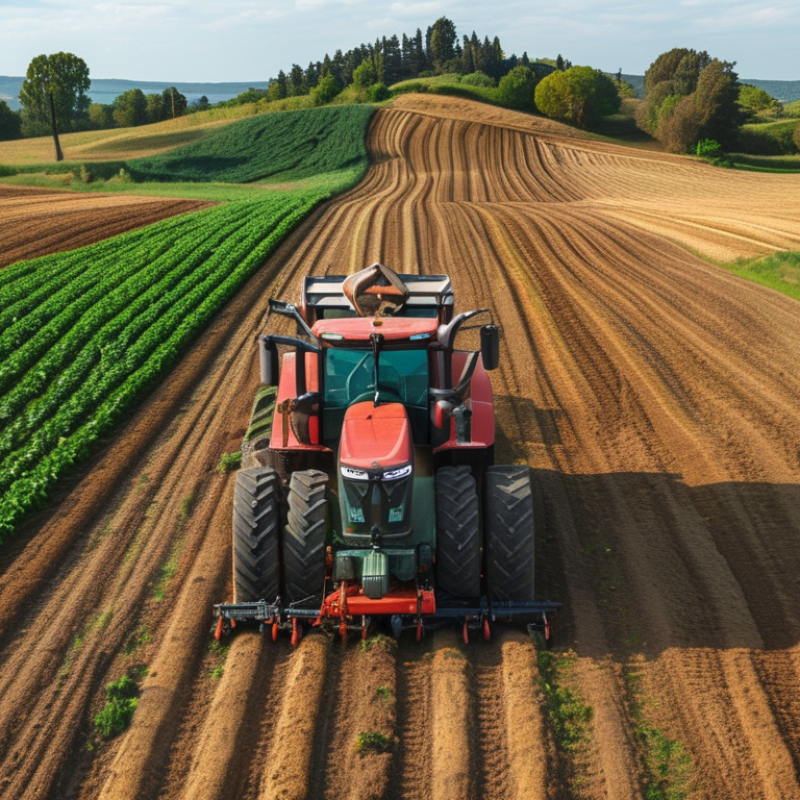
Choosing the right large tractor for your farming operations involves critical factors. It’s essential to assess your specific farming needs, including land size, terrain type, and crop varieties. Data from the American Society of Agricultural and Biological Engineers (ASABE) indicates that larger tractors can enhance productivity. However, the right size is crucial. Oversizing can lead to soil compaction.
Power and horsepower are significant considerations. Farmers should evaluate the engine specifications and ensure adequate power for tasks like plowing and hauling. According to a report by the National Agricultural Statistics Service (NASS), tractors with 100-200 horsepower are becoming increasingly common, catering to diverse farming practices.
Tip: Research local rental options. Testing different tractor models helps in making an informed decision.
Another vital aspect is fuel efficiency. A tractor that uses less fuel cuts operational costs. The USDA reports that compact tractors may be less fuel-efficient than larger models. However, larger machines can also have higher maintenance needs. Finding a balance is essential.
Tip: Keep in mind the resale value. Tractors depreciate, but certain features can retain value.
Evaluate the technological features as well. Advanced systems can make operations smoother but may come with a learning curve. Balancing technology, power, and size is key to selecting the best tractor for your farm.
Choosing the right large tractor involves understanding its horsepower and power requirements for your specific crops. Horsepower (HP) is crucial in determining how effectively a tractor can perform tasks like tilling, planting, and harvesting. According to the USDA, a farm may require anywhere from 30 to 50 HP per row for efficient crop production. This means understanding the scale and type of farming operation you have is vital.
When evaluating horsepower needs, consider soil type, crop type, and field conditions. For example, heavier soils may require more power to maneuver through effectively. A report by the American Society of Agricultural and Biological Engineers suggests that optimizing your tractor's horsepower based on these factors can improve fuel efficiency and reduce operational costs.
Tips: Always assess your annual crop yield history. This data can help fine-tune your horsepower needs. It’s also wise to consult local agricultural extension services for tailored advice. Remember, too much horsepower can lead to soil compaction and inefficiencies, while too little can affect productivity, making it essential to find a balance that fits your farming practices.
When selecting a large tractor, size and maneuverability play crucial roles in field operations. A tractor that is too large may struggle in tighter spaces, such as between rows of crops or around trees. It's important to evaluate your specific land layout and crop type when making your choice.
Maneuverability affects efficiency during planting, harvesting, and maintenance tasks. Tractors with smaller turning radii can navigate tighter fields, reducing damage to crops and soil. Conversely, a tractor with a larger size may provide more horsepower but can compromise agility. Reflecting on these aspects can help make an informed decision.
The balance between size and function requires careful consideration. It's easy to underestimate the impact of maneuverability. Choosing a machine that is too powerful may lead to operational challenges. Assessing your farming needs and field characteristics is essential. Engaging with local extension services or experienced farmers can provide valuable insights and help avoid common pitfalls.
When selecting a large tractor, attachment compatibility is crucial. A versatile tractor can handle various implements. According to a report by the Agricultural Engineering Society, approximately 75% of tractor users value adaptability in their equipment. This versatility can optimize farm operations and enhance productivity.
Consider the types of attachments. Common options include plows, seeders, and mowers. It is essential to ensure that the tractor's specifications align with intended implements. Data shows that compatibility issues can lead to a 20% decline in efficiency. This highlights the importance of checking attachment specifications closely.
Tip: Always review the owner's manual for compatibility guidelines. This document often lists recommended attachments. It helps prevent mismatches that could damage your tractor.
Another tip is to consult with local dealers. They can provide insights into what implements work best with specific tractors. Some attachments can be costly, and incorrect choices lead to wasted investments. Exploring community forums can also be beneficial. Engaging with other farmers offers real-world insights into their experiences with equipment compatibility.
Choosing the best large tractor relies heavily on understanding fuel efficiency. A tractor with excellent fuel economy saves you money over time. Many farmers overlook this factor, focusing only on initial costs. Long-term expenses, including fuel, can deeply impact your budget.
Maintenance costs also play a critical role in the overall equation. Regular servicing ensures your tractor runs smoothly but can add up quickly. It’s essential to consider what parts are prone to wear and tear. Some tractors require frequent repairs, which can be frustrating. Analyze how much maintenance is typical for any model you're considering.
A reliable tractor should not only meet your immediate needs but also remain cost-effective in the long run. Balancing power with economy is key. Exploring community feedback on operational costs can guide you. Be prepared for potential pitfalls, and weigh them carefully against your farming hopes and dreams.
| Tractor Model | Fuel Efficiency (MPG) | Maintenance Cost per Year ($) | Initial Purchase Price ($) | Expected Lifespan (Years) |
|---|---|---|---|---|
| Model A | 8.0 | 1,200 | 45,000 | 15 |
| Model B | 7.5 | 1,500 | 50,000 | 20 |
| Model C | 9.0 | 1,000 | 42,000 | 18 |
| Model D | 6.5 | 2,000 | 40,000 | 12 |
„Thanks to the LUVIR technology, the solder resist process could be switched directly from the previously used mask exposure to direct exposure. As an outstanding digital solution on the market, this technology has been able to demonstrate fast process times and superior quality on our certified conventional ink in production. This allowed us to fully digitize the solder mask process at low cost – without process or ink adjustments. An excellent benefit to our production in Rot am See.“
Ralf Göhringer (Head of Production WE Rot am See)
I would definitely recommend the Limata machine and team for a future company purchase
Michael Greenaway
Compunetics Inc.
“The Limata ldi has been amazing!! Best thing we did was buy this machine”
Richard Brady
GM
Circuitlabs
“Since 2019, we have been running the Limata X1000 LDI system (including LUVIR for solder mask imaging) in daily production as an addition to our current process with film. The machine was capable of properly exposing Taiyo PSR-4000 BN (DI) solder mask types on normal to high-copper boards using a new and unique direct imaging process. The machine operating interface is very user friendly which allowed for a quick technical training curve. The pre-registration processing reduced several seconds of production time at every print. Limata support and service staff is incomparable. They supported our team every step of the way at basically any time of the day or night, with literally, an immediate response time, customizing the software interface to best fit our Operations and needs.
We have exposed more than 8,000 prints since end of October, on various solder mask colors and some resist film panels. Limata, has proven to be very capable and innovative. They are a strong contender in the industry.
We have very much enjoyed this project, and working with the team!
Thank you Limata for the continued support and being a part of our growth.”
Bill Sezate
Vice President, GM
Summit Interconnect
As a replacement to our current contact exposure process with film, the LIMATA X2000 system including LUVIR-Technology was capable of properly exposing non-LDI solder mask types using a direct imaging process. The machine offers cutting edge software with a very intuitive operating interface which allowed for quick technician training curve. The dual drawer system combined with pre-registration processing reduced several seconds of production time at every machine cycle. Limata support and service staff is world class. They added software patches to keep production running at shortest possible response times, customized the software interface to best fit our in-house Operations system, and even wrote a step-by-step machine processing manual. As a result of the project, we have exposed more than 16,000 times on various product types and solder mask brands/colors. Limata, in a very short timeframe as a company, has definitely shown they are truly innovative and will be challenging the industry of direct imaging for the top spot.
Kevin Beattie
Process Engineer
TTM Technologies
Forest Grove Division
