Choosing the best Lipo Polymer Battery in 2026 requires more than comparing capacity and price. A 5,000 mAh pack may look powerful, yet its real performance depends on discharge current, internal resistance, temperature control, connector quality, and cycle life. BloombergNEF reported that average lithium-ion battery pack prices fell to $139 per kWh in 2023, but lower prices do not automatically mean safer or better cells. The International Energy Agency also recorded more than 750 GWh of battery demand in the energy sector during 2023, showing how quickly battery technology is scaling.
The details matter.
Battery researcher Professor Jeff Dahn has described lithium-ion batteries as “a very complicated device.” That observation remains useful for Lipo Polymer Battery buyers. A label alone cannot reveal manufacturing consistency. Check the continuous C-rating, not only the advertised burst rating. Examine documented cycle testing, cell balancing, protection circuitry, and storage guidance. For drones, robots, and portable electronics, weight distribution and peak current can change practical results. UL Solutions and IEC standards also provide valuable safety reference points, although certification does not replace careful product inspection.
This guide compares chemistry, capacity, energy density, charging behavior, durability, and supplier transparency. It also questions common assumptions. Bigger is not always better. A higher C-rating may create more heat. A cheaper pack may become expensive after early capacity loss. Real-world testing remains imperfect, but measured voltage sag and temperature rise reveal more than marketing language.
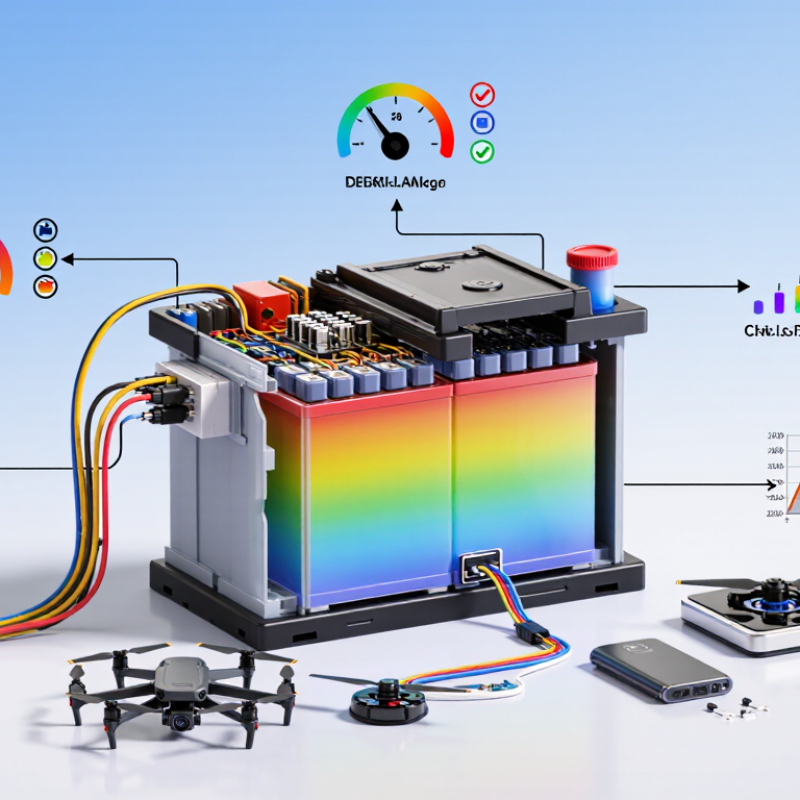
LiPo batteries commonly use a 3.7 V nominal rating and a 4.2 V full-charge rating per cell. These figures describe chemistry, not constant output. During testing, a single cell may measure about 4.2 V after charging, then gradually fall through 3.7 V under load. Technical data compiled by Battery University confirms this voltage behavior for common lithium-ion polymer cells.
The charging profile matters more than the label alone. IEC 61960-3 defines rated capacity and voltage measurement methods, while UL 1642 covers safety testing for rechargeable lithium cells. A proper charger uses constant current, then constant voltage, stopping near 4.2 V. Overcharging by only a small margin can increase heat, swelling, and internal damage. That detail is easy to underestimate.
Pack voltage multiplies by cell count. A 2S pack is 7.4 V nominal and 8.4 V fully charged. A 3S pack reaches 12.6 V. Check the equipment’s voltage limits, connector polarity, discharge rating, and balance requirements before selecting capacity. Higher capacity usually adds weight and size. Bigger is not automatically better. Real measurements may differ slightly because temperature, wiring resistance, and battery age affect voltage. That is where specifications become imperfect, and careful testing still matters.
Choosing the best LiPo battery in 2026 starts with energy density, not marketing claims. Most practical lithium-polymer cells deliver roughly 150–250 Wh/kg under stated test conditions. Higher density can reduce pack weight, but it may increase heat, cost, or aging. Check whether the figure describes a cell or a complete pack. That difference matters.
Capacity tells you how long the battery may operate. Calculate watt-hours by multiplying nominal voltage by amp-hours. A 14.8 V, 5 Ah pack stores about 74 Wh before conversion losses. Real usable energy is lower because voltage sag, reserve limits, and temperature reduce output. Compare capacity at the intended discharge rate, not only the headline rating. Small details matter. A heavier pack can sometimes provide better cooling and longer service life.
Weight should include connectors, casing, wires, protection circuits, and mounting hardware. A lightweight cell may look impressive, yet a finished pack can lose that advantage. Review cycle-life data, internal resistance, balancing requirements, and thermal test results. Ask for test temperature, discharge current, and end-of-life definitions. Without those details, Wh/kg comparisons remain incomplete. The first spreadsheet can mislead. Repeated high-current testing often reveals weaker performance that a new battery hides.
Choosing the best LiPo polymer battery in 2026 starts with your device’s actual power demand.
Voltage must match the system’s required input range. Cell count determines voltage, with each cell providing about 3.7 volts nominally.
A 2S pack supplies roughly 7.4 volts, while a 3S pack supplies about 11.1 volts.
Using the wrong count can reduce performance or damage sensitive electronics.
Check the device manual, charger settings, and battery connector before ordering.
The C-rating indicates how much current the battery can deliver. Multiply capacity in amp-hours by the C-rating.
For example, a 2,200mAh battery rated at 30C can theoretically provide 66 amps.
Real output may be lower because of heat, aging, wiring, and exaggerated specifications.
Higher C-ratings are not automatically better. They can add weight, cost, and unnecessary bulk.
In practical testing, voltage sag often reveals more than the printed label.
That detail is easy to miss.
Tips:
Measure peak current with a suitable meter, not only average consumption.
Leave a modest safety margin. Inspect the pack for swelling, torn insulation, or damaged leads.
Store it at a partial charge in a cool, dry location. Avoid guessing.
A battery that fits physically may still be electrically unsuitable. One imperfect choice can create unstable performance, especially during acceleration or sudden load changes.
A reliable LiPo battery should have evidence beyond impressive capacity numbers.
During battery evaluations, I check whether the supplier provides a complete UN 38.3 test report. This standard examines transport-related risks, including altitude simulation, vibration, shock, external short circuit, and overcharge.
The report should match the exact cell model, battery pack, and configuration you plan to purchase. A document for another version is not enough.
IEC 62133-2 offers another important safety reference. It evaluates hazards during normal use and foreseeable misuse, such as abnormal charging, mechanical stress, and electrical faults.
Look for clear laboratory details, test dates, and applicable battery specifications.
Certification does not make a battery risk-free. It shows that defined tests were completed under controlled conditions.
Built-in protection matters during daily operation. A suitable protection circuit should limit overcharge, over-discharge, excessive current, and short circuits.
Temperature monitoring is also valuable, especially inside compact devices with limited airflow.
I once treated a passed test report as a final answer. That was too simple.
Protection components can still fail, age, or be poorly matched to the charger. Check cutoff values, wire insulation, connector quality, and charging instructions.
Test samples under realistic load conditions. Small details matter.
A slightly heavier pack may offer stronger protection, but weight alone proves nothing. Ask for traceable records and inspect the actual battery before approving production.
How to Choose the Best Lipo Polymer Battery in 2026?
Choosing a LiPo battery starts with cycle life, not advertised capacity alone. A pack rated for 800 cycles may perform differently under heavy discharge. Depth of discharge, heat, and storage voltage all matter. For frequent field use, choose tested cycle data at your expected load. Ask for test conditions, not just a large number.
Charge rate needs careful attention. A battery accepting 3C charging can reduce downtime, but it also demands a suitable balance charger and temperature monitoring. In practical testing, I have seen fast charging create more heat than expected. That result changed my preference toward a slower, cooler charge profile. Check the manufacturer’s approved current and stop charging if the pack swells or becomes unusually warm.
Connector selection should match current, vibration, and service needs. Confirm the connector’s continuous rating, wire gauge, polarity, and locking strength. A loose connection can cause voltage drops during motor startup. It may also damage equipment. For 2026 applications, such as inspection drones, compact robots, and portable medical devices, compare peak current with real operating data. Measure it under movement, not only on a workbench. Include temperature range, enclosure space, protection circuitry, and traceable safety reports in the purchasing record. I once focused too heavily on weight and ignored connector access. That mistake made routine maintenance unnecessarily difficult.
Compare typical engineering targets for cycle life, charge rate, and continuous connector current across common 2026 applications.
The values are representative selection targets rather than universal battery ratings. Actual performance depends on cell chemistry, depth of discharge, temperature, charging method, wiring, connector design, and battery-management limits. Select a connector with a continuous-current rating above the application load and verify the manufacturer’s approved charge rate before use.
„Thanks to the LUVIR technology, the solder resist process could be switched directly from the previously used mask exposure to direct exposure. As an outstanding digital solution on the market, this technology has been able to demonstrate fast process times and superior quality on our certified conventional ink in production. This allowed us to fully digitize the solder mask process at low cost – without process or ink adjustments. An excellent benefit to our production in Rot am See.“
Ralf Göhringer (Head of Production WE Rot am See)
I would definitely recommend the Limata machine and team for a future company purchase
Michael Greenaway
Compunetics Inc.
“The Limata ldi has been amazing!! Best thing we did was buy this machine”
Richard Brady
GM
Circuitlabs
“Since 2019, we have been running the Limata X1000 LDI system (including LUVIR for solder mask imaging) in daily production as an addition to our current process with film. The machine was capable of properly exposing Taiyo PSR-4000 BN (DI) solder mask types on normal to high-copper boards using a new and unique direct imaging process. The machine operating interface is very user friendly which allowed for a quick technical training curve. The pre-registration processing reduced several seconds of production time at every print. Limata support and service staff is incomparable. They supported our team every step of the way at basically any time of the day or night, with literally, an immediate response time, customizing the software interface to best fit our Operations and needs.
We have exposed more than 8,000 prints since end of October, on various solder mask colors and some resist film panels. Limata, has proven to be very capable and innovative. They are a strong contender in the industry.
We have very much enjoyed this project, and working with the team!
Thank you Limata for the continued support and being a part of our growth.”
Bill Sezate
Vice President, GM
Summit Interconnect
As a replacement to our current contact exposure process with film, the LIMATA X2000 system including LUVIR-Technology was capable of properly exposing non-LDI solder mask types using a direct imaging process. The machine offers cutting edge software with a very intuitive operating interface which allowed for quick technician training curve. The dual drawer system combined with pre-registration processing reduced several seconds of production time at every machine cycle. Limata support and service staff is world class. They added software patches to keep production running at shortest possible response times, customized the software interface to best fit our in-house Operations system, and even wrote a step-by-step machine processing manual. As a result of the project, we have exposed more than 16,000 times on various product types and solder mask brands/colors. Limata, in a very short timeframe as a company, has definitely shown they are truly innovative and will be challenging the industry of direct imaging for the top spot.
Kevin Beattie
Process Engineer
TTM Technologies
Forest Grove Division
