Choosing the right Millet color sorter can significantly impact the quality of your production. Industry expert Dr. Emily Chen, a leading figure in agricultural technology, once stated, "The right millet color sorter can enhance efficiency and improve product quality." This highlights the importance of making an informed decision.
When selecting a millet color sorter, consider your specific needs. Different sorters vary in technology, capacity, and accuracy. Investing in the wrong model could lead to increased waste and reduced efficiency. Practical features, such as adjustable parameters for different millet varieties, can greatly improve sorting outcomes.
It's also vital to assess the support and service from manufacturers. A good relationship with suppliers ensures your sorter remains operational. Issues can arise unexpectedly, and prompt assistance is crucial. In the end, the best choice depends on understanding your particular requirements and researching the options available in the market.
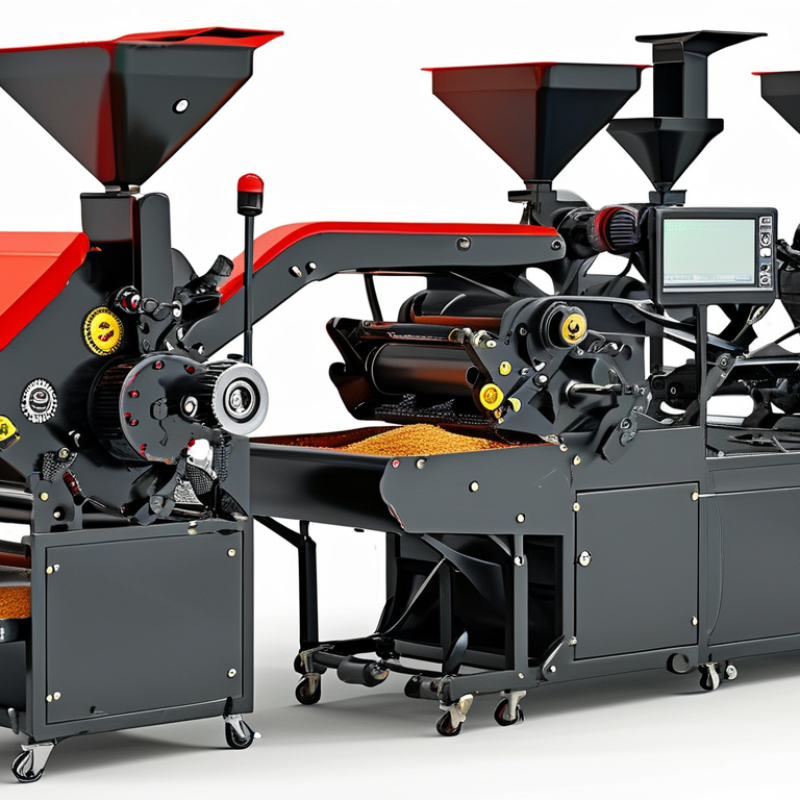
Millet color sorters play a crucial role in agriculture. They help farmers maintain grain quality, ensuring consumers receive the best products. Sorting millet by color allows for the removal of impurities, such as stones and discolored grains. This process can significantly enhance the overall quality of the final product.
In today’s competitive market, efficient sorting can lead to greater profits. The demand for high-quality millet is ever-increasing. Farmers must adapt to meet this demand. However, choosing the right color sorter can be challenging. Many models are available, each offering different features. A thorough understanding of your specific needs is vital.
Farmers should consider machine capacity, sorting speed, and technology used. Experience in selecting the right equipment is essential. Testing different machines may reveal unexpected results. Some models may underperform, requiring adjustments in processes. Effective sorting not only improves market value but also builds trust with buyers. Investing time in research can lead to better decision-making.
When selecting a millet color sorter, there are several key features to consider. First, assess the machine's detection capabilities. A more advanced sorter can distinguish between subtle color variations, which is crucial for high-quality output. Look for models that offer adjustable sensitivity settings. This flexibility allows you to customize the sorting process based on your specific millet variety.
Another important feature is the sorting speed. If you have a large volume of millet to process, efficiency matters. Many machines can sort thousands of kilograms per hour. Ensure the model you choose aligns with your production needs. Additionally, consider the machine's ease of use and maintenance. User-friendly interfaces and straightforward cleaning processes can save you time and reduce operational hiccups.
Finally, evaluate the build quality and durability of the sorter. Investing in a robust machine can lead to fewer breakdowns and longer service life. It's also wise to check for available support and warranty options. While many machines boast incredible specifications, real-world performance may reveal shortcomings. Take the time to read user reviews and testimonials to gain insight into their experiences. Ensuring that the machine fits your unique needs will lead to successful millet processing.
When evaluating millet color sorters, consider the technology behind each type. Most devices use optical sensors to identify color differences. Different models vary in their efficiency and speed. Some are designed for small-scale operations, while others cater to larger industrial uses. Assessing your output needs is crucial.
For optimal performance, look at the sorting precision claimed by manufacturers. It's essential to balance product quality with cost. Lower-priced options might sacrifice some features. Reliability is key in production environments, so ensure the equipment meets your needs for consistency and robustness.
**Tip:** Always seek reviews from users in similar industries. Their insights can guide your decision.
Another consideration is the ease of maintenance. Some models require frequent servicing. Evaluate if this fits your operational capabilities. A reliable color sorter should minimize downtime and maintenance costs. Checking technical support can also save time and resources.
**Tip:** Don’t hesitate to ask for a demo. Real-world testing can showcase performance and ease of use.
| Type | Detection Technology | Capacity (kg/h) | Power (kW) | Price Range ($) |
|---|---|---|---|---|
| CCD Color Sorter | CCD Camera | 200-2000 | 0.75-2.5 | 5000-15000 |
| Laser Sorter | Laser Detection | 100-1000 | 1.0-3.0 | 8000-20000 |
| Infrared Sorter | Infrared Sensors | 150-1800 | 0.5-2.0 | 6000-12000 |
| Vibrating Sorter | Mechanical Vibration | 50-500 | 0.5-1.5 | 3000-7000 |
When choosing a millet color sorter, budget plays a crucial role. Understanding your financial limits helps narrow down options. It’s essential to balance cost and functionality. Higher-priced sorters often provide better efficiency. However, some lower-cost models can still perform adequately, but they may lack advanced features.
Cost-effectiveness is more than just the purchase price. Consider maintenance and operational costs. Some models require more frequent servicing, increasing overall expenses. Analyzing energy consumption is also vital. A machine that uses less power over time saves money. Additionally, look for warranties and customer support when evaluating expenses.
It can be tempting to focus on features. However, each investment must be viable for the business. Prioritize the features that match your production needs, not just the latest technology. Always reflect on how a choice aligns with your objectives. This thoughtful approach can lead to better long-term results.
When selecting a reliable millet color sorter supplier, consider their maintenance and support offerings. This aspect often gets overlooked but is crucial for long-term efficiency. A good supplier should provide comprehensive technical assistance. This includes timely repairs and troubleshooting guidance.
Understand the importance of availability. Aim for suppliers who offer 24/7 support. If an issue arises, you need immediate help to prevent production delays. They should also provide user manuals and training sessions. This empowers your staff to resolve minor issues independently.
Here are some tips for evaluating suppliers. Check online reviews and testimonials. Past customers can reveal their experiences. Look for suppliers who have a track record in your industry. Longevity can indicate reliability. Also, consider their warranty and parts availability. A solid warranty reflects confidence in their product quality. Having access to spare parts ensures your operations run smoothly.
„Thanks to the LUVIR technology, the solder resist process could be switched directly from the previously used mask exposure to direct exposure. As an outstanding digital solution on the market, this technology has been able to demonstrate fast process times and superior quality on our certified conventional ink in production. This allowed us to fully digitize the solder mask process at low cost – without process or ink adjustments. An excellent benefit to our production in Rot am See.“
Ralf Göhringer (Head of Production WE Rot am See)
I would definitely recommend the Limata machine and team for a future company purchase
Michael Greenaway
Compunetics Inc.
“The Limata ldi has been amazing!! Best thing we did was buy this machine”
Richard Brady
GM
Circuitlabs
“Since 2019, we have been running the Limata X1000 LDI system (including LUVIR for solder mask imaging) in daily production as an addition to our current process with film. The machine was capable of properly exposing Taiyo PSR-4000 BN (DI) solder mask types on normal to high-copper boards using a new and unique direct imaging process. The machine operating interface is very user friendly which allowed for a quick technical training curve. The pre-registration processing reduced several seconds of production time at every print. Limata support and service staff is incomparable. They supported our team every step of the way at basically any time of the day or night, with literally, an immediate response time, customizing the software interface to best fit our Operations and needs.
We have exposed more than 8,000 prints since end of October, on various solder mask colors and some resist film panels. Limata, has proven to be very capable and innovative. They are a strong contender in the industry.
We have very much enjoyed this project, and working with the team!
Thank you Limata for the continued support and being a part of our growth.”
Bill Sezate
Vice President, GM
Summit Interconnect
As a replacement to our current contact exposure process with film, the LIMATA X2000 system including LUVIR-Technology was capable of properly exposing non-LDI solder mask types using a direct imaging process. The machine offers cutting edge software with a very intuitive operating interface which allowed for quick technician training curve. The dual drawer system combined with pre-registration processing reduced several seconds of production time at every machine cycle. Limata support and service staff is world class. They added software patches to keep production running at shortest possible response times, customized the software interface to best fit our in-house Operations system, and even wrote a step-by-step machine processing manual. As a result of the project, we have exposed more than 16,000 times on various product types and solder mask brands/colors. Limata, in a very short timeframe as a company, has definitely shown they are truly innovative and will be challenging the industry of direct imaging for the top spot.
Kevin Beattie
Process Engineer
TTM Technologies
Forest Grove Division
