Choosing a Modular Power Wall is not simply a matter of buying the largest battery. The right system should match your household’s daily use, backup priorities, and plans for future expansion. Industry data shows why storage deserves careful attention: the International Energy Agency’s Batteries and Secure Energy Transitions (2024) reports that battery storage additions in the power sector reached about 42 GW in 2023, more than double the previous year. That figure describes grid-scale growth, not household sales, but it reflects the wider shift toward flexible electricity storage.
For a home, practical details matter more than headline capacity. Compare usable kilowatt-hours, continuous and peak power, expansion limits, inverter compatibility, operating temperature, warranty terms, and safety certifications. A battery may run lights and a refrigerator, yet struggle with a heat pump or well pump starting at the same time. That matters. NREL’s Storage Futures Study also examines how storage needs may grow across the U.S. electricity system; its projections are useful context, not a promise about any single home or product. Numbers can mislead. Actual performance depends on installation, local conditions, and how the system is operated. Even a careful comparison can miss an awkward detail, such as whether added modules require extra hardware. This guide explains how to weigh those trade-offs, check manufacturer claims, and choose a Modular Power Wall that fits real household needs—not just a polished specification sheet.
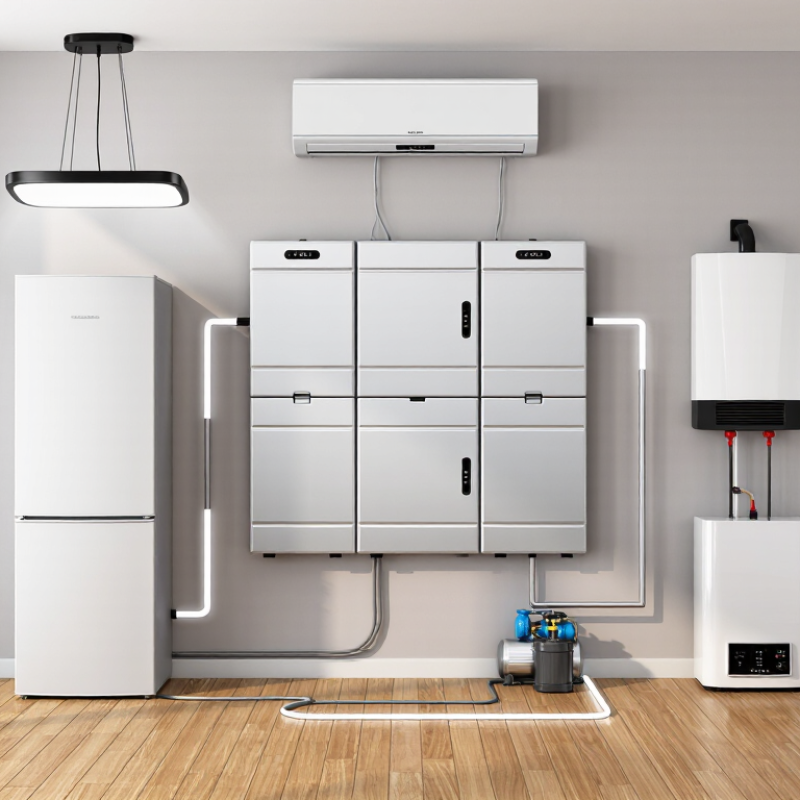
Choosing a modular power wall starts with a load list, not the biggest battery available. The U.S. Energy Information Administration reported average U.S. household electricity use of 10,791 kWh in 2022, or roughly 29.6 kWh daily. That matters. It is a household average, not a backup target. NREL’s End-Use Load Profiles for the U.S. Building Stock shows why: demand varies across homes and hours, so daily averages can hide evening peaks.
For a 5–20 kWh system, list essential loads such as a refrigerator, router, selected lights, and a heating or circulation pump. Add each device’s watts multiplied by expected run hours, then divide by 1,000 for kWh. A combined 500-watt load uses 2 kWh in four hours. A 5 kWh battery could therefore cover about ten hours at that load in ideal conditions; usable capacity, inverter losses, and startup surges shorten that estimate. Check both continuous and surge ratings.
I would question my own list after watching one ordinary evening at home. People often forget a pump, device chargers, or the extra runtime of a refrigerator. Keep a reserve for uncertain needs, and compare the battery’s usable kWh—not just its advertised capacity—with your calculated total. A 20 kWh system may offer longer coverage, but it cannot compensate for an undersized inverter or an unrealistic load estimate.
When choosing a modular power wall, compare continuous output before peak output. Continuous power, measured in kilowatts, indicates what the system can supply steadily to appliances. Surge power covers brief startup loads, such as a refrigerator compressor or well pump. Check how many seconds the unit can sustain that peak. A large surge figure without a duration can be misleading. Add up the running and startup demands of the devices you expect to use together, then leave practical headroom.
Efficiency affects how much stored energy reaches your home. A quoted 85–95% round-trip efficiency means some charging energy is lost before discharge; the exact result depends on system boundaries, temperature, and operating conditions. NREL’s 2024 Annual Technology Baseline uses 85% as a round-trip-efficiency assumption for utility-scale lithium-ion storage. Treat that as a benchmark, not a guarantee for a home system. Compare AC-to-AC figures when possible, since DC-only figures may exclude inverter losses. I would not trust one headline number alone. Ask for the test conditions, usable capacity, and surge duration; small details can change the real result.
A modular power wall should be compared by energy it can actually deliver, not its headline capacity. Check the usable-kWh figure and whether it assumes a specific reserve setting. NREL’s 2024 Annual Technology Baseline uses 85% round-trip efficiency for lithium-ion storage; this is a planning assumption, not a guarantee for a particular home system. In practice, conversion losses and the battery’s operating reserve both affect the energy available overnight. A 10 kWh label is not the whole story.
Expansion needs limits, too. Ask how many modules one inverter can support, whether added units must match the original modules, and whether output power rises with capacity. More storage does not always mean more power. The U.S. Department of Energy’s 2022 Grid Energy Storage Technology Cost and Performance Assessment evaluates systems using measures such as efficiency, cycle life, and calendar life. Those measures help explain why expansion compatibility and expected use matter alongside capacity. Measure the wall space and check the electrical design before planning future modules; it is easy to overlook this step.
Read the full 10-year warranty, not just its duration. Confirm the minimum capacity retention at year ten, covered cycle or energy-throughput limits, and any temperature or installation conditions. Check who pays labor and shipping, and whether a claim leads to repair or replacement. These details can change the real value of coverage. Small print matters. A warranty may protect the battery while excluding costs that homeowners assume are included.
When choosing a modular power wall, check the exact system configuration against its UL 9540 certification. Certification applies to a tested energy-storage system, not automatically to every battery, inverter, or later-added module. Ask for the certificate and confirm that the model numbers and permitted configurations match your installation. Small differences matter.
Then review the UL 9540A test report. UL 9540A is a test method, not a product certification. It evaluates how thermal runaway may spread through cells, modules, and larger assemblies, while recording details such as temperatures, flame behavior, and gas release. EPRI’s Battery Energy Storage System Failure Event Database also shows why incident evidence matters: failures can involve fire, explosion, or toxic gases, so installation plans should address spacing, ventilation, detection, and emergency access—not just battery capacity. A report from a smaller configuration may not represent a larger modular array. That part deserves a second look.
Tips: Request the full UL 9540A report, not a one-page claim. Check tested module count, enclosure, and installation conditions. Ask a qualified installer to compare these details with your site plan. If key information is missing, pause before purchase.
How to Choose the Best Modular Power Wall?
Start with the inverter, not the battery’s advertised capacity. Check the inverter’s permitted DC voltage range, continuous and peak current, communication protocol, and firmware requirements. A battery may share the right voltage yet fail to communicate with the inverter. Confirm the exact battery-inverter pairing in current manufacturer documentation, including backup operation and system expansion limits. Small details matter: a connector that fits is not proof of compatibility.
NFPA 855 addresses the installation of stationary energy storage systems, but requirements depend on system design and locally adopted codes. Verify the applicable edition and review clearances, equipment location, fire protection, access, and commissioning documents with a qualified installer and local authority. Do not assume one wall-mounted layout suits every garage. EIA forecast U.S. battery storage capacity would nearly double in 2024, from 15.5 GW to 30 GW, reflecting fast-changing deployment needs. That figure is a forecast, not a guarantee. Ask for the system’s safety listing and installation documentation, then check that the proposed layout matches both. One uncomfortable point: product sheets can leave site-specific constraints unclear, so request written confirmation before ordering.
Illustrative example only: the battery’s 44.8–57.6 V operating window sits within the inverter’s 40–60 V DC input range, indicating voltage-range overlap—not complete system compatibility. Confirm the actual equipment’s voltage limits, current and power ratings, and communication requirements. NFPA 855 installation requirements depend on the system and locally adopted codes; confirm applicable provisions, permits, and fire-code requirements with the authority having jurisdiction.
„Thanks to the LUVIR technology, the solder resist process could be switched directly from the previously used mask exposure to direct exposure. As an outstanding digital solution on the market, this technology has been able to demonstrate fast process times and superior quality on our certified conventional ink in production. This allowed us to fully digitize the solder mask process at low cost – without process or ink adjustments. An excellent benefit to our production in Rot am See.“
Ralf Göhringer (Head of Production WE Rot am See)
I would definitely recommend the Limata machine and team for a future company purchase
Michael Greenaway
Compunetics Inc.
“The Limata ldi has been amazing!! Best thing we did was buy this machine”
Richard Brady
GM
Circuitlabs
“Since 2019, we have been running the Limata X1000 LDI system (including LUVIR for solder mask imaging) in daily production as an addition to our current process with film. The machine was capable of properly exposing Taiyo PSR-4000 BN (DI) solder mask types on normal to high-copper boards using a new and unique direct imaging process. The machine operating interface is very user friendly which allowed for a quick technical training curve. The pre-registration processing reduced several seconds of production time at every print. Limata support and service staff is incomparable. They supported our team every step of the way at basically any time of the day or night, with literally, an immediate response time, customizing the software interface to best fit our Operations and needs.
We have exposed more than 8,000 prints since end of October, on various solder mask colors and some resist film panels. Limata, has proven to be very capable and innovative. They are a strong contender in the industry.
We have very much enjoyed this project, and working with the team!
Thank you Limata for the continued support and being a part of our growth.”
Bill Sezate
Vice President, GM
Summit Interconnect
As a replacement to our current contact exposure process with film, the LIMATA X2000 system including LUVIR-Technology was capable of properly exposing non-LDI solder mask types using a direct imaging process. The machine offers cutting edge software with a very intuitive operating interface which allowed for quick technician training curve. The dual drawer system combined with pre-registration processing reduced several seconds of production time at every machine cycle. Limata support and service staff is world class. They added software patches to keep production running at shortest possible response times, customized the software interface to best fit our in-house Operations system, and even wrote a step-by-step machine processing manual. As a result of the project, we have exposed more than 16,000 times on various product types and solder mask brands/colors. Limata, in a very short timeframe as a company, has definitely shown they are truly innovative and will be challenging the industry of direct imaging for the top spot.
Kevin Beattie
Process Engineer
TTM Technologies
Forest Grove Division
