Choosing the right Overcurrent Testing Equipment can be challenging. The market is full of options, each claiming to excel in performance. But how do you decide which one meets your specific needs? Understanding the purpose of this equipment is essential. Overcurrent testing ensures safety and reliability in electrical systems. Therefore, opting for the best equipment is crucial.
Key factors to consider include accuracy, durability, and ease of use. You may want equipment that can handle various applications. Look for product specifications that provide clarity. This can help identify which equipment aligns with your requirements. A reliable brand often indicates quality, but it is wise to read customer reviews for genuine feedback.
While many products look impressive on paper, real-world performance can differ. Test results may vary depending on the conditions. Sometimes, equipment may fall short of expectations. Reflect on your unique context. The right choice enhances both safety and efficiency, emphasizing the importance of informed decision-making.
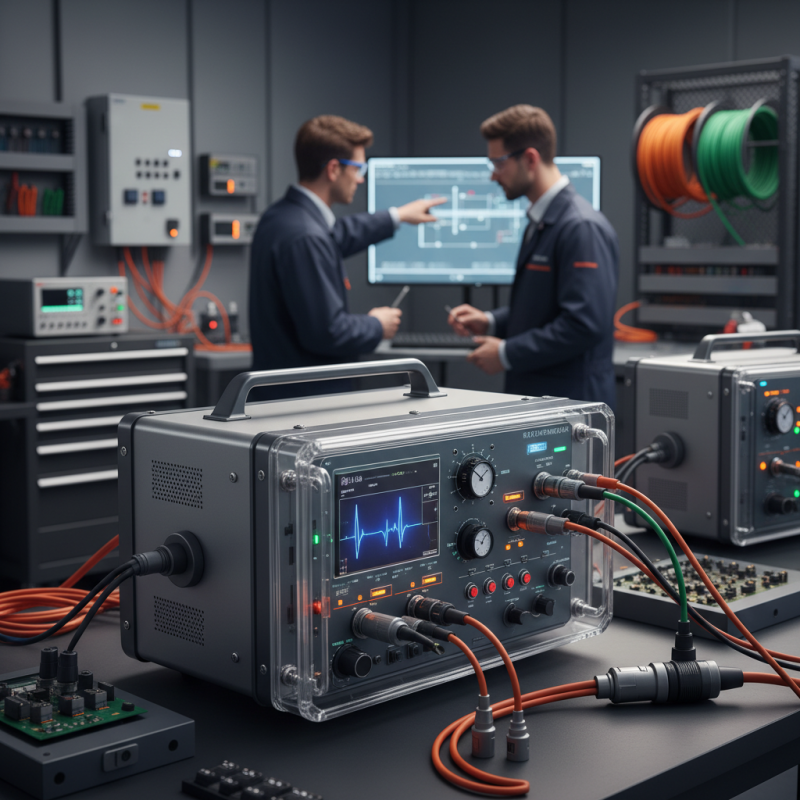
Selecting the right overcurrent testing equipment is critical for ensuring safety and reliability in electrical systems. When evaluating different options, one should consider accuracy. A good device must provide precise readings for effective testing. Calibration is essential; without it, results may be misleading. Regular checks on calibration can prevent potential faults in your electrical systems.
Another important factor is ease of use. A user-friendly interface can significantly reduce the time spent on testing. This means clear displays and accessible controls. The knowledge of how to operate the equipment properly plays a vital role in obtaining accurate data. Often, operators may overlook certain features due to complexity, leading to errors.
Moreover, portability can influence your choice. If testing occurs in various locations, lightweight and portable models are more practical. However, the trade-off might be durability. A device that’s easy to transport might not withstand harsh conditions. It’s necessary to evaluate your specific needs and environment before making a decision. Balancing these factors can be challenging but is crucial for optimal performance.
Overcurrent testing is crucial in ensuring the reliability and safety of electrical systems. Various methods are employed across industries, each suited to different applications. The primary methods include thermal testing, which measures excess heat in conductors, and electromagnetic testing, focusing on current-induced magnetic fields. According to a report from the International Electrotechnical Commission, these techniques can help identify system weaknesses before they lead to failures.
In industrial applications, routine overcurrent testing can enhance system longevity. A study by the IEEE indicates that regular testing can reduce maintenance costs by up to 30%. Facilities that incorporate advanced testing equipment can identify issues swiftly and prevent costly downtime. Additionally, the type of testing equipment selected is vital. It should match the specific needs of the facility, including its electrical capacity and operational conditions. However, improper equipment selection often leads to suboptimal results, leaving potential vulnerabilities.
Testing also requires skilled personnel. Without adequate training, the interpretation of test results can be misleading. A survey showed that 40% of electrical failures stem from human error in testing. Thus, it’s essential to invest in both quality equipment and professional training to ensure the reliability of testing protocols. By doing so, industries can better protect their assets and maintain operational efficiency.
When selecting overcurrent testing equipment, compliance with industry standards is crucial. These standards ensure that devices can withstand and accurately measure overcurrent conditions. They address safety, performance, and reliability aspects critical for various applications. Without adherence to these standards, equipment may fail in unexpected scenarios. This can lead to dangerous situations and significant financial losses.
Understanding the importance of compliance helps ensure effective testing. Specific standards guide engineers in choosing equipment tailored to their needs. Non-compliance might result in unreliable data, which can have dire consequences. The complexity of electrical systems amplifies this risk. For example, using substandard equipment can lead to miscalculations during testing. This undermines confidence in the testing results.
Investing in compliant equipment may seem costly initially. However, it often saves money long-term by reducing failures and ensuring accurate testing. Engineers should not overlook the impact of industry certifications. Properly vetted equipment can greatly minimize risks in operational settings. This vigilance is key to maintaining safety and performance.
When selecting overcurrent testing equipment, accuracy, range, and usability are critical features to consider. Accuracy ensures that the equipment delivers reliable measurements. According to industry standards, equipment with a tolerance of ±1% is preferable. This level of precision is crucial for accurate diagnostics and safety assessments.
Range is another essential factor. Testing equipment should cover various current levels. Many devices offer ranges from microamps up to several hundred amps. Selecting a device with an appropriate range prevents overload and ensures the equipment works effectively in different scenarios. A report from an industry analysis suggests that equipment should ideally accommodate at least 1.5 times the expected maximum current for versatility.
Usability should not be overlooked. Users often report challenges with complicated interfaces. The ease of operation significantly influences how quickly and accurately tests can be performed. Equipment that is intuitive and user-friendly minimizes errors. Observations show that devices with ergonomic designs and clear displays help reduce user fatigue and increase efficiency during prolonged testing sessions.
When selecting overcurrent testing equipment, balancing initial investment with long-term reliability is crucial. A recent market analysis shows that the average cost of high-quality equipment can range from $5,000 to $20,000. While lower-priced options may seem attractive, they often lead to higher maintenance costs over time. Therefore, it's essential to evaluate the total cost of ownership rather than just the sticker price.
Tips: Consider the equipment's lifespan. A device with a slightly higher upfront cost may last 10 years, whereas a cheaper one might need replacement in just 3 years. Also, check warranty terms. A longer warranty often indicates manufacturer confidence in reliability.
Furthermore, reliability in testing equipment significantly affects operational efficiency. According to industry statistics, companies face a 25% increase in downtime due to unreliable equipment. This not only impacts productivity but also leads to financial losses. A robust piece of equipment may have a higher initial cost, but its reliability can save potentially thousands in downtime.
Tips: Look for reviews and case studies from trusted sources. Data from industry reports can highlight the long-term performance of various equipment types. Engaging with professionals who have hands-on experience can also inform your decision. Always remember, a well-informed choice today saves headaches in the future.
„Thanks to the LUVIR technology, the solder resist process could be switched directly from the previously used mask exposure to direct exposure. As an outstanding digital solution on the market, this technology has been able to demonstrate fast process times and superior quality on our certified conventional ink in production. This allowed us to fully digitize the solder mask process at low cost – without process or ink adjustments. An excellent benefit to our production in Rot am See.“
Ralf Göhringer (Head of Production WE Rot am See)
I would definitely recommend the Limata machine and team for a future company purchase
Michael Greenaway
Compunetics Inc.
“The Limata ldi has been amazing!! Best thing we did was buy this machine”
Richard Brady
GM
Circuitlabs
“Since 2019, we have been running the Limata X1000 LDI system (including LUVIR for solder mask imaging) in daily production as an addition to our current process with film. The machine was capable of properly exposing Taiyo PSR-4000 BN (DI) solder mask types on normal to high-copper boards using a new and unique direct imaging process. The machine operating interface is very user friendly which allowed for a quick technical training curve. The pre-registration processing reduced several seconds of production time at every print. Limata support and service staff is incomparable. They supported our team every step of the way at basically any time of the day or night, with literally, an immediate response time, customizing the software interface to best fit our Operations and needs.
We have exposed more than 8,000 prints since end of October, on various solder mask colors and some resist film panels. Limata, has proven to be very capable and innovative. They are a strong contender in the industry.
We have very much enjoyed this project, and working with the team!
Thank you Limata for the continued support and being a part of our growth.”
Bill Sezate
Vice President, GM
Summit Interconnect
As a replacement to our current contact exposure process with film, the LIMATA X2000 system including LUVIR-Technology was capable of properly exposing non-LDI solder mask types using a direct imaging process. The machine offers cutting edge software with a very intuitive operating interface which allowed for quick technician training curve. The dual drawer system combined with pre-registration processing reduced several seconds of production time at every machine cycle. Limata support and service staff is world class. They added software patches to keep production running at shortest possible response times, customized the software interface to best fit our in-house Operations system, and even wrote a step-by-step machine processing manual. As a result of the project, we have exposed more than 16,000 times on various product types and solder mask brands/colors. Limata, in a very short timeframe as a company, has definitely shown they are truly innovative and will be challenging the industry of direct imaging for the top spot.
Kevin Beattie
Process Engineer
TTM Technologies
Forest Grove Division
