Choosing the best Recliner Massage Chair requires more than comparing prices, colors, or dramatic advertising claims. Grand View Research reported that the global massage equipment market was valued at approximately USD 6.9 billion in 2023. Fortune Business Insights also projects continued growth in the massage chair market through 2032. These figures show rising interest, but they do not prove that every chair delivers equal comfort or therapeutic value.
Fit matters most.
A reliable evaluation should examine body scanning, roller movement, massage tracks, recline angles, airbag pressure, heat settings, and noise levels. A tall user may need an extended footrest, while a shorter user may feel uncomfortable in a poorly fitted chair. Try the chair whenever possible. Ten minutes can reveal pressure points that product photographs hide.
Dr. Tiffany Field, director of the Touch Research Institute, has said, “Massage therapy can help reduce stress and anxiety.” Her observation supports relaxation benefits, but it should not replace medical advice. Research on home massage chairs remains less consistent than marketing language suggests. That is an important limitation. Buyers should consider their health conditions, daily sitting habits, warranty coverage, repair access, and return policy before purchasing. The best Recliner Massage Chair is not necessarily the most expensive model. It is the chair that fits the user’s body, comfort preferences, and realistic expectations. Check the details carefully. Small omissions can become expensive problems. Sources: Grand View Research, Massage Equipment Market Report; Fortune Business Insights, Massage Chair Market Report; Touch Research Institute, University of Miami.
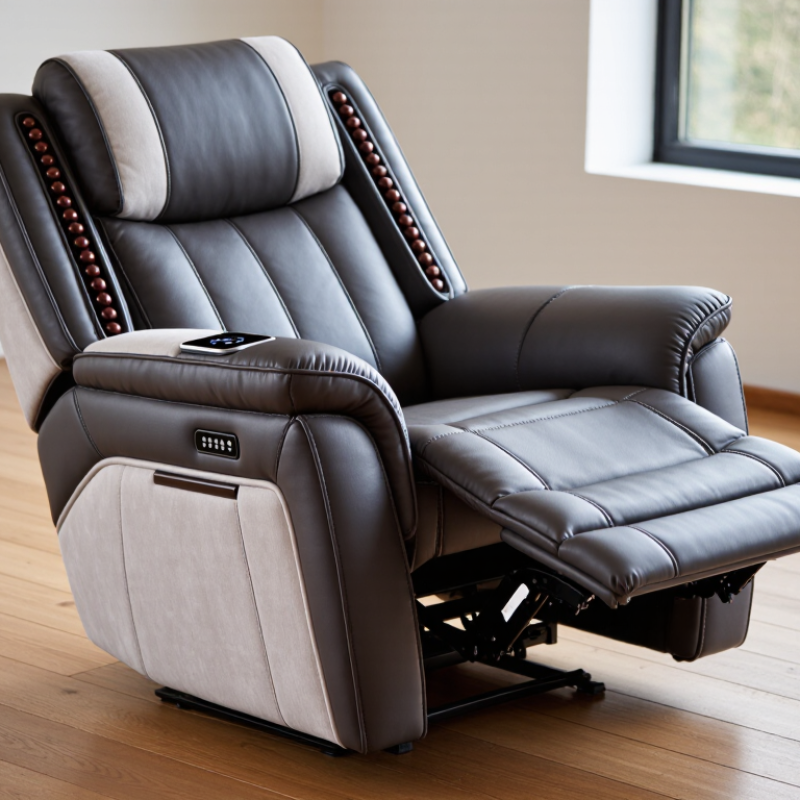
Choosing a recliner massage chair starts with its type, not its appearance. A basic 2D chair moves rollers up and down. It suits users seeking simple back relief. A 3D model adds forward movement and stronger pressure. A 4D system varies speed and rhythm, creating a more human-like massage. Zero-gravity recliners tilt the body, reducing pressure around the hips and lower back. They can feel excellent, but not every user enjoys the fixed posture.
Fortune Business Insights valued the global massage chair market at about USD 3.03 billion in 2023. Its 2024 report projects continued growth through 2032. This demand reflects broader interest in home wellness, yet market growth does not prove every chair performs equally. Check the roller track, motor noise, upholstery, and warranty terms. A chair should support your shoulders and keep your feet stable. Small gaps matter. Try it with your normal clothing.
Core features deserve closer attention. Look for adjustable intensity, body scanning, heat control, and manual zone selection. Air compression should feel firm, not painful, around the calves and arms. A 2024 Grand View Research analysis identified smart controls and connected wellness functions as important market trends. Convenient controls help, though complicated menus can discourage regular use. I once preferred a quieter chair over a stronger one. That choice surprised me. It also showed a weakness in my testing: short demonstrations can hide long-term discomfort. Users with circulation problems, pregnancy, implanted devices, or persistent pain should seek medical advice before use.
Choosing a recliner massage chair starts with your body, not its feature list. Test whether your shoulders rest naturally against the upper cushions. Your lower back should meet the lumbar zone without pushing you forward. Measure seat width, footrest length, and doorway clearance at home. Small mismatches become obvious after twenty minutes. I once underestimated calf support; the rollers felt pleasant, but my feet hovered awkwardly.
Assess the massage technique as carefully as the padding. Kneading can feel useful around tired shoulders, while rolling may provide a gentler sensation. Air compression should feel secure, never sharp or numb. Try different intensity levels with ordinary clothing. Too much pressure can leave muscles tender after a long workday. Check whether the track follows your back accurately. A fixed roller may miss shorter or taller users. Ask about the adjustment range and read the care instructions.
Comfort also depends on control. A clear remote, quick stop button, and easy posture changes matter when you are reclined. Look for removable, cleanable surfaces and sturdy stitching around high-contact areas. I would not trust a ten-minute showroom test completely. Bodies relax differently later. If possible, sit through a full session, then notice hip, neck, and calf pressure. Personal fit is imperfect science. Record what feels supportive and what merely feels impressive.
Compare each massage technique by its typical coverage, comfort adjustability, and body-fit adaptability. Higher scores indicate more useful features for general chair selection, while personal comfort and professional medical advice should remain the final considerations.
How to Choose the Best Recliner Massage Chair?
Safety functions should be checked before massage strength. Look for automatic shutoff, overheating protection, stable foot support, and a clear emergency stop. The U.S. Consumer Product Safety Commission’s recall database shows why electrical and mechanical safeguards deserve attention. A chair may feel luxurious, yet a poorly placed cable can create a real household hazard. Weight limits matter too. They are not decorative numbers. Users with circulation problems, recent surgery, or implanted medical devices should ask a qualified clinician before use.
Controls should be understandable without a manual. Large buttons, tactile feedback, and a simple remote help users adjust pressure while seated. Voice control can improve access, but it may misread commands in a noisy room. My practical test is simple: can someone change intensity, stop the rollers, and return the chair upright within seconds? If not, the interface needs work. It sounds obvious.
Convenience includes more than cup holders. Measure doorways, leave space behind the backrest, and check whether cleaning instructions are realistic. AARP’s 2021 Home and Community Preferences Survey found that 77% of adults aged 50 and older want to remain in their homes. Easy controls and low-maintenance surfaces support that goal. The World Health Organization still recommends regular physical activity, so massage should complement movement, not replace it. Claims promising complete relief deserve skepticism.
Choosing the best recliner massage chair starts with measuring the room, not browsing features. Measure the chair upright and fully reclined, then add 30–45 centimeters for safe walking space. Check doorways, stair turns, and nearby outlets. A chair that blocks a cabinet becomes inconvenient quickly. It may also remain unused.
Budget for more than the purchase price. Include delivery, assembly, electricity, cleaning supplies, and possible repairs. Grand View Research valued the global massage equipment market at about USD 6.9 billion in 2023, showing strong demand but not guaranteed value. Compare motor types, massage programs, noise levels, and maximum user weight. A low price can hide expensive service gaps. My own practical mistake would be focusing too heavily on features. Comfort and room fit usually matter more.
Warranty terms deserve careful reading. Confirm coverage for the frame, motors, remote, upholstery, labor, and shipping. Ask whether in-home service is included and how long replacement parts remain available. The U.S. Consumer Product Safety Commission emphasizes following manufacturer instructions and inspecting products for damage. Apply that habit here. Wipe touch surfaces with a manufacturer-approved cleaner, keep liquids away from controls, and inspect cables monthly. Industry growth reports provide useful context, but they cannot predict one chair’s reliability. Documenting maintenance may help if a warranty dispute occurs.
Your ideal massage chair should match your body, routine, and comfort preferences. A tall user may need an extended footrest and a longer back track. A shorter user should check whether the rollers reach the neck without pressing too firmly. Measure your room, too. A chair that reclines fully needs more space than expected.
Choose massage functions based on your actual needs. For tight shoulders after desk work, look for adjustable upper-back rollers and gentle kneading. For tired legs, air compression around the calves and feet may feel more useful. Heat can add comfort, but it should have clear temperature controls and an automatic shutoff. Stronger is not always better. Pain during a session is a warning, not proof of effectiveness.
Try the chair before buying when possible. Sit with your feet flat and your lower back supported. Test several intensity levels, not only the strongest setting. Check the remote’s labels and emergency stop function. Read the warranty and return terms carefully. One easy mistake is choosing impressive features that remain unused. A simpler chair may suit you better. People with persistent pain, circulation concerns, or recent injuries should seek qualified medical advice before regular use.
„Thanks to the LUVIR technology, the solder resist process could be switched directly from the previously used mask exposure to direct exposure. As an outstanding digital solution on the market, this technology has been able to demonstrate fast process times and superior quality on our certified conventional ink in production. This allowed us to fully digitize the solder mask process at low cost – without process or ink adjustments. An excellent benefit to our production in Rot am See.“
Ralf Göhringer (Head of Production WE Rot am See)
I would definitely recommend the Limata machine and team for a future company purchase
Michael Greenaway
Compunetics Inc.
“The Limata ldi has been amazing!! Best thing we did was buy this machine”
Richard Brady
GM
Circuitlabs
“Since 2019, we have been running the Limata X1000 LDI system (including LUVIR for solder mask imaging) in daily production as an addition to our current process with film. The machine was capable of properly exposing Taiyo PSR-4000 BN (DI) solder mask types on normal to high-copper boards using a new and unique direct imaging process. The machine operating interface is very user friendly which allowed for a quick technical training curve. The pre-registration processing reduced several seconds of production time at every print. Limata support and service staff is incomparable. They supported our team every step of the way at basically any time of the day or night, with literally, an immediate response time, customizing the software interface to best fit our Operations and needs.
We have exposed more than 8,000 prints since end of October, on various solder mask colors and some resist film panels. Limata, has proven to be very capable and innovative. They are a strong contender in the industry.
We have very much enjoyed this project, and working with the team!
Thank you Limata for the continued support and being a part of our growth.”
Bill Sezate
Vice President, GM
Summit Interconnect
As a replacement to our current contact exposure process with film, the LIMATA X2000 system including LUVIR-Technology was capable of properly exposing non-LDI solder mask types using a direct imaging process. The machine offers cutting edge software with a very intuitive operating interface which allowed for quick technician training curve. The dual drawer system combined with pre-registration processing reduced several seconds of production time at every machine cycle. Limata support and service staff is world class. They added software patches to keep production running at shortest possible response times, customized the software interface to best fit our in-house Operations system, and even wrote a step-by-step machine processing manual. As a result of the project, we have exposed more than 16,000 times on various product types and solder mask brands/colors. Limata, in a very short timeframe as a company, has definitely shown they are truly innovative and will be challenging the industry of direct imaging for the top spot.
Kevin Beattie
Process Engineer
TTM Technologies
Forest Grove Division
