
How to Choose the Best Rust Cleaning Agent?
Checking Safety, Compatibility, and Environmental Considerations
A rust cleaner should match the metal, coating, and working environment. Check the product’s safety data sheet before opening the container. It should explain hazards, ventilation needs, protective equipment, and first-aid measures. Strong acids may remove rust quickly, but they can also etch steel, weaken plated surfaces, or damage nearby paint. Speed is not everything.
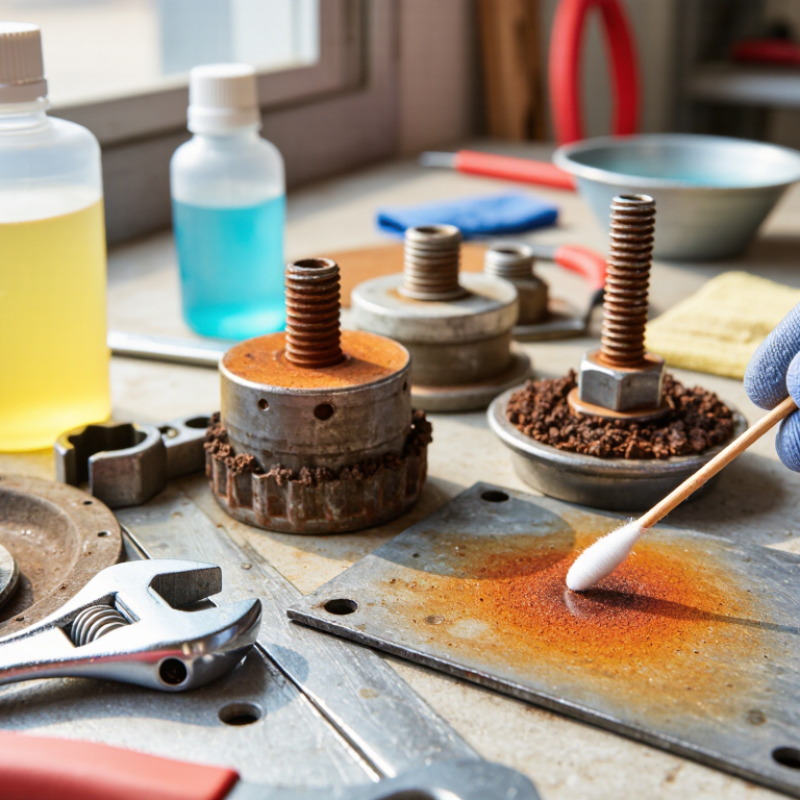
Test a small hidden area first. Apply a limited amount, wait for the recommended period, and inspect the surface closely. Look for dull patches, bubbling, discoloration, or a sticky residue. Copper, aluminum, zinc, and painted parts often react differently. Compatibility charts can help, but they are not perfect. Surface age, temperature, and previous treatments may change the result.
Keep gloves and eye protection available, even with mild formulas. Good ventilation matters in small workshops. Never mix cleaning agents unless the safety data sheet clearly permits it. That shortcut can create dangerous fumes. After treatment, rinse or wipe the surface as directed, then dry it completely to slow flash rust. Consider biodegradable ingredients and low-odor options, but do not trust those words alone. Read the disposal instructions and prevent contaminated liquid from reaching drains or soil. In practice, I would rather accept a slower treatment than risk hidden metal damage. Mistakes happen, especially when the rust looks harmless.