Choosing the right solar lamp can be a daunting task. With many options available, it’s crucial to understand what suits your needs best. Solar lamps provide light while being energy-efficient and environmentally friendly. However, not every solar lamp is designed equally.
When selecting a solar lamp, consider its brightness, design, and how long it lasts on a full charge. It's important to compare different models and their features. Some solar lamps are great for decorative use, while others excel in providing bright, lasting light for security purposes. You might find yourself overwhelmed by choices, and that's okay.
Take your time to evaluate what matters most. Remember, a solar lamp is an investment in your outdoor space and sustainability. Reflect on your environment and lighting needs. This will guide you toward making an informed choice that you won’t regret.
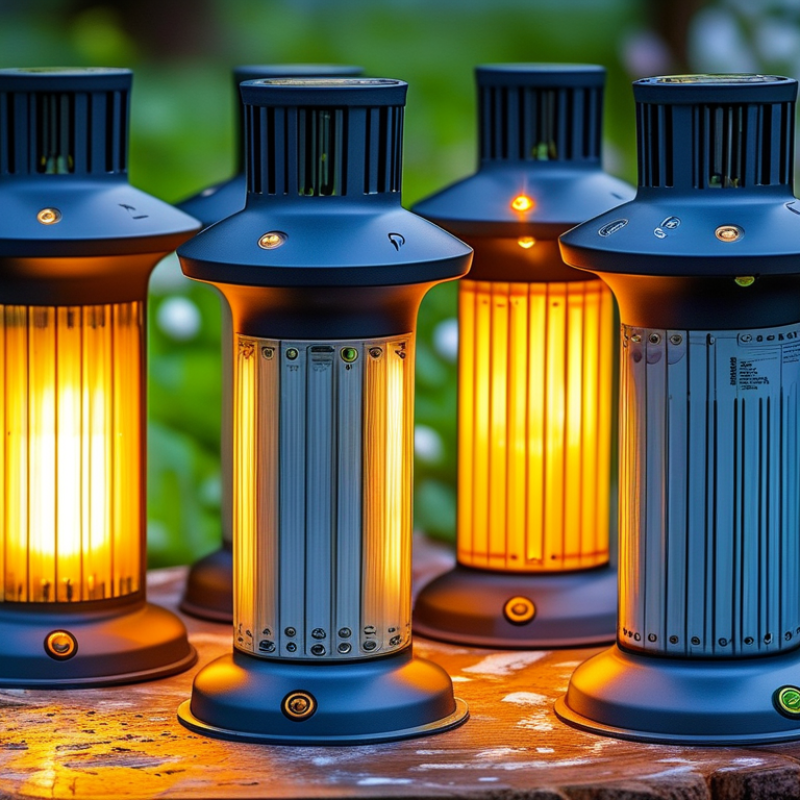
When choosing a solar lamp, consider your specific needs carefully. Different environments require different features. For instance, outdoor lamps should have a high lumen output for proper illumination. Meanwhile, indoor lamps must complement your home decor while providing sufficient light.
**Tips:** Always check the battery capacity. A larger capacity means longer usage time during the night. Make sure the solar panel is adjustable. Placement can greatly influence charging efficiency.
Another point to consider is the lamp's durability. If you live in a region with extreme weather, opt for models that can withstand harsh conditions. Look for water-resistant ratings and sturdy materials. A solar lamp may look great but not be well-suited for your environment.
**Tips:** Monitor user reviews for insights into real-world performance. Honest feedback from others can reveal common issues. Don’t just focus on aesthetics; function should be a priority. Make a list of your priorities to help narrow down your options.
When selecting a solar lamp, understanding the types available is crucial. There are three primary categories: garden lamps, path lights, and floodlights. Each type has distinct performance characteristics that cater to specific needs. For instance, garden lamps usually provide low-level illumination, ideal for decoration. They often emit a soft glow, enhancing outdoor aesthetics without overwhelming the surroundings.
Path lights are designed for safety and guidance. According to a 2022 report by the Solar Lighting Association, well-placed path lights can reduce accidents by up to 40%. They come with different brightness levels, commonly ranging from 100 to 300 lumens, making them versatile for various outdoor settings. Floodlights, on the other hand, are brighter and ideal for security purposes. They can reach up to 1,000 lumens and cover a larger area, emphasizing safety.
Design options also vary significantly. Some solar lamps feature sleek, modern aesthetics while others embrace a classic look. Materials can range from durable plastic to elegant metal. The choice often depends on the user’s style preference and the outdoor environment. It’s worth noting that while some lamps are water-resistant, others may not withstand harsh weather conditions. Always consider local climate when choosing. Balancing performance and design is key to finding the right solar lamp for your needs.
| Type of Solar Lamp | Lumen Output | Battery Life | Design Options | Best For |
|---|---|---|---|---|
| Pathway Solar Lamp | 200 - 600 Lumens | 6 - 12 hours | Various styles (post, wall-mounted) | Path lighting, garden decoration |
| Solar Floodlight | 500 - 3000 Lumens | 8 - 15 hours | Adjustable heads, various wattages | Security lighting, yard lighting |
| Solar String Lights | 10 - 100 Lumens | 4 - 8 hours | Multiple colors, lengths | Decoration, ambiance |
| Solar Wall Light | 150 - 400 Lumens | 6 - 10 hours | Sleek designs, integrated solar panels | Entryways, garage lighting |
| Solar Lantern | 50 - 300 Lumens | 5 - 10 hours | Portable, traditional or modern styles | Camping, outdoor events |
When evaluating solar lamps, brightness is a crucial factor. Measured in lumens, this indicates how much light a lamp emits. A common guideline suggests that 100 lumens can illuminate a small area adequately, suitable for pathways or accent lighting. For larger spaces, like patios, aiming for at least 200-400 lumens is optimal.
However, not all lumens are created equal. Perception of brightness varies depending on the surrounding environment. Factors like color and reflective surfaces can influence how light is experienced. Many industry reports, like those from the Illuminating Engineering Society, emphasize that outdoor spaces often require higher lumens to achieve the desired effect.
Additionally, consider the purpose of the solar lamp. If it’s for security, a brighter lamp may be necessary to deter intruders. But for ambiance, softer lighting could suffice. Balancing brightness with energy efficiency is vital. Assess your needs carefully. Sometimes, higher lumens might not be the best choice if they lead to higher energy consumption. Reflect on what you truly need before making a decision.
This chart illustrates the distribution of solar lamp models across various brightness levels measured in lumens. Knowing the number of available models at different brightness levels can help you choose the best solar lamp for your needs.
When selecting a solar lamp, understanding battery life and charging time is essential. The battery capacity directly affects how long the lamp will operate when fully charged. For instance, a lamp with a 2000mAh battery can provide light for about 10 hours, depending on the brightness setting. The charging time typically ranges from 4 to 8 hours. This can impact your decision, especially if you need reliable light during the night.
Consider the solar panel's efficiency as well. If the solar panel cannot absorb enough sunlight during the day, it will lead to longer charging times. In less sunny climates, this can be a concern. It’s worth pondering whether the lamp will meet your specific needs in various weather conditions.
Regular maintenance of the solar lamp could be necessary. Cleaning the solar panel ensures it functions effectively. Neglecting this may result in diminished charging efficiency over time. Assessing these factors helps ensure you choose a solar lamp that will reliably serve your lighting needs.
When selecting a solar lamp for outdoor use, durability and weather resistance are crucial factors. Outdoor environments can be harsh. Solar lamps must withstand intense sunlight, rain, snow, and varying temperatures. According to industry reports, nearly 40% of solar lamps fail due to inadequate materials that cannot endure these conditions.
Quality construction materials, such as high-grade plastics and metals, significantly enhance longevity. For instance, aluminum housings resist corrosion and rust, while polycarbonate lenses offer high impact resistance. A study by the Solar Energy Industries Association revealed that lamps designed with robust weatherproofing can last up to five years longer than their cheaper counterparts. This durability ensures that your investment in solar lighting pays off over time.
Remember to look for solar lamps that can handle extreme temperatures. Extreme cold can affect battery performance, while excessive heat can damage internal components. Solar lamps equipped with temperature-regulating technology tend to perform better across diverse climates. However, not all manufacturers provide transparency on these specifications, making it vital to research and cross-reference user reviews for reliable information.
„Thanks to the LUVIR technology, the solder resist process could be switched directly from the previously used mask exposure to direct exposure. As an outstanding digital solution on the market, this technology has been able to demonstrate fast process times and superior quality on our certified conventional ink in production. This allowed us to fully digitize the solder mask process at low cost – without process or ink adjustments. An excellent benefit to our production in Rot am See.“
Ralf Göhringer (Head of Production WE Rot am See)
I would definitely recommend the Limata machine and team for a future company purchase
Michael Greenaway
Compunetics Inc.
“The Limata ldi has been amazing!! Best thing we did was buy this machine”
Richard Brady
GM
Circuitlabs
“Since 2019, we have been running the Limata X1000 LDI system (including LUVIR for solder mask imaging) in daily production as an addition to our current process with film. The machine was capable of properly exposing Taiyo PSR-4000 BN (DI) solder mask types on normal to high-copper boards using a new and unique direct imaging process. The machine operating interface is very user friendly which allowed for a quick technical training curve. The pre-registration processing reduced several seconds of production time at every print. Limata support and service staff is incomparable. They supported our team every step of the way at basically any time of the day or night, with literally, an immediate response time, customizing the software interface to best fit our Operations and needs.
We have exposed more than 8,000 prints since end of October, on various solder mask colors and some resist film panels. Limata, has proven to be very capable and innovative. They are a strong contender in the industry.
We have very much enjoyed this project, and working with the team!
Thank you Limata for the continued support and being a part of our growth.”
Bill Sezate
Vice President, GM
Summit Interconnect
As a replacement to our current contact exposure process with film, the LIMATA X2000 system including LUVIR-Technology was capable of properly exposing non-LDI solder mask types using a direct imaging process. The machine offers cutting edge software with a very intuitive operating interface which allowed for quick technician training curve. The dual drawer system combined with pre-registration processing reduced several seconds of production time at every machine cycle. Limata support and service staff is world class. They added software patches to keep production running at shortest possible response times, customized the software interface to best fit our in-house Operations system, and even wrote a step-by-step machine processing manual. As a result of the project, we have exposed more than 16,000 times on various product types and solder mask brands/colors. Limata, in a very short timeframe as a company, has definitely shown they are truly innovative and will be challenging the industry of direct imaging for the top spot.
Kevin Beattie
Process Engineer
TTM Technologies
Forest Grove Division
