When selecting the best welded wire mesh for your projects, understanding its features is vital. According to John Miller, a leading expert in the welded wire mesh industry, "Choosing the right mesh can significantly enhance your project's durability." His insight underscores the importance of careful selection.
welded wire mesh comes in various specifications, which can be overwhelming. It’s easy to overlook critical factors such as wire diameter, spacing, and coating options. These elements directly influence strength and longevity. Additionally, different applications require specific mesh types. For instance, agricultural fencing and concrete reinforcement need distinct mesh characteristics.
While many consider cost first, this approach may lead to compromises. An investment in quality welded wire mesh often pays off in the long run. It’s essential to reflect on your project's unique demands before making a choice. In the end, the right welded wire mesh selection can determine the overall success of your work.
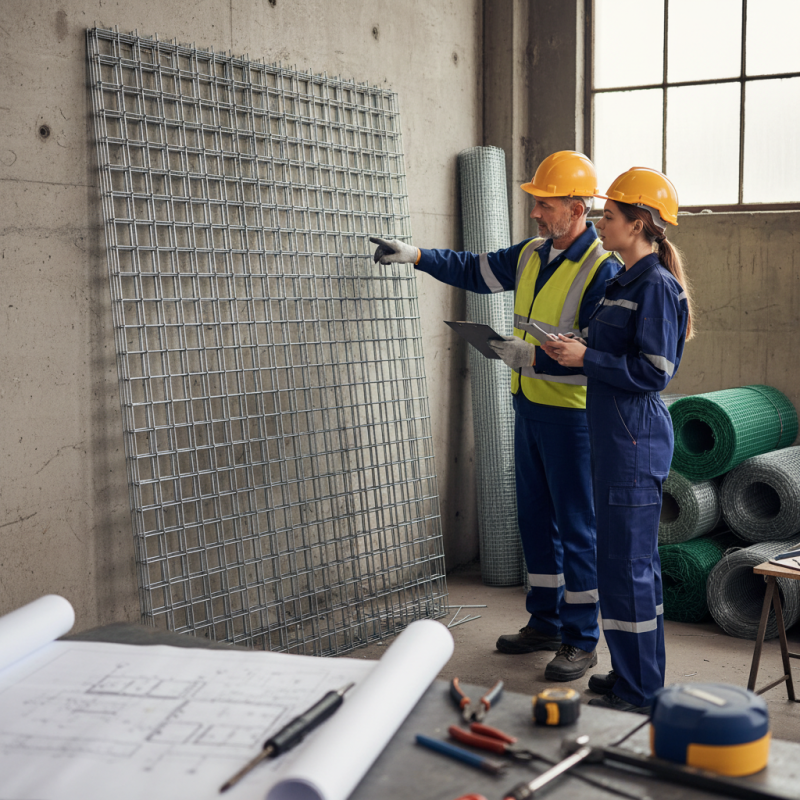
Welded wire mesh is a versatile material used in various projects. Understanding the types and materials is crucial for effective use. Common types include standard welded wire, reinforced mesh, and decorative mesh. Each type serves different purposes, such as fencing, reinforcement, or aesthetics.
Materials also play a significant role in the choice. Stainless steel offers durability and resistance to corrosion, ideal for outdoor applications. Galvanized wire is affordable and provides good protection against rust. Vinyl-coated options add a layer of color but may wear over time. Selecting the right material can impact longevity and performance.
When choosing welded wire mesh, consider the project requirements. Think about the environment it will be exposed to. Make sure to evaluate your specific needs. For example, decorative mesh may suit an artistic project but might not be suitable for structural needs. Reflection on these choices can lead to better outcomes.
When evaluating the strength and durability of welded wire mesh, several factors come into play. The material composition and manufacturing process are crucial. Opt for steel with a protective coating to prevent rust and corrosion. This will extend the lifespan of the mesh, especially in outdoor applications.
A common mistake is underestimating the importance of gauge size. A lower gauge means thicker wires, which typically indicate greater strength. Analyze the project's requirements to choose the appropriate gauge that meets your needs without overspending.
Tips: Always check for quality certifications. This adds assurance of the product's reliability. Conducting a tensile strength test can also provide valuable insight into the mesh's durability.
Regular evaluations of the mesh's condition during use are essential. Look for signs of wear, rust, or any structural weaknesses. This proactive approach can save you time and money in repairs down the line. Having the right tools for installation and maintenance is equally important.
Choosing the right mesh size is crucial for the effectiveness of welded wire mesh in various projects. The size of the openings directly impacts the materials that can pass through or be contained. For instance, a mesh with a smaller opening may be ideal for keeping out small animals or providing more structural support. Conversely, a larger mesh can facilitate drainage or allow airflow.
Industry data suggests that most residential projects favor 1-inch square openings for fencing. This size balances security and visibility. However, using a larger square mesh, around 2-inch openings, might prove effective for agricultural applications, where air circulation is vital.
Studies indicate that nearly 30% of project failures stem from improper mesh sizing. Getting it right saves both time and resources.
Material thickness also plays a role. Thicker wires add strength but increase weight. A 16-gauge wire is commonly used for general-purpose fences. Yet, if you require more durability, consider a 14-gauge option. Each choice carries unique implications on cost and application, highlighting the need for careful consideration. Reflecting on these variables ensures that your selected mesh aligns perfectly with project requirements.
When selecting welded wire mesh, it’s essential to consider the specific application. The needs for residential projects differ greatly from industrial uses. Residential applications often require a lighter gauge wire, providing adequate strength while maintaining an attractive appearance. In contrast, industrial projects often demand heavier gauge options. Data shows that 75% of industrial applications depend on mesh strength and durability.
For projects involving gardens or fencing, using a galvanized finish can extend the mesh's lifespan, reducing future replacement costs by 30%. In industrial settings, corrosion resistance is vital. A study from the Steel Wire Association indicates that corrosion can reduce mesh strength by nearly 50% over time.
Tips: Always assess environmental factors. If your location is prone to moisture, choose mesh designed for harsh conditions. When in doubt, consult with professionals. Their expertise can save you from costly mistakes. Mesh selection can impact not only your project's success but also its longevity, so take this step seriously. Ensuring the right material can prevent issues down the line.
When selecting welded wire mesh, budget considerations are paramount. Understanding your project's specific needs can guide you to cost-effective options. Research from the Welded Wire Association indicates that prices can vary widely based on material and gauge. Generally, higher gauge wire meshes tend to be less expensive, but they may sacrifice strength and durability. Balancing cost with project requirements is essential.
Local suppliers often offer competitive pricing. Consider purchasing in bulk to reduce costs. A recent market analysis shows that buying larger rolls can cut expenses by up to 15%. However, this approach requires careful planning to avoid excess material, which can lead to wastage. Understanding your material needs and availability will aid in making savvy purchasing decisions.
There are also variations in coating and finish that impact expense. Galvanized mesh provides rust resistance but costs more initially. A study showed that non-galvanized options may need replacement sooner, raising long-term expenses. Evaluating lifespan against upfront costs is vital for any project. Choosing wisely can lead to significant savings while ensuring project integrity.
„Thanks to the LUVIR technology, the solder resist process could be switched directly from the previously used mask exposure to direct exposure. As an outstanding digital solution on the market, this technology has been able to demonstrate fast process times and superior quality on our certified conventional ink in production. This allowed us to fully digitize the solder mask process at low cost – without process or ink adjustments. An excellent benefit to our production in Rot am See.“
Ralf Göhringer (Head of Production WE Rot am See)
I would definitely recommend the Limata machine and team for a future company purchase
Michael Greenaway
Compunetics Inc.
“The Limata ldi has been amazing!! Best thing we did was buy this machine”
Richard Brady
GM
Circuitlabs
“Since 2019, we have been running the Limata X1000 LDI system (including LUVIR for solder mask imaging) in daily production as an addition to our current process with film. The machine was capable of properly exposing Taiyo PSR-4000 BN (DI) solder mask types on normal to high-copper boards using a new and unique direct imaging process. The machine operating interface is very user friendly which allowed for a quick technical training curve. The pre-registration processing reduced several seconds of production time at every print. Limata support and service staff is incomparable. They supported our team every step of the way at basically any time of the day or night, with literally, an immediate response time, customizing the software interface to best fit our Operations and needs.
We have exposed more than 8,000 prints since end of October, on various solder mask colors and some resist film panels. Limata, has proven to be very capable and innovative. They are a strong contender in the industry.
We have very much enjoyed this project, and working with the team!
Thank you Limata for the continued support and being a part of our growth.”
Bill Sezate
Vice President, GM
Summit Interconnect
As a replacement to our current contact exposure process with film, the LIMATA X2000 system including LUVIR-Technology was capable of properly exposing non-LDI solder mask types using a direct imaging process. The machine offers cutting edge software with a very intuitive operating interface which allowed for quick technician training curve. The dual drawer system combined with pre-registration processing reduced several seconds of production time at every machine cycle. Limata support and service staff is world class. They added software patches to keep production running at shortest possible response times, customized the software interface to best fit our in-house Operations system, and even wrote a step-by-step machine processing manual. As a result of the project, we have exposed more than 16,000 times on various product types and solder mask brands/colors. Limata, in a very short timeframe as a company, has definitely shown they are truly innovative and will be challenging the industry of direct imaging for the top spot.
Kevin Beattie
Process Engineer
TTM Technologies
Forest Grove Division
