Choosing the right delivery truck is crucial for business success. A delivery truck impacts efficiency and costs. It can affect customer satisfaction and brand reputation.
When selecting a delivery truck, consider your specific business needs. Think about your cargo type and delivery frequency. Fuel efficiency and maintenance costs are also important factors. You want a reliable truck that minimizes downtime.
Don’t overlook the importance of size. A truck that is too small could lead to extra trips. A truck that is too large may incur unnecessary expenses. Ultimately, the right delivery truck should enhance your operations while aligning with your budget.
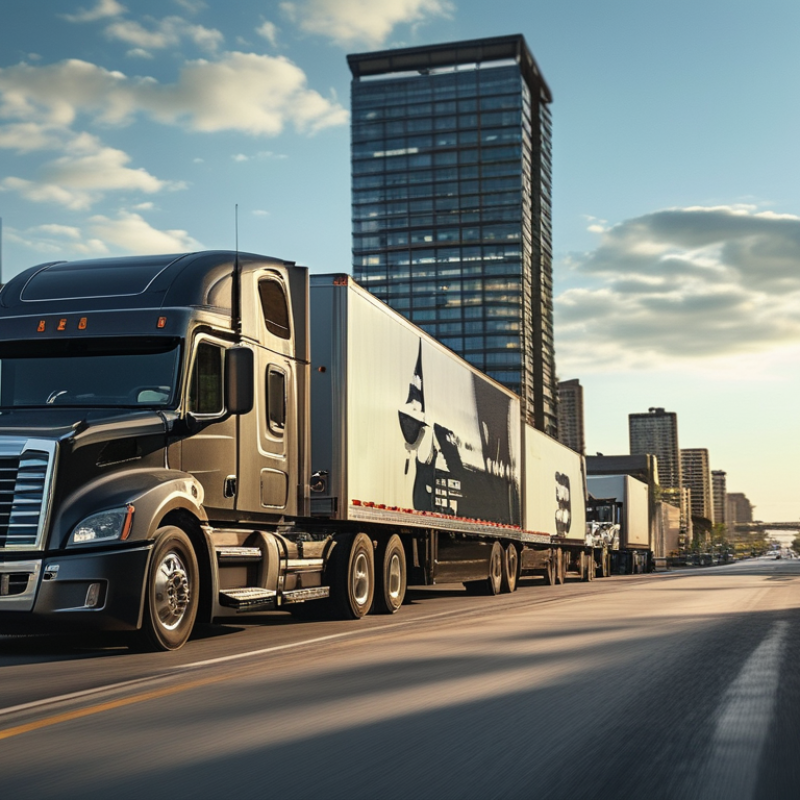
Choosing the right delivery truck for your business starts with understanding your specific needs. Consider the types of goods you transport. Are they bulky, fragile, or perishable? Each category requires different solutions. For instance, a refrigerated truck might be essential for perishable items. Measure the typical loads you handle as well. Knowing the volume helps in selecting the right size truck.
Next, think about your delivery routes. Are they urban or rural? Urban areas might necessitate smaller trucks for maneuverability. In contrast, longer rural deliveries could benefit from trucks with higher fuel efficiency. Don't forget to factor in your budget. A truck's purchase price is just one part of the equation. Maintenance costs, fuel efficiency, and insurance rates all impact your bottom line over time.
Lastly, reflect on your business growth projections. Will you need more capacity in the future? Choosing a truck that can scale with your needs can save you from making repeated purchases. Take the time to assess your current and future requirements thoroughly. Avoid rushing the decision, as an ill-fitting truck can lead to operational inefficiencies and additional costs.
When selecting a delivery truck, various types are available, each serving specific needs. Box trucks offer a spacious cargo area, ideal for transporting large packages. They provide protection from the elements, ensuring packages remain undamaged. However, their size can make them tricky to maneuver in tight urban areas.
Van trucks are another option. These trucks have lower loading heights, making it easier to load and unload. They are often more fuel-efficient than larger trucks. Yet, they may not accommodate bulky items as effectively. Consider your typical load to find the right fit.
Refrigerated trucks are critical for businesses delivering perishable goods. These trucks maintain temperature controls, ensuring freshness during transport. However, they can be more expensive to operate. Evaluating your specific delivery requirements helps in making an informed choice. Balancing size, cost, and functionality is key to selecting the best delivery truck for your business needs.
Choosing the right delivery truck is crucial for your business. Evaluating key features can aid in making a smart choice. Begin with payload capacity. The average delivery truck has a payload range from 3,000 to 6,000 pounds. Knowing your typical load is essential. Consider fuel efficiency too. Trucks typically average around 6 to 10 miles per gallon. Picking a more efficient model can save significant costs over time.
Storage space is another critical factor. Depending on your delivery needs, you might require a box truck with at least 16 feet of cargo space. This dimension suits most local deliveries. However, larger businesses may opt for trucks that offer more room. Technology features matter as well. Modern trucks often come equipped with GPS and route optimization tools, which can enhance operational efficiency.
Tip: Prioritize comfort in the driver’s area. A well-designed cabin can increase productivity. Also, think about maintenance costs. Some trucks may look appealing upfront but have high long-term expenses. Always check reviews and reliability ratings from trusted sources. User experiences can provide insights into potential issues often overlooked.
When selecting a delivery truck, budget considerations are essential. Determine your maximum financial capacity before exploring options. The initial purchase price is only one aspect. Maintenance costs, insurance, and fuel efficiency should also factor into your decision. Long-term expenses can quickly add up, eclipsing the benefits of a seemingly inexpensive vehicle.
Tips: Start by assessing your delivery volume. Smaller businesses may only require a compact truck. Larger operations might need something more robust. Compare fuel economy across models to predict ongoing costs accurately. Additionally, consider resale value. Some trucks depreciate faster than others, impacting your future budget.
It’s not just about the truck itself; think about finance options as well. Many businesses overlook this aspect and may end up paying more than necessary. Be cautious of high-interest loans or long repayment terms. Understanding all financial implications will help in making a sound choice. Don’t rush the process; assessing all variables can lead to a better fit for your business.
When choosing a delivery truck, fuel efficiency is crucial. High fuel costs impact your bottom line. A truck that consumes less fuel saves money over time. Look for models with better mileage ratings. These trucks can reduce your operational costs significantly. The initial investment may be higher, but the savings add up.
Maintenance is another important factor. Routine maintenance can be costly if overlooked. Choose a truck that is easy to service. Some models require specialized technicians, which can increase expenses. Regular checks also prolong the vehicle's life. Neglecting maintenance could lead to larger repairs, costing more in the long run.
Reliability is key in logistics. A dependable truck minimizes downtime. Evaluate service records and owner reviews for specific models. Pay attention to reports on maintenance issues. A well-reviewed truck often indicates fewer problems. This helps ensure that your deliveries remain on schedule.
„Thanks to the LUVIR technology, the solder resist process could be switched directly from the previously used mask exposure to direct exposure. As an outstanding digital solution on the market, this technology has been able to demonstrate fast process times and superior quality on our certified conventional ink in production. This allowed us to fully digitize the solder mask process at low cost – without process or ink adjustments. An excellent benefit to our production in Rot am See.“
Ralf Göhringer (Head of Production WE Rot am See)
I would definitely recommend the Limata machine and team for a future company purchase
Michael Greenaway
Compunetics Inc.
“The Limata ldi has been amazing!! Best thing we did was buy this machine”
Richard Brady
GM
Circuitlabs
“Since 2019, we have been running the Limata X1000 LDI system (including LUVIR for solder mask imaging) in daily production as an addition to our current process with film. The machine was capable of properly exposing Taiyo PSR-4000 BN (DI) solder mask types on normal to high-copper boards using a new and unique direct imaging process. The machine operating interface is very user friendly which allowed for a quick technical training curve. The pre-registration processing reduced several seconds of production time at every print. Limata support and service staff is incomparable. They supported our team every step of the way at basically any time of the day or night, with literally, an immediate response time, customizing the software interface to best fit our Operations and needs.
We have exposed more than 8,000 prints since end of October, on various solder mask colors and some resist film panels. Limata, has proven to be very capable and innovative. They are a strong contender in the industry.
We have very much enjoyed this project, and working with the team!
Thank you Limata for the continued support and being a part of our growth.”
Bill Sezate
Vice President, GM
Summit Interconnect
As a replacement to our current contact exposure process with film, the LIMATA X2000 system including LUVIR-Technology was capable of properly exposing non-LDI solder mask types using a direct imaging process. The machine offers cutting edge software with a very intuitive operating interface which allowed for quick technician training curve. The dual drawer system combined with pre-registration processing reduced several seconds of production time at every machine cycle. Limata support and service staff is world class. They added software patches to keep production running at shortest possible response times, customized the software interface to best fit our in-house Operations system, and even wrote a step-by-step machine processing manual. As a result of the project, we have exposed more than 16,000 times on various product types and solder mask brands/colors. Limata, in a very short timeframe as a company, has definitely shown they are truly innovative and will be challenging the industry of direct imaging for the top spot.
Kevin Beattie
Process Engineer
TTM Technologies
Forest Grove Division
