Choosing the right Hdpe Sheet Plastic starts with understanding what the part must do. Will it support a load, resist repeated impact, or face moisture and cleaning chemicals? These details shape the choice of grade, thickness, and finish. HDPE is valued for its toughness, low moisture absorption, and ease of fabrication, but no single sheet suits every setting. Small differences matter.
A practical selection process compares operating temperature, chemical exposure, sunlight, and expected wear with the supplier’s technical data. Check the sheet’s stated tolerances and ask whether its grade fits the intended use. For outdoor projects, confirm UV resistance rather than assuming every HDPE sheet handles prolonged sun equally well. For regulated or sensitive applications, verify applicable material documentation with the manufacturer. A data sheet helps. It does not tell the whole story.
Fabrication also deserves attention. Cutting, drilling, welding, and fastening can affect fit and long-term performance, especially when dimensions are tight. Price is easy to focus on, yet choosing the thinnest sheet may create avoidable repairs. The reverse can happen, too: buying more material than the design needs adds cost without improving the result. There is no perfect shortcut. This guide outlines the key questions to ask, the specifications to compare, and the trade-offs worth reviewing before purchase. Real conditions can still surprise a careful planner, so test a sample when the application is demanding or uncertain.
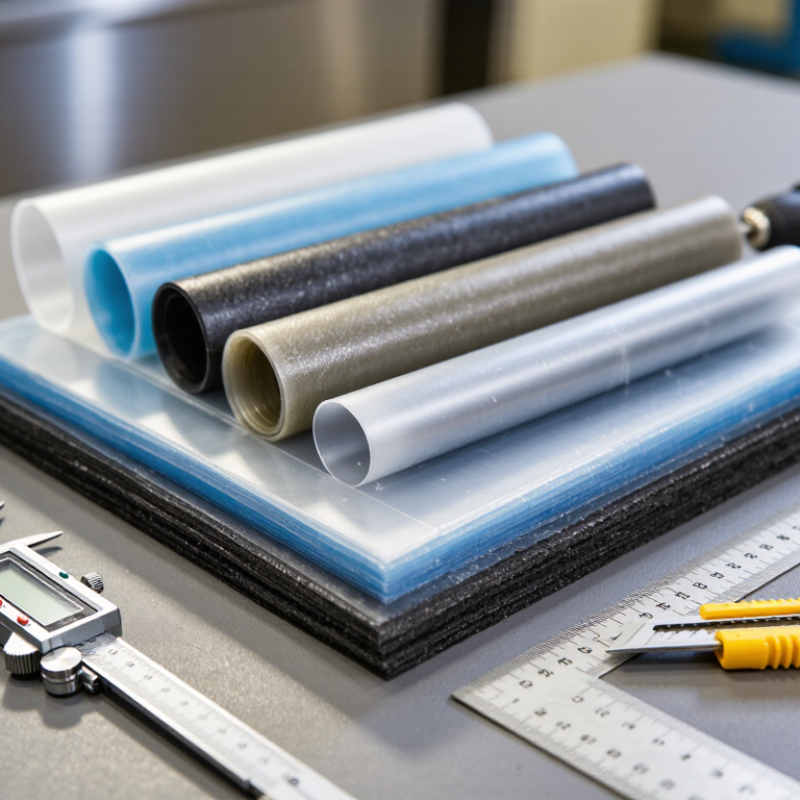
HDPE sheet plastic is valued for its low moisture absorption, chemical resistance, and impact strength. It is often easier to handle than metal, but it can flex under load. That matters. A thick sheet may still creep over time when it carries a steady weight, especially in warm conditions. Check the load, support spacing, and service temperature before choosing a thickness.
General-purpose HDPE suits wear strips, tank liners, and simple cutting surfaces. UV-stabilized grades are better for outdoor signs or covers exposed to sunlight, though they may still fade with long exposure. Machining grades are made for more consistent fabrication, while food-contact grades require documentation for the intended use. Do not assume every HDPE sheet is suitable for food contact. Ask for the grade specification.
Color can help identify parts, but it does not reliably confirm performance. Compare the datasheet for density, temperature limits, impact resistance, and thickness tolerance. For example, a panel used near a pump may need chemical compatibility and secure supports, not just a high impact rating. Test a small sample when the environment is unusual. It is easy to focus on strength and overlook expansion; HDPE moves with temperature, and that detail can complicate a tight fit.
Define the load before choosing an HDPE sheet. Will it hold a steady weight, absorb repeated impacts, or support a person leaning on it? These conditions call for different thicknesses and support layouts. A sheet spanning 600 millimeters between supports may flex more than one resting on a solid frame. HDPE can also creep under constant load, slowly bending over time. Check the expected weight, contact area, unsupported span, and how long the load will remain. Small details matter.
Next, note the finished dimensions and operating conditions. Measure the installation space, including holes, slots, and edge clearances. HDPE expands with temperature changes, so a tightly fitted panel may buckle in warm conditions. Record the coldest and warmest expected temperatures, plus any contact with water, cleaning fluids, or abrasive materials.
For a sliding surface, wear and friction may matter as much as strength. A rough estimate is still only an estimate. Manufacturer data and engineering calculations can help confirm thickness and deflection limits, especially for large spans or safety-critical supports. If the design is uncertain, test a small sample under realistic conditions before ordering the full sheet.
Choosing HDPE sheet starts with the load, span, temperature, and support points—not a guess based on appearance. Thickness affects stiffness: a thin panel may bow between widely spaced supports, even if its stated strength looks adequate. The Plastics Pipe Institute’s Handbook of Polyethylene Pipe describes typical HDPE resin densities of about 0.941–0.965 g/cm³. Treat that as material context, not a substitute for a sheet maker’s technical data; formulations and properties vary. A neat rule of thumb can still mislead.
Choose grade for the working environment. General-purpose HDPE suits many fabricated parts, while UV-stabilized grades are worth considering for outdoor exposure. For repeated impact or chemical contact, check the supplier’s documented test data for the actual grade. Surface type matters, too: smooth sheet is easier to wipe clean, while textured sheet can improve grip but collect dirt in its pattern. Thickness should be checked against the real span and load; unsupported corners are easy to overlook.
Tips: Request density, tensile-property, temperature, and UV data for the exact sheet. Compare these with ASTM D4976 classifications where relevant. If the panel will carry weight, prototype the intended thickness and supports before ordering a full run.
Choosing an HDPE sheet starts with the way it will be made. A routed panel, a welded tank liner, and a formed cover place different demands on the material. Check the supplier’s thickness tolerance against your drawing, especially where holes or mating edges must align. A router can leave a slightly raised edge, so plan for deburring before assembly. Small details matter.
For outdoor use, ask whether the sheet is UV-stabilized; plain material may weather differently in direct sun. Also consider the site’s temperature range. HDPE expands with heat, so long panels may need slotted mounting holes or room to move. Near solvents, oils, or cleaning solutions, verify compatibility at the actual concentration and temperature. A general resistance chart is useful, but it may not match a mixed or heated exposure.
Fabrication choices can involve trade-offs. Welding may suit a sealed assembly, while bolts make repairs easier, but fasteners can create stress around holes. If the sheet will carry a load, check span, support spacing, and expected impact rather than relying on thickness alone. That can be awkward. A small offcut test can reveal tool behavior, weld quality, or surface changes before the full sheet is cut. Keep those observations with the project specifications; the first choice may need revision.
Before ordering HDPE sheet, match the supplier’s stated grade to the job’s actual conditions.
A general “HDPE” label does not explain how the sheet handles impact, chemicals, sunlight, or repeated loading. Check the current technical data sheet for thickness tolerance, density, tensile properties, impact rating, and recommended service temperature. Confirm the test method and edition, not just a number. Standards differ by product form and intended use.
Ask which standard applies to the sheet and whether the supplied lot was tested against it. Small details matter.
Request a certificate of analysis or lot-specific inspection record when consistency is important. Compare its values with the published specification, then ask what happens if a shipment falls outside tolerance. For outdoor use, verify whether UV stabilization is included and supported by data; color alone proves little.
For food-contact or other regulated applications, request documentation covering the exact grade, thickness, and intended conditions. A broadly worded certificate may not cover your use. Check supplier details too: available sheet sizes, edge condition, packaging, traceability, and how claims are handled.
Keep answers in writing. Ask for proof. I may be overchecking, but supplier shorthand can leave gaps, so request clarification before cutting material.
„Thanks to the LUVIR technology, the solder resist process could be switched directly from the previously used mask exposure to direct exposure. As an outstanding digital solution on the market, this technology has been able to demonstrate fast process times and superior quality on our certified conventional ink in production. This allowed us to fully digitize the solder mask process at low cost – without process or ink adjustments. An excellent benefit to our production in Rot am See.“
Ralf Göhringer (Head of Production WE Rot am See)
I would definitely recommend the Limata machine and team for a future company purchase
Michael Greenaway
Compunetics Inc.
“The Limata ldi has been amazing!! Best thing we did was buy this machine”
Richard Brady
GM
Circuitlabs
“Since 2019, we have been running the Limata X1000 LDI system (including LUVIR for solder mask imaging) in daily production as an addition to our current process with film. The machine was capable of properly exposing Taiyo PSR-4000 BN (DI) solder mask types on normal to high-copper boards using a new and unique direct imaging process. The machine operating interface is very user friendly which allowed for a quick technical training curve. The pre-registration processing reduced several seconds of production time at every print. Limata support and service staff is incomparable. They supported our team every step of the way at basically any time of the day or night, with literally, an immediate response time, customizing the software interface to best fit our Operations and needs.
We have exposed more than 8,000 prints since end of October, on various solder mask colors and some resist film panels. Limata, has proven to be very capable and innovative. They are a strong contender in the industry.
We have very much enjoyed this project, and working with the team!
Thank you Limata for the continued support and being a part of our growth.”
Bill Sezate
Vice President, GM
Summit Interconnect
As a replacement to our current contact exposure process with film, the LIMATA X2000 system including LUVIR-Technology was capable of properly exposing non-LDI solder mask types using a direct imaging process. The machine offers cutting edge software with a very intuitive operating interface which allowed for quick technician training curve. The dual drawer system combined with pre-registration processing reduced several seconds of production time at every machine cycle. Limata support and service staff is world class. They added software patches to keep production running at shortest possible response times, customized the software interface to best fit our in-house Operations system, and even wrote a step-by-step machine processing manual. As a result of the project, we have exposed more than 16,000 times on various product types and solder mask brands/colors. Limata, in a very short timeframe as a company, has definitely shown they are truly innovative and will be challenging the industry of direct imaging for the top spot.
Kevin Beattie
Process Engineer
TTM Technologies
Forest Grove Division
