The selection of the right Pcb Board is crucial for project success. According to industry reports, the global PCB market is projected to reach $80 billion by 2026. This growth highlights the importance of choosing the right materials and specifications. A well-chosen PCB board can enhance performance and reduce costs.
Designers often face challenges like complexity and heat dissipation. Selecting the wrong board can lead to project failures or delays. Additionally, factors such as dielectric materials and layer counts significantly impact design efficacy. Understanding these elements is key to making informed decisions.
Consulting reliable sources and industry experts can provide valuable insights. Mishaps often stem from insufficient research or overlooking key specifications. A thorough understanding of PCB board types can steer projects toward success. Emphasizing quality and reliability in your choice is essential.
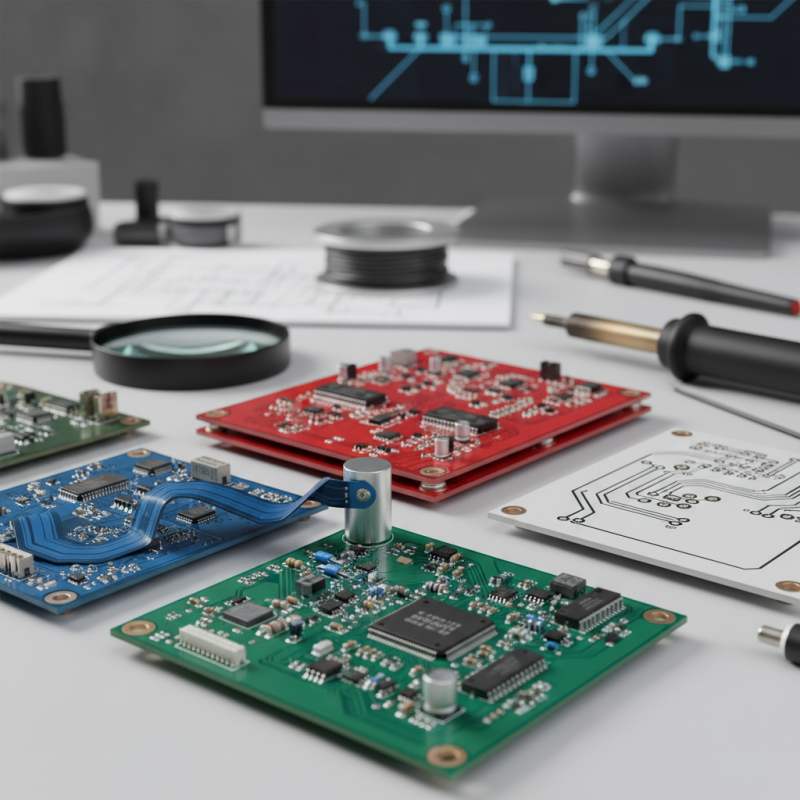
When choosing a PCB board, understanding the basics is crucial. PCBs, or printed circuit boards, serve as the backbone for electronic devices. They provide physical support and electrical connections for components. The materials used can significantly influence performance. Common materials include FR-4, which is well-known for its stability and affordability. In fact, a recent industry report indicated that FR-4 boards account for nearly 70% of the global PCB market.
The design of a PCB can affect its functionality. Layer count is one aspect to consider. Single-layer boards are simpler and cheaper, while multi-layer boards offer more complexity and functionality. A multi-layered board can improve signal integrity and reduce interference. However, the increased production cost might not be justified for simpler projects.
Tip: Always assess your project requirements carefully. If speed and efficiency are essential, opt for a multi-layer design. However, for basic projects, a single-layer board can suffice. Balancing cost and performance is critical. It's important to reflect upon whether the chosen design meets both immediate and long-term project needs. Remember, the right PCB can enhance overall project success.
Choosing the right PCB board hinges on identifying specific project requirements. Start with understanding voltage and current requirements. According to a recent industry report, 70% of PCB design failures stem from mismatch in power specifications. A thorough analysis of these elements can prevent costly mistakes.
Next, consider the board's size and complexity. Projects with limited space need compact designs. The average size of PCBs in consumer electronics is shrinking, with many now measuring less than 100mm x 100mm. It’s essential to factor in component placement and the density of connections. Designing densely packed boards increases manufacturing challenges and potential errors.
Thermal management is another critical aspect. Overheating is a common failure point in PCBs. Reports indicate that 40% of PCB reliability issues can be traced back to insufficient thermal considerations. Ensure the design accommodates heat dissipation. Proper spacing and material selection play vital roles here. Reflecting on past projects can shed light on what worked and what didn’t.
When selecting the appropriate PCB material for your projects, understanding the distinct properties of various options is essential. Standard materials include FR-4, polyimide, and aluminum. FR-4 is known for its excellent electrical insulation and thermal resistance, making it suitable for most applications. According to the IPC-2221 standard, FR-4 supports a wide range of temperatures and performs well up to 130°C. However, it may not withstand extreme conditions, limiting its use in high-performance environments.
In contrast, polyimide provides superior thermal stability. It remains functional in high-temperature situations, withstanding up to 260°C. This makes it ideal for aerospace and automotive applications. However, polyimide can be challenging to fabricate, often affecting production costs. According to a recent market report, while FR-4 is cost-effective, polyimide boards can increase project expenses by 30-50%.
Aluminum PCBs are favored in LED applications due to their excellent heat dissipation properties. They provide a robust option for high-power devices. Reports indicate that heat management is critical, as poor thermal conductivity can reduce component lifespan by up to 40%. Selecting the right PCB material relies on evaluating project requirements, costs, and potential challenges in manufacturing. Understanding these nuances will help you make informed decisions in your design process.
When selecting the right PCB board, evaluating manufacturing processes is crucial. The fabrication method impacts not just the board's performance but also its cost. Traditional methods can be slow and costly. However, newer techniques like automated assembly are often more efficient. They can produce boards quickly but may require higher initial investment.
Cost considerations are equally important. A low-cost PCB may seem appealing, but watch out for hidden costs. Reworks and longer lead times can inflate your budget. Testing and quality assurance must also be factored in. A compromise on quality may lead to project failure, necessitating a complete redesign.
Reflecting on past projects can guide your decisions. Analyze where costs overran and why. Did a rush on manufacturing lead to mistakes? Learning from these experiences can help you choose a more reliable process for future projects. Balancing cost, quality, and manufacturing efficiency is a critical part of creating effective PCBs.
When selecting the right size and layout for your PCB project, precision is crucial. According to a report from IPC, nearly 30% of PCB design revisions result from layout issues. A well-thought-out design minimizes iterations, saving valuable time and resources. Your PCB needs to accommodate components efficiently while ensuring optimal signal integrity.
Consider the dimensions impacted by your project's goals. For instance, consumer electronics often require compact boards. A study from TechInsights suggests that reducing PCB size by 25% can significantly enhance product performance and reduce manufacturing costs. However, be cautious. Oversized components or inadequate spacing can lead to interference and thermal issues.
Customizing your layout involves strategic placement of elements. A balanced distribution ensures proper electrical performance. However, the challenge lies in managing complexity. A complex design may result in layout pitfalls, affecting reliability. Experts recommend frequent simulations to visually assess potential flaws. This proactive approach can prevent costly mistakes down the road. Ultimately, the journey of choosing the right PCB size and layout demands careful consideration and foresight.
| Dimension | Recommendation | Notes |
|---|---|---|
| Size | Standard sizes (e.g., 100mm x 100mm) | Ensure compatibility with components |
| Layer Count | 2-4 layers for most projects | More layers for complex designs |
| Material | FR-4 for standard applications | Use specialized materials for high-frequency |
| Thickness | 1.6mm typical, 0.8mm for lightweight | Consider mechanical requirements |
| Layout | Keep traces short and direct | Minimize noise and interference |
„Thanks to the LUVIR technology, the solder resist process could be switched directly from the previously used mask exposure to direct exposure. As an outstanding digital solution on the market, this technology has been able to demonstrate fast process times and superior quality on our certified conventional ink in production. This allowed us to fully digitize the solder mask process at low cost – without process or ink adjustments. An excellent benefit to our production in Rot am See.“
Ralf Göhringer (Head of Production WE Rot am See)
I would definitely recommend the Limata machine and team for a future company purchase
Michael Greenaway
Compunetics Inc.
“The Limata ldi has been amazing!! Best thing we did was buy this machine”
Richard Brady
GM
Circuitlabs
“Since 2019, we have been running the Limata X1000 LDI system (including LUVIR for solder mask imaging) in daily production as an addition to our current process with film. The machine was capable of properly exposing Taiyo PSR-4000 BN (DI) solder mask types on normal to high-copper boards using a new and unique direct imaging process. The machine operating interface is very user friendly which allowed for a quick technical training curve. The pre-registration processing reduced several seconds of production time at every print. Limata support and service staff is incomparable. They supported our team every step of the way at basically any time of the day or night, with literally, an immediate response time, customizing the software interface to best fit our Operations and needs.
We have exposed more than 8,000 prints since end of October, on various solder mask colors and some resist film panels. Limata, has proven to be very capable and innovative. They are a strong contender in the industry.
We have very much enjoyed this project, and working with the team!
Thank you Limata for the continued support and being a part of our growth.”
Bill Sezate
Vice President, GM
Summit Interconnect
As a replacement to our current contact exposure process with film, the LIMATA X2000 system including LUVIR-Technology was capable of properly exposing non-LDI solder mask types using a direct imaging process. The machine offers cutting edge software with a very intuitive operating interface which allowed for quick technician training curve. The dual drawer system combined with pre-registration processing reduced several seconds of production time at every machine cycle. Limata support and service staff is world class. They added software patches to keep production running at shortest possible response times, customized the software interface to best fit our in-house Operations system, and even wrote a step-by-step machine processing manual. As a result of the project, we have exposed more than 16,000 times on various product types and solder mask brands/colors. Limata, in a very short timeframe as a company, has definitely shown they are truly innovative and will be challenging the industry of direct imaging for the top spot.
Kevin Beattie
Process Engineer
TTM Technologies
Forest Grove Division
