Choosing a Ring Mechanism Manufacturer is not just a price comparison. The supplier’s design, materials, and production controls affect how a binder opens, closes, and holds up to daily use. A mechanism may look sturdy on a desk yet feel stiff after repeated operation. Small details matter.
Manufacturing engineer Shigeo Shingo is often credited with saying, “The most dangerous kind of waste is the waste we do not recognize.” That principle applies when assessing suppliers: a low quote can hide costly weaknesses, such as inconsistent wire thickness, rough edges, or slow sample revisions. Ask how the manufacturer checks opening force, alignment, surface finish, and cycle durability. Request samples, drawings, and clear tolerances. Then compare them against the real product requirements.
A capable Ring Mechanism Manufacturer should explain its process plainly, from tooling and material selection to inspection and packaging. Look for relevant production experience, stable quality records, responsive engineering support, and realistic lead times. Ask what happens when a sample fails. The answer can reveal more than a polished brochure.
No checklist catches everything. A detail I might overlook is how the mechanism feels in the finished cover, not just in a loose sample. Test it in context. This guide will outline practical questions and comparison points to help buyers make a careful, evidence-based choice.
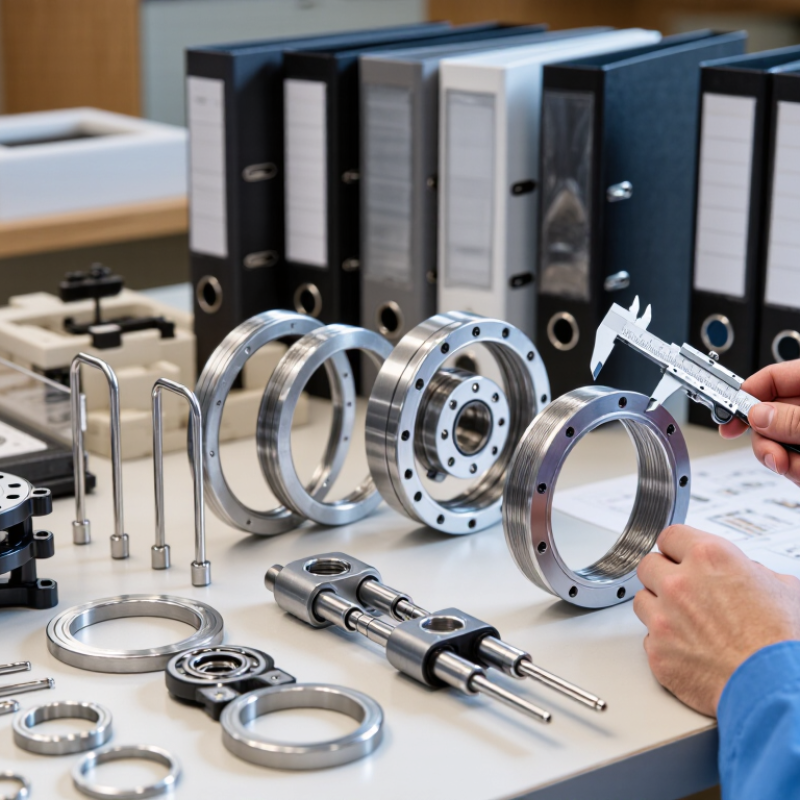
Before comparing manufacturers, define the job your ring mechanism must do. Start with the paper. Note the sheet size, paper weight, and approximate stack thickness, including any covers or dividers. A mechanism that works well with thin sheets may feel stiff when loaded with thicker stock. Specify the number and shape of rings, the opening method, and how the mechanism will attach to the cover. Small details matter: a lever that is hard to reach can make everyday use frustrating.
Describe the conditions the mechanism must handle. Will it be opened several times a day, or only during occasional filing? Is a smooth finish important because users will handle it often? Share any limits for overall size, color, material, and attachment points. If you have a sample cover, provide measurements or a drawing rather than relying on a rough description.
Ask how the manufacturer checks ring alignment, opening force, and repeated operation. Request a sample, then test it with your actual paper stack. Check whether pages turn freely and the rings close evenly.
One thing is easy to overlook: a sample may not reflect every production run. Discuss acceptable tolerances and inspection records before approving an order. Your first specification may still miss something. Revise it after testing.
Ring mechanisms are made by several kinds of suppliers, and the right fit depends on your product and order volume. A specialist mechanism manufacturer focuses on ring geometry, riveting, spring action, and opening force. This is often a strong option when you need consistent performance across repeated production runs. Ask for samples in the exact ring size and profile you plan to use.
A metal stamping or fabrication shop may suit custom shapes or unusual mounting plates. Check whether it can also assemble the moving parts; a low-cost stamped component is not a complete mechanism. For finished binders, a full-service binder manufacturer can coordinate the mechanism with covers, board thickness, and hole placement. That can reduce fit problems, though you may have fewer choices for the mechanism itself. Small details matter.
Distributors can help with standard mechanisms and modest quantities, especially when you need several sizes quickly. However, they may not control factory tolerances or provide detailed test records. Request a drawing, material specification, and samples, then check whether the rings close evenly and stay aligned after repeated cycles. A polished sample is useful, but it may not reflect every production batch. That is easy to overlook. Ask how the supplier checks spring strength, rivet security, and surface finish during routine production.
How to Choose a Ring Mechanism Manufacturer?
Assess Manufacturing Capabilities and Quality Controls
A reliable assessment starts on the production floor, not in a polished product brochure. Ask how the manufacturer forms wire, sets rivets, and controls alignment across production runs. Can the team explain its tooling limits and typical production capacity? Small details matter. A slightly uneven hinge or a loose rivet can affect how a binder opens after repeated use.
Quality controls should be visible and specific. Ask how dimensions are checked, how often samples are inspected, and what happens when a part falls outside tolerance. Useful evidence may include inspection records, material traceability, and results from repeated opening-and-closing tests. Ask to see records. A verbal assurance is less helpful than a clear procedure and a recent example of how a defect was corrected.
A sample can look excellent while hiding variation between batches. Request samples from normal production, not only hand-finished prototypes, and compare their opening force, ring alignment, and surface finish. It is also worth discussing how design changes are reviewed and communicated. Not every supplier will have perfect documentation; that deserves a closer look, not an automatic rejection. Consider whether the team answers practical questions openly and can show how it improves when a process misses the mark.
A ring mechanism manufacturer should provide clear evidence that its products meet your project’s stated requirements. Ask for test reports, material specifications, and inspection records for the exact mechanism you plan to order. Check that documents identify the tested model and revision, not just a similar product. Paper matters. A certificate alone may not show how consistently the mechanism performs in daily use.
For reliability, request sample mechanisms and cycle-test results. Open and close each sample repeatedly, checking for loose rivets, uneven movement, sharp edges, or rings that fail to align. Ask how defects are recorded and what happens when a batch falls outside specification. Small details count. A polished sample is useful, but production records can reveal whether the same quality is maintained across multiple runs.
Production capacity needs evidence, too. Ask for normal monthly output, current lead times, and the number of production lines assigned to similar orders. Confirm whether tooling, surface treatment, and final inspection happen in-house or through outside suppliers. Capacity is not a promise. Compare stated output with recent delivery records, and ask how the manufacturer handles peak demand without skipping checks. Even a capable factory may need more time than expected when specifications change mid-order.
Compare Pricing, Lead Times, and After-Sales Support
A ring mechanism may look simple, but wire thickness, rivet alignment, and plating can affect how pages turn. Compare quotations line by line. Check whether tooling, samples, packaging, and inspection are included instead of comparing unit prices alone. Ask for a sample with your actual cover board and paper stack. That test can reveal binding or uneven opening early. Small details matter.
Lead times deserve the same scrutiny as cost. Request separate dates for sample approval, production, and dispatch, along with the assumptions behind each estimate. Ask what happens if a component fails inspection or a shipment is delayed. A clear remedy matters. After-sales support should include a contact person, response window, spare-part availability, and a practical process for handling defects. Get those details in writing.
„Thanks to the LUVIR technology, the solder resist process could be switched directly from the previously used mask exposure to direct exposure. As an outstanding digital solution on the market, this technology has been able to demonstrate fast process times and superior quality on our certified conventional ink in production. This allowed us to fully digitize the solder mask process at low cost – without process or ink adjustments. An excellent benefit to our production in Rot am See.“
Ralf Göhringer (Head of Production WE Rot am See)
I would definitely recommend the Limata machine and team for a future company purchase
Michael Greenaway
Compunetics Inc.
“The Limata ldi has been amazing!! Best thing we did was buy this machine”
Richard Brady
GM
Circuitlabs
“Since 2019, we have been running the Limata X1000 LDI system (including LUVIR for solder mask imaging) in daily production as an addition to our current process with film. The machine was capable of properly exposing Taiyo PSR-4000 BN (DI) solder mask types on normal to high-copper boards using a new and unique direct imaging process. The machine operating interface is very user friendly which allowed for a quick technical training curve. The pre-registration processing reduced several seconds of production time at every print. Limata support and service staff is incomparable. They supported our team every step of the way at basically any time of the day or night, with literally, an immediate response time, customizing the software interface to best fit our Operations and needs.
We have exposed more than 8,000 prints since end of October, on various solder mask colors and some resist film panels. Limata, has proven to be very capable and innovative. They are a strong contender in the industry.
We have very much enjoyed this project, and working with the team!
Thank you Limata for the continued support and being a part of our growth.”
Bill Sezate
Vice President, GM
Summit Interconnect
As a replacement to our current contact exposure process with film, the LIMATA X2000 system including LUVIR-Technology was capable of properly exposing non-LDI solder mask types using a direct imaging process. The machine offers cutting edge software with a very intuitive operating interface which allowed for quick technician training curve. The dual drawer system combined with pre-registration processing reduced several seconds of production time at every machine cycle. Limata support and service staff is world class. They added software patches to keep production running at shortest possible response times, customized the software interface to best fit our in-house Operations system, and even wrote a step-by-step machine processing manual. As a result of the project, we have exposed more than 16,000 times on various product types and solder mask brands/colors. Limata, in a very short timeframe as a company, has definitely shown they are truly innovative and will be challenging the industry of direct imaging for the top spot.
Kevin Beattie
Process Engineer
TTM Technologies
Forest Grove Division
