Choosing the right Roller Compactor can determine whether a pavement base remains stable or develops costly ruts. The decision depends on soil type, moisture, lift thickness, working space, and required density. A machine that performs well on granular gravel may struggle on cohesive clay. Bigger is not always better.
Experienced site teams usually begin with a careful ground assessment. They check the material underfoot, observe drainage, and review the project’s compaction specifications. A smooth drum roller may suit asphalt and well-graded aggregate, while a padfoot model often handles clay more effectively. Vibratory settings also matter. Excessive vibration can damage weak layers or create uneven surfaces. Insufficient energy leaves hidden voids beneath the finished grade.
Small details matter. A narrow access road may require a compact machine with a tighter turning radius. A large highway project may justify higher drum weight, wider coverage, and greater production capacity. Manufacturer data should be compared with field conditions, not accepted blindly. That assumption can fail.
Reliable selection also requires operator feedback, maintenance records, and verified density testing. These sources reveal problems that brochures rarely show. Fuel use, drum visibility, service access, and control simplicity can affect daily productivity. Safety features deserve equal attention, especially around slopes, edges, and nearby workers.
No checklist is perfect. Soil conditions can change within a few meters. Careful judgment remains essential. This guide explains the practical factors behind Roller Compactor selection, helping project teams make a defensible, efficient, and informed choice.
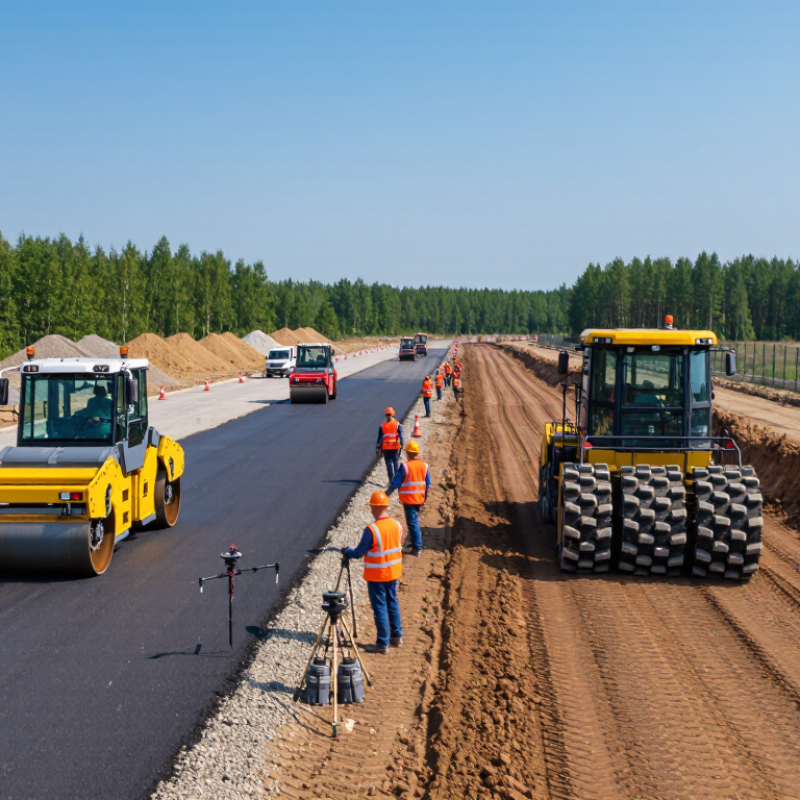
How to Choose the Right Roller Compactor for Your Project?
Start with the soil, not the machine. A sandy granular fill behaves differently from clay-rich soil beneath a building pad. Ask a qualified laboratory to test representative material and establish its moisture-density relationship. ASTM D698 uses standard compactive effort; ASTM D1557 uses higher modified effort. Each produces a maximum dry density and optimum moisture content. Your project specifications determine which result applies and what percentage of maximum dry density is required. Do not choose D1557 simply because its target density is higher. The wrong reference can lead to misleading field results. Small detail, big consequence.
Tips: Check the soil report before renting. Confirm the test method, target percentage, and moisture range. If the material changes across the site, test each distinct soil. A damp handful is not a moisture test.
Use the target and material to guide roller selection. Granular soils often respond well to vibration, while cohesive soils may need a different drum action and careful moisture control. Match machine weight and operating settings to the lift thickness and available space. Then verify compaction in the field using the specified test method. If results fall short, pause and check moisture, lift depth, and pass coverage before adding passes. More rolling is not always better. It can waste time or disturb the layer. I have seen plans look clear on paper, yet site moisture shifts after rain. Recheck conditions rather than assuming the lab value still fits.
Choose the drum to suit the material beneath it. Cohesive clay usually responds better to a padfoot drum, whose feet knead the soil and help compact deeper layers. Loose sand and crushed aggregate generally suit a smooth vibratory drum. On asphalt, smooth steel drums are common, while pneumatic tires can help press and seal the surface.
Drum width matters as much as drum type. A wider drum covers more ground on open, even stretches, but may be awkward near curbs, walls, or narrow trenches. For asphalt, check that the drum fits the paving width without leaving long, poorly compacted edges. Overlap each pass consistently; a few centimeters of missed coverage can show later. Small jobs may benefit from a narrower machine, even if each pass takes longer.
Match the machine to the lift thickness and the material’s moisture, too. A drum that is too light may leave loose aggregate below the surface; excessive vibration can loosen thin asphalt or damage a fragile base. There is no perfect rule. Site conditions change, and specifications should guide the final choice. A short trial pass can reveal uneven marks, movement, or poor density before the full area is compacted.
Choosing a roller compactor starts with the material and lift, not machine weight alone. A 1.5-inch asphalt lift behaves differently from a 10-inch granular base. Check the specified layer depth and material gradation before comparing machines. Thin asphalt often needs a lighter, more maneuverable roller to avoid pushing the mat. Thick, coarse aggregate may require greater drum force and several controlled passes. More weight is not automatically better.
Match drum width and operating weight to the work area. A wide drum covers open pavement efficiently, while a narrower unit can handle curbs, utility cuts, and tight turns. On soft shoulders, excessive weight can cause rutting or sinking. On dense base, too little mass may leave loose stone and uneven support. Watch the surface after each pass. If the drum marks the mat or aggregate shifts, pause and reassess the lift, moisture, and settings. Small clues matter.
Keep lift thickness within the compactor’s effective range and the project specification. Compacting a thick layer from the surface can leave a weak zone underneath. Splitting it into thinner lifts may take longer, but can produce more consistent results. Still, site conditions vary; moisture and temperature affect compaction. Record pass counts and check density with the required field method, rather than relying on appearance alone.
Choosing a roller compactor means matching vibration to the material, not simply selecting the highest setting. Frequency describes how quickly the drum vibrates; amplitude describes how far it moves. Centrifugal force is the resulting compactive force, influenced by the machine’s design and operating speed. These settings work together, but they are not interchangeable.
For granular soil, such as crushed gravel, higher frequency and lower amplitude often help compact thinner lifts smoothly. Cohesive or harder materials may respond better to greater amplitude, especially when the lift is thicker. Still, soil type, moisture, and layer depth can change the result. Watch the surface. If the drum leaves waves or the material starts to loosen, the setting may be too aggressive. That rule is imperfect.
Centrifugal force matters when comparing machines, but a larger number does not guarantee better compaction. Excessive force can damage delicate surfaces or transmit unwanted vibration near structures. Check the project specifications, test a small area, and observe how the material responds over several passes. A simple field check helps: compare density results, surface appearance, and pass count. Keep notes. One practical detail is easy to overlook: reducing travel speed may improve the time each section receives vibration, but it cannot fix unsuitable moisture or an overly thick lift.
Choose a roller compactor by matching its working width and expected pace to the area you need to finish. Estimate daily output from lane width, lift thickness, required passes, and available work hours. Compaction productivity depends on the material and moisture too, not just machine speed. A wider drum may cover more ground, but it can struggle around tight edges or small patches. Allow time for turns, refilling, and testing. Small delays add up. Compare the estimated output with the site schedule, then leave some room for interruptions. Production figures from ideal conditions can look reassuring and still miss the reality of a crowded jobsite.
Check the machine’s gradeability against the steepest route it must travel, including ramps and uneven approaches. A slope that seems manageable when dry may become difficult on loose or wet material. Confirm the operator’s manual gives suitable limits for the planned conditions; do not assume one gradeability figure applies everywhere. Site access matters just as much. Measure gate widths, turning space, overhead clearance, and the route from delivery point to work area. A compactor that fits through the entrance may still lack room to turn. Verify transport dimensions and unloading space before scheduling delivery. These checks are easy to overlook, and sometimes the first site measurement is wrong; recheck it before committing.
Verify productivity, gradeability, and site access before selection.
| Roller category | Typical drum width | Productive speed used | Indicative gradeability | Access consideration |
|---|---|---|---|---|
| Light vibratory roller | 0.9 m | 4.0 km/h | Approximately 25–30% | Best for narrow paths and restricted entrances |
| Medium tandem roller | 1.4 m | 4.5 km/h | Approximately 25–35% | Suitable for general road and parking-area work |
| Heavy soil compactor | 2.1 m | 5.0 km/h | Approximately 30–40% | Requires wider haul routes and stronger working platforms |
Productivity is an indicative estimate calculated as drum width × operating speed × 1,000 × 0.75 field-efficiency factor. Actual output varies with overlap, turning time, lift thickness, material moisture, target density, and the number of passes. Confirm the manufacturer’s gradeability limit and measure the narrowest access point before mobilization.
„Thanks to the LUVIR technology, the solder resist process could be switched directly from the previously used mask exposure to direct exposure. As an outstanding digital solution on the market, this technology has been able to demonstrate fast process times and superior quality on our certified conventional ink in production. This allowed us to fully digitize the solder mask process at low cost – without process or ink adjustments. An excellent benefit to our production in Rot am See.“
Ralf Göhringer (Head of Production WE Rot am See)
I would definitely recommend the Limata machine and team for a future company purchase
Michael Greenaway
Compunetics Inc.
“The Limata ldi has been amazing!! Best thing we did was buy this machine”
Richard Brady
GM
Circuitlabs
“Since 2019, we have been running the Limata X1000 LDI system (including LUVIR for solder mask imaging) in daily production as an addition to our current process with film. The machine was capable of properly exposing Taiyo PSR-4000 BN (DI) solder mask types on normal to high-copper boards using a new and unique direct imaging process. The machine operating interface is very user friendly which allowed for a quick technical training curve. The pre-registration processing reduced several seconds of production time at every print. Limata support and service staff is incomparable. They supported our team every step of the way at basically any time of the day or night, with literally, an immediate response time, customizing the software interface to best fit our Operations and needs.
We have exposed more than 8,000 prints since end of October, on various solder mask colors and some resist film panels. Limata, has proven to be very capable and innovative. They are a strong contender in the industry.
We have very much enjoyed this project, and working with the team!
Thank you Limata for the continued support and being a part of our growth.”
Bill Sezate
Vice President, GM
Summit Interconnect
As a replacement to our current contact exposure process with film, the LIMATA X2000 system including LUVIR-Technology was capable of properly exposing non-LDI solder mask types using a direct imaging process. The machine offers cutting edge software with a very intuitive operating interface which allowed for quick technician training curve. The dual drawer system combined with pre-registration processing reduced several seconds of production time at every machine cycle. Limata support and service staff is world class. They added software patches to keep production running at shortest possible response times, customized the software interface to best fit our in-house Operations system, and even wrote a step-by-step machine processing manual. As a result of the project, we have exposed more than 16,000 times on various product types and solder mask brands/colors. Limata, in a very short timeframe as a company, has definitely shown they are truly innovative and will be challenging the industry of direct imaging for the top spot.
Kevin Beattie
Process Engineer
TTM Technologies
Forest Grove Division
