Choosing a Stainless Steel Powder supplier is not a price comparison alone. It is a decision about repeatability, documentation, and whether the powder fits your process. A practical paraphrase of powder-metallurgy expert Randall M. German’s work is: “Powder characteristics and processing together shape the performance of the finished part.” That distinction matters. A powder with the right chemistry may still behave poorly if its particle-size distribution, morphology, or flow properties vary between lots. Ask how the supplier measures these properties, how often they test, and whether results are tied to specific batch numbers. Look for material certificates, traceable production records, and clear answers about sampling. Small details matter.
Experience is visible in the questions a supplier asks you, too. Do they want to know your forming method, target density, or sintering conditions? Can they explain how a change in particle shape might affect filling a narrow die cavity? A dependable supplier should discuss those details without promising that one grade suits every application. Request a representative sample and compare its documentation with your own test results. If possible, evaluate more than one production lot; a polished sample alone proves little. The lowest quote may still be the right choice, but only when performance and records support it. Supplier selection is not perfectly tidy. Specifications can miss real process variation, and early trials may expose assumptions on both sides. That is useful evidence, not a reason to rush.
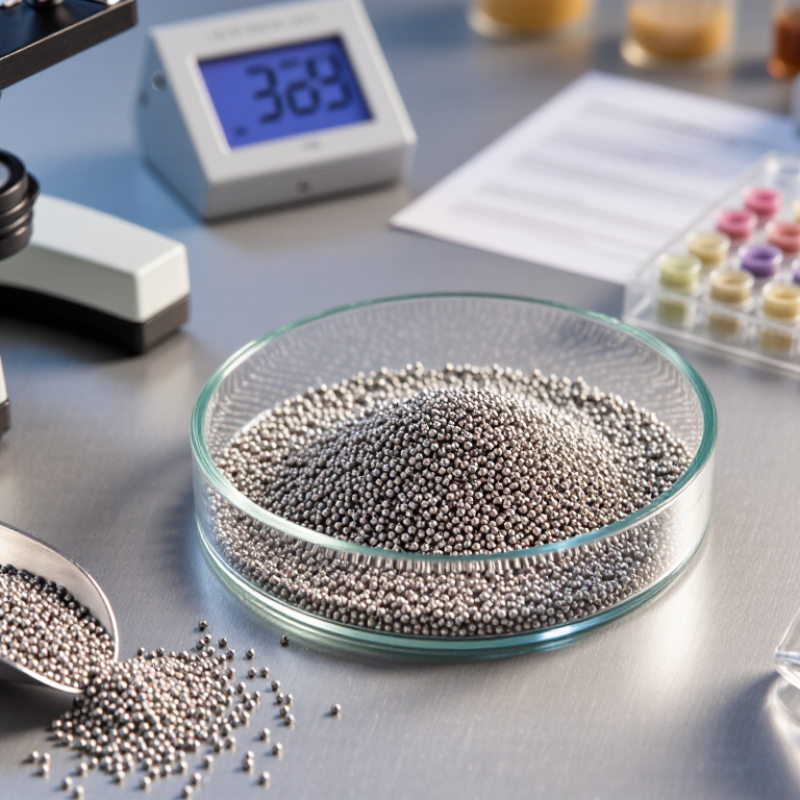
Define the powder’s job before comparing suppliers. Specify the stainless steel grade and intended process, such as additive manufacturing, molding, or thermal spraying. Each application places different demands on particle shape, flow, and packing. Small details matter. A powder that spreads smoothly in a thin layer may not suit every production method.
Set measurable requirements, not vague terms like “fine powder.” State the target particle-size range, including D10, D50, and D90 where relevant. Add limits for oxygen, moisture, and contaminants, plus acceptable apparent density and flowability. Identify required test methods and documentation, such as a lot-specific certificate of analysis. A common planning mistake is to focus on grade alone. Two powders with the same grade can behave differently because their size distribution or morphology differs.
Consider how the powder will be stored and handled. Will it face repeated opening, long storage, or humid conditions? Define packaging, shelf-life expectations, and traceability needs before requesting a quotation. If a value is uncertain, say so and ask for representative sample data. That is more useful than setting a precise limit without evidence. Test a sample using your own equipment and process settings; supplier data may not predict performance on your production line. Keep the specification practical, and revise it when trial results reveal a gap.
| Requirement | What to Define | Example Inquiry Specification | What to Confirm with the Supplier |
|---|---|---|---|
| Application and process | Describe the intended process and component, such as metal additive manufacturing, powder metallurgy, thermal spraying, or another use. | Gas-atomized powder for a qualified laser powder bed fusion process. | Confirm that the powder’s size distribution, flow behavior, and morphology are suitable for the specific equipment and process parameters. |
| Stainless steel grade | Specify the grade or required chemical composition. Common options include 316L, 304L, and precipitation-hardening 17-4 PH. | 316L stainless steel, with chemistry reported against the agreed specification. | Request a chemical analysis and clarify the applicable standard, permitted composition limits, and any project-specific restrictions. |
| Particle size distribution | State the target size range and measurement method. The suitable range depends on the process and equipment. | Request a target range such as 15–45 μm for evaluation, subject to process compatibility. | Ask for the measured particle size distribution, including D10, D50, and D90 where available, plus the test method and acceptance limits. |
| Particle morphology | Define any need for spherical particles, low satellite content, or limits on irregular and hollow particles. | Spherical, gas-atomized powder with morphology supported by representative inspection data. | Clarify how morphology is assessed and request representative microscopy images or inspection results when morphology is critical. |
| Flow and packing properties | Identify flowability and packing requirements relevant to feeding, spreading, or compaction. | Report flow or apparent-density results using an agreed test method; set acceptance limits after process trials. | Confirm the test method, sample condition, and whether results are typical values or batch-specific measurements. |
| Oxygen and other interstitial elements | Set limits for oxygen, nitrogen, and other elements that may affect material performance or process suitability. | Request batch-specific oxygen and nitrogen results, with limits agreed for the application. | Check the analytical method, reporting units, and whether the supplier can meet the limits consistently across batches. |
| Quantity and batch size | Specify the sample amount, expected production volume, and preferred batch consistency. | Begin with a small evaluation lot, then define the production quantity after process validation. | Confirm minimum order quantity, available lot sizes, lead time, and whether repeat orders can be supplied to the same specification. |
| Quality records and traceability | Define the records needed for incoming inspection, qualification, and production control. | Request a lot-specific certificate of analysis, lot identification, and documented test results. | Confirm document content, traceability from powder lot to test results, change-notification practices, and retention of quality records. |
| Packaging and storage | Specify container size, moisture protection, labeling, and handling requirements. | Request sealed, clearly labeled containers appropriate to the powder quantity and transport conditions. | Confirm packaging materials, net weight, storage guidance, shelf-life policy if applicable, and safe handling documentation. |
| Qualification and supply continuity | Plan sample evaluation, approval criteria, and the process for managing future specification or production changes. | Qualify an initial lot against agreed tests before approving routine supply. | Ask about production controls, lot-to-lot data, notification of material or process changes, and contingency planning for supply interruptions. |
Example values are starting points for discussion, not universal specifications. Final chemistry, particle-size limits, test methods, and acceptance criteria should be agreed for the intended process and applicable material standard.
A capable stainless steel powder supplier should explain how its production route affects consistency. Ask whether the powder is gas-atomized or water-atomized, and request recent certificates showing chemistry, particle-size distribution, oxygen content, and apparent density. For additive manufacturing, ASTM F3049 provides guidance on characterizing metal powders; it is a useful reference when comparing test methods. The Wohlers Report 2024 estimated the global additive manufacturing industry reached $20.035 billion in revenue in 2023. That growth makes reliable powder qualification more important, not less.
Look beyond equipment lists. Ask how the supplier controls atomization, sieving, blending, and batch traceability. Can it provide samples from multiple lots? Can its team investigate a change in powder flow or a rough surface finish? A polished brochure is not evidence. I would not treat one good sample as proof of stable production; it is easy to overlook variation between batches. Check whether the supplier can scale your required volume without changing its process or documentation.
Tips: Request a small trial lot and compare its test results with your own measurements. Confirm lead times, minimum order quantities, and how deviations are reported. Keep the questions specific: “What was the D90 for this lot?” is more useful than “Is the powder consistent?”
A dependable stainless steel powder supplier should make its quality controls visible, not just promise consistency. Ask how each lot is identified and traced from production through shipment. Review a recent certificate of analysis and check that it lists the grade, chemical composition, particle-size distribution, and test methods. For applications sensitive to oxygen content or flow, confirm those properties are measured against agreed limits. Details matter.
Examine the testing process, too. Ask whether samples represent the full lot, which instruments are used, and how calibration is maintained. A neat report is useful, but only if the method and acceptance criteria are clear. Compare results across several lots; small variations can reveal more than a single impressive sample. No checklist catches everything.
Tips: Request a sample report before placing an order. Verify that any quality-system certificate is current and covers the relevant site and activity. Keep a retained powder sample and document agreed specifications. If a supplier cannot explain a test result in plain language, pause and ask again. Certifications support confidence, but they do not replace product-specific testing or careful review.
Compare quotations on equal terms. A low price may exclude testing, protective packaging, or freight. Cheap isn’t always cheap. Check that each offer specifies the same alloy composition, particle-size range, order quantity, and delivery location.
Ask whether the price changes with volume or reflects a one-time discount. Small details matter: a moisture barrier or sealed drum can affect handling costs after the powder arrives.
Lead times deserve the same scrutiny. Ask whether the quoted date covers production, inspection, and shipment, or only dispatch. A supplier with material in stock may deliver sooner, but confirm that the lot meets your requirements.
Request recent delivery records and ask how delays are communicated. Promises are easy. A dated schedule is more useful. In practice, forecasts can still slip, so leave room for incoming inspection and production planning.
Supply reliability shows up in repeatable batches and clear communication. Compare available lot documentation, test methods, and procedures for addressing out-of-spec results.
You might request a sample or review records from several recent shipments before committing to a larger order. Also ask who will respond if a shipment is delayed or a batch needs investigation. A polished sales answer is not proof of dependable service; specific, verifiable details are better.
A supplier’s technical support should extend beyond sending a certificate with each shipment. Ask for recent batch data on chemistry, particle-size distribution, apparent density, flow rate, and oxygen content. Request the test methods and limits, not just pass/fail results. World Stainless reported 58.4 million tonnes of crude stainless steel production in 2023 in its Stainless Steel in Figures 2024 report. That scale reflects a mature, demanding industry, but it does not guarantee that a powder will behave consistently on your equipment. Small details matter.
Check whether the supplier can help investigate changes in recoater behavior, flow, or build defects using your machine and process settings. ASTM methods such as B214 for sieve analysis and B213 for flow rate can support comparable testing, provided both parties use consistent procedures. For long-term compatibility, compare several batches and agree on change notifications, retained samples, and documentation before production. Run a controlled trial; record powder reuse cycles and the settings that produced acceptable parts. A polished certificate can still miss a process mismatch. I would also ask how quickly technical staff respond when results drift, because a slow answer can disrupt qualification plans.
These nominal aperture sizes correspond to ASTM E11 sieve designations and provide a reference for discussing powder sizing with suppliers. Confirm the required particle-size distribution, test method, and reporting format for your process; sieve openings are not a powder specification or acceptance limit.
„Thanks to the LUVIR technology, the solder resist process could be switched directly from the previously used mask exposure to direct exposure. As an outstanding digital solution on the market, this technology has been able to demonstrate fast process times and superior quality on our certified conventional ink in production. This allowed us to fully digitize the solder mask process at low cost – without process or ink adjustments. An excellent benefit to our production in Rot am See.“
Ralf Göhringer (Head of Production WE Rot am See)
I would definitely recommend the Limata machine and team for a future company purchase
Michael Greenaway
Compunetics Inc.
“The Limata ldi has been amazing!! Best thing we did was buy this machine”
Richard Brady
GM
Circuitlabs
“Since 2019, we have been running the Limata X1000 LDI system (including LUVIR for solder mask imaging) in daily production as an addition to our current process with film. The machine was capable of properly exposing Taiyo PSR-4000 BN (DI) solder mask types on normal to high-copper boards using a new and unique direct imaging process. The machine operating interface is very user friendly which allowed for a quick technical training curve. The pre-registration processing reduced several seconds of production time at every print. Limata support and service staff is incomparable. They supported our team every step of the way at basically any time of the day or night, with literally, an immediate response time, customizing the software interface to best fit our Operations and needs.
We have exposed more than 8,000 prints since end of October, on various solder mask colors and some resist film panels. Limata, has proven to be very capable and innovative. They are a strong contender in the industry.
We have very much enjoyed this project, and working with the team!
Thank you Limata for the continued support and being a part of our growth.”
Bill Sezate
Vice President, GM
Summit Interconnect
As a replacement to our current contact exposure process with film, the LIMATA X2000 system including LUVIR-Technology was capable of properly exposing non-LDI solder mask types using a direct imaging process. The machine offers cutting edge software with a very intuitive operating interface which allowed for quick technician training curve. The dual drawer system combined with pre-registration processing reduced several seconds of production time at every machine cycle. Limata support and service staff is world class. They added software patches to keep production running at shortest possible response times, customized the software interface to best fit our in-house Operations system, and even wrote a step-by-step machine processing manual. As a result of the project, we have exposed more than 16,000 times on various product types and solder mask brands/colors. Limata, in a very short timeframe as a company, has definitely shown they are truly innovative and will be challenging the industry of direct imaging for the top spot.
Kevin Beattie
Process Engineer
TTM Technologies
Forest Grove Division
