Choosing a Standard Conveyor is not simply a matter of matching belt width to product size. The right system must move the actual load safely, at the required rate, through the available space. A carton line may need a simple belt; mixed packages or steep transfers may require rollers, guards, or incline sections. Even small details matter. Product weight, shape, surface, temperature, and packaging all affect tracking and transfers. So do washdown needs, dust, noise limits, operator access, and floor space. Real sites surprise you.
This guide explains how to compare conveyor types, materials, drive options, controls, and installation requirements. It also outlines what to ask suppliers about capacity, duty cycle, safety features, maintenance access, and spare parts. A useful specification starts with operating data, not a catalog photograph or a guessed peak rate. Measure the heaviest item, observe the busiest shift, and map every transfer point. Then consider how product changes could affect the design. There is no perfect choice. A lower-cost system can become expensive if it causes jams, awkward cleaning, or difficult repairs. Conversely, extra automation may add complexity without improving the process. The best decision balances performance, reliability, footprint, and support over the equipment’s working life. Because site conditions differ, confirm final sizing and safety details with a qualified conveyor supplier or engineer.
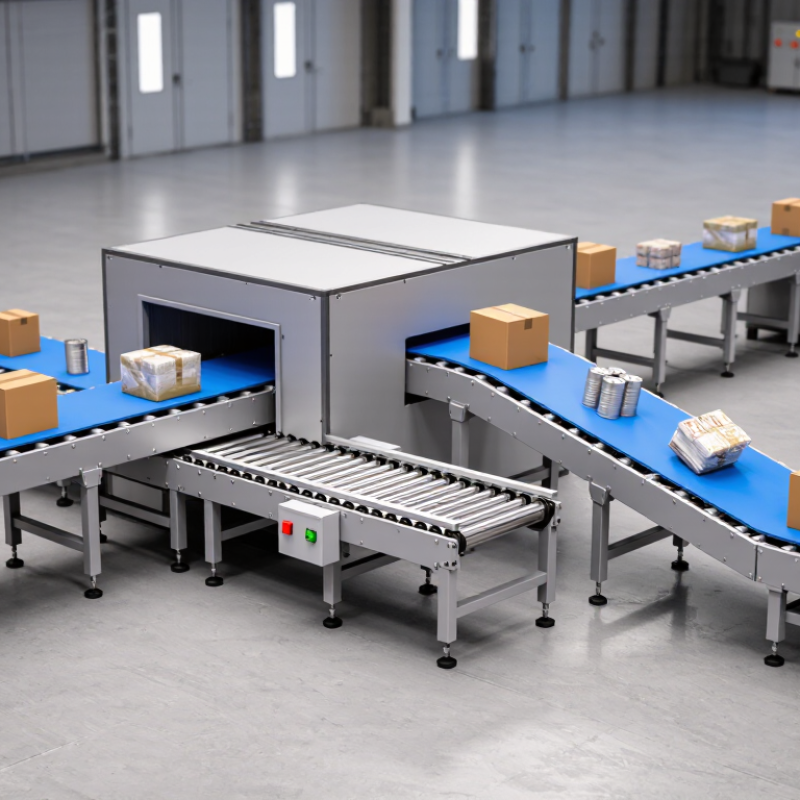
A standard conveyor should be selected around the material it will carry, not just the available floor space. Is it loose powder, small components, cartons, or damp produce? Surface texture, shape, and moisture affect grip and transfer. Fine material may escape through gaps, while smooth items can slide on an inclined belt. Test a representative sample if possible. Small details matter.
Define the load using the heaviest expected item, including its packaging. Also note how that weight sits on the conveyor. A long box spreads its load; a compact part can concentrate pressure on a few rollers. Consider impact at loading points, too. A static weight rating may not reflect repeated drops or sudden starts. The label alone is not the whole story.
Throughput means more than an hourly target. Record units per minute during busy periods, and note whether items arrive steadily or in batches. Allow for pauses, changeovers, and downstream delays. A line sized for average flow may struggle during a rush. More speed is not always better; it can create spacing problems or overwhelm the next station. Measurements from one shift may be imperfect, so check them again during a typical peak period.
A standard conveyor should match the product’s shape, weight, and surface—not just the available floor space. Start by checking how items arrive and where they need to go. A flat belt carries loose or small products without letting them slip between rollers. Roller conveyors suit stable cartons and totes, especially when workers need to push or turn them by hand. That distinction matters.
Next, consider the process. An incline belt may move products between levels, while cleats help prevent items from sliding backward. If products need to queue, choose a layout that supports controlled accumulation without crushing packages. Keep transfer points close and level where possible. Small gaps cause trouble. Narrow items can catch, and soft packaging may snag at an exposed edge.
Process conditions matter, too. A dusty area may need accessible cleaning points; damp or oily products can affect belt grip. Check the heaviest load, the smallest item, and the pace of real production, not just ideal conditions. A catalog speed is only a starting point; actual loading is rarely so tidy. Operators often notice awkward handoffs that a plan misses. Test a representative product through turns, merges, and transfers before settling on a configuration.
Choosing the right standard conveyor system begins with demand, not catalog speed. Record average and peak cartons per hour, then size capacity for surges. Peak demand matters. A line rated for 1,000 cartons per hour can still fall short when mixed carton sizes create gaps or merges interrupt flow. Measure package length, width, weight, and daily volume. Note fragile loads and accumulation points, too. These details are easy to miss during early planning.
Speed only helps when transfers and downstream work can keep pace. A faster belt may feed cartons to a labeling station quickly, then create a queue at packing. MHI’s 2024 Annual Industry Report found that 55% of respondents planned to increase investment in supply chain innovation and technology. That indicates investment interest, not proof that higher conveyor speed pays off. Compare straight runs, curves, inclines, and accumulation zones against the actual floor plan. CEMA design guidance can inform conveyor layout and safe operation. Still, a neat drawing may hide awkward maintenance access. Check jam-clearing space and noise near operator positions before approval.
How to Choose the Right Standard Conveyor System?
Check Site Conditions, Safety, and Integration Needs
A conveyor that fits the catalog may not fit the building. Measure aisle widths, door openings, column spacing, floor slopes, and headroom where maintenance staff need access. Check dust, moisture, temperature, and washdown requirements; these can affect belt choice, guarding, and motor placement. Note where operators load cartons and where pallets turn. Small details matter. The U.S. Bureau of Labor Statistics reported a 2022 recordable injury rate of 4.8 cases per 100 full-time workers in transportation and warehousing, compared with 2.7 across private industry (BLS, Survey of Occupational Injuries and Illnesses). That gap makes clear access to emergency stops, guarded pinch points, and safe clearing procedures essential—not optional.
Map the conveyor’s connections before choosing equipment. List required throughput, carton sizes, peak loads, accumulation points, and handoff locations. Confirm how controls will communicate with scanners, warehouse software, and upstream or downstream machines. MHI’s 2024 Annual Industry Report found that 88% of surveyed organizations planned to increase supply-chain technology investment over the next five years. Integration deserves early attention. Ask vendors to document signal interfaces, fault responses, and restart behavior; test these with real operating scenarios. A layout drawing can look perfect and still miss a service door or awkward transfer. This step is often rushed; it should not be. Verify assumptions on site, with operators and maintenance staff in the room.
| Evaluation Area | Site Condition or Requirement to Check | Suitable Standard Conveyor Options | Selection Guideline |
|---|---|---|---|
| Available space and route | Measure the usable floor area, aisle clearances, column locations, doorways, and any required turns or elevation changes. | Straight or curved belt conveyors; straight or curved roller sections; modular layouts with transfer points. | Map the route before choosing equipment. Confirm that the layout preserves access for people, emergency exits, and routine maintenance. |
| Product size and base | Record the smallest and largest item dimensions, shape, underside condition, and whether products arrive individually or in cases. | Belt conveyors support small or irregular items; roller conveyors suit unit loads with a firm, reasonably flat base; slat conveyors can support products needing a more continuous surface. | Check that the product is adequately supported and stable at transfers, curves, and gaps. Test small items to ensure they cannot fall between rollers. |
| Load and accumulation | Determine the maximum item or unit-load weight, load distribution, spacing, and whether products must queue without stopping the entire line. | Gravity rollers for suitable manually moved loads; powered belt or roller conveyors for controlled movement; zoned accumulation systems where buffering is needed. | Verify conveyor capacity against the heaviest load and operating pattern. Accumulation equipment should be designed to limit product pressure and avoid damaging goods. |
| Throughput and speed | Estimate peak items per minute or hour, operating shifts, expected variation, and any required spacing or orientation. | Powered belt or roller systems for continuous, controlled flow; gravity sections for simple transfers where manual control is acceptable. | Size the line for peak demand rather than average demand alone. Confirm that upstream and downstream equipment can handle the same flow rate. |
| Floor, incline, and elevation | Check floor level and condition, support points, available headroom, and the height difference between pickup and discharge points. | Level belt or roller conveyors; incline belt conveyors with an appropriate surface or cleats; inclined powered roller systems where the load and design permit. | Do not select an incline from angle alone. Validate product stability, belt grip, load behavior, and stopping performance under actual operating conditions. |
| Environment and cleaning | Identify dust, moisture, washdown, temperature variation, corrosive substances, and any cleanliness or hygiene requirements. | Belt, roller, or slat systems configured with materials and components appropriate to the environment; open or cleanable designs where access is important. | Specify materials, seals, electrical enclosures, and cleaning methods for the actual site conditions. Confirm compatibility with any required hygiene procedures. |
| Safety and access | Review nip points, moving parts, operator tasks, loading and clearing points, emergency access, and foreseeable misuse. | Any conveyor type with risk-appropriate guarding, emergency-stop devices, safe access points, and suitable control arrangements. | Complete a machinery risk assessment. Consider applicable requirements such as ISO 12100 for risk assessment and ISO 13850 for emergency-stop design; confirm local regulations and standards. |
| Controls and system integration | Check interfaces with upstream and downstream machines, sensors, scanners, weighing equipment, control systems, and production data requirements. | Powered belt or roller systems with the required sensors, drives, control logic, and communication interfaces; gravity sections for non-powered transitions. | Define interface signals, start/stop behavior, fault handling, and line ownership before installation. Test interlocks and recovery procedures across the full line. |
| Maintenance and future changes | Assess access to wear parts, cleaning points, electrical components, and adjustment locations; consider planned changes in products or capacity. | Conveyor sections with accessible service points and replaceable wear components; modular layouts where the process may change. | Allow safe maintenance clearance and plan isolation procedures. Confirm availability of operating documentation, spare parts, and training for site personnel. |
Final selection should be verified against the actual product, operating conditions, risk assessment, and applicable local requirements.
How to Choose the Right Standard Conveyor System?
Maintenance demands shape a conveyor’s real cost long after installation. Compare routine tasks, not just the purchase price. Ask how often belts need tensioning, rollers need replacement, and bearings require inspection. A system with guarded, hard-to-reach components may turn a small repair into hours of labor.
Request a maintenance schedule and price common wear parts before comparing options. Check whether your team can replace a roller with standard tools, and whether critical spares are readily available. Small costs add up. Include technician time, replacement parts, energy use, and expected downtime in your total ownership estimate. Downtime hurts. A stopped line can delay work beyond the conveyor itself.
Use your own operating conditions when reviewing estimates. Dust, washdown routines, heavy loads, and long daily run times can change service needs. Ask suppliers to explain their assumptions, then compare them with maintenance records from similar equipment in your facility. Estimates are imperfect; actual wear may differ from projections. Still, a clear cost model helps reveal whether a lower upfront price could mean more frequent repairs or harder servicing over time.
Evaluate maintenance demands and total ownership cost over a 10-year operating period.
Gravity roller systems can be a cost-effective choice for simple, low-volume handling, while powered systems add energy and component costs but support controlled movement. Chain systems may require more maintenance labor, especially in demanding applications. Values are illustrative planning estimates per 10 m of conveyor—not market benchmarks or supplier quotes. The model assumes two shifts per day, 250 operating days per year, and includes estimated equipment, energy, scheduled parts, and maintenance labor; it excludes downtime, installation, and site-specific costs.
„Thanks to the LUVIR technology, the solder resist process could be switched directly from the previously used mask exposure to direct exposure. As an outstanding digital solution on the market, this technology has been able to demonstrate fast process times and superior quality on our certified conventional ink in production. This allowed us to fully digitize the solder mask process at low cost – without process or ink adjustments. An excellent benefit to our production in Rot am See.“
Ralf Göhringer (Head of Production WE Rot am See)
I would definitely recommend the Limata machine and team for a future company purchase
Michael Greenaway
Compunetics Inc.
“The Limata ldi has been amazing!! Best thing we did was buy this machine”
Richard Brady
GM
Circuitlabs
“Since 2019, we have been running the Limata X1000 LDI system (including LUVIR for solder mask imaging) in daily production as an addition to our current process with film. The machine was capable of properly exposing Taiyo PSR-4000 BN (DI) solder mask types on normal to high-copper boards using a new and unique direct imaging process. The machine operating interface is very user friendly which allowed for a quick technical training curve. The pre-registration processing reduced several seconds of production time at every print. Limata support and service staff is incomparable. They supported our team every step of the way at basically any time of the day or night, with literally, an immediate response time, customizing the software interface to best fit our Operations and needs.
We have exposed more than 8,000 prints since end of October, on various solder mask colors and some resist film panels. Limata, has proven to be very capable and innovative. They are a strong contender in the industry.
We have very much enjoyed this project, and working with the team!
Thank you Limata for the continued support and being a part of our growth.”
Bill Sezate
Vice President, GM
Summit Interconnect
As a replacement to our current contact exposure process with film, the LIMATA X2000 system including LUVIR-Technology was capable of properly exposing non-LDI solder mask types using a direct imaging process. The machine offers cutting edge software with a very intuitive operating interface which allowed for quick technician training curve. The dual drawer system combined with pre-registration processing reduced several seconds of production time at every machine cycle. Limata support and service staff is world class. They added software patches to keep production running at shortest possible response times, customized the software interface to best fit our in-house Operations system, and even wrote a step-by-step machine processing manual. As a result of the project, we have exposed more than 16,000 times on various product types and solder mask brands/colors. Limata, in a very short timeframe as a company, has definitely shown they are truly innovative and will be challenging the industry of direct imaging for the top spot.
Kevin Beattie
Process Engineer
TTM Technologies
Forest Grove Division
