Choosing the right universal joint is crucial for mechanical efficiency. A universal joint, also known as a U-joint, connects shafts at angles. It allows for smooth power transmission while accommodating misalignment. This understanding is essential for engineers and technicians involved in machinery design and repair.
When selecting a universal joint, consider factors like load capacity, size, and material. Each joint serves a different purpose based on these attributes. For example, a heavy-duty application requires a robust design that can endure significant stress. Conversely, lighter applications might prioritize cost-effectiveness and flexibility.
Moreover, compatibility cannot be overlooked. Using the wrong universal joint can lead to premature wear or failure. It's vital to assess existing systems before making a choice. While expert knowledge aids this process, user experience can also provide valuable insights. Reflecting on past mistakes can lead to better decisions.
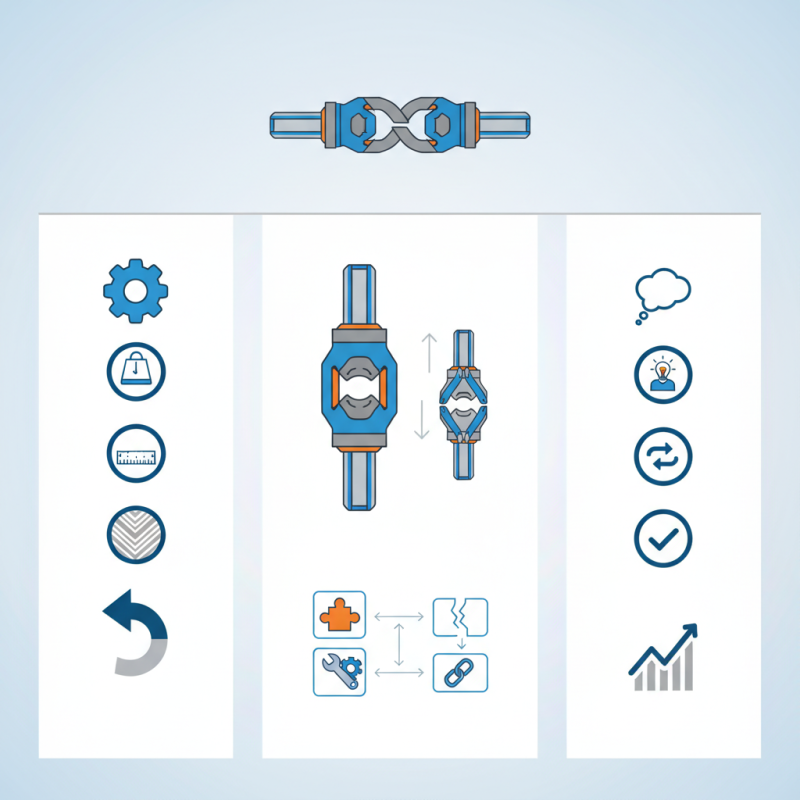
Universal joints are essential mechanical components that allow for flexible movement in various systems. Understanding their types and functionality is crucial for making informed choices. The most common types include Hooke joints, which provide angular flexibility, and constant velocity joints, known for maintaining a constant speed regardless of angle.
When selecting the right universal joint, consider the application. Some joints are designed for high torque, while others are better for lightweight applications. The material can also impact performance. Steel joints are durable, but lighter materials might suit specific needs. It's important to evaluate the environment, such as exposure to harsh chemicals or extreme temperatures.
Not all joints are created equal. Proper installation is critical for functionality. Misalignment can lead to premature wear and failure. Regular maintenance helps ensure longevity but can be overlooked. Reflecting on past experiences can guide future decisions. It’s essential to stay informed about advancements in joint technology as well.
When selecting a universal joint, it's essential to assess application needs thoroughly. Load requirements are crucial; heavier loads demand stronger joints to prevent failure. Consider the maximum weight the joint will handle. This assessment often requires detailed calculations and testing. Underestimating can lead to costly breakdowns.
Speed is another vital factor. High-speed applications can cause wear and overheating. It’s important to match the joint design with the operational speed. Pay attention to how the rotation affects performance over time. Some joints excel at lower speeds, while others may be designed for rapid rotation.
Angle requirements must not be overlooked. Universal joints function best within specific angle ranges. Exceeding these limits can result in increased wear or even joint failure. It’s a balancing act. Engaging in a thorough evaluation of these factors is key. Sometimes, trial and error is necessary to find the perfect fit. Reflect on past experiences to guide your current choices. A thoughtful approach leads to better long-term performance.
When selecting a universal joint, material choice is essential. Various materials can significantly affect durability and performance. For instance, steel is popular for its strong tensile strength, but aluminum offers lightweight benefits. The trade-off is often between weight and strength.
According to industry reports, stainless steel joints exhibit exceptional corrosion resistance. This can extend their lifespan in harsh environments. The right material can reduce maintenance costs significantly, potentially by up to 30%. However, some factors are frequently overlooked. For example, the joint's exposure to temperature extremes can affect its properties.
Plastic composites are becoming more common. They are lightweight and resistant to certain chemicals. Yet, they may not withstand heavy loads. Engineers must carefully evaluate the application requirements. A mismatch can lead to premature failure. As reports indicate, nearly 15% of joint failures arise from improper material selection. Thus, conducting thorough assessments is crucial for optimal performance.
Maintaining universal joints is crucial for ensuring their longevity. Regular inspection is key. Look for signs of wear or damage, such as pitting or rust. Any visible grease leakage indicates a problem. Contaminated joints can lead to failures, so cleanliness is vital during maintenance. When inspecting, check for proper lubrication. Inadequate lubrication increases friction, causing premature wear.
Lubrication frequency is essential. Joints should be greased every few months, depending on usage. Heavy-duty applications may require more frequent attention. Implement a regular schedule to avoid overlooking this task. Using the correct grease is also important. Different joints might require specific grease types for optimal performance.
Consider environmental factors. Exposure to dirt, moisture, or extreme temperatures can impact joint lifespan. If joints operate in harsh conditions, protective covers might be warranted. This change could preserve functionality, but it’s not a one-size-fits-all solution. Assessing your unique environment consistently can guide better decisions. Regular checks and mindful adjustments ensure your universal joints perform reliably over time.
| Universal Joint Type | Material | Load Capacity (lbs) | Operating Temperature (°F) | Maintenance Frequency (months) |
|---|---|---|---|---|
| Standard Steel U-Joint | Steel | 5000 | -40 to 200 | 6 |
| High-Performance U-Joint | Alloy Steel | 6000 | -40 to 250 | 12 |
| Corrosion-Resistant U-Joint | Stainless Steel | 4800 | -40 to 300 | 8 |
| Plastic U-Joint | Plastic Composite | 2000 | -20 to 150 | 24 |
When installing a universal joint, alignment and fitment play critical roles in performance and longevity. Proper alignment ensures that the joint functions smoothly within the drivetrain. Misalignment can lead to excessive wear and potential failure. Take the time to inspect your setup before installation.
One tip is to use a dial indicator for precision. It helps check runout, which can prevent future issues. Ensure that all components are clean and free of debris. Dirt can cause misalignment. Regular maintenance checks will help catch problems before they escalate.
Another essential aspect is the fitment of the joint. Verify that the sizing matches your application. An improper fit can lead to vibrations during operation. Carefully review the specifications. Remember, sometimes what seems like a minor detail can have significant consequences. If you notice unusual noises, reflect on your installation process. Could misalignment be the cause? Taking the time to address fitment issues will pay off in the long run.
This chart illustrates the key factors to consider when selecting a universal joint, rated by their importance on a scale from 1 to 10. The most critical factors include torque capacity and operating angle, followed by material, size, and weight considerations.
„Thanks to the LUVIR technology, the solder resist process could be switched directly from the previously used mask exposure to direct exposure. As an outstanding digital solution on the market, this technology has been able to demonstrate fast process times and superior quality on our certified conventional ink in production. This allowed us to fully digitize the solder mask process at low cost – without process or ink adjustments. An excellent benefit to our production in Rot am See.“
Ralf Göhringer (Head of Production WE Rot am See)
I would definitely recommend the Limata machine and team for a future company purchase
Michael Greenaway
Compunetics Inc.
“The Limata ldi has been amazing!! Best thing we did was buy this machine”
Richard Brady
GM
Circuitlabs
“Since 2019, we have been running the Limata X1000 LDI system (including LUVIR for solder mask imaging) in daily production as an addition to our current process with film. The machine was capable of properly exposing Taiyo PSR-4000 BN (DI) solder mask types on normal to high-copper boards using a new and unique direct imaging process. The machine operating interface is very user friendly which allowed for a quick technical training curve. The pre-registration processing reduced several seconds of production time at every print. Limata support and service staff is incomparable. They supported our team every step of the way at basically any time of the day or night, with literally, an immediate response time, customizing the software interface to best fit our Operations and needs.
We have exposed more than 8,000 prints since end of October, on various solder mask colors and some resist film panels. Limata, has proven to be very capable and innovative. They are a strong contender in the industry.
We have very much enjoyed this project, and working with the team!
Thank you Limata for the continued support and being a part of our growth.”
Bill Sezate
Vice President, GM
Summit Interconnect
As a replacement to our current contact exposure process with film, the LIMATA X2000 system including LUVIR-Technology was capable of properly exposing non-LDI solder mask types using a direct imaging process. The machine offers cutting edge software with a very intuitive operating interface which allowed for quick technician training curve. The dual drawer system combined with pre-registration processing reduced several seconds of production time at every machine cycle. Limata support and service staff is world class. They added software patches to keep production running at shortest possible response times, customized the software interface to best fit our in-house Operations system, and even wrote a step-by-step machine processing manual. As a result of the project, we have exposed more than 16,000 times on various product types and solder mask brands/colors. Limata, in a very short timeframe as a company, has definitely shown they are truly innovative and will be challenging the industry of direct imaging for the top spot.
Kevin Beattie
Process Engineer
TTM Technologies
Forest Grove Division
