Choosing a Warehouse Racking System is not simply a matter of fitting the most shelves into a building. The right setup should support the products, equipment, and daily movement of your operation. A pallet of bottled goods, for example, places different demands on a rack than cartons picked by hand. Aisle width, ceiling height, floor condition, and forklift turning space all influence what will work safely and efficiently.
Begin with the details you can measure. Record product dimensions and weights, inventory turnover, pallet sizes, and the handling equipment used on each shift. Then compare options such as selective pallet racking, drive-in systems, and shelving against those needs. Check rated capacities and installation requirements with the rack manufacturer or a qualified professional; a layout that looks efficient on paper may not suit your actual loads. Small details matter.
The best choice also leaves room for change. Seasonal stock, new equipment, or a different picking process can make a once-practical layout awkward. Consider access, inspection, maintenance, and future expansion alongside storage density. There may be no perfect system, and that is worth admitting. A careful decision comes from balancing measurable requirements with the realities of the warehouse floor, then reviewing the plan before installation. This guide outlines the key questions to ask so you can choose a Warehouse Racking System that fits your operation rather than forcing your operation to fit the racks.
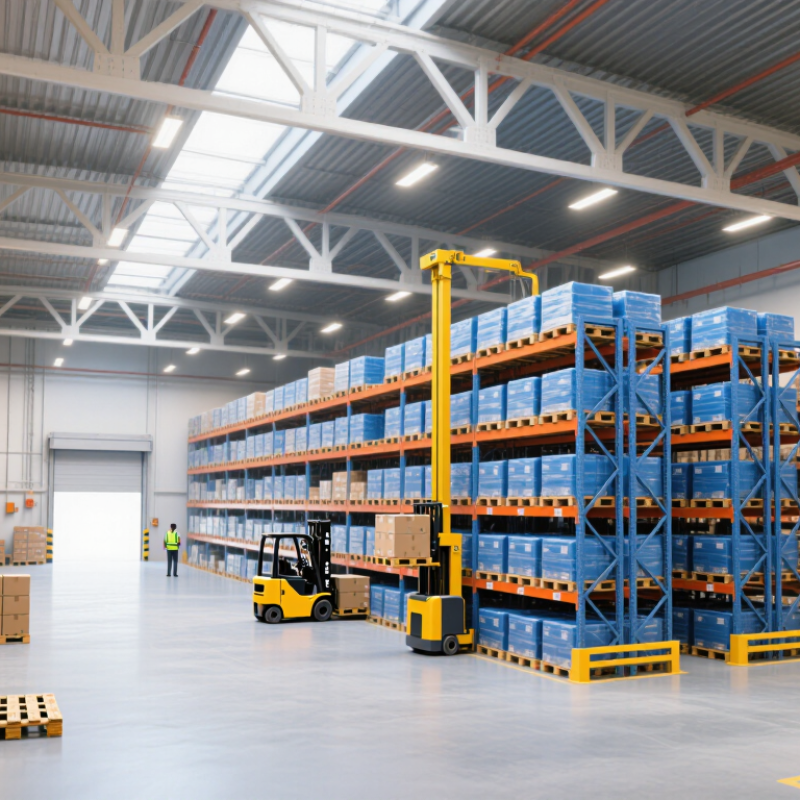
Start with the stock. Record each item’s dimensions, weight, and turnover rate, then note how often it is picked. Fast-moving cartons may belong near packing areas, while slower stock can occupy less accessible locations. Measure ceiling height, floor condition, columns, doors, and sprinkler clearance before comparing rack layouts. A tape measure and a marked floor plan can reveal constraints that a drawing misses.
Then match the system to daily work. Check forklift turning space, picking methods, replenishment routes, and peak-season volume. Deep storage can use space efficiently, but may slow access when workers need a specific pallet. Select rack capacities using verified load data, and make sure the design suits the actual pallets and handling equipment. Forecasts are often wrong. Leave room for change, but avoid paying for capacity your operation cannot use. Revisit the plan after observing a normal shift; small bottlenecks near an aisle or packing bench can matter more than the storage total.
| Racking System | Typical Inventory Profile | Storage Density | Selectivity and Stock Rotation | Operational Requirements | Best Fit | Key Trade-Off |
|---|---|---|---|---|---|---|
| Selective Pallet Racking | Many SKUs with a small or moderate number of pallets per SKU; mixed product sizes. | Low to moderate. Aisles are needed for forklift access to each storage position. | Direct access to every pallet; supports FIFO or LIFO depending on inventory procedures. | Works with standard forklifts, subject to aisle width, lift height, and load requirements. | Warehouses prioritizing easy access, frequent picking, and flexible SKU changes. | Uses more aisle space than high-density systems. |
| Double-Deep Racking | Fewer SKUs with multiple pallets per SKU and reasonably consistent pallet dimensions. | Moderate to high. Two pallet positions are stored deep on each side of an aisle. | Front pallets must be moved to reach rear pallets; rear positions have reduced selectivity. | Usually requires a deep-reach truck and compatible aisle layout. | Operations seeking more pallet positions while retaining access to multiple product lines. | Requires specialized equipment and can complicate access to rear pallets. |
| Drive-In / Drive-Through Racking | Large batches of the same SKU, with few product lines and stable pallet dimensions. | High. Forklifts enter storage lanes, reducing the number of access aisles. | Drive-in commonly operates LIFO; drive-through can support FIFO when loading and unloading occur at opposite ends. | Operators drive into lanes; pallet and rack clearances require careful control. | Bulk storage of seasonal goods or uniform products with limited SKU variety. | Lower selectivity and greater care needed to avoid rack or pallet impacts. |
| Pallet Flow Racking | High-volume pallet quantities per SKU with regular replenishment and dispatch. | High. Pallets move through inclined lanes, reducing forklift travel into the storage area. | Typically FIFO: pallets are loaded at one end and retrieved at the other. | Requires flow lanes, compatible pallets, and controlled loading and replenishment practices. | Fast-moving products where stock rotation and predictable replenishment are important. | Higher system complexity; lane performance depends on pallet condition and product consistency. |
| Push-Back Racking | Several pallets per SKU, often arranged in short lanes for batch storage. | High. Multiple pallets are stored deep from the aisle on nested carts or rollers. | Generally LIFO: the most recently loaded pallet is retrieved first. | Forklift loading pushes existing pallets farther into the lane; operators need lane-specific procedures. | Products stored in batches when greater density is needed than selective racking provides. | Not suitable when strict FIFO rotation or direct access to each pallet is required. |
| Carton Flow Racking | Fast-moving cases or totes picked individually from cartons. | Moderate to high for forward-pick areas, depending on lane depth and replenishment space. | Usually FIFO within a lane as cartons move from the replenishment side to the picking face. | Needs orderly replenishment and cartons or totes that move reliably on the flow track. | Order-picking zones with frequent case-level picks and replenishment from reserve storage. | Lane capacity and product fit must be planned around carton dimensions and demand. |
| Cantilever Racking | Long, bulky, or irregular items such as pipe, timber, and metal sections. | Moderate. Open fronts allow long items to be stored without front columns. | Direct access to stored loads; stock rotation depends on the loading and picking process. | Requires suitable material-handling equipment and properly supported, balanced loads. | Storage of products that do not fit safely or efficiently on standard pallet beams. | Load dimensions, arm configuration, and floor layout can limit capacity and flexibility. |
Planning note: Storage capacity, aisle widths, rack dimensions, and load limits depend on the building, handling equipment, pallet or product specifications, and applicable safety requirements. Confirm final designs and rated capacities with a qualified rack designer or engineer.
Choosing the right warehouse racking system begins with measuring the space you can actually use. Record clear ceiling height, wall-to-wall dimensions, and the locations of columns, doors, dock areas, lights, and sprinkler lines. Measure the largest pallet and its load, too. A few centimetres can change how safely goods fit.
Aisle width should match the equipment and the work it must do. Measure a loaded forklift’s turning radius, then test the planned route around rack ends and columns. Narrower aisles may add storage positions, but they can slow picking or make everyday movements awkward. Leave room for people and handling equipment to pass. Real traffic is rarely as tidy as a floor plan.
Check floor capacity before specifying rack loads. Ask a qualified structural professional to assess the slab and confirm whether concentrated loads or floor condition limit the layout. Building features matter as well: low beams, uneven floors, and restricted exits can rule out an otherwise efficient arrangement.
Measure twice. Leave margin. It is tempting to use every inch, but that can be a poor trade when repairs, inspections, or changing inventory require access. Recheck the measurements on site before finalizing the design.
Warehouse racking is not one-size-fits-all. The right system depends on product size, stock rotation, picking methods, and available floor space. Selective pallet racking keeps each pallet directly accessible, making it practical for warehouses with many product types or frequent picking. It uses more aisle space. Aisles matter. Drive-in racking stores pallets several positions deep, which can suit larger quantities of fewer products. Forklifts enter the lanes, so consistent pallet sizes and careful operating procedures are important. Access is limited, and the system commonly supports last-in, first-out handling. Push-back racks also increase storage density, while gravity-fed pallet flow can support first-in, first-out rotation. Flow lanes need suitable maintenance.
For long goods such as timber or pipe, cantilever racks provide open arms without front uprights blocking access. Small cartons and hand-picked parts may fit better on shelving, where workers can reach items directly. A mezzanine can add a picking level, but it may lengthen travel routes and complicate replenishment. Not always an improvement. Compare rack depth, aisle width, load ratings, pallet dimensions, and the reach of existing equipment. Walk the proposed layout with pickers and forklift operators; a drawing rarely reveals every awkward turn. Have qualified professionals check floor conditions and building constraints before loads are specified. A dense layout can look efficient on paper yet slow daily work if replenishment blocks picking. That trade-off deserves a second look.
Choosing warehouse racking means balancing safety, access, future growth, and cost. Safety deserves a hard look. The Bureau of Labor Statistics reported 4.8 recordable injury cases per 100 full-time workers in warehousing and storage in 2023, versus 2.4 across private industry. These figures cover all workplace injuries, not rack failures. OSHA’s 29 CFR 1910.176(b) requires stored materials to remain stable and secure against sliding or collapse. Check load ratings, floor conditions, anchoring, and forklift clearance before installation.
Accessibility affects daily work. Selective pallet rack offers direct access to each pallet, while denser systems may limit access or require specific handling equipment. Match the layout to actual order patterns, not just the maximum number of pallets. Leave clear aisles and room for safe turning. Small details matter. For expandability, consider whether bays can be added without blocking exits or disrupting active picking areas. Compare total cost, including installation, inspections, repairs, equipment changes, and downtime—not just the initial quote. A neat spreadsheet can still miss operational friction.
Tips: Walk the proposed layout with forklift operators and pickers. Mark aisle widths on the floor, test turning paths, and confirm rack capacity signage is visible. Keep a little room for change; forecasts are rarely perfect. The right design should fit today’s inventory while allowing practical adjustments later.
A useful rack plan starts with the loads, not the empty floor. Record pallet dimensions, weights, and the heaviest load each beam level will carry. Map columns, doors, turning paths, and picking zones before setting aisle widths. Leave clear space for equipment movement and access to exits, lights, and fire protection. A layout that looks roomy on paper can feel tight once a loaded forklift turns. Check clearances in the actual building, then confirm rack capacities and anchoring details with a qualified storage-system professional.
Tips: Mark proposed rack rows on the floor with tape. Walk the routes with a pallet or cart. It is an easy step to skip, but it can reveal awkward turns early.
Use installers familiar with the selected rack type and site conditions. Before loading, check that frames are plumb, anchors are secure, and beams are locked in place. Keep load signs visible and consistent with the approved configuration. Set inspection intervals based on traffic, equipment use, and site conditions. During checks, look for bent uprights, loose anchors, damaged beam connectors, and missing safety pins. Record findings and repairs. If a rack is struck or visibly damaged, keep the affected area clear and have a competent person assess it before reuse. Even a small impact can be hard to judge by eye.
Typical preliminary aisle-width ranges by material-handling equipment (meters). Use them to compare layout options; actual clearances depend on the specific truck, load, rack design, and site requirements.
Planning note: Confirm aisle clearances with equipment and rack suppliers before installation. After installation, include rack condition checks in a documented inspection program and promptly assess any visibly damaged components.
„Thanks to the LUVIR technology, the solder resist process could be switched directly from the previously used mask exposure to direct exposure. As an outstanding digital solution on the market, this technology has been able to demonstrate fast process times and superior quality on our certified conventional ink in production. This allowed us to fully digitize the solder mask process at low cost – without process or ink adjustments. An excellent benefit to our production in Rot am See.“
Ralf Göhringer (Head of Production WE Rot am See)
I would definitely recommend the Limata machine and team for a future company purchase
Michael Greenaway
Compunetics Inc.
“The Limata ldi has been amazing!! Best thing we did was buy this machine”
Richard Brady
GM
Circuitlabs
“Since 2019, we have been running the Limata X1000 LDI system (including LUVIR for solder mask imaging) in daily production as an addition to our current process with film. The machine was capable of properly exposing Taiyo PSR-4000 BN (DI) solder mask types on normal to high-copper boards using a new and unique direct imaging process. The machine operating interface is very user friendly which allowed for a quick technical training curve. The pre-registration processing reduced several seconds of production time at every print. Limata support and service staff is incomparable. They supported our team every step of the way at basically any time of the day or night, with literally, an immediate response time, customizing the software interface to best fit our Operations and needs.
We have exposed more than 8,000 prints since end of October, on various solder mask colors and some resist film panels. Limata, has proven to be very capable and innovative. They are a strong contender in the industry.
We have very much enjoyed this project, and working with the team!
Thank you Limata for the continued support and being a part of our growth.”
Bill Sezate
Vice President, GM
Summit Interconnect
As a replacement to our current contact exposure process with film, the LIMATA X2000 system including LUVIR-Technology was capable of properly exposing non-LDI solder mask types using a direct imaging process. The machine offers cutting edge software with a very intuitive operating interface which allowed for quick technician training curve. The dual drawer system combined with pre-registration processing reduced several seconds of production time at every machine cycle. Limata support and service staff is world class. They added software patches to keep production running at shortest possible response times, customized the software interface to best fit our in-house Operations system, and even wrote a step-by-step machine processing manual. As a result of the project, we have exposed more than 16,000 times on various product types and solder mask brands/colors. Limata, in a very short timeframe as a company, has definitely shown they are truly innovative and will be challenging the industry of direct imaging for the top spot.
Kevin Beattie
Process Engineer
TTM Technologies
Forest Grove Division
