In the evolving field of mechanical design, selecting the right components is crucial. Wave Springs play a vital role in enhancing the efficiency of various applications. Experts, like John Harper, a renowned engineer in the spring industry, recognize the significance of thoughtful selection. He has stated, “Choosing the right Wave Spring can significantly impact the performance of your system.”
When considering a Wave Spring, various factors come into play. Material, load capacity, and the environment are essential. Each application can vary widely in its requirements. A misunderstanding here could lead to failures. This makes expert guidance invaluable.
Despite advancements, many still struggle with choosing the correct Wave Spring. It’s not always straightforward. The wrong choice can lead to inefficiencies or even breakage. Hence, careful evaluation is vital in ensuring that the selected Wave Spring meets both performance and reliability standards. Understanding these nuances can save time and resources in the long run.
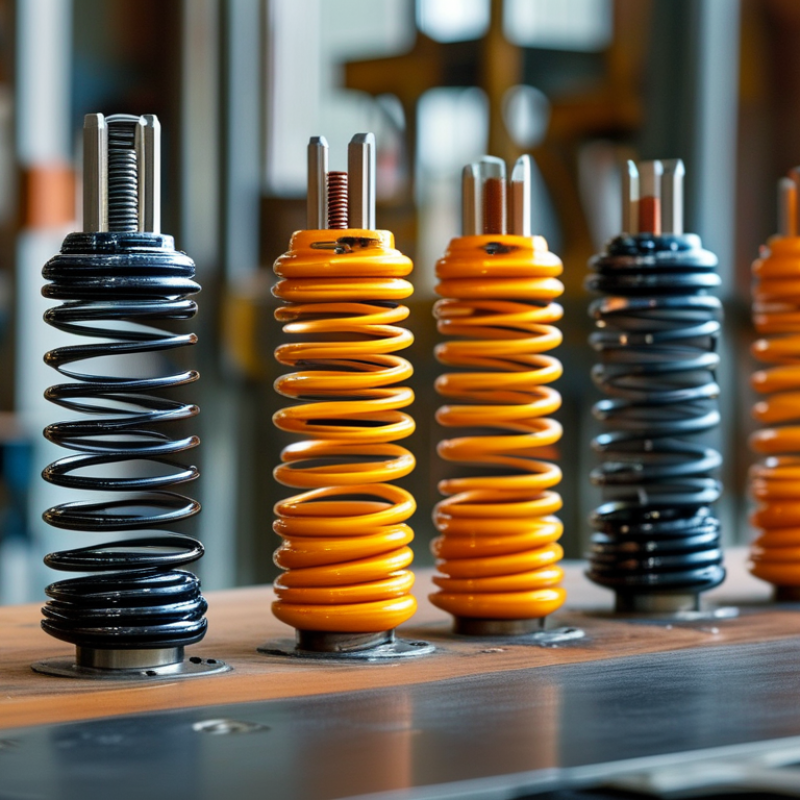
When selecting the right wave spring for your project, it's essential to understand the different designs available. Wave springs are unique because of their compact size and varying configurations. Common types include single turn and multi-turn wave springs. Each type is suitable for different applications, depending on the load and space constraints.
Choosing the right wave spring also depends on the application environment. For instance, high-temperature applications may require specific materials. Some designs work better under static loads, while others excel under dynamic conditions. Understanding these factors will lead to better performance and longevity of the spring.
Remember to consider load requirements early in the process. Adjustments may be needed if the space is limited. Testing prototypes can help identify potential failures before full-scale production. Always seek expert advice when unsure about the specifications needed. Finding the perfect wave spring is a balance of engineering knowledge and practical application.
When selecting a wave spring, material choice is crucial. The composition impacts performance, durability, and cost-effectiveness. According to industry reports, over 70% of wave spring failures occur due to improper materials. This statistic underscores the importance of selecting suitable materials that align with the application.
Stainless steel is a popular choice, known for its corrosion resistance. It performs well in challenging environments, especially when moisture is present. However, stainless steel can be costly. In some applications, carbon steel may suffice, providing a less expensive alternative. Research indicates that carbon steel wave springs are effective in low-corrosion environments, but they may face limitations in harsh conditions.
Another material to consider is a phosphor bronze alloy. This material offers excellent strength and fatigue resistance. It is particularly useful in applications requiring high load bearings. However, it is important to note that higher strength does not always mean better performance. In certain scenarios, using a softer material can lead to improved functionality and less wear over time. Balancing these factors is essential for achieving optimal results.
When selecting a wave spring, understanding load capacity and deflection is crucial. Load capacity refers to the maximum load the spring can support without permanent deformation. It’s essential to calculate the exact force needed in your application. An understated load may lead to insufficient performance, while an overstated load could cause failures.
Deflection is another critical metric. It indicates how much a spring compresses under load. Knowing the correct deflection helps determine the spring's effectiveness in your design. Too much deflection may compromise functionality. In contrast, too little may not provide the necessary space for movement.
These parameters are interconnected. A high load capacity can sometimes lead to more deflection, depending on the spring’s material and design. Experimenting with different configurations can reveal insights into optimal performance. However, designers must remain wary of the limits. Understanding the balance between load and deflection is key to making the right choice. This knowledge allows for more reliable and effective applications in various industries.
| Application Type | Load Capacity (N) | Deflection (mm) | Material | Spring Free Length (mm) |
|---|---|---|---|---|
| Automotive Suspension | 1500 | 12 | Stainless Steel | 30 |
| Industrial Machinery | 2000 | 15 | Carbon Steel | 40 |
| Medical Devices | 1000 | 10 | Titanium | 25 |
| Electronics | 800 | 7 | Phosphor Bronze | 20 |
| Aerospace | 2500 | 20 | Inconel | 35 |
When selecting a wave spring, manufacturing tolerances play a crucial role in its functionality. A wave spring’s performance depends not only on its design but also on how closely it adheres to specified tolerances. Variations in manufacturing can lead to variations in load capacity, deflection, and overall spring behavior. Ensuring that production meets exact tolerance specifications is vital for maintaining consistency across multiple units.
Common issues arise when tolerances are too loose. This can cause the wave spring to behave unpredictably, reducing its effectiveness in applications. For example, if the free height of a spring is not maintained within specifications, it may not compress or extend as intended. This inconsistency can result in premature failure in critical applications. Conversely, overly tight tolerances can increase production costs and impact scalability.
It is essential to balance these tolerances based on the application requirements. Some applications can tolerate minor variations without issue, while others demand precision. Reflecting on these factors can guide engineers towards making informed decisions. Precision in manufacturing does not guarantee perfection. It invites continuous evaluation and improvement in the design and production processes. Understanding this complexity fosters reliability in wave spring selection, ensuring optimal performance in various applications.
When selecting a wave spring, evaluating cost versus performance is crucial. A wave spring's function impacts its material, dimensions, and design complexity. Budget constraints often limit choices. However, opting for lower-cost options may lead to compromised performance. This is a delicate balance.
Consider the specific requirements of your application. For example, high-temperature environments may necessitate specialized materials, increasing costs. On the flip side, a standard material could suffice for simple tasks. Assessing these needs helps prevent overspending or, worse, product failure. Experimenting with different designs can also yield insights.
It's important to factor in long-term performance and reliability. A more expensive wave spring might offer better durability, reducing replacement costs over time. Yet, it's easy to overlook these aspects in favor of initial savings. Conducting thorough research and consulting with experts can clarify these trade-offs, ensuring informed decisions.
„Thanks to the LUVIR technology, the solder resist process could be switched directly from the previously used mask exposure to direct exposure. As an outstanding digital solution on the market, this technology has been able to demonstrate fast process times and superior quality on our certified conventional ink in production. This allowed us to fully digitize the solder mask process at low cost – without process or ink adjustments. An excellent benefit to our production in Rot am See.“
Ralf Göhringer (Head of Production WE Rot am See)
I would definitely recommend the Limata machine and team for a future company purchase
Michael Greenaway
Compunetics Inc.
“The Limata ldi has been amazing!! Best thing we did was buy this machine”
Richard Brady
GM
Circuitlabs
“Since 2019, we have been running the Limata X1000 LDI system (including LUVIR for solder mask imaging) in daily production as an addition to our current process with film. The machine was capable of properly exposing Taiyo PSR-4000 BN (DI) solder mask types on normal to high-copper boards using a new and unique direct imaging process. The machine operating interface is very user friendly which allowed for a quick technical training curve. The pre-registration processing reduced several seconds of production time at every print. Limata support and service staff is incomparable. They supported our team every step of the way at basically any time of the day or night, with literally, an immediate response time, customizing the software interface to best fit our Operations and needs.
We have exposed more than 8,000 prints since end of October, on various solder mask colors and some resist film panels. Limata, has proven to be very capable and innovative. They are a strong contender in the industry.
We have very much enjoyed this project, and working with the team!
Thank you Limata for the continued support and being a part of our growth.”
Bill Sezate
Vice President, GM
Summit Interconnect
As a replacement to our current contact exposure process with film, the LIMATA X2000 system including LUVIR-Technology was capable of properly exposing non-LDI solder mask types using a direct imaging process. The machine offers cutting edge software with a very intuitive operating interface which allowed for quick technician training curve. The dual drawer system combined with pre-registration processing reduced several seconds of production time at every machine cycle. Limata support and service staff is world class. They added software patches to keep production running at shortest possible response times, customized the software interface to best fit our in-house Operations system, and even wrote a step-by-step machine processing manual. As a result of the project, we have exposed more than 16,000 times on various product types and solder mask brands/colors. Limata, in a very short timeframe as a company, has definitely shown they are truly innovative and will be challenging the industry of direct imaging for the top spot.
Kevin Beattie
Process Engineer
TTM Technologies
Forest Grove Division
