Choosing the right Wall Washers for your lighting project can be challenging. These fixtures play a key role in enhancing aesthetics and functionality. They ensure even illumination across walls, transforming spaces in unique ways.
Selecting wall washers requires understanding your project's specific needs. Consider factors like beam angle, lumen output, and color temperature. Your choices will significantly affect ambiance and design. It's also important to think about installation and maintenance when selecting fixtures.
However, not all wall washers perform equally. Some may not meet the brightness required for larger areas. It’s crucial to read reviews and seek expert advice. By taking these steps, you can make informed decisions that elevate your lighting design.
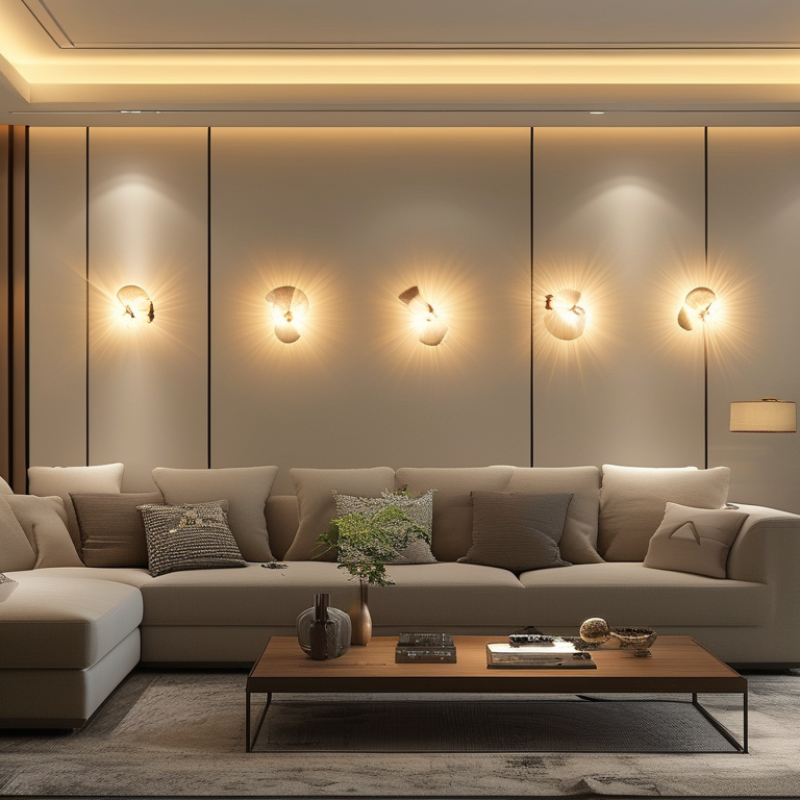
Wall washers are specialized lighting fixtures designed to illuminate walls uniformly. They create a wash of light that highlights textures, artwork, and architectural features. By distributing light evenly, these fixtures provide an inviting atmosphere in any space. They can be used for both functional and aesthetic purposes, enhancing the overall ambiance.
When choosing wall washers, consider the illumination angle. A wider beam can cover more area, while a narrow beam focuses light on specific spots. Additionally, the color temperature impacts the mood. Warm light creates a cozy feel, while cool light adds a modern touch. Understand your space's needs for the best results.
Not all wall washers perform equally. Some may not provide the expected coverage. Others might create shadows, making the wall appear uneven. Testing different options in your space can lead to better choices. Sometimes, multiple fixtures are necessary to achieve the desired effect. Reflecting on these factors helps refine your selection process.
| Feature | Description | Example Use |
|---|---|---|
| Type | Linear, round, or adjustable | Commercial spaces, galleries |
| Beam Angle | Wide (up to 180°) for a broad wash or narrow (less than 30°) for focused lighting | Focusing light on artworks or architectural details |
| Color Temperature | Warm white (3000K), cool white (4000K), or daylight (5000K) | Creating ambiance in hospitality venues |
| Voltage | Low voltage (12V) or line voltage (120V) | Residential or commercial lighting systems |
| Installation Type | Surface-mounted, recessed, or track-mounted | Retail displays or museum settings |
| Dimming Capability | Compatible with dimmer switches for adjustable brightness | Theater or event spaces |
When selecting wall washers, understanding the various types is crucial for your lighting project. Wall washers generally fall into three categories: linear, adjustable, and recessed. Linear wall washers provide even lighting along surfaces. They are ideal for corridors and long walls. Adjustable models offer flexibility. You can focus light on specific areas. Use these in galleries or display settings. Recessed options blend seamlessly into ceilings, creating a subtle aesthetic in residential or commercial spaces.
According to the Lighting Research Center, improper wall washing can lead to uneven illumination. A study revealed that well-placed washers can increase perceived room brightness by up to 30%. This effect plays a vital role in creating inviting environments. For instance, a height of 8-10 feet is often optimal for wall-mounted fixtures. The spacing between washers also affects the outcome. A rule of thumb is to place fixtures one-half of their mounting height apart.
Consider the effects of color temperature, too. Cooler temperatures create a vibrant atmosphere, while warmer light evokes coziness. It’s essential to balance these aspects according to the room's purpose. Make notes during your selection process to reflect on how each type matches your vision. Lighting design is both an art and a science, requiring thoughtful consideration of variance and beauty.
When selecting wall washers for your lighting project, understanding beam angle and light distribution is crucial. The beam angle determines how wide the light spreads. A narrow beam focuses light on a smaller area, creating a bright, spotlit effect. In contrast, a wider beam angle offers softer lighting, which is ideal for washing large walls. Consider the intended effect. If you want to highlight artwork, a narrow beam is preferred. For ambient lighting, use a wider angle.
Light distribution plays a significant role in how effectively the wall washer illuminates your space. Even distribution avoids harsh shadows and creates a balanced look. Some wall washers feature adjustable optics. This flexibility allows you to fine-tune the light for various surfaces and textures. Experiment with different settings to find what works best. Remember, the surface color and texture also impact the perceived brightness. Dark surfaces absorb more light, while light surfaces reflect it.
It's essential to reflect on how these factors interact in your design. Poor choices may lead to uneven lighting or an undesirable atmosphere. Take time to test different combinations. To achieve the desired effect, sometimes trial and error is necessary. This process will ultimately inform your decision and enhance the overall quality of the lighting project.
When selecting wall washers, positioning is crucial. Proper placement enhances the light distribution effectively. A key guideline is to install wall washers approximately 12 to 18 inches away from the wall. This distance ensures a smooth wash of light, avoiding hotspots. A report by the Illuminating Engineering Society highlights that inadequate positioning can reduce light efficiency by up to 40%.
Power supply considerations are essential for wall washers. Using fixtures that fit within the existing electrical framework can save costs. Ensure the power requirements align with the chosen fixtures. For instance, many wall washers require 120V, while others function on low voltage. According to the National Electrical Code, any wiring must meet local safety standards. Oversights here can lead to safety hazards or performance issues.
When assessing your location, remember that surface texture impacts the final effect. Textured surfaces will diffuse light differently. Conducting light tests before installation can provide clarity. Real-world observations are vital in making adjustments. Embracing flexibility will lead to an optimized lighting solution.
Wall washers play a crucial role in lighting design, enhancing aesthetics and functionality. They distribute light evenly across vertical surfaces, creating a captivating visual effect. In galleries and museums, wall washers accentuate artwork, highlighting textures and colors. This creates an atmosphere that draws viewers in, making the art more engaging.
In retail environments, wall washers can define spaces and guide customer flow. They illuminate product displays effectively, drawing attention to key items. However, selecting the right intensity and angle is vital. Too much light can create glare, while too little may not showcase products adequately. Balancing these factors is essential for optimal results.
Residential settings also benefit from wall washers. They can highlight architectural features or artwork, adding depth to a room. Yet, improper placement may result in shadows or uneven lighting. Understanding the space and its purpose is key to achieving the desired effect. Experimenting with different placements and settings can lead to unexpected but rewarding outcomes.
„Thanks to the LUVIR technology, the solder resist process could be switched directly from the previously used mask exposure to direct exposure. As an outstanding digital solution on the market, this technology has been able to demonstrate fast process times and superior quality on our certified conventional ink in production. This allowed us to fully digitize the solder mask process at low cost – without process or ink adjustments. An excellent benefit to our production in Rot am See.“
Ralf Göhringer (Head of Production WE Rot am See)
I would definitely recommend the Limata machine and team for a future company purchase
Michael Greenaway
Compunetics Inc.
“The Limata ldi has been amazing!! Best thing we did was buy this machine”
Richard Brady
GM
Circuitlabs
“Since 2019, we have been running the Limata X1000 LDI system (including LUVIR for solder mask imaging) in daily production as an addition to our current process with film. The machine was capable of properly exposing Taiyo PSR-4000 BN (DI) solder mask types on normal to high-copper boards using a new and unique direct imaging process. The machine operating interface is very user friendly which allowed for a quick technical training curve. The pre-registration processing reduced several seconds of production time at every print. Limata support and service staff is incomparable. They supported our team every step of the way at basically any time of the day or night, with literally, an immediate response time, customizing the software interface to best fit our Operations and needs.
We have exposed more than 8,000 prints since end of October, on various solder mask colors and some resist film panels. Limata, has proven to be very capable and innovative. They are a strong contender in the industry.
We have very much enjoyed this project, and working with the team!
Thank you Limata for the continued support and being a part of our growth.”
Bill Sezate
Vice President, GM
Summit Interconnect
As a replacement to our current contact exposure process with film, the LIMATA X2000 system including LUVIR-Technology was capable of properly exposing non-LDI solder mask types using a direct imaging process. The machine offers cutting edge software with a very intuitive operating interface which allowed for quick technician training curve. The dual drawer system combined with pre-registration processing reduced several seconds of production time at every machine cycle. Limata support and service staff is world class. They added software patches to keep production running at shortest possible response times, customized the software interface to best fit our in-house Operations system, and even wrote a step-by-step machine processing manual. As a result of the project, we have exposed more than 16,000 times on various product types and solder mask brands/colors. Limata, in a very short timeframe as a company, has definitely shown they are truly innovative and will be challenging the industry of direct imaging for the top spot.
Kevin Beattie
Process Engineer
TTM Technologies
Forest Grove Division
