Buying a CNC machining center is a production decision, not just a search for a low price. The right machine can shorten cycle times, improve repeatability, and handle demanding materials. The wrong one can sit idle because its spindle, tooling, or travel limits do not match the work.
Market figures offer useful context, but they need careful reading. Grand View Research estimated the global CNC machine market at USD 83.99 billion in 2023 and forecast growth through 2030. The report covers a broad market, not machining centers alone. Meanwhile, the International Federation of Robotics reported 4.28 million industrial robots operating worldwide in 2023, up 10% from 2022. This points to expanding factory automation, though it does not prove that every shop needs a more advanced machine.
This guide to Top CNC Machining Centers for Sale Worldwide examines the practical details buyers should compare: machine type, working envelope, spindle speed, control system, condition, and service support. A five-axis model may suit complex aerospace parts, while a sturdy three-axis center may be better for repeat production. The nameplate is only the start. Ask for maintenance records, inspect the spindle, and confirm available parts and local technician support before committing. Listings can omit important details, and specifications do not reveal everything. That matters. A careful comparison helps buyers match Cnc Machining Centers to real workloads, budgets, and shop-floor constraints—without assuming the newest machine is always the best choice.
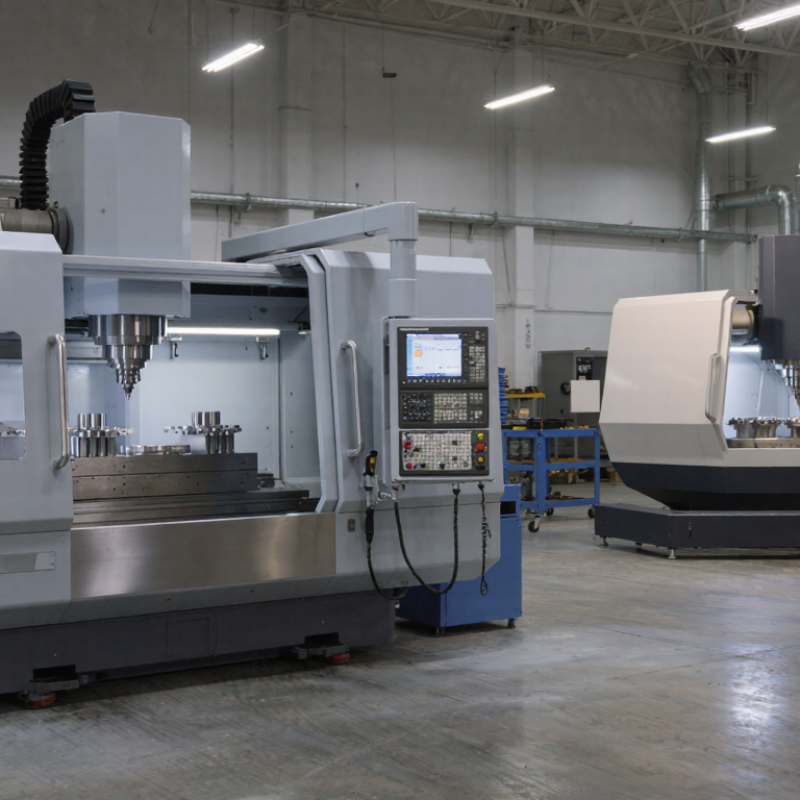
A CNC machining center is a computer-controlled machine tool designed to perform several cutting operations on a workpiece. Its defining feature is usually an automatic tool changer, which lets it switch between tools without manual replacement. Drilling, milling, and boring can happen in one setup. That reduces repositioning and helps maintain alignment. Common configurations include vertical, horizontal, and multi-axis models, often with an enclosed work area, a worktable, and a tool magazine. ISO 10791 sets out test conditions for machining centers, including checks of accuracy and performance.
A practical definition still leaves gray areas. Some CNC mills lack automatic tool changers, while machining centers vary widely in axis count and capacity. Buyers should compare usable work envelope, spindle speed, tool capacity, and positioning accuracy against the actual parts they produce. The IFR’s World Robotics 2024 report recorded 541,302 industrial robot installations worldwide in 2023. That figure does not define a machining center, but it shows the wider move toward automated production. Automation is useful only when the machine suits the process.
Tips: Inspect the tool changer, spindle, and enclosure in person when possible. Ask for a test cut using similar material and geometry. Check repeatability under real operating conditions, not just brochure specifications. I would also confirm service access and maintenance records; these details are easy to overlook.
What defines a CNC machining center? It is a computer-controlled machine tool that performs operations such as milling and drilling, typically with automatic tool changing. Common configurations have three, four, or five axes. More axes can allow access to more part surfaces in fewer setups, but axis count alone does not determine a machine’s capability or suitability.
Vertical machining centers are common in job shops and general manufacturing. Their vertical spindle provides clear access to the workpiece, making setup and inspection straightforward. They handle flat plates, fixture components, and housings with pockets or drilled features. For example, an operator can machine several hole patterns on an aluminum plate without changing its position. Setup matters.
Horizontal machining centers suit heavier parts and production runs that need access to multiple sides. A rotary pallet can bring different faces to the spindle, reducing manual repositioning. This is useful for gearbox housings, pump bodies, and structural components. The horizontal layout also helps chips fall away from the cutting area, though coolant flow and chip removal still need attention.
Five-axis centers tilt or rotate the part, or the cutting head, to reach angled surfaces in fewer setups. They are useful for turbine components, medical-device parts, and complex molds, where tool access can shape both accuracy and cycle time.
Gantry and bridge centers work with large panels, molds, and aerospace structures that would not fit on a compact machine. Their size is not an automatic advantage; floor space, foundation strength, and part handling all matter. A practical choice depends on material, geometry, batch size, and the skill available to program and maintain the machine. Even a capable center can disappoint when fixturing is weak.
Leading CNC machining center brands worldwide are best judged by more than name recognition. Compare machine design, control options, service coverage, and documented accuracy under realistic conditions. A five-axis model may suit complex parts, while a rigid three-axis center can be more practical for repeatable production. The right choice depends on the work.
Look for clear specifications on spindle speed, tool capacity, travel, and positioning accuracy. Ask how accuracy is tested, and whether the quoted figures match your materials and operating environment. A supplier should explain maintenance intervals and parts availability in your region. That matters. A machine that is difficult to support can lose valuable production time, even when its cutting performance looks impressive on paper.
Good evaluations include a test cut using a representative workpiece. Check surface finish, chip evacuation, cycle consistency, and setup time; record the results. Also inspect the operator interface and access points during routine maintenance. Small details count. It is tempting to treat brand reputation as a shortcut, but it cannot replace a careful comparison. Even well-regarded makers may have models that do not fit a particular shop’s workload, budget, or floor space.
When comparing CNC machining centers for sale, begin with the parts you actually plan to produce. Note material, workpiece size, required tolerances, and expected production volume. Then compare each machine’s travels, table load, spindle speed, and tool capacity against those needs. A large work envelope may look impressive, but it can add cost without improving your work.
Check the control system, available tooling, maintenance records, and service support. Ask to see the machine running, ideally cutting a representative material. Listen for unusual vibration and inspect the spindle, way covers, and tool changer. Numbers need context. A seller’s accuracy figures may not reflect a machine’s current condition, so request recent inspection results where possible. I would not treat fresh paint as proof of good care. Also compare installation, training, and repair costs, not only the asking price. I have seen buyers focus on speed and overlook setup time.
Tips: Bring a sample part drawing and a short checklist to each inspection. Record unanswered questions, then verify them before making a decision.
CNC machining center prices depend on machine age, working envelope, spindle speed, axis count, and included equipment. A basic used machine may cost far less than a new, automated system, but the purchase price rarely tells the whole story. Ask whether the quote includes tooling, software, installation, training, freight, and commissioning. Request a written breakdown. Small details matter.
Availability can shift quickly, especially for machines with uncommon travels or spindle specifications. Confirm the machine’s location, inspection access, and estimated delivery window before comparing offers. For used equipment, review maintenance records and request a recent geometry report. A live video showing the machine cutting material can reveal vibration, noise, or control issues. Still, it cannot replace an in-person inspection. I would not treat a clean listing photo as evidence of accuracy.
Before committing, match the machine’s capacity to actual part dimensions and tolerances. Check electrical requirements, floor space, foundation needs, and compatibility with existing tooling. Clarify warranty coverage, service response times, and which parts are excluded. Compare the total cost of ownership, not just the headline price. Delivery estimates can slip; that possibility deserves attention, even when a seller sounds confident. A detailed acceptance checklist helps both sides identify problems before final payment.
„Thanks to the LUVIR technology, the solder resist process could be switched directly from the previously used mask exposure to direct exposure. As an outstanding digital solution on the market, this technology has been able to demonstrate fast process times and superior quality on our certified conventional ink in production. This allowed us to fully digitize the solder mask process at low cost – without process or ink adjustments. An excellent benefit to our production in Rot am See.“
Ralf Göhringer (Head of Production WE Rot am See)
I would definitely recommend the Limata machine and team for a future company purchase
Michael Greenaway
Compunetics Inc.
“The Limata ldi has been amazing!! Best thing we did was buy this machine”
Richard Brady
GM
Circuitlabs
“Since 2019, we have been running the Limata X1000 LDI system (including LUVIR for solder mask imaging) in daily production as an addition to our current process with film. The machine was capable of properly exposing Taiyo PSR-4000 BN (DI) solder mask types on normal to high-copper boards using a new and unique direct imaging process. The machine operating interface is very user friendly which allowed for a quick technical training curve. The pre-registration processing reduced several seconds of production time at every print. Limata support and service staff is incomparable. They supported our team every step of the way at basically any time of the day or night, with literally, an immediate response time, customizing the software interface to best fit our Operations and needs.
We have exposed more than 8,000 prints since end of October, on various solder mask colors and some resist film panels. Limata, has proven to be very capable and innovative. They are a strong contender in the industry.
We have very much enjoyed this project, and working with the team!
Thank you Limata for the continued support and being a part of our growth.”
Bill Sezate
Vice President, GM
Summit Interconnect
As a replacement to our current contact exposure process with film, the LIMATA X2000 system including LUVIR-Technology was capable of properly exposing non-LDI solder mask types using a direct imaging process. The machine offers cutting edge software with a very intuitive operating interface which allowed for quick technician training curve. The dual drawer system combined with pre-registration processing reduced several seconds of production time at every machine cycle. Limata support and service staff is world class. They added software patches to keep production running at shortest possible response times, customized the software interface to best fit our in-house Operations system, and even wrote a step-by-step machine processing manual. As a result of the project, we have exposed more than 16,000 times on various product types and solder mask brands/colors. Limata, in a very short timeframe as a company, has definitely shown they are truly innovative and will be challenging the industry of direct imaging for the top spot.
Kevin Beattie
Process Engineer
TTM Technologies
Forest Grove Division
