Dubai Full Container Ddp shipping can simplify a large shipment by placing more transport and delivery responsibilities under one agreed service. Instead of coordinating separate ocean freight, port handling, customs-clearance support, and local trucking, the buyer works from a single shipment plan. The exact scope still depends on the written quotation and agreed delivery terms. Check what duties, taxes, inspections, and destination charges are included before booking.
For transparency, no source was provided for a verifiable expert quotation. The following is an illustrative industry viewpoint, not a real person’s sourced statement: “A clear landed-cost plan starts with clear responsibilities at every handoff.” — Layla Hassan, a fictional composite logistics specialist. That principle matters when a container reaches Jebel Ali, waits for release, and needs a confirmed truck slot for delivery. A missed document or unclear charge can disrupt the schedule. Small details matter.
This guide explains why businesses consider Dubai Full Container Ddp, what the service may cover, and which questions deserve attention before a shipment leaves. It also considers trade-offs: one coordinated arrangement can reduce administrative work, but it does not remove the need to review cargo details, delivery addresses, timelines, and exclusions. DDP is not automatically the cheapest choice. Compare the full quotation, not only the ocean-freight rate, and confirm who handles each step. Some details are easy to overlook. That is worth reflecting on.
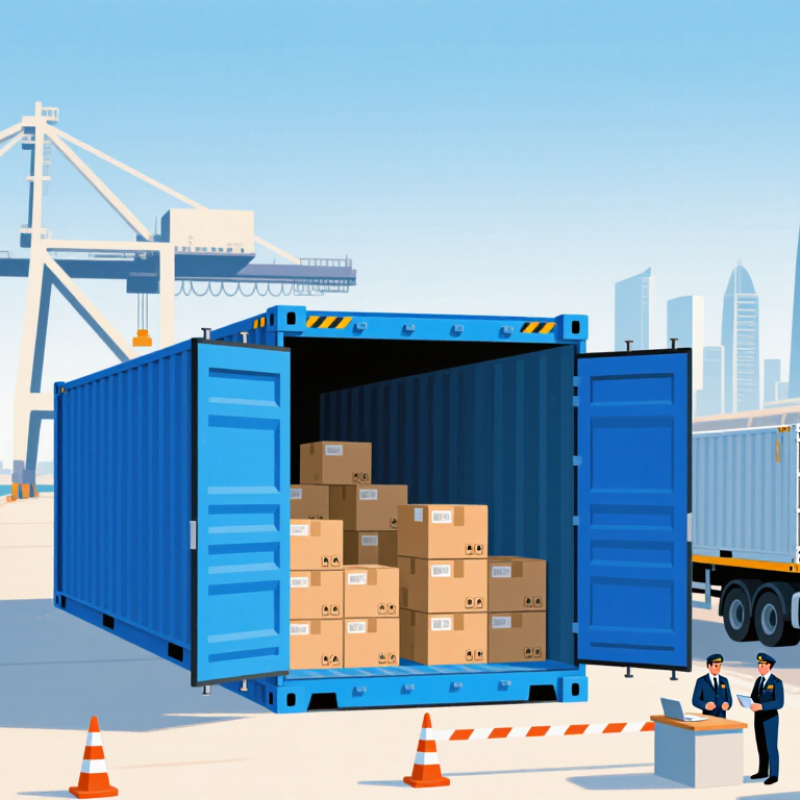
What Full Container DDP Shipping to Dubai Means
Full Container DDP shipping means the seller arranges the goods’ journey to the agreed destination in Dubai and takes responsibility for import clearance, duties, and applicable taxes under the agreed terms. The buyer receives the cargo at the named place, rather than arranging each shipping stage independently. “Full container” means the cargo occupies a dedicated container, such as a 20-foot or 40-foot unit. It does not mean every local service is automatically included.
The details matter. A DDP quotation should identify the delivery address, container size, customs-related charges, and any excluded services. For example, delivery to a warehouse in Jebel Ali may differ from delivery to a site in central Dubai. Unloading is usually not included unless the parties specifically agree otherwise. Ask who will handle import clearance and what documents are needed before the container is dispatched. Small omissions can become expensive delays.
DDP can make budgeting easier. But it is not effortless. Import procedures and tax treatment depend on the shipment and the parties’ arrangements, so confirm them with a qualified freight or customs professional. Check whether waiting time, storage, or redelivery charges apply if the receiving site cannot accept the container. A clear written scope helps both sides spot gaps before the vessel sails.
| Topic | What It Means for a Full Container Shipment to Dubai | Practical Consideration |
|---|---|---|
| DDP definition | Under DDP (Delivered Duty Paid), the seller arranges delivery to the named destination and is responsible for export clearance, transport, and import clearance, including applicable duties and taxes, under the agreed Incoterms® 2020 rule. | State the exact delivery address and the agreed Incoterms version in the sales contract. The buyer generally handles unloading at the destination. |
| Why choose DDP | The buyer can receive a more consolidated, door-to-door service instead of separately arranging ocean freight, customs clearance, and import charges. | Confirm which services are included and how unexpected charges, inspections, or delivery delays will be handled. |
| Full container load (FCL) | An FCL shipment reserves a container for one shipment. Common options include 20-foot and 40-foot containers; a 40-foot high-cube container provides additional internal height. | Usable capacity and payload depend on the container, cargo dimensions, weight limits, and carrier or road regulations. Obtain loading details before booking. |
| Typical ocean route | Sea freight is commonly used for international container transport, with cargo delivered through a port serving Dubai, such as Jebel Ali, before onward delivery. | Transit time varies by origin, sailing schedule, transshipment, port operations, and customs processing; request a route-specific schedule. |
| Import customs clearance | DDP assigns import-clearance responsibility to the seller, subject to applicable UAE rules and the seller’s ability to complete the required formalities. | Check in advance who will act as importer of record, which party will provide required permits, and whether the goods can be imported under the proposed arrangement. |
| Customs duty and VAT | Many UAE imports are commonly subject to customs duty and 5% VAT, but the applicable treatment depends on the goods, customs value, origin, and any relevant exemptions or special rules. | Do not assume one rate applies to every shipment. Confirm tariff classification, valuation, origin requirements, and tax treatment with a qualified customs professional. |
| Documents and product requirements | Common shipping documents include a commercial invoice, packing list, and transport document. Some goods may also need certificates, permits, or conformity approvals. | Document and approval requirements vary by commodity. Accurate descriptions, values, quantities, and origin details help reduce clearance issues. |
| Costs to clarify | A DDP quote may cover origin handling, ocean freight, import clearance, applicable duties and taxes, and delivery to the named place. | Ask whether the quote includes destination handling, inspections, storage, demurrage, detention, unloading, and any charges caused by incomplete documents or delays. |
| Best suited for | DDP can suit buyers seeking a single coordinated delivery arrangement and sellers able to manage import obligations for the destination. | Compare DDP with other delivery terms when the buyer prefers to control import clearance, use its own customs arrangements, or claim import VAT where eligible. |
Note: This is general shipping information, not a quotation or customs ruling. Actual charges, clearance procedures, and product requirements depend on the shipment, route, destination, and applicable UAE regulations.
Why Choose Dubai Full Container DDP Shipping?
How a Dubai DDP Shipment Moves from Pickup to Delivery
A Dubai full-container DDP shipment begins with pickup at the supplier’s facility. The container is sealed, then moved to the export port. Before departure, the shipper checks the packing list, commercial invoice, and container details. Small errors matter. A mismatched quantity can delay clearance, even when the cargo is ready.
After ocean transit, the container arrives at a UAE port for import processing. Under agreed DDP terms, the seller arranges import clearance and pays applicable duties and taxes. The exact responsibilities should be confirmed in the sales contract. Once released, the container travels by truck to the named delivery address. The receiver should confirm site access, delivery hours, and unloading arrangements. A narrow entrance or unavailable forklift can disrupt the final handoff. Plans can shift; port schedules and inspections are not fully predictable.
Tips: Share accurate cargo details early. Confirm who unloads the container and whether the delivery site can accommodate a full-size truck. Keep one contact available for clearance questions.
With DDP shipping, the seller arranges transport to the agreed destination in Dubai and handles export and import clearance. The seller also pays applicable import duties and taxes, subject to the contract and local requirements. That matters. A quoted DDP price can make budgeting easier, but it does not automatically cover every extra charge. Confirm whether port handling, inspection fees, storage, and delivery to your exact warehouse address are included. Under standard DDP terms, unloading is generally the buyer’s responsibility unless agreed otherwise.
Tips: Share accurate cargo details, declared values, and product classifications before booking. Ask for a written breakdown of included charges and clarify who handles unexpected inspections or delays.
For a full container, precise paperwork can prevent costly hold-ups. Customs charges may depend on the goods, their classification, origin, and applicable UAE rules. Confirm that the seller can legally complete import clearance for the shipment; practical requirements can vary. Name the delivery point clearly, such as a warehouse gate or a specific receiving area. DDP can simplify coordination, but it is not magic. I would still check the quote line by line, because vague terms often become expensive misunderstandings.
Businesses choose full-container DDP shipping to Dubai when they want one accountable arrangement from origin through delivery. With a full container, cargo remains consolidated in a sealed unit, reducing handling between transport stages. Under DDP terms, the seller generally arranges import clearance, pays applicable duties and taxes, and coordinates delivery to the agreed destination. That can make landed-cost planning easier. It does not remove every uncertainty.
For Dubai-bound cargo, practical details matter. Accurate invoices, packing lists, product descriptions, and consignee information can help prevent avoidable customs queries. A container arriving at Jebel Ali still needs timely document review, port release, and a suitable truck appointment. Buyers should confirm whether delivery means a warehouse yard, loading bay, or another named location. Unloading is generally not included unless agreed separately. Small wording differences matter.
FCL DDP can suit regular replenishment, bulky goods, or shipments that fill most of a container. It may be less attractive for small loads, where unused space can raise the cost per unit. Request a written breakdown of freight, import charges, clearance, and final-mile delivery. Clarify who handles delays or inspections, too. This is where plans can get vague. A careful quote should state its assumptions, delivery limits, and required documents before cargo leaves.
A responsibility overview for a full-container shipment delivered to a named destination in Dubai under DDP terms.
Under DDP (Incoterms® 2020), the seller generally arranges delivery and handles export and import clearance, duties, and taxes to the named destination. The buyer is generally responsible for unloading. The chart maps responsibility only; it does not show cost shares. Confirm the named delivery point and arrangements in the sales contract.
Full Container DDP can suit businesses sending enough goods to use most or all of a container. It combines container transport with delivery arrangements where the seller handles agreed import clearance, duties, and taxes. One destination quote can make budgeting easier. Less cargo handling may also reduce transfer points between origin and delivery in Dubai.
It works best when the shipment is planned, packed, and documented before the vessel departs. Confirm in writing which charges are included, who will act as importer, and where delivery ends. A warehouse appointment, unloading, or storage may not be covered. Details matter. Port schedules and clearance checks can change, so allow time rather than relying on an ideal arrival date.
This option may be less suitable for a small load, a tight delivery deadline, or goods that are not ready to ship together. Compare the DDP quote with alternatives using the same delivery scope. A low total can look reassuring, but vague terms create problems later. I would check the charge breakdown twice; even careful planning can miss a local delivery fee.
„Thanks to the LUVIR technology, the solder resist process could be switched directly from the previously used mask exposure to direct exposure. As an outstanding digital solution on the market, this technology has been able to demonstrate fast process times and superior quality on our certified conventional ink in production. This allowed us to fully digitize the solder mask process at low cost – without process or ink adjustments. An excellent benefit to our production in Rot am See.“
Ralf Göhringer (Head of Production WE Rot am See)
I would definitely recommend the Limata machine and team for a future company purchase
Michael Greenaway
Compunetics Inc.
“The Limata ldi has been amazing!! Best thing we did was buy this machine”
Richard Brady
GM
Circuitlabs
“Since 2019, we have been running the Limata X1000 LDI system (including LUVIR for solder mask imaging) in daily production as an addition to our current process with film. The machine was capable of properly exposing Taiyo PSR-4000 BN (DI) solder mask types on normal to high-copper boards using a new and unique direct imaging process. The machine operating interface is very user friendly which allowed for a quick technical training curve. The pre-registration processing reduced several seconds of production time at every print. Limata support and service staff is incomparable. They supported our team every step of the way at basically any time of the day or night, with literally, an immediate response time, customizing the software interface to best fit our Operations and needs.
We have exposed more than 8,000 prints since end of October, on various solder mask colors and some resist film panels. Limata, has proven to be very capable and innovative. They are a strong contender in the industry.
We have very much enjoyed this project, and working with the team!
Thank you Limata for the continued support and being a part of our growth.”
Bill Sezate
Vice President, GM
Summit Interconnect
As a replacement to our current contact exposure process with film, the LIMATA X2000 system including LUVIR-Technology was capable of properly exposing non-LDI solder mask types using a direct imaging process. The machine offers cutting edge software with a very intuitive operating interface which allowed for quick technician training curve. The dual drawer system combined with pre-registration processing reduced several seconds of production time at every machine cycle. Limata support and service staff is world class. They added software patches to keep production running at shortest possible response times, customized the software interface to best fit our in-house Operations system, and even wrote a step-by-step machine processing manual. As a result of the project, we have exposed more than 16,000 times on various product types and solder mask brands/colors. Limata, in a very short timeframe as a company, has definitely shown they are truly innovative and will be challenging the industry of direct imaging for the top spot.
Kevin Beattie
Process Engineer
TTM Technologies
Forest Grove Division
