Choosing an Electric Block Machine supplier is not just a price comparison. It affects block consistency, production uptime, labor needs, and the cost of every rejected unit. Buyers should examine machine capacity, mold-change time, curing arrangements, spare-parts access, and the supplier’s commissioning support. A polished brochure helps. A real factory visit helps more.
The wider materials sector makes these choices increasingly important. The International Energy Agency’s 2023 cement analysis estimates that cement production causes about 7% of global CO₂ emissions. The United Nations Environment Programme’s 2023 Global Status Report for Buildings and Construction also highlights the sector’s substantial climate impact. These reports do not measure block-machine performance directly. That distinction matters. Equipment claims still need verification through trials, technical documents, and comparable customer references.
Professor Karen Scrivener, a leading cement researcher, has emphasized reducing clinker as a route to lower cement emissions. That is a useful industry perspective, not a machine-buying guarantee. Buyers must still check whether a supplier’s equipment can reliably handle the materials and mix designs planned for their plant. Details matter: a jammed feed hopper, uneven vibration, or delayed replacement part can erase projected gains. Sometimes, the simplest machine is the better fit.
This guide compares ten suppliers for global buyers. It considers practical capabilities alongside published claims, while recognizing that performance depends on site conditions and operator skill. No ranking can replace due diligence. And supplier information can change.
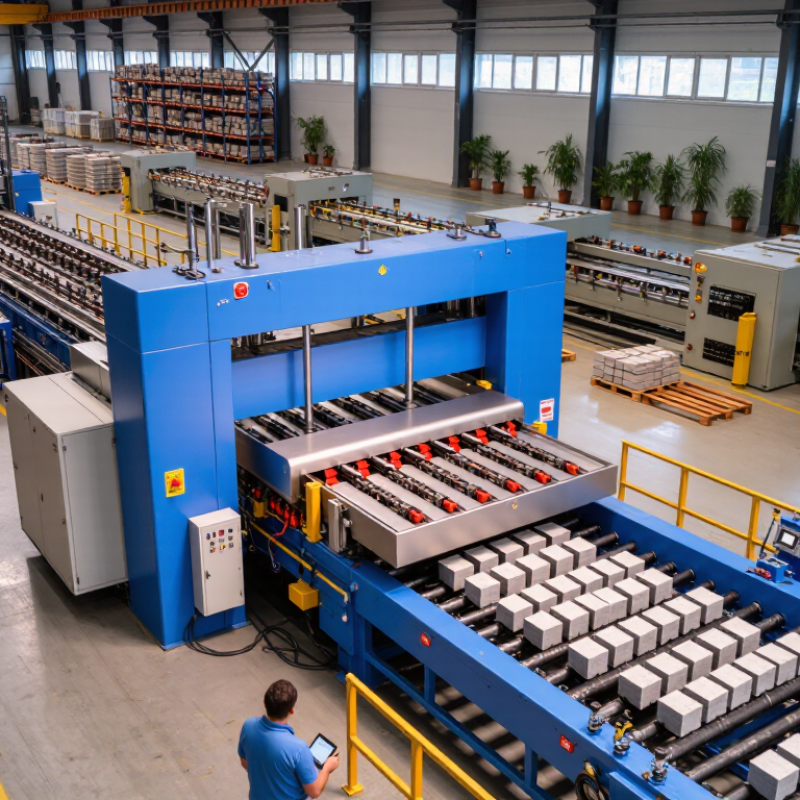
Electric block machines are easier to compare when buyers define block type, automation, and realistic output. Hollow blocks need accurate core dimensions and steady vibration. Solid blocks place different demands on moulds and material flow. Pavers often require tighter control of thickness and surface finish. Ask suppliers for sample dimensions, cycle details, and finished-product photos. That matters.
Automation ranges from manually loaded machines to integrated lines with automatic batching, feeding, stacking, and controls. Semi-automatic equipment may suit smaller sites, but it still needs trained operators and consistent material handling. A fully automatic line can reduce repetitive work, though it also requires space, maintenance, and reliable utilities. Output figures deserve careful checking. A quoted hourly capacity may assume ideal material, continuous operation, and no mould changes. Ask how many acceptable blocks the machine produces during a normal shift, not just its fastest cycle. Compare that figure with curing space, labour, and local power supply. Supplier claims are useful, but a production plan should leave room for stoppages and imperfect batches.
| Supplier Profile | Typical Machine Type | Block Types Supported | Automation Level | Indicative Output per 8-Hour Shift | Suitable Buyer | Key Procurement Check |
|---|---|---|---|---|---|---|
| 1. Entry-level electric machine supplier | Compact stationary vibration machine | Solid blocks, small hollow blocks, basic paving blocks | Manual feeding and demolding; electrically driven vibration | Approximately 500–1,500 standard block equivalents | Small producers and new market entrants | Confirm mold availability, spare-part supply, and the labor needed for material handling. |
| 2. Mobile machine supplier | Mobile, egg-laying block machine | Hollow and solid concrete blocks; selected paving products | Operator-controlled travel and production; limited automation | Approximately 1,000–3,000 standard block equivalents | Buyers producing directly on prepared concrete floors | Check floor flatness, curing-space requirements, and whether the machine can make the required block dimensions. |
| 3. Small stationary-line supplier | Stationary vibration press with basic conveyor or mixer integration | Hollow blocks, solid blocks, and common masonry units | Semi-automatic; operator-assisted batching, feeding, and handling | Approximately 1,500–3,500 standard block equivalents | Local producers seeking more consistent daily output | Request a complete equipment list, including mixer, conveyor, pallets, and control equipment. |
| 4. Hydraulic press supplier | Stationary hydraulic vibration-press machine | Hollow blocks, solid blocks, interlocking pavers, and kerbstones with suitable molds | Semi-automatic to automatic, depending on feeding and handling equipment | Approximately 2,000–5,000 standard block equivalents | Buyers needing a broader product range and repeatable compaction | Verify hydraulic service support, mold-change time, and product-specific cycle rates. |
| 5. Palletized semi-automatic line supplier | Vibration press with pallet feeder and collection system | Hollow blocks, solid blocks, and selected paving products | Semi-automatic; machine cycles are controlled, with some manual transfers | Approximately 2,500–5,500 standard block equivalents | Growing plants with reliable operators and moderate floor space | Confirm pallet dimensions, pallet quantity, and compatibility with curing and stacking arrangements. |
| 6. Automatic block-line supplier | Stationary press integrated with batching, conveying, and pallet handling | Hollow and solid blocks; paving products with compatible molds and settings | Automatic production cycle with operator supervision | Approximately 4,000–8,000 standard block equivalents | Established producers targeting regular commercial production | Ask for a guaranteed capacity by exact product, mold layout, and operating schedule—not a headline maximum. |
| 7. High-output palletized-line supplier | Automatic multi-station production line | High-volume masonry blocks and selected paving products | Automatic pressing and material transfer; separate curing and packing systems may be needed | Approximately 6,000–10,000 standard block equivalents | Regional producers serving large construction-material markets | Assess line balance, curing capacity, power supply, installation needs, and planned maintenance downtime. |
| 8. Paving-product specialist supplier | Vibration press configured for paving molds and surface-layer options | Concrete pavers, permeable pavers, and compatible curb products | Semi-automatic or automatic, depending on line configuration | Product-specific; compare by square metres or mold cycles as well as piece count | Buyers focused on landscaping, roadworks, or architectural paving | Check achievable thickness, edge quality, color-layer equipment, and the output basis used in quotations. |
| 9. Heavy-duty industrial-line supplier | Robust stationary press with automated feeding and pallet circulation | Large-format hollow blocks, solid units, and selected special shapes | Automatic line with centralized controls and operator oversight | Approximately 5,000–10,000 standard block equivalents; lower for larger products | Industrial plants prioritizing uptime and continuous production | Review frame construction, vibration-system maintenance, service response, and critical spare-parts lead times. |
| 10. Turnkey plant supplier | Integrated electric production plant, from aggregate handling through block stacking | Multiple block and paving products when supplied with the appropriate molds and line equipment | Configured from semi-automatic to fully integrated automatic operation | Project-specific; request a product-by-product capacity schedule | Global buyers building a new plant or expanding an existing facility | Require a defined scope covering layout, commissioning, operator training, utilities, and after-sales support. |
Capacity note: These are indicative equipment-category ranges, not verified ratings for individual suppliers. “Standard block equivalent” is a comparison basis, not a guaranteed output; actual production depends on block dimensions, mold cavities, mix design, cycle time, handling, operator practice, and planned downtime. Ask suppliers to substantiate capacity using the exact product and configuration being quoted.
A useful comparison of ten electric block machine suppliers starts with the work each machine must handle. Check rated output against the block size, mix, and production hours you actually need. Capacity matters. A quoted daily figure may assume ideal materials, skilled operators, and no stoppages. Ask for a live production test or a recent, verifiable operating record. Compare mold-change time, power requirements, and the space needed for feeding and curing. A large machine can still be the wrong fit.
Export reach is more than a list of destination countries. Ask which ports the supplier regularly serves, what shipping documents it prepares, and whether it can share references from similar projects. Then compare support: installation guidance, operator training, spare-parts availability, and typical response times. Request these details in writing. A polished brochure is not proof of fast service, and a low price may leave important setup work to the buyer. I would also check how warranty terms apply to wear parts; that detail is easy to overlook.
Tips: Send all ten suppliers the same product mix and shift schedule. Ask each for a machine layout, a realistic output estimate, and a sample spare-parts list. Compare like with like. Keep one question open: what happens if actual output falls short? The answer may expose gaps, and your own production assumptions may need a second look.
These broad planning benchmarks show typical block-output ranges by automation level, not verified production claims for individual suppliers. Actual output depends on block size, mold configuration, cycle time, operating hours, and curing arrangements. Ask suppliers for machine-specific test results and references before comparing capacity or export support.
When comparing electric block machine suppliers, ask how each machine controls vibration, compaction, and cycle consistency. These factors affect density and strength, but the machine alone cannot guarantee compliant blocks. Mix design, aggregate grading, moisture, and curing also matter. Request trial units made with a representative mix, not just polished samples. Small details matter.
ASTM C90’s commonly cited benchmark for loadbearing concrete masonry units is an average net-area compressive strength of 13.8 MPa across three units. It is not a gross-area figure, and the standard also sets requirements for individual units. Confirm the applicable edition and project requirements before treating this value as a pass-or-fail rule. Testing under ASTM C140 by a qualified independent laboratory can help verify results. Check that samples are cured consistently and that dimensions and net area are recorded correctly. A strong result from one batch is useful, but it does not prove every production run will perform the same. That gap deserves attention. Ask suppliers what process data they record and how operators respond when test results drift.
When comparing electric block machine suppliers, treat ISO 9001:2015 as a starting point, not a guarantee of machine performance. Ask for a current certificate and check that its scope covers the relevant manufacturing site and activities. Confirm the issuing body and validity dates independently. Paper can look convincing. The details matter.
A useful quality review goes beyond the certificate. Request examples of incoming steel inspections, welding checks, electrical testing, and final machine acceptance records. Ask how measuring tools are calibrated and how production changes are controlled. For a real order, trace one machine or component through its inspection records. Clear batch identification should connect the parts, test results, and shipment documents.
Pay attention to how the supplier handles problems. Ask for a recent, anonymized nonconformity example and examine the corrective action: Was the cause investigated, and was the fix checked later? A polished procedure is less useful than evidence that workers follow it on the factory floor. Still, an audit visit offers only a snapshot, and paperwork can miss hurried work between inspections. Buyers should compare documented controls with actual practices, then agree on practical acceptance tests before production begins. ISO certification supports confidence; it does not replace technical checks on capacity, safety features, or finished block consistency.
A low quote can hide costly gaps. When comparing electric block machine suppliers, inspect the safety features, not just the machine’s output. Ask how emergency stops, moving parts, and electrical cabinets are protected. Request clear operating and maintenance instructions in a language your operators understand. If possible, watch a machine run with material similar to yours. A tidy showroom tells you little about daily use. Small details matter.
Spare parts deserve close attention. Ask for a parts list with item codes, prices, and typical delivery times. Check whether wear items, such as molds, belts, and vibration components, are stocked locally or shipped from far away. Clarify what support is available when a fault stops production. A promise of “quick service” is vague; ask who responds and what information they need. Even then, delays can happen.
Estimate lifecycle costs over several years, including electricity, labor, maintenance, and downtime. Ask suppliers for expected consumption and maintenance intervals, then compare those figures against your working schedule. Treat estimates as estimates. Actual costs depend on materials, operators, and production conditions. I would leave a buffer in the budget; buyers often underestimate the cost of a few idle days. Before ordering, agree on a practical acceptance test using the block dimensions and output rate you require.
„Thanks to the LUVIR technology, the solder resist process could be switched directly from the previously used mask exposure to direct exposure. As an outstanding digital solution on the market, this technology has been able to demonstrate fast process times and superior quality on our certified conventional ink in production. This allowed us to fully digitize the solder mask process at low cost – without process or ink adjustments. An excellent benefit to our production in Rot am See.“
Ralf Göhringer (Head of Production WE Rot am See)
I would definitely recommend the Limata machine and team for a future company purchase
Michael Greenaway
Compunetics Inc.
“The Limata ldi has been amazing!! Best thing we did was buy this machine”
Richard Brady
GM
Circuitlabs
“Since 2019, we have been running the Limata X1000 LDI system (including LUVIR for solder mask imaging) in daily production as an addition to our current process with film. The machine was capable of properly exposing Taiyo PSR-4000 BN (DI) solder mask types on normal to high-copper boards using a new and unique direct imaging process. The machine operating interface is very user friendly which allowed for a quick technical training curve. The pre-registration processing reduced several seconds of production time at every print. Limata support and service staff is incomparable. They supported our team every step of the way at basically any time of the day or night, with literally, an immediate response time, customizing the software interface to best fit our Operations and needs.
We have exposed more than 8,000 prints since end of October, on various solder mask colors and some resist film panels. Limata, has proven to be very capable and innovative. They are a strong contender in the industry.
We have very much enjoyed this project, and working with the team!
Thank you Limata for the continued support and being a part of our growth.”
Bill Sezate
Vice President, GM
Summit Interconnect
As a replacement to our current contact exposure process with film, the LIMATA X2000 system including LUVIR-Technology was capable of properly exposing non-LDI solder mask types using a direct imaging process. The machine offers cutting edge software with a very intuitive operating interface which allowed for quick technician training curve. The dual drawer system combined with pre-registration processing reduced several seconds of production time at every machine cycle. Limata support and service staff is world class. They added software patches to keep production running at shortest possible response times, customized the software interface to best fit our in-house Operations system, and even wrote a step-by-step machine processing manual. As a result of the project, we have exposed more than 16,000 times on various product types and solder mask brands/colors. Limata, in a very short timeframe as a company, has definitely shown they are truly innovative and will be challenging the industry of direct imaging for the top spot.
Kevin Beattie
Process Engineer
TTM Technologies
Forest Grove Division
