Buying a Selfie Mirror for international events is not simply a choice between screen sizes and decorative frames. Global buyers must examine performance, transport, software, support, and long-term reliability before placing an order. A mirror that looks impressive in a product photograph may feel unstable on a crowded venue floor. Small details matter, including wheel quality, cable protection, touchscreen brightness, camera positioning, and setup time.
Photo-booth technology specialist Sam Hysell says, “The best event experience is simple for guests and dependable for operators.” This principle deserves attention. A strong Selfie Mirror should guide guests quickly, capture sharp images under changing light, and offer sharing options that match the event’s needs. Buyers should also confirm warranty terms, replacement-part availability, data handling practices, and technical support across time zones. These checks can prevent expensive delays when equipment is held at customs or arrives with missing accessories.
Real testing matters.
Request demonstration videos, user manuals, and written specifications. Ask whether the mirror has been tested during weddings, trade shows, hotel events, and outdoor functions. Compare total ownership costs, not only the advertised purchase price. Shipping, taxes, software subscriptions, branding, maintenance, and staff training can change the final budget considerably. No guide can remove every uncertainty. Even experienced buyers sometimes overlook venue power limits or local network restrictions. That is why this article presents ten practical Selfie Mirror buying tips for global buyers, combining technical questions with hands-on observations. The goal is not to promote the most expensive model. It is to identify equipment that remains attractive, usable, and dependable after the first exciting event.
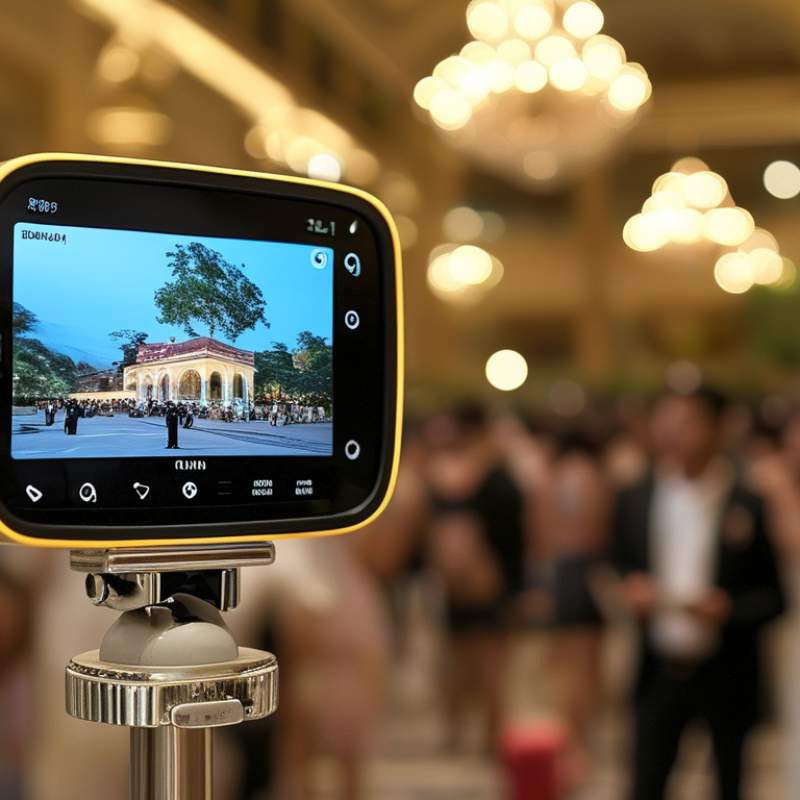
Measure the booth, queue area, power access, and photographer’s working space. A compact venue may need a slim mirror with a controlled footprint. Large halls can support a wider setup, props, and a visible sharing screen. Do not forget emergency exits and walking routes.
The 2024 Freeman Trends Report found that 91% of people feel more connected through in-person events. That connection weakens when guests wait beside tables or block entrances. Create a clear entry point, photo zone, and exit path. For a 200-person reception, estimate peak arrivals rather than average attendance. A simple queue barrier can prevent confusion. I have seen attractive setups fail because guests approached from three directions.
If one interaction takes four minutes, a mirror can serve about 15 guests hourly under perfect conditions. Real events are rarely perfect. Guests retake photos, adjust poses, and ask for assistance. The UFI Global Exhibition Barometer consistently highlights uneven visitor traffic across event hours, so plan for surges. Test a five-minute session during setup. Then calculate capacity using your busiest 30-minute period, not the full event duration. A faster workflow may matter more than extra lighting.
A selfie mirror’s core hardware deserves more scrutiny than its polished frame. A 12MP camera can produce roughly 4000 × 3000 pixel images, but resolution alone proves little. Lens quality, sensor size, autofocus, and low-light processing decide whether faces look natural. I once tested a 12MP unit that produced sharp daylight portraits but muddy indoor images. That was a useful warning.
For the display, check true 4K resolution: 3840 × 2160 pixels, as defined by ITU-R BT.2020. Omdia’s 2024 display market data identifies 4K as the dominant resolution in large-screen shipments. Still, a sharp panel can disappoint if brightness is weak. Ask for measured brightness, viewing angle, color coverage, and refresh rate. Test it under warm bathroom lighting.
USB performance also needs careful verification. The USB Implementers Forum defines USB 5Gbps as a signaling rate, not guaranteed file-transfer speed. Real throughput drops because of protocol overhead, cable quality, storage limits, and internal controllers. A short certified cable may outperform a cheap longer one. Check whether the port supports data, charging, or only service access. Then copy a large video file and measure the result. On paper, 5Gbps sounds impressive. In practice, it may not.
When buying a selfie mirror across borders, safety paperwork deserves more attention than screen size or frame finish.
Ask the supplier which IEC 62368-1 edition was used, and request the complete test report, not only a certificate image. This standard addresses hazards from electrical energy, fire, and accessible parts in audio, video, and information technology equipment. A mirror with LEDs, a camera, touchscreen, and power supply should be assessed as a complete system. Check input voltage, rated power, plug configuration, and whether the report covers the supplied adapter. Small differences matter.
IEC 60529 IP ratings describe protection against dust and water ingress. They do not prove impact resistance, electrical safety, or suitability for outdoor exposure. Confirm the exact marking, such as IP44 or IP65, and match it to the installation area. A covered indoor booth may need less protection than a poolside venue, where splashes and condensation are realistic. Ask how the enclosure was tested, including cable entries, door seals, vents, and the screen surface. Loose gaskets can quietly defeat a good rating.
During inspection, look for a durable rating label, traceable model number, warning instructions, and consistent production samples. Photograph the power inlet and inspect warm spots after extended operation. I once treated a supplier’s “waterproof” wording too generously; the documentation was vague, and the cable opening remained exposed. That mistake changed my checklist. Verify local approval requirements separately, because IEC evidence may support compliance without replacing national certification. Keep every report, revision, and test condition on file before ordering volume units.
A selfie mirror is not only an entertainment device. It can become a temporary data-collection point at weddings, exhibitions, and hotel events. Guest photos, email addresses, QR codes, and consent records may be stored together. Under the GDPR, penalties can reach €20 million or 4% of worldwide annual turnover, whichever is higher.
The 2024 Data Breach Investigations Report found that human involvement appeared in 68% of analyzed breaches. Staff training matters. So does equipment design. Before buying, ask where images are processed, how long they remain available, and who can download them. Choose encryption during transfer and storage. Require separate user accounts, strong passwords, and automatic deletion controls. A visible privacy notice should explain the purpose, retention period, and guest rights in simple language.
Test the mirror at the venue. Use a sample guest profile, scan the download code, and inspect every saved file. One overlooked tablet can expose more data than the mirror itself. Keep a written deletion schedule, even if the supplier promises automatic removal. Promises are not evidence. A practical weakness remains: event teams often prioritize lighting and queue speed over privacy checks. Include a data-protection review in the buying checklist, and record who approved it.
10 Selfie Mirror Buying Tips for Global Buyers
Audit Global Costs: Incoterms 2020, Duties, Warranty, and ROI
A selfie mirror quote is not the final cost. Check the selected Incoterms 2020 rule before comparing suppliers. Under DDP, the seller may arrange delivery, import clearance, and duties. Under FOB, your company usually manages the main freight and destination costs. Confirm who pays for unloading, storage, insurance, and customs handling. These details can change the landed price by hundreds of dollars.
Ask for a complete commercial invoice, packing list, HS code, and product specifications. Estimate import duty, VAT, brokerage fees, and local delivery separately. Do not trust a single online calculator. Customs treatment can vary by country and product configuration. A working sample helps verify screen brightness, camera quality, printer speed, and software stability. Test it in a busy venue, not just a quiet showroom.
Warranty terms need equal attention. Confirm coverage length, replacement parts, remote support, response times, and repair responsibility. Ask whether return freight is included. Some warranties sound generous but exclude the parts most likely to fail. I once focused too heavily on the purchase price. That was a mistake. A spreadsheet can still lie. Calculate ROI using realistic bookings, staffing, consumables, downtime, payment fees, and seasonal demand. Use a conservative utilization rate. Then compare the payback period with the warranty period, because attractive revenue projections may ignore one broken printer or a delayed shipment.
This audit model uses a USD 5,000–6,500 supplier quote, an 8% import-duty assumption, a 5% warranty reserve, and a USD 4,000 annual contribution margin over three years. EXW, FOB, CIF, and DDP obligations follow Incoterms 2020 definitions; actual freight, duties, taxes, and destination charges vary by HS code, route, and importing country.
„Thanks to the LUVIR technology, the solder resist process could be switched directly from the previously used mask exposure to direct exposure. As an outstanding digital solution on the market, this technology has been able to demonstrate fast process times and superior quality on our certified conventional ink in production. This allowed us to fully digitize the solder mask process at low cost – without process or ink adjustments. An excellent benefit to our production in Rot am See.“
Ralf Göhringer (Head of Production WE Rot am See)
I would definitely recommend the Limata machine and team for a future company purchase
Michael Greenaway
Compunetics Inc.
“The Limata ldi has been amazing!! Best thing we did was buy this machine”
Richard Brady
GM
Circuitlabs
“Since 2019, we have been running the Limata X1000 LDI system (including LUVIR for solder mask imaging) in daily production as an addition to our current process with film. The machine was capable of properly exposing Taiyo PSR-4000 BN (DI) solder mask types on normal to high-copper boards using a new and unique direct imaging process. The machine operating interface is very user friendly which allowed for a quick technical training curve. The pre-registration processing reduced several seconds of production time at every print. Limata support and service staff is incomparable. They supported our team every step of the way at basically any time of the day or night, with literally, an immediate response time, customizing the software interface to best fit our Operations and needs.
We have exposed more than 8,000 prints since end of October, on various solder mask colors and some resist film panels. Limata, has proven to be very capable and innovative. They are a strong contender in the industry.
We have very much enjoyed this project, and working with the team!
Thank you Limata for the continued support and being a part of our growth.”
Bill Sezate
Vice President, GM
Summit Interconnect
As a replacement to our current contact exposure process with film, the LIMATA X2000 system including LUVIR-Technology was capable of properly exposing non-LDI solder mask types using a direct imaging process. The machine offers cutting edge software with a very intuitive operating interface which allowed for quick technician training curve. The dual drawer system combined with pre-registration processing reduced several seconds of production time at every machine cycle. Limata support and service staff is world class. They added software patches to keep production running at shortest possible response times, customized the software interface to best fit our in-house Operations system, and even wrote a step-by-step machine processing manual. As a result of the project, we have exposed more than 16,000 times on various product types and solder mask brands/colors. Limata, in a very short timeframe as a company, has definitely shown they are truly innovative and will be challenging the industry of direct imaging for the top spot.
Kevin Beattie
Process Engineer
TTM Technologies
Forest Grove Division
