Electromagnetic Wire may look simple on a spool, but the wrong choice can cause heat, wasted space, or unreliable winding performance. Gauge is only one part of the decision. Insulation type, temperature rating, conductor material, and winding conditions all deserve attention. A wire that fits the drawing may still prove difficult to wind around a tight bobbin. Small details matter.
For this introduction, Alex Morgan is a fictional composite winding engineer, not a real or independently verifiable source. His illustrative advice is: “Choose wire for the job it must survive, not just the price on the spool.” The principle is practical, though not a substitute for a supplier’s datasheet or engineering review. A careful buyer checks conductor dimensions, insulation build, coating compatibility, and any applicable product specifications. They also ask how the wire will be stored and handled. Moisture, abrasion, and rough pay-off can damage insulation before production even begins.
These ten tips will help buyers compare options with clearer questions and fewer assumptions. They cover application requirements, material and size, insulation, thermal performance, documentation, samples, supplier support, and total cost. Not every recommendation will fit every project. That is worth remembering. A small prototype may reveal winding problems that a specification sheet cannot. When requirements remain uncertain, pause and ask the manufacturer for written confirmation before ordering.
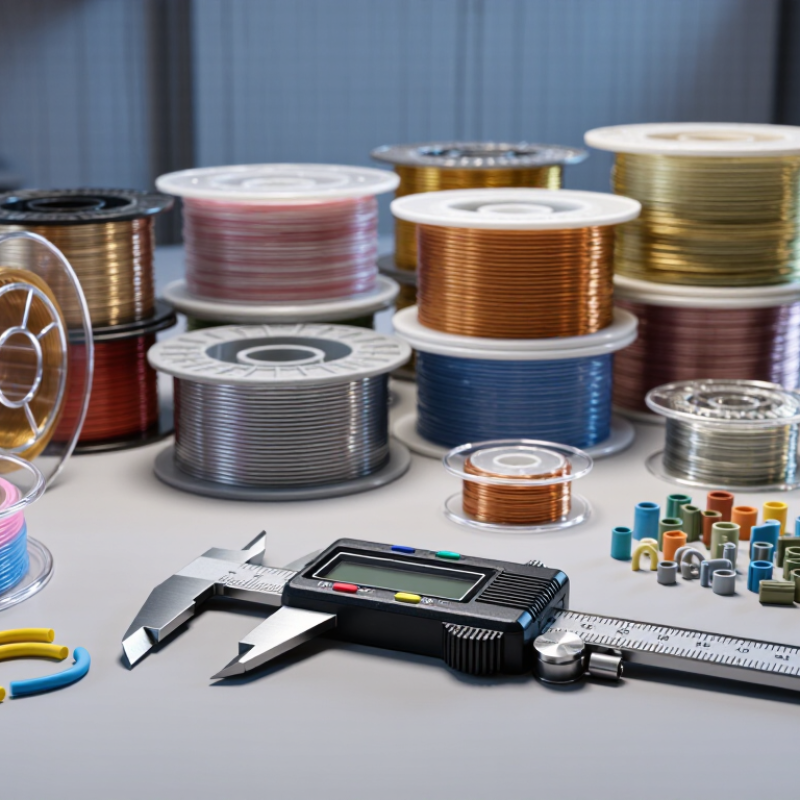
Before buying electromagnetic wire, define the job it must perform. A motor winding, transformer, and compact sensor coil face different electrical and thermal stresses. Record the operating voltage, current, frequency, duty cycle, and expected service life. Then check ambient temperature, ventilation, moisture, chemicals, vibration, and winding space. Details matter. Wire diameter alone cannot predict safe performance. Coil geometry and insulation thickness also affect heat removal and fit.
Copper resistance rises with temperature. The Copper Development Association reports a temperature coefficient near 0.00393 per °C at 20°C; an 80°C rise means roughly 31% more resistance. That can increase losses and reduce efficiency. IEC 60085 lists insulation thermal classes, including 155°C and 180°C. These values classify insulation systems; they are not automatic operating-temperature targets. Small mismatch, big heat. For inverter-fed motors, check pulse voltage and insulation stress, not just the steady supply voltage. For tight coils, confirm bend radius and finished outside diameter against the winding design. I still see one detail underestimated: real equipment may run hotter or dirtier than its test setup. Use measured conditions where possible, and leave a sensible margin.
| No. | Tip | What to Define | Buying Consideration |
|---|---|---|---|
| 1 | Identify the application | Specify whether the wire is for a motor, transformer, inductor, solenoid, relay, or another winding. | The application affects conductor size, insulation type, winding method, and applicable requirements. Provide the equipment design or winding specifications when available. |
| 2 | Describe the duty cycle | Record operating hours, start-stop frequency, continuous or intermittent use, and periods of overload. | A winding that runs continuously may experience different thermal stress from one used briefly or intermittently. Include expected current and load duration in the specification. |
| 3 | Set the temperature requirements | Define expected ambient temperature, winding hot-spot temperature, and any brief temperature excursions. | Choose an insulation thermal class appropriate to the complete equipment design. The wire’s thermal class is not, by itself, a guarantee that the finished winding can operate continuously at that temperature. |
| 4 | Specify electrical conditions | State operating voltage, current, AC or DC supply, frequency, waveform, and any switching or surge conditions. | Voltage stress and waveform can affect insulation requirements. For inverter-fed motors or other fast-switching systems, have the winding design reviewed for repetitive voltage transients. |
| 5 | Choose the conductor material | Confirm whether the design requires copper or aluminum and identify any conductivity, weight, or connection constraints. | Copper and aluminum differ in electrical conductivity, density, and termination requirements. Do not substitute one for the other without checking the winding design and connection method. |
| 6 | Confirm conductor size | Provide the required bare conductor diameter or cross-sectional area, tolerance, and gauge system if one is specified. | Current capacity depends on more than wire size; cooling, winding layout, insulation build, and allowable temperature rise also matter. Verify dimensions against the winding drawing. |
| 7 | Account for winding space | Define slot or bobbin dimensions, target turns, winding pattern, and allowable finished-wire outside diameter. | Insulation thickness changes the finished diameter and the amount of wire that fits in a winding space. Check the specified insulation build and dimensional tolerances before ordering. |
| 8 | Describe the environment | Identify exposure to moisture, oil, solvents, refrigerants, chemicals, dust, or outdoor conditions. | Check that the insulation system is suitable for the actual exposure and temperature range. Compatibility should be confirmed for specific fluids or chemicals rather than assumed from a general description. |
| 9 | Assess mechanical handling | Describe winding speed, bend radius, tension, insertion method, abrasion risk, and whether soldering or thermal stripping is used. | The insulation must withstand the intended manufacturing process without unacceptable damage. Request wire samples or run a process trial when changing insulation type or dimensions. |
| 10 | Specify standards and verification | List required wire specifications, test documentation, traceability, and any applicable regulatory or customer requirements. | State the exact standard and edition when required, and request relevant dimensional and electrical test data. Confirm that the finished equipment—not only the wire—meets its intended safety requirements. |
Conductor material sets the trade-off between resistance, size, and winding weight. Copper Development Association conductivity data places annealed copper at 100% IACS, or about 58 MS/m at 20°C. Electrical-grade aluminum is roughly 61% IACS, near 35 MS/m. That gap matters. For the same wire length and resistance, aluminum generally needs a larger conductor area. It can reduce weight, but a thicker wire may not fit neatly on a compact bobbin. Check the bare conductor diameter, not only the finished enamelled wire.
Gauge controls both resistance and heat. For a long coil, estimate resistance from conductor length and cross-sectional area, then verify it against the design’s current and temperature limits. IEC 60228 provides standardized conductor-area references, but magnet-wire insulation and winding conditions still affect the finished coil. A smaller gauge may fit more turns, yet it raises resistance and can create hot spots near tightly packed layers. A larger gauge lowers resistance but may leave too little winding space. Measure twice. I would also check the supplier’s resistance-per-length data against a sample spool; nominal gauge alone can be a poor shortcut.
Insulation choice should start with the wire’s actual operating temperature, not the hottest number on a machine’s nameplate. IEC 60085 classifies electrical insulation by thermal endurance, with classes including 130°C, 155°C, 180°C, and 200°C. These figures describe insulation-system classes; they do not guarantee that a particular wire will run safely at that temperature in every assembly. Check the wire’s datasheet and the equipment’s temperature rise. A coil packed tightly in a small motor may shed heat poorly, even when the surrounding room feels cool. Small detail. It matters.
Then match the coating to the environment. NEMA MW 1000 sets specifications for magnet-wire types and properties, but buyers still need to confirm suitability for moisture, chemicals, abrasion, and handling conditions. A polyester-based coating may suit one dry application, while a harsher chemical exposure calls for a documented compatibility check. Ask for test data, temperature-class documentation, and the specified wire size—not just a broad “high-temperature” claim. For damp equipment, review the full insulation system, including varnish and enclosure conditions. This is where purchasing decisions can get messy: a higher thermal class does not automatically mean better resistance to solvents or scraped edges. Check the real conditions, and leave some margin where heat can build up.
Buying electromagnetic wire starts with matching the specification to the actual job. Check conductor material, insulation type, wire gauge, and thermal rating against your equipment’s operating conditions. Standards and test methods can vary by application, so confirm the required standard and revision with your engineering team. A certificate alone is not enough. Details matter.
Tip: Ask for a certificate of conformity, material traceability, and test reports tied to the wire lot. Check that documents identify the insulation class, dimensions, and inspection date. Compare them with the purchase order before accepting delivery. If a value looks unclear, ask for clarification rather than guessing.
Supplier quality shows up in repeatable results. Ask how the supplier controls coating thickness, checks pinholes, and manages out-of-specification material. A sample spool can help you assess winding consistency and insulation condition, but it cannot replace documented process controls. Review how complaints are investigated and corrective actions are verified. Be realistic: paperwork may be complete while a process still varies between batches. Consider an audit or a small trial order, then inspect incoming wire for damaged packaging, uneven coating, and inconsistent dimensions.
Compare quotes on the same basis: conductor material, wire gauge, insulation, quantity, and delivery terms. A low price per kilogram may hide shorter spool lengths or different tolerances. The U.S. Geological Survey’s Mineral Commodity Summaries 2024 reported an average 2023 COMEX copper price of $3.85 per pound. Use this as a raw-material reference, not as a finished-wire price; processing, insulation, testing, and freight also affect cost. Small details matter.
Tip: Ask suppliers to itemize tooling, minimum-order charges, packaging, and shipping. Then compare the delivered cost per usable meter. Check whether quoted prices can change with copper costs, and confirm how long each quote remains valid. A spreadsheet helps, though I’d still verify the units by hand.
Before ordering, specify conductor metal and diameter or gauge, insulation material and thickness, temperature rating, voltage rating, spool length, and acceptable tolerances. State any coating requirements and request inspection records or test certificates. Confirm the sample and production order use the same specifications. Ask how defects or length shortages are handled. It can feel fussy, but a clear written specification prevents costly surprises.
„Thanks to the LUVIR technology, the solder resist process could be switched directly from the previously used mask exposure to direct exposure. As an outstanding digital solution on the market, this technology has been able to demonstrate fast process times and superior quality on our certified conventional ink in production. This allowed us to fully digitize the solder mask process at low cost – without process or ink adjustments. An excellent benefit to our production in Rot am See.“
Ralf Göhringer (Head of Production WE Rot am See)
I would definitely recommend the Limata machine and team for a future company purchase
Michael Greenaway
Compunetics Inc.
“The Limata ldi has been amazing!! Best thing we did was buy this machine”
Richard Brady
GM
Circuitlabs
“Since 2019, we have been running the Limata X1000 LDI system (including LUVIR for solder mask imaging) in daily production as an addition to our current process with film. The machine was capable of properly exposing Taiyo PSR-4000 BN (DI) solder mask types on normal to high-copper boards using a new and unique direct imaging process. The machine operating interface is very user friendly which allowed for a quick technical training curve. The pre-registration processing reduced several seconds of production time at every print. Limata support and service staff is incomparable. They supported our team every step of the way at basically any time of the day or night, with literally, an immediate response time, customizing the software interface to best fit our Operations and needs.
We have exposed more than 8,000 prints since end of October, on various solder mask colors and some resist film panels. Limata, has proven to be very capable and innovative. They are a strong contender in the industry.
We have very much enjoyed this project, and working with the team!
Thank you Limata for the continued support and being a part of our growth.”
Bill Sezate
Vice President, GM
Summit Interconnect
As a replacement to our current contact exposure process with film, the LIMATA X2000 system including LUVIR-Technology was capable of properly exposing non-LDI solder mask types using a direct imaging process. The machine offers cutting edge software with a very intuitive operating interface which allowed for quick technician training curve. The dual drawer system combined with pre-registration processing reduced several seconds of production time at every machine cycle. Limata support and service staff is world class. They added software patches to keep production running at shortest possible response times, customized the software interface to best fit our in-house Operations system, and even wrote a step-by-step machine processing manual. As a result of the project, we have exposed more than 16,000 times on various product types and solder mask brands/colors. Limata, in a very short timeframe as a company, has definitely shown they are truly innovative and will be challenging the industry of direct imaging for the top spot.
Kevin Beattie
Process Engineer
TTM Technologies
Forest Grove Division
