Choosing a Prefabricated Cabin Substation is an important decision for any energy project. These structures offer efficiency and quick installation, but not all options are equal. Understanding the nuances of design, materials, and specifications can help ensure that your choice meets regulatory requirements and site conditions.
When evaluating a Prefabricated Cabin Substation, consider the technical aspects. What are the load capacities? How does the insulation stand against extreme weather? These questions can make a significant difference. Additionally, think about the long-term maintenance and operational costs. Sometimes, a cheaper option could lead to higher expenses over time.
It’s also vital to think about your specific needs. Do you require customization for particular applications? How about aesthetics? Reflecting on these factors can point you toward a solution that balances functionality with your project’s vision. Choosing wisely will be crucial for the efficiency of your energy distribution efforts.
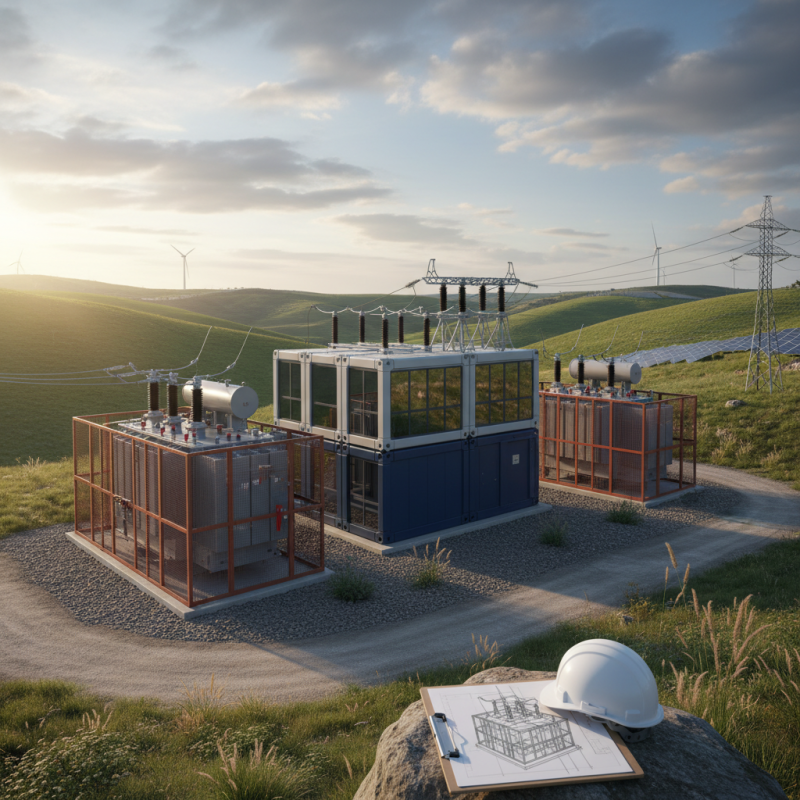
Prefabricated cabin substations are essential in modern electrical distribution. They offer several advantages, including rapid deployment and reduced site disruption. Understanding their components is crucial for making informed choices. A typical substation includes transformers, switchgear, and protection systems. Each element must be carefully selected to ensure safety and efficiency.
The installation site plays a significant role in determining the type of substation needed. Consideration of local infrastructure and environmental factors is vital. For instance, proximity to load centers can influence design choices. Efficiency in energy delivery depends on optimal placement and setup. Evaluating local regulations is also necessary to avoid legal issues.
While prefabricated designs are convenient, they may lack the customization needed for unique projects. Custom solutions often meet specific site requirements better than standard designs. However, they can lead to higher costs and longer lead times. Balancing customization with readiness is a challenge that requires careful planning. The end goal should always be maximizing functionality and reliability while minimizing delays throughout the project lifecycle.
When selecting a prefabricated cabin substation, several key factors warrant careful consideration. First, evaluate the land requirements. According to recent industry reports, proper site selection can save up to 20% in construction costs. Precision in location avoids future logistical issues. Ensure you have ample space for expanded operations.
Material quality cannot be overlooked. High-quality materials increase durability and can lower maintenance costs. Research indicates that investing in superior insulation can improve energy efficiency by up to 30%. Look closely at the operational climate too. Substations must endure temperature fluctuations and potential environmental hazards.
Consider future scalability. The demand for electricity fluctuates. A good substation should allow room for expansion. Data shows that approximately 40% of facilities face capacity issues by their fifth year. This reveals the importance of modular designs that accommodate growth without major overhauls. Additionally, assess the ease of access for maintenance. Regular servicing is critical in avoiding extended downtimes, which can lead to significant revenue losses.
When selecting a prefabricated cabin substation, understanding technical specifications is crucial. Begin by assessing your power needs. Identify the total load you expect to manage. Consider peak demands and future growth. This will guide you in choosing the right configuration. Make sure to evaluate voltage ratings. Different applications require different voltage levels.
Another vital aspect is the substation’s power factor. A higher power factor indicates better efficiency. Look for features that support energy savings and load balancing. Don't overlook safety certifications. Verify that the substation meets the necessary local and national standards. This ensures reliability and reduces risks.
Installation and maintenance requirements are sometimes neglected. Consider the ease of access for potential repairs and upgrades. Also, check for the manufacturer’s support options. Having access to expert advice can save you time and money. Remember, what may seem perfect at first glance might require more thinking. Always take the time to weigh each option carefully.
When choosing a prefabricated cabin substation, understanding the manufacturer’s reputation is vital. A 2021 industry report highlights that 70% of utility companies prioritize reliability in their vendor selection. This statistic underscores the need for manufacturers with a strong track record. The manufacturer's experience in the market often correlates with the quality of their products and support services.
Customer reviews and case studies provide essential insights into a manufacturer’s service support. According to a recent survey, 85% of clients indicated they value post-purchase assistance. Many manufacturers may promise exceptional service, but delivery may fall short. Investigating their customer service response times can reveal much about their commitment.
Moreover, certifications and industry recognition play critical roles in evaluating reputation. A recent analysis showed brands with ISO certifications had 30% fewer faults reported in the field. However, reliance solely on these standards may miss nuances. Some manufacturers may excel in compliance but lack hands-on experience. This difference can significantly impact your projects. Make informed choices by blending quantitative data with qualitative insights.
When considering the costs of prefabricated cabin substations, it's crucial to assess the overall budget carefully. The initial purchase price is just one component. Installation expenses can significantly impact total costs. Site preparation and infrastructure also require attention. It's wise to include potential hidden costs in your calculations.
Another factor influencing budget is maintenance. Prefabricated structures often need upkeep over time. Regular inspections can prevent costly repairs. Moreover, think about energy efficiency. Investing in energy-saving features can reduce operational costs in the long run.
It's important to reflect on your selections. The cheapest option may not always be the best choice. Quality is essential for reliability. Look for materials with proven durability. Seeking expert advice can provide valuable insights. Balancing cost and quality is key to making a wise investment.
„Thanks to the LUVIR technology, the solder resist process could be switched directly from the previously used mask exposure to direct exposure. As an outstanding digital solution on the market, this technology has been able to demonstrate fast process times and superior quality on our certified conventional ink in production. This allowed us to fully digitize the solder mask process at low cost – without process or ink adjustments. An excellent benefit to our production in Rot am See.“
Ralf Göhringer (Head of Production WE Rot am See)
I would definitely recommend the Limata machine and team for a future company purchase
Michael Greenaway
Compunetics Inc.
“The Limata ldi has been amazing!! Best thing we did was buy this machine”
Richard Brady
GM
Circuitlabs
“Since 2019, we have been running the Limata X1000 LDI system (including LUVIR for solder mask imaging) in daily production as an addition to our current process with film. The machine was capable of properly exposing Taiyo PSR-4000 BN (DI) solder mask types on normal to high-copper boards using a new and unique direct imaging process. The machine operating interface is very user friendly which allowed for a quick technical training curve. The pre-registration processing reduced several seconds of production time at every print. Limata support and service staff is incomparable. They supported our team every step of the way at basically any time of the day or night, with literally, an immediate response time, customizing the software interface to best fit our Operations and needs.
We have exposed more than 8,000 prints since end of October, on various solder mask colors and some resist film panels. Limata, has proven to be very capable and innovative. They are a strong contender in the industry.
We have very much enjoyed this project, and working with the team!
Thank you Limata for the continued support and being a part of our growth.”
Bill Sezate
Vice President, GM
Summit Interconnect
As a replacement to our current contact exposure process with film, the LIMATA X2000 system including LUVIR-Technology was capable of properly exposing non-LDI solder mask types using a direct imaging process. The machine offers cutting edge software with a very intuitive operating interface which allowed for quick technician training curve. The dual drawer system combined with pre-registration processing reduced several seconds of production time at every machine cycle. Limata support and service staff is world class. They added software patches to keep production running at shortest possible response times, customized the software interface to best fit our in-house Operations system, and even wrote a step-by-step machine processing manual. As a result of the project, we have exposed more than 16,000 times on various product types and solder mask brands/colors. Limata, in a very short timeframe as a company, has definitely shown they are truly innovative and will be challenging the industry of direct imaging for the top spot.
Kevin Beattie
Process Engineer
TTM Technologies
Forest Grove Division
