The fiberglass mesh machine plays a crucial role in the production of high-quality mesh products. Experts in the industry emphasize its importance. John Smith, a renowned fiberglass manufacturing expert, states, “A fiberglass mesh machine transforms raw materials into durable and reliable reinforcements.”
This machine combines fibers with resin to create a robust mesh. It operates through a weaving or knitting process, ensuring strength and flexibility. Each component of the machine has a specific function, contributing to the final product's quality.
However, not all fiberglass mesh machines operate equally. Variations in technology can lead to inconsistencies in mesh strength. This aspect often requires careful monitoring and adjustments during production. Industry professionals continually seek improvements to enhance efficiency. The complexities within this field invite reflection on best practices and the potential for innovation.
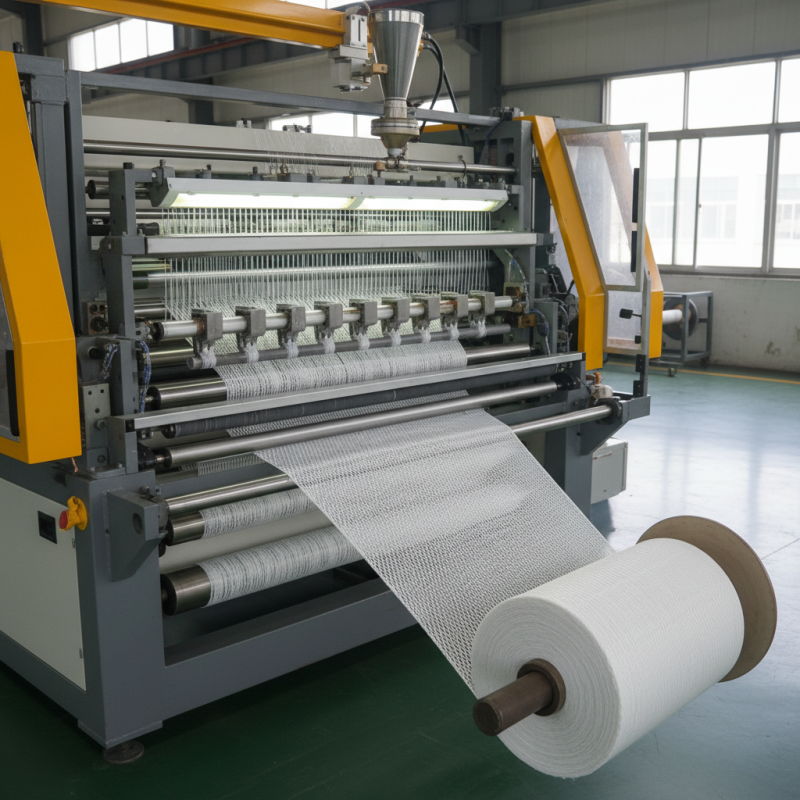
A fiberglass mesh machine is a specific tool designed for manufacturing fiberglass mesh. This mesh is used widely in construction and insulation. The primary purpose is to reinforce materials like concrete, plaster, and walls. It increases strength and stability.
The machine operates through a combination of weaving and coating processes. Fiberglass strands are woven together to create a fine net structure. This forms the backbone of the mesh. After weaving, the mesh is often coated with resin. This coating enhances durability and resistance to environmental factors. Manual adjustments are sometimes necessary during production. Workers need to monitor tension and alignment closely, ensuring consistent quality.
In practice, there are challenges. Sometimes the mesh may not adhere correctly to surfaces. This can lead to weakening over time. Frequent calibration of the machine also requires attention. A slight shift in settings can lead to defects. These issues highlight the importance of skilled operators in this industry. The future of fiberglass mesh production could benefit from automation, but human oversight remains crucial.
A fiberglass mesh machine is a crucial tool in the production of fiberglass mesh, commonly used in construction and reinforcement. Understanding its components helps in appreciating its function. These machines typically consist of several key parts.
The weaving mechanism is vital. It consists of warp and weft rods that interlace fiberglass yarns. This part requires precise calibration. If not adjusted correctly, the mesh can end up uneven. The tensioning system is another essential component. It maintains the right tension on the yarns during the weaving process. Insufficient tension may lead to weak spots in the mesh.
Another crucial part is the cutting mechanism. After weaving, the machine cuts the fiberglass mesh to the desired sizes. If the cutting is not done accurately, it can waste materials. Finally, there's the control panel. It allows operators to monitor the machine’s functions. If users are not well-trained, this panel can be confusing. Each component plays a role in ensuring the quality and efficiency of the final product.
A fiberglass mesh machine plays a crucial role in producing high-quality fiberglass mesh used for construction and reinforcement. The operation of this machine is quite fascinating. First, raw fiberglass strands are unwound. These strands are then woven together with precise tension, producing a sturdy mesh framework essential for various applications. According to industry reports, the global fiberglass market was valued at over $17 billion in 2023, indicating a growing demand.
The machine operates using various components, including a weaving mechanism and an application system. Each component must work seamlessly. For instance, the warp and weft threads must be aligned perfectly to maintain quality. During production, operators monitor the machine closely, as a minor misalignment can lead to significant defects. Studies show that a 5% increase in quality control can lead to a 20% reduction in production costs.
Despite its efficiency, challenges exist. Maintenance can interrupt production schedules. Additionally, fluctuations in raw material quality can impact the final product. While advances in technology have improved reliability, ongoing adjustments are often necessary. The fiberglass mesh machine's operation is intricate and requires skilled labor to ensure optimal performance.
Fiberglass mesh products are widely used across various industries. They serve crucial roles in construction, agriculture, and even in home improvement projects. For example, in construction, fiberglass mesh reinforces concrete structures. This increases their durability against weather elements and enhances their overall strength. The mesh is typically embedded in walls, ensuring they can withstand tension and cracking.
In agriculture, fiberglass mesh is used for various purposes. It acts as a trellis for climbing plants, providing support and helping maximize space. Additionally, it can be employed in insect netting to protect crops from pests. The lightweight nature of the mesh makes it easy to handle and install, even for the average gardener.
Fiberglass mesh can also be found in DIY home improvements. Homeowners use it for projects like reinforcing drywalls or creating decorative patterns in plaster. Some challenge arises from its installation. While it may seem simple, proper alignment is crucial for effectiveness. The mesh needs to be securely fastened to achieve its intended reinforcement. Overall, this versatile product is vital in various applications, yet achieving optimal results requires careful attention to detail.
Maintaining a fiberglass mesh machine is crucial for its longevity and efficiency. Regular inspections are necessary to identify wear and tear. Check mechanical parts, especially belts and gears. Lubrication is essential; it prevents friction and reduces the risk of breakdowns. Often overlooked, the cleanliness of the machine impacts its performance. Dust and debris can hinder operations if not addressed.
Safety is another critical consideration. Operators should wear appropriate protective gear, such as gloves and goggles. Proper training on operating procedures is essential. Many accidents occur due to negligence or lack of knowledge. Keep emergency shutoff switches accessible. It’s vital to have protocols in place for handling injuries or malfunctions.
Reflecting on these practices, it's clear that a slight oversight can lead to significant issues. Routine maintenance checks may seem tedious, yet they ensure the machine runs smoothly. Skipping these steps may save time initially but can lead to costly repairs down the line. Adopting a proactive approach is beneficial in the long run. Safety and maintenance go hand in hand for efficient operations.
| Feature | Description | Maintenance Tips | Safety Considerations |
|---|---|---|---|
| Machine Type | Weaving machine primarily used for producing fiberglass mesh. | Regularly clean the machine and inspect for wear and tear. | Always wear protective gear like gloves and goggles when operating. |
| Working Principle | Fiberglass threads are woven together to create a mesh fabric. | Lubricate moving parts periodically to ensure smooth operation. | Keep the work area clean and free of obstacles to prevent accidents. |
| Production Capacity | Capable of producing X square meters of mesh per hour. | Monitor production rates and adjust machine settings accordingly. | Ensure that emergency stop buttons are accessible and functional. |
| Applications | Used in construction, automotive, and aerospace industries for reinforcement. | Check for defects in the final product before shipping. | Follow all local regulations for operating machinery. |
„Thanks to the LUVIR technology, the solder resist process could be switched directly from the previously used mask exposure to direct exposure. As an outstanding digital solution on the market, this technology has been able to demonstrate fast process times and superior quality on our certified conventional ink in production. This allowed us to fully digitize the solder mask process at low cost – without process or ink adjustments. An excellent benefit to our production in Rot am See.“
Ralf Göhringer (Head of Production WE Rot am See)
I would definitely recommend the Limata machine and team for a future company purchase
Michael Greenaway
Compunetics Inc.
“The Limata ldi has been amazing!! Best thing we did was buy this machine”
Richard Brady
GM
Circuitlabs
“Since 2019, we have been running the Limata X1000 LDI system (including LUVIR for solder mask imaging) in daily production as an addition to our current process with film. The machine was capable of properly exposing Taiyo PSR-4000 BN (DI) solder mask types on normal to high-copper boards using a new and unique direct imaging process. The machine operating interface is very user friendly which allowed for a quick technical training curve. The pre-registration processing reduced several seconds of production time at every print. Limata support and service staff is incomparable. They supported our team every step of the way at basically any time of the day or night, with literally, an immediate response time, customizing the software interface to best fit our Operations and needs.
We have exposed more than 8,000 prints since end of October, on various solder mask colors and some resist film panels. Limata, has proven to be very capable and innovative. They are a strong contender in the industry.
We have very much enjoyed this project, and working with the team!
Thank you Limata for the continued support and being a part of our growth.”
Bill Sezate
Vice President, GM
Summit Interconnect
As a replacement to our current contact exposure process with film, the LIMATA X2000 system including LUVIR-Technology was capable of properly exposing non-LDI solder mask types using a direct imaging process. The machine offers cutting edge software with a very intuitive operating interface which allowed for quick technician training curve. The dual drawer system combined with pre-registration processing reduced several seconds of production time at every machine cycle. Limata support and service staff is world class. They added software patches to keep production running at shortest possible response times, customized the software interface to best fit our in-house Operations system, and even wrote a step-by-step machine processing manual. As a result of the project, we have exposed more than 16,000 times on various product types and solder mask brands/colors. Limata, in a very short timeframe as a company, has definitely shown they are truly innovative and will be challenging the industry of direct imaging for the top spot.
Kevin Beattie
Process Engineer
TTM Technologies
Forest Grove Division
