The Fin Press Line is revolutionizing the manufacturing sector. According to Johnathan Baker, a leading expert in industrial design, "Fin Press Line technology optimizes efficiency and reduces waste." Companies adopting this innovation gain a competitive edge.
This process involves precise automation. It streamlines production workflows. As a result, businesses can increase output while minimizing errors. The benefits extend beyond just efficiency. Adopting a Fin Press Line can enhance product quality and consistency. This is vital in today's market, where consumer expectations are high.
Yet, the transition to a Fin Press Line is not without challenges. Companies must invest in training and new technologies. There can be resistance from staff unfamiliar with automation. Each organization must evaluate its readiness. Reflecting on these aspects ensures a smoother integration. By understanding both the advantages and potential obstacles, businesses can make informed decisions.
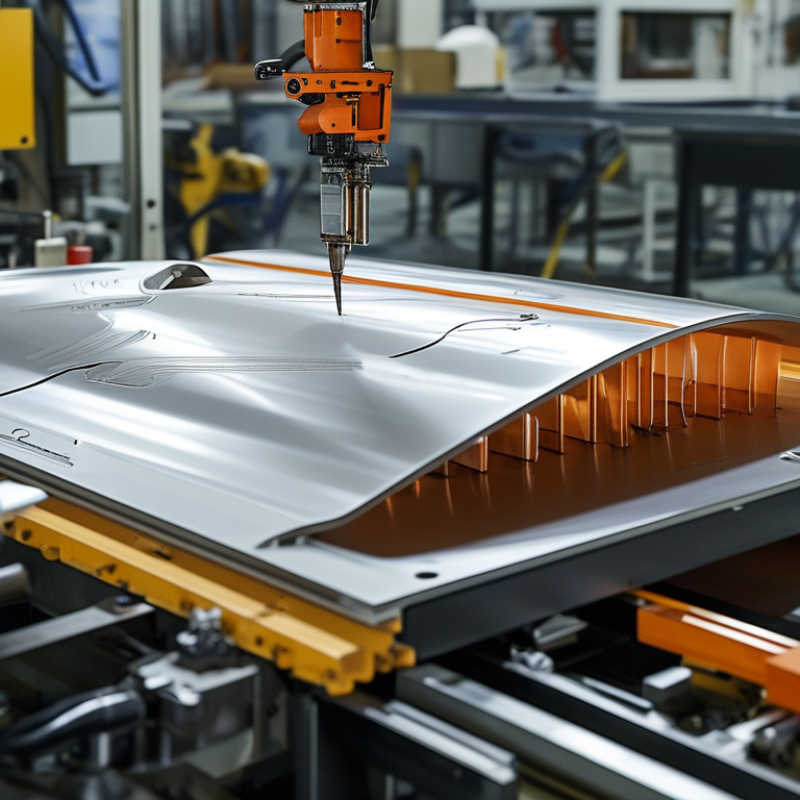
Fin Press Line is a specialized process used in manufacturing, particularly in metal forming. This technique integrates various stages of production, allowing for efficiency and precision. The purpose of a Fin Press Line is to create components with uniform quality while minimizing waste. Businesses can achieve faster turnaround times, which directly impacts their bottom line.
By understanding the Fin Press Line, companies can optimize their production flow. It combines several operations into one streamlined process. This means fewer machine setups and reduced labor costs. However, transitioning to a Fin Press Line may present challenges. Companies must train their staff and maintain equipment regularly. These factors can strain resources initially but can lead to long-term benefits.
Investing in a Fin Press Line can enhance product quality and consistency. With careful planning, the potential for increased production capacity is significant. Yet, businesses must remain vigilant about the maintenance of their systems. The balance between efficiency and oversight requires ongoing reflection and improvement. Taking the plunge into Fin Press Line technology could be the turning point for many manufacturing operations.
Fin press line technology is transforming manufacturing processes across various industries. This innovative solution integrates several key components for enhanced efficiency. The primary component is the fin press itself, which uses precise pressure to create fins on metal sheets. These fins improve heat exchange, making applications more efficient. Another crucial element is the automation system. It streamlines the production process, minimizing human error and increasing output consistency.
Monitoring systems play a vital role too. They track performance in real time, allowing for quick adjustments. Data from these systems can highlight inefficiencies that need addressing. Additionally, training staff on this technology is essential. Lack of understanding can lead to improper usage and wasted resources. Manufacturers must invest time and effort into staff training to fully leverage the fin press line's benefits.
Fin press line technology requires a thoughtful approach. Businesses must carefully assess their specific needs before integrating these systems. Not all setups will yield the same results. Customization and adaptability are necessary. Reflecting on past implementations can guide future improvements. Manufacturing is about precision, and every element counts towards achieving optimal results.
Implementing a Fin Press Line can significantly enhance manufacturing operations. It streamlines the process of forming and assembling metal components. Businesses can utilize this technology to reduce production time and minimize labor costs. The automation in the Fin Press Line allows for quicker setup and reduced material waste. This efficiency can lead to improved profit margins, making it a viable investment.
One of the primary advantages is the precision it offers. The technology ensures consistent product quality, which is crucial for maintaining customer satisfaction. A business with high-quality standards can build a loyal customer base. However, the initial investment may raise concerns, especially for smaller companies. It requires careful consideration of budget allocation and long-term benefits. Some companies might struggle with the adjustment period, which can seem daunting.
Flexibility is another key benefit. A Fin Press Line can adapt to various production needs. This attribute allows businesses to switch between product lines smoothly. Companies might face challenges in training staff, which is vital for maximizing the equipment’s potential. Ensuring that employees are knowledgeable can take time, yet it’s essential for realizing the technology's full advantages. Overall, evaluating the long-term gains vs. immediate challenges is necessary for strategic planning.
The Fin Press Line has gained widespread applications across various industries, transforming production processes and reducing costs. In the automotive sector, for instance, reports indicate that implementing Fin Press Lines can enhance manufacturing efficiency by up to 30%. The ability to produce complex shapes with precision significantly reduces waste and improves material utilization.
In the aerospace industry, this technology plays a crucial role in fabricating lightweight components. A recent study highlighted that aerospace manufacturers using Fin Press Lines achieve a weight reduction of 15% to 20% in their parts, contributing to fuel efficiency and lower emissions. However, integrating advanced press lines requires careful analysis of operational capabilities and workforce training.
Food packaging is another field benefiting from Fin Press Lines. According to industry analysis, packaging companies report a 25% improvement in production speed, meeting increasing consumer demand for quick retail solutions. Yet, businesses must address challenges such as equipment maintenance and the need for skilled labor to handle these sophisticated systems.
| Industry | Application | Benefits | Efficiency Improvement |
|---|---|---|---|
| Automotive | Heat Exchangers | Increased thermal efficiency | 25% |
| Aerospace | Cooling Systems | Weight reduction | 15% |
| HVAC | Condensers | Improved energy efficiency | 20% |
| Marine | Cooling Systems | Enhanced thermal performance | 30% |
| Renewable Energy | Solar Collectors | Higher energy capture | 15% |
Optimizing your Fin Press Line operations can significantly enhance productivity and efficiency. One effective strategy is to streamline your workflow. Assess each step in the process, identifying bottlenecks and redundancies. For instance, ensure that materials are readily available to minimize downtime. By organizing your workspace and tools, you reduce wasted time and create a smoother flow.
Another key practice involves regular maintenance and staff training. Machines must be kept in good condition to prevent breakdowns. Develop a maintenance schedule and adhere to it strictly. Additionally, equipping your team with thorough knowledge of equipment usage can prevent accidents and errors. Short training sessions can make a noticeable difference in operational safety and efficiency.
Finally, consider implementing data analysis. Monitoring production metrics helps identify trends and performance issues. Regularly review this data to make informed decisions about process improvements. Invite feedback from your team, as they may provide insights you might overlook. This collaborative approach fosters a culture of continuous improvement, ultimately benefiting your Fin Press Line operations.
„Thanks to the LUVIR technology, the solder resist process could be switched directly from the previously used mask exposure to direct exposure. As an outstanding digital solution on the market, this technology has been able to demonstrate fast process times and superior quality on our certified conventional ink in production. This allowed us to fully digitize the solder mask process at low cost – without process or ink adjustments. An excellent benefit to our production in Rot am See.“
Ralf Göhringer (Head of Production WE Rot am See)
I would definitely recommend the Limata machine and team for a future company purchase
Michael Greenaway
Compunetics Inc.
“The Limata ldi has been amazing!! Best thing we did was buy this machine”
Richard Brady
GM
Circuitlabs
“Since 2019, we have been running the Limata X1000 LDI system (including LUVIR for solder mask imaging) in daily production as an addition to our current process with film. The machine was capable of properly exposing Taiyo PSR-4000 BN (DI) solder mask types on normal to high-copper boards using a new and unique direct imaging process. The machine operating interface is very user friendly which allowed for a quick technical training curve. The pre-registration processing reduced several seconds of production time at every print. Limata support and service staff is incomparable. They supported our team every step of the way at basically any time of the day or night, with literally, an immediate response time, customizing the software interface to best fit our Operations and needs.
We have exposed more than 8,000 prints since end of October, on various solder mask colors and some resist film panels. Limata, has proven to be very capable and innovative. They are a strong contender in the industry.
We have very much enjoyed this project, and working with the team!
Thank you Limata for the continued support and being a part of our growth.”
Bill Sezate
Vice President, GM
Summit Interconnect
As a replacement to our current contact exposure process with film, the LIMATA X2000 system including LUVIR-Technology was capable of properly exposing non-LDI solder mask types using a direct imaging process. The machine offers cutting edge software with a very intuitive operating interface which allowed for quick technician training curve. The dual drawer system combined with pre-registration processing reduced several seconds of production time at every machine cycle. Limata support and service staff is world class. They added software patches to keep production running at shortest possible response times, customized the software interface to best fit our in-house Operations system, and even wrote a step-by-step machine processing manual. As a result of the project, we have exposed more than 16,000 times on various product types and solder mask brands/colors. Limata, in a very short timeframe as a company, has definitely shown they are truly innovative and will be challenging the industry of direct imaging for the top spot.
Kevin Beattie
Process Engineer
TTM Technologies
Forest Grove Division
