In the realm of electronics, the NTC thermistor plays a pivotal role. Understanding the Ntc Thermistor Function is essential for both designers and engineers. These components are temperature-sensitive resistors that decrease their resistance with increasing temperature. This unique characteristic lends itself to various applications.
NTC thermistors are widely used in temperature sensing and circuit protection. They provide precise readings in thermal management systems. The reliability of these devices is critical for maintaining optimal performance in electronic circuits. However, not all applications are straightforward. Miscalculations in temperature ranges can lead to malfunctions.
Moreover, the integration of NTC thermistors requires careful consideration. Designing circuits without thorough understanding may cause issues. Their behavior under different conditions can sometimes be unpredictable. Despite the challenges, the benefits of using NTC thermistors far outweigh the risks when applied correctly.
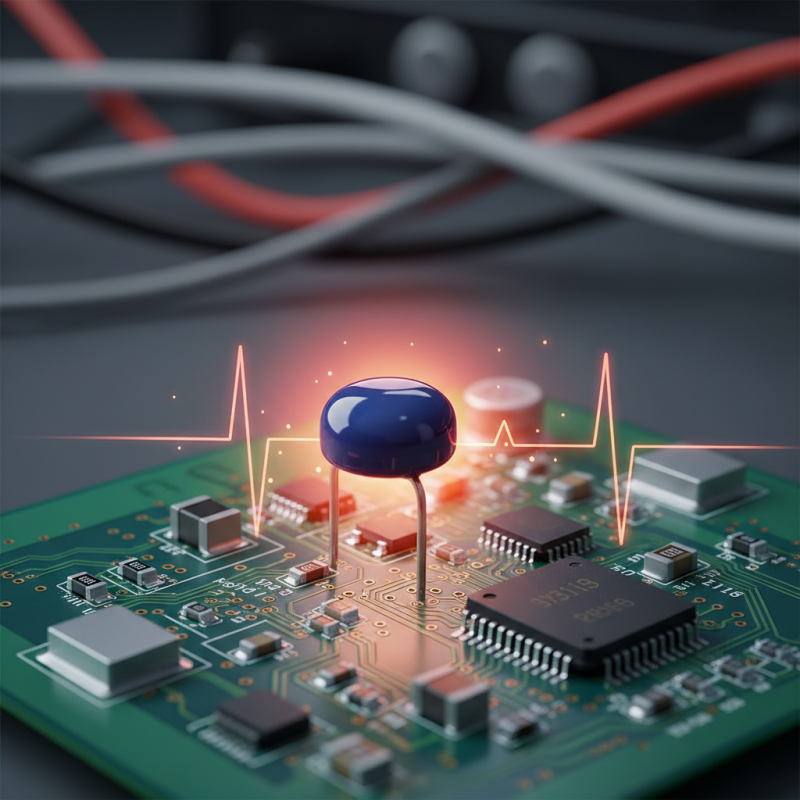
NTC thermistors are crucial components in electronics. These resistors change their resistance based on temperature. As the temperature rises, the resistance decreases, which is essential for temperature reading and control.
In practical applications, NTC thermistors help regulate temperatures in devices. For instance, they can protect circuits from overheating. This functionality ensures the longevity and safety of electronic equipment.
Tips: When using NTC thermistors, consider their response time. Some models react slower than others. Proper placement is vital for accurate temperature measurement. Ensure that the thermistor is in direct contact with the object you want to monitor.
Additionally, not all NTC thermistors have the same specifications. This creates the need for careful selection based on your project's requirements. Be cautious of the operating range. Exceeding it can lead to inaccurate readings or damage. A thoughtful approach in choosing and using NTC thermistors can greatly enhance your electronic projects.
NTC thermistors play a crucial role in electronics by sensing temperature changes. These components are made from semiconductor materials that exhibit a significant decrease in resistance as temperature rises. This property allows them to function effectively in various applications, including temperature sensing, circuit protection, and voltage regulation.
When exposed to heat, the resistance of an NTC thermistor drops. This change can be measured and translated into temperature readings. For instance, in a simple temperature measurement circuit, the decrease in resistance can alter the voltage across the thermistor. This voltage change can then be calibrated to match specific temperature values.
In practical applications, using NTC thermistors isn't without challenges. The sensitivity of these devices to temperature changes can lead to issues with stability and accuracy. Environmental factors, such as humidity and air pressure, may also affect their performance. Therefore, careful selection and calibration are crucial to ensure precise and reliable temperature monitoring in electronic systems.
NTC thermistors, or Negative Temperature Coefficient thermistors, play a crucial role in electronic circuits. Their primary function involves temperature sensing and resistance changes. As temperature increases, their resistance decreases, making them ideal for various applications. According to a report by MarketsandMarkets, the global thermistor market is projected to reach USD 2.8 billion by 2025, with significant growth in automotive and consumer electronics sectors.
One prominent application of NTC thermistors is in temperature control systems. These components help regulate temperatures in devices like HVAC systems. They ensure efficiency and safety in operation. In power supply circuits, NTC thermistors also act as inrush current limiters. They prevent damage during start-up by reducing high initial currents. This protective measure extends the lifespan of electronic devices.
In automotive applications, NTC thermistors assist in monitoring engine temperatures. This data is critical for maintaining optimal performance. However, it’s important to note that installation errors can lead to inaccurate readings. Proper calibration and placement are necessary for reliable operation. The growing need for precise temperature management in electronics provides a substantial opportunity for NTC thermistors. Their versatility is evident across various sectors, driving innovation and efficiency.
NTC thermistors play a crucial role in various electronic applications. Their primary function is to provide temperature sensing and compensation. As temperature increases, the resistance of an NTC thermistor decreases. This property makes them ideal for temperature measurement and control. They are often used in circuits that require precision and accuracy.
Despite their advantages, NTC thermistors have their limitations. One significant drawback is their non-linear response to temperature changes. This non-linearity complicates the calibration process, requiring additional circuitry for accurate readings. Moreover, these thermistors can have limited operational ranges. Extreme temperatures can lead to unreliable readings, affecting system performance.
In real-world applications, the size and response time of NTC thermistors may also pose challenges. Smaller devices can exhibit faster response but may have reduced power handling capabilities. This trade-off needs careful consideration in design. Furthermore, using NTC thermistors often necessitates supplementary components to achieve consistent results. Balancing these factors is essential for optimizing performance in electronic systems.
NTC thermistors are temperature-sensitive resistors whose resistance decreases as the temperature increases. This chart illustrates the typical operating conditions of an NTC thermistor, including the resistance at a standard temperature of 25°C, which is approximately 15,000 ohms, and the expected current flowing through it at this temperature, which is about 10 mA.
NTC thermistors are widely adopted for their unique temperature sensing capabilities. They exhibit a decrease in resistance as temperature increases. This property makes them suitable for various applications, from home appliances to industrial controls. Industry reports show that NTC thermistors are preferred for precise temperature monitoring, especially in the automotive and HVAC sectors. Their accuracy often surpasses that of typical thermocouples, making them a reliable choice in critical applications.
When comparing NTC thermistors with other temperature sensors, notable differences arise. Thermocouples are rugged and can handle extreme temperatures, yet they lack the precision of NTC thermistors. Additionally, RTDs (Resistance Temperature Detectors) excel in stability but are typically more costly. Data indicates that the market for NTC thermistors is growing rapidly, projected to reach $2 billion by 2025. This growth reflects their increasing application in smart devices and energy-efficient systems.
Despite their advantages, NTC thermistors come with limitations. They may not perform well in very high temperatures, and sensitivity can vary with manufacturing quality. In precision applications, even minor variations can lead to errors. Users must consider the specific requirements of their projects when choosing a temperature sensor. A careful balance of cost, precision, and environmental conditions is essential for optimal performance.
„Thanks to the LUVIR technology, the solder resist process could be switched directly from the previously used mask exposure to direct exposure. As an outstanding digital solution on the market, this technology has been able to demonstrate fast process times and superior quality on our certified conventional ink in production. This allowed us to fully digitize the solder mask process at low cost – without process or ink adjustments. An excellent benefit to our production in Rot am See.“
Ralf Göhringer (Head of Production WE Rot am See)
I would definitely recommend the Limata machine and team for a future company purchase
Michael Greenaway
Compunetics Inc.
“The Limata ldi has been amazing!! Best thing we did was buy this machine”
Richard Brady
GM
Circuitlabs
“Since 2019, we have been running the Limata X1000 LDI system (including LUVIR for solder mask imaging) in daily production as an addition to our current process with film. The machine was capable of properly exposing Taiyo PSR-4000 BN (DI) solder mask types on normal to high-copper boards using a new and unique direct imaging process. The machine operating interface is very user friendly which allowed for a quick technical training curve. The pre-registration processing reduced several seconds of production time at every print. Limata support and service staff is incomparable. They supported our team every step of the way at basically any time of the day or night, with literally, an immediate response time, customizing the software interface to best fit our Operations and needs.
We have exposed more than 8,000 prints since end of October, on various solder mask colors and some resist film panels. Limata, has proven to be very capable and innovative. They are a strong contender in the industry.
We have very much enjoyed this project, and working with the team!
Thank you Limata for the continued support and being a part of our growth.”
Bill Sezate
Vice President, GM
Summit Interconnect
As a replacement to our current contact exposure process with film, the LIMATA X2000 system including LUVIR-Technology was capable of properly exposing non-LDI solder mask types using a direct imaging process. The machine offers cutting edge software with a very intuitive operating interface which allowed for quick technician training curve. The dual drawer system combined with pre-registration processing reduced several seconds of production time at every machine cycle. Limata support and service staff is world class. They added software patches to keep production running at shortest possible response times, customized the software interface to best fit our in-house Operations system, and even wrote a step-by-step machine processing manual. As a result of the project, we have exposed more than 16,000 times on various product types and solder mask brands/colors. Limata, in a very short timeframe as a company, has definitely shown they are truly innovative and will be challenging the industry of direct imaging for the top spot.
Kevin Beattie
Process Engineer
TTM Technologies
Forest Grove Division
