When tackling your next construction project, efficiency is key. Choosing the right equipment can make a significant difference. One essential tool to consider is the Grab For Mini Digger. This versatile attachment allows for improved digging and material handling. Whether you are dealing with soil, debris, or larger rocks, the Grab For Mini Digger can help streamline your tasks.
Using a mini digger equipped with a grab adds value to your workflow. It offers precision and control that a traditional bucket may lack. However, it is important to understand your project needs. Not all grabs fit every mini digger model, so compatibility is crucial. Take time to research various options before making a decision. You might encounter difficulties if the grab doesn't align well with your digger.
Investing in a Grab For Mini Digger could lead to unexpected challenges. It is essential to assess the load capacity and operational limits. While this tool can increase productivity, improper use might cause damage or safety hazards. Reflecting on past experiences, many operators have learned that careful planning is vital. Observing best practices will ensure that your project runs smoothly.
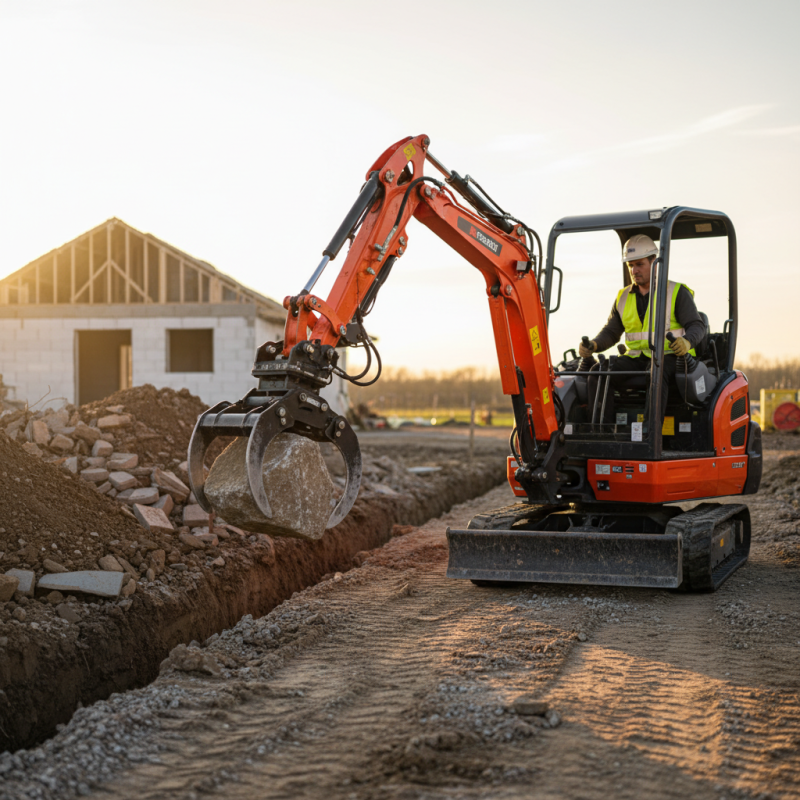
Mini diggers are essential tools in modern construction. Their versatility allows for various applications, from digging trenches to landscaping. According to a recent industry report, the mini excavator market is projected to grow by 5% annually, highlighting their increasing importance.
Understanding mini diggers requires recognizing their capabilities. These machines are compact yet powerful, often weighing between 1 to 10 tons. They can fit into tight spaces, making them ideal for urban construction sites. A survey by a leading construction association indicated that 75% of contractors prefer mini diggers for small to medium projects because they enhance efficiency and reduce labor costs.
However, it's important to address the limitations of mini diggers. Their size restricts the depth they can reach compared to larger excavators. Additionally, improper operation can lead to accidents or project delays. Construction teams must ensure proper training and maintenance to maximize their benefits. Emphasizing safety and skill is crucial for successful mini digger use in any project.
Choosing the right mini digger for your project can be daunting. Consider the project's size and scope first. Are you digging a small garden or a larger construction site? The answer influences the digger's size. A compact mini digger works wonders in tight spaces. However, bigger tasks might require more power and capacity.
Next, assess the terrain. Different mini diggers handle various surfaces better than others. If your project involves rough ground or slopes, look for diggers with good traction and stability. Also, evaluate how deep you need to dig. Some mini diggers can reach depth quickly but may struggle in tougher materials. Understanding these factors can help avoid costly mistakes.
Budget is another significant consideration. Mini diggers come in various price ranges. While it might be tempting to opt for the cheapest option, weigh the long-term value. Reliable equipment often offers better performance and longevity. Finally, consider your experience level. Some models are easier to operate, suited for beginners, while others require more skill. Taking these factors into account can lead to better decisions.
| Consideration | Details |
|---|---|
| Size of the Digger | Consider the dimensions to fit your project space. |
| Weight Capacity | Ensure it can handle the loads you need to lift. |
| Fuel Type | Choose between diesel or electric based on convenience and project site. |
| Operating Depth | Look for a digger that can reach the required depth for your tasks. |
| Attachments Available | Check for compatible attachments like buckets and drills for versatility. |
| Ease of Transport | Consider the weight and size for easy transportation to and from the site. |
| Rental Costs | Evaluate rental versus purchase based on project duration and budget. |
| Safety Features | Look for safety features such as rollover protection and emergency brakes. |
When selecting a mini digger for your project, consider the specific tasks at hand. The size of the digger is crucial. A smaller model can fit in tight spaces, while a larger one is better for heavy-duty work. Think about the depth and width of the excavation needed. Familiarize yourself with the specifications of different models to see which aligns with your project's requirements.
Next, evaluate the attachments available for the mini digger. Various attachments can enhance functionality, allowing for trenching, grading, or even demolition. It's important to match these attachments to the job needs. Some users overlook this aspect and end up with equipment that doesn’t fully meet their project demands.
Lastly, check the digger's weight and transportability. A heavier digger may offer stability but can be challenging to transport. On the contrary, a lightweight option might be more mobile but less powerful. Balancing these factors can be tricky and requires careful consideration. Don't hesitate to consult experts to get insights, but remember that your experience with equipment can guide you too.
Operating a mini digger can transform your project, but safety and efficiency are paramount. Always wear protective gear like gloves and helmets. Before starting, inspect the machine for any visible damage. Check the fuel levels and hydraulic fluid. A simple inspection can prevent accidents. Remember, a mini digger requires focus. Avoid distractions to maintain safety.
Understanding the controls is crucial. Familiarize yourself with the levers and pedals before operating the machine. Each function has a specific purpose. Practice makes perfect. Spend time on a flat, open area to get comfortable. When digging, maintain a steady pace. Quick movements can lead to errors or accidents. Remember to keep an eye on your surroundings and other workers.
Reflection is important in learning. If you make a mistake, take time to analyze it. Ask for feedback from experienced operators. They can offer insights that enhance your skills. A mini digger can be a game-changer, but it requires respect and caution in handling. Choosing to improve will ensure safety and efficiency in your next project.
Mini diggers are essential for many construction projects, but they require regular maintenance to extend their lifespan. Proper care is not just about keeping the machine clean; it’s a combination of inspection, lubricating parts, and checking for wear and tear. When using a mini digger, always check the hydraulic fluid levels and hoses for leaks. Missing this can lead to costly repairs.
Additionally, regularly inspect the filters. Clogged filters can hinder performance and lead to overheating. It’s common for operators to overlook this simple step, thinking it’s not crucial. Change the engine oil as recommended. Neglecting oil changes can cause severe engine damage over time. Remember, your mini digger works hard; treat it with respect.
Lastly, training operators on safe usage can help prevent accidents. Many issues arise from improper handling. Consider providing refresher courses on best practices. While maintenance may seem time-consuming, neglecting it can result in more significant problems. Investing a little time now saves money later. Keep records of all maintenance activities for future reference. This approach not only improves reliability but also maximizes the digger's value.
„Thanks to the LUVIR technology, the solder resist process could be switched directly from the previously used mask exposure to direct exposure. As an outstanding digital solution on the market, this technology has been able to demonstrate fast process times and superior quality on our certified conventional ink in production. This allowed us to fully digitize the solder mask process at low cost – without process or ink adjustments. An excellent benefit to our production in Rot am See.“
Ralf Göhringer (Head of Production WE Rot am See)
I would definitely recommend the Limata machine and team for a future company purchase
Michael Greenaway
Compunetics Inc.
“The Limata ldi has been amazing!! Best thing we did was buy this machine”
Richard Brady
GM
Circuitlabs
“Since 2019, we have been running the Limata X1000 LDI system (including LUVIR for solder mask imaging) in daily production as an addition to our current process with film. The machine was capable of properly exposing Taiyo PSR-4000 BN (DI) solder mask types on normal to high-copper boards using a new and unique direct imaging process. The machine operating interface is very user friendly which allowed for a quick technical training curve. The pre-registration processing reduced several seconds of production time at every print. Limata support and service staff is incomparable. They supported our team every step of the way at basically any time of the day or night, with literally, an immediate response time, customizing the software interface to best fit our Operations and needs.
We have exposed more than 8,000 prints since end of October, on various solder mask colors and some resist film panels. Limata, has proven to be very capable and innovative. They are a strong contender in the industry.
We have very much enjoyed this project, and working with the team!
Thank you Limata for the continued support and being a part of our growth.”
Bill Sezate
Vice President, GM
Summit Interconnect
As a replacement to our current contact exposure process with film, the LIMATA X2000 system including LUVIR-Technology was capable of properly exposing non-LDI solder mask types using a direct imaging process. The machine offers cutting edge software with a very intuitive operating interface which allowed for quick technician training curve. The dual drawer system combined with pre-registration processing reduced several seconds of production time at every machine cycle. Limata support and service staff is world class. They added software patches to keep production running at shortest possible response times, customized the software interface to best fit our in-house Operations system, and even wrote a step-by-step machine processing manual. As a result of the project, we have exposed more than 16,000 times on various product types and solder mask brands/colors. Limata, in a very short timeframe as a company, has definitely shown they are truly innovative and will be challenging the industry of direct imaging for the top spot.
Kevin Beattie
Process Engineer
TTM Technologies
Forest Grove Division
