High Softening Resin is a critical material in various industries, particularly in adhesives and coatings. This resin has a unique softening point, which allows for better flexibility and durability in applications. According to a recent market report by Grand View Research, the global demand for high softening resin is expected to grow at a Compound Annual Growth Rate (CAGR) of 5.2% from 2023 to 2030. This growth reflects the resin's importance in enhancing product performance.
High Softening Resin offers essential characteristics such as enhanced thermal stability and adhesive strength. Industries like automotive and construction heavily rely on this resin for structural bond strength. However, not all high softening resins are created equal. Different grades can significantly impact their performance in specific applications. Users should be cautious in choosing the right type.
The development of eco-friendly alternatives is also noteworthy. Industries are increasingly shifting towards sustainable materials without compromising quality. Nevertheless, challenges remain in finding optimal formulations that meet both environmental and performance standards. There is an ongoing need for research and dialogue on the impact of these resins on health and the environment. An informed approach is essential for future advancements in high softening resin technology.
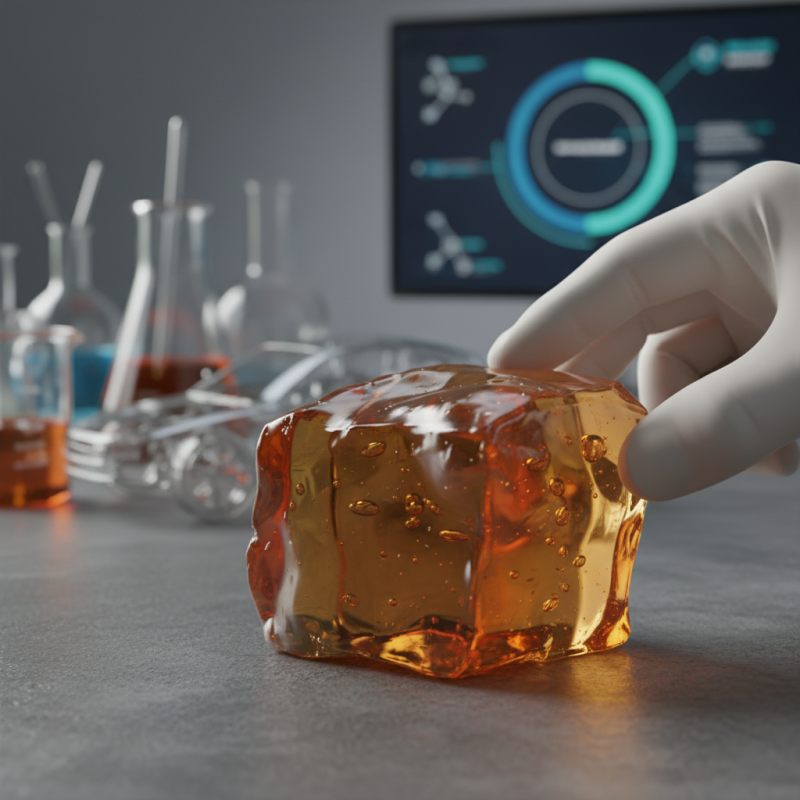
High softening resin plays a crucial role in various applications, including coatings and adhesives. Its chemical makeup consists primarily of a blend of aromatic and aliphatic compounds, which influence its thermal properties. These resins demonstrate high softening points, generally ranging from 80°C to 160°C. This temperature range allows them to maintain stability under heat.
The significance of high softening resin lies in its ability to enhance durability and processability. According to a market research report by Grand View Research, the global demand for high-performance resins is expected to grow by 5.6% annually through the next decade. Manufacturers increasingly rely on these materials for improving product longevity and compatibility with different substrates. However, the selection process is not flawless. Some high softening resins can lead to brittle failures if not blended properly, raising quality concerns.
Understanding the chemistry of these resins is vital for optimizing their utility. Their molecular structure often includes various additives to improve specific properties. A study from the Journal of Applied Polymer Science noted that blending strategies must be carefully executed. Otherwise, inconsistencies in performance can result. This highlights the need for ongoing research and development in resin formulation to meet evolving market demands effectively.
High softening resin plays a crucial role in various industrial applications. Its unique properties make it an essential ingredient in products like adhesives, coatings, and sealants. The softening point is a key characteristic. This property affects the flexibility, viscosity, and adhesion of the material.
In industrial settings, high softening resin provides excellent thermal stability. This ensures that products remain effective under heat stress. Additionally, its good compatibility with different types of polymers enhances overall performance. The versatility of this resin allows it to be blended with other materials, leading to customized properties for specific applications.
Tips: Always test resin blends in small batches. This helps identify the right softening point for your needs. Watch for changes in viscosity as temperatures rise. Adjust formulations accordingly to maintain optimal performance.
Moreover, transparency and clarity are vital. High softening resin can often be transparent, which benefits applications where appearance matters. The balance between functionality and aesthetics should be carefully managed. Finding this balance takes trial and error, but it is necessary for successful outcomes.
High softening resin plays a pivotal role across various industries. This material is characterized by its ability to maintain flexibility and stability under high temperatures. Such properties make it ideal for applications in sealants, adhesives, and coatings. For instance, in the automotive industry, high softening resin is used in coatings that protect surfaces from corrosion and UV damage.
In adhesives, high softening resin enhances bonding strength. It improves the longevity of products by withstanding extreme conditions. The construction sector benefits as well. Here, it is used in waterproofing materials, ensuring durability. Despite its advantages, the choice of the wrong type of resin can lead to failures. It’s crucial to assess specific application needs carefully.
Packaging solutions also integrate high softening resin. This is vital for creating flexible packaging that can resist various environmental factors. When not used appropriately, issues like environmental degradation may arise. Balancing functionality with environmental impact remains a challenge. Many companies are exploring more sustainable options. Each industry must weigh its choices and adapt continuously.
High softening resin, known for its unique thermal properties, plays a significant role in various industries. It's essential in the production of adhesives, coatings, and sealants. The market for high softening resin is expanding rapidly, driven by increased demand in packaging and construction sectors. The global focus on sustainability is also pushing companies to explore bio-based resins.
As you navigate this growing market, it's wise to stay informed about the latest trends. Research shows a rise in demand for eco-friendly alternatives. Attend industry conferences and webinars to connect with experts. Networking can provide insights into new technologies and applications.
Consider the implications of changing regulations on production processes. Adapting to these changes can be challenging but necessary. Engaging with industry reports will help you understand market shifts. Emphasizing high-quality materials while remaining flexible can foster resilience. This adaptability is crucial for businesses aiming to thrive in this competitive landscape.
High softening resins are increasingly recognized for their role in sustainable manufacturing. These resins serve as crucial components in various applications, particularly in adhesives and coatings. According to a report by Smithers, the global demand for high softening point resins is projected to grow by 4.5% annually. This trend reflects their importance in reducing environmental impact.
The use of high softening resins can promote sustainability. They often replace more harmful materials, improving product lifespan and reducing waste. In 2021, the environmental agency reported that replacing traditional substances with bio-based high softening resins could cut carbon emissions by approximately 30%. However, the sourcing of raw materials for these resins warrants scrutiny. Sustainable practices must be implemented to ensure that resource extraction does not lead to ecosystem degradation.
There are challenges associated with the adoption of high softening resins. While they offer environmental benefits, the production process can still be energy-intensive. Industry experts suggest that manufacturers should prioritize energy-efficient methods. Furthermore, the recycling of products containing these resins is not yet standardized. Advancements in this area are necessary for maximizing their sustainability potential. Addressing these issues can enhance the positive impact of high softening resins on the environment.
| Property | Value | Importance |
|---|---|---|
| Softening Point | 80-120 °C | Determines thermal stability in applications |
| Viscosity | 1000-5000 cP at 150 °C | Influences processing and application of the resin |
| Environmental Impact | Low volatile organic compounds (VOCs) | Safety for users and reduced air pollution |
| Applications | Adhesives, coatings, sealants | Versatility in various industries |
| Sustainability | Biodegradable options available | Reduced environmental footprint |
„Thanks to the LUVIR technology, the solder resist process could be switched directly from the previously used mask exposure to direct exposure. As an outstanding digital solution on the market, this technology has been able to demonstrate fast process times and superior quality on our certified conventional ink in production. This allowed us to fully digitize the solder mask process at low cost – without process or ink adjustments. An excellent benefit to our production in Rot am See.“
Ralf Göhringer (Head of Production WE Rot am See)
I would definitely recommend the Limata machine and team for a future company purchase
Michael Greenaway
Compunetics Inc.
“The Limata ldi has been amazing!! Best thing we did was buy this machine”
Richard Brady
GM
Circuitlabs
“Since 2019, we have been running the Limata X1000 LDI system (including LUVIR for solder mask imaging) in daily production as an addition to our current process with film. The machine was capable of properly exposing Taiyo PSR-4000 BN (DI) solder mask types on normal to high-copper boards using a new and unique direct imaging process. The machine operating interface is very user friendly which allowed for a quick technical training curve. The pre-registration processing reduced several seconds of production time at every print. Limata support and service staff is incomparable. They supported our team every step of the way at basically any time of the day or night, with literally, an immediate response time, customizing the software interface to best fit our Operations and needs.
We have exposed more than 8,000 prints since end of October, on various solder mask colors and some resist film panels. Limata, has proven to be very capable and innovative. They are a strong contender in the industry.
We have very much enjoyed this project, and working with the team!
Thank you Limata for the continued support and being a part of our growth.”
Bill Sezate
Vice President, GM
Summit Interconnect
As a replacement to our current contact exposure process with film, the LIMATA X2000 system including LUVIR-Technology was capable of properly exposing non-LDI solder mask types using a direct imaging process. The machine offers cutting edge software with a very intuitive operating interface which allowed for quick technician training curve. The dual drawer system combined with pre-registration processing reduced several seconds of production time at every machine cycle. Limata support and service staff is world class. They added software patches to keep production running at shortest possible response times, customized the software interface to best fit our in-house Operations system, and even wrote a step-by-step machine processing manual. As a result of the project, we have exposed more than 16,000 times on various product types and solder mask brands/colors. Limata, in a very short timeframe as a company, has definitely shown they are truly innovative and will be challenging the industry of direct imaging for the top spot.
Kevin Beattie
Process Engineer
TTM Technologies
Forest Grove Division
