Choosing a hose is rarely just a matter of matching a diameter. Buyers must consider the conveyed material, operating pressure, temperature, flexibility, and connection style. A suitable Hose Combination brings the hose, fittings, and intended application together as one workable assembly. Get one detail wrong, and installation can become difficult or performance may fall short.
This guide introduces ten common hose combination types for global buyers, from general-purpose industrial assemblies to options designed for hydraulic, air, water, and other service conditions. Each type serves a different need. A compact hose may suit a tight machine enclosure, while a reinforced assembly may better handle repeated movement or higher pressure. Details matter.
The best choice starts with clear operating data. Check the hose’s inner diameter, working pressure, temperature range, fitting material, and connection dimensions. Then confirm that the complete assembly—not just the hose—is suited to the application. A specification sheet helps, but it rarely tells the whole story. Ask suppliers about testing, materials, and traceable product information, and compare equivalent specifications rather than relying on appearance or price alone.
Even experienced buyers can overlook routing space or how often a hose will flex. That is worth reconsidering. No single combination fits every job, and product descriptions may use different terms across markets. The overview below offers a practical starting point; verify critical requirements with the manufacturer before ordering.
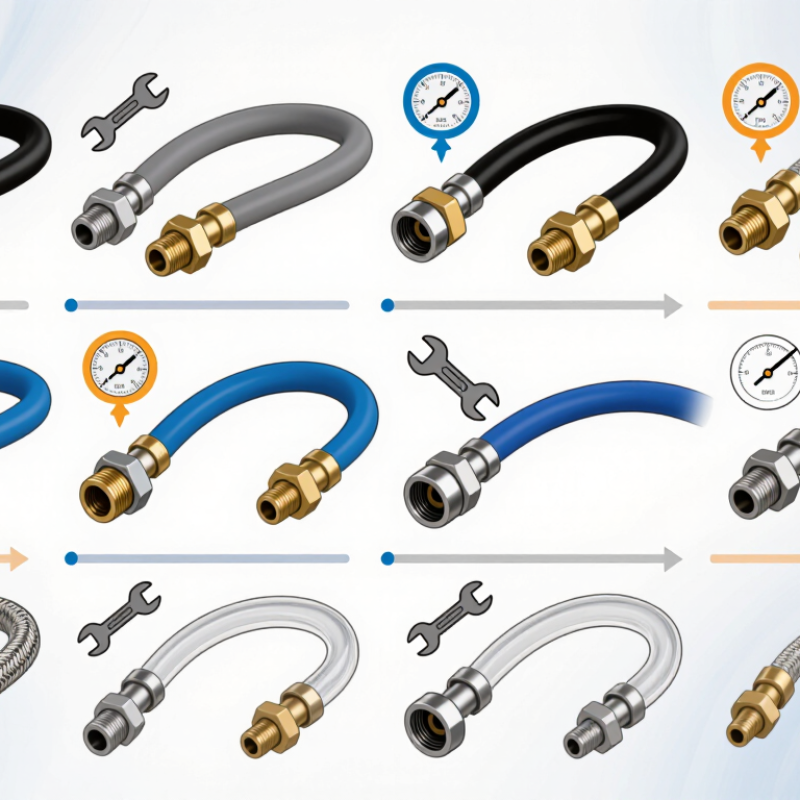
Top 10 Hose Combination Types for Global Buyers
Hose types are best compared by their tube, reinforcement, cover, and end connections. These parts work together. A rubber tube with textile reinforcement suits many general air and water duties. A synthetic-rubber tube with one or two wire braids is common in hydraulic assemblies. Multiple wire spirals support demanding pressure cycles, but can reduce flexibility. Thermoplastic tubing with textile reinforcement offers a lighter option for some hydraulic lines. PTFE with a stainless-steel braid handles many temperature-sensitive or chemically challenging services; verify compatibility for the specific fluid. Silicone with textile reinforcement is used where flexibility and heat resistance matter. Details matter.
Other combinations include a helix-reinforced suction hose, a layered composite transfer hose, steel-wire-reinforced PVC, and twin hoses joined for paired supply lines. Each construction has trade-offs. A suction hose needs enough vacuum resistance, while a transfer hose depends on its inner layer and seals. Covers protect against abrasion, weather, or oil exposure, but no cover is universally suitable. Before selection, compare working pressure, temperature range, bend radius, fluid compatibility, and fitting method in the manufacturer’s technical data. The categories overlap. That can make comparison frustrating, especially when suppliers use different names for similar builds. A clear specification is more dependable than a type label alone.
Hose Combination Types: Components, Construction, and Classification
The chart compares representative constructions: 1 means the feature is typically present in the named hose style; 0 means it is not typical or is not a defining feature. Actual construction varies by material, size, pressure rating, and application. Confirm specifications with the supplier before selection.
Top 10 Hose Combination Types for Global Buyers
Rubber and Thermoplastic Hose Combinations for General Use
Rubber and thermoplastic hoses serve different everyday needs. Rubber constructions often tolerate abrasion and vibration well, making them practical around pumps, workshops, and mobile equipment. Thermoplastic hoses can be lighter and easier to route through tight spaces. Common combinations include rubber tubes with textile or wire reinforcement, and thermoplastic tubes with fiber or synthetic braid. The right choice depends on the fluid, pressure, temperature, and movement—not appearance alone. Grand View Research’s 2024 Industrial Hose Market report projects roughly 5% annual market growth through 2030, reflecting broad demand across industrial applications. That forecast does not identify which hose suits a particular job.
Tips: Check the hose maker’s documented fluid-compatibility and pressure limits. For hydraulic applications, compare construction and performance requirements with SAE J517. Measure the actual bend radius at the installation point. A hose that kinks beside a hot pump can fail sooner than expected.
Rubber may be preferable where repeated rubbing is likely; thermoplastic may help when lower weight or a compact route matters. Neither material is universally better. Temperature cycling, sunlight, cleaning chemicals, and end-fitting design can change service life. Small details matter. Buyers should request test data for the intended operating conditions, rather than rely on a general material label. Even a careful selection can miss an awkward installation constraint; inspect the finished routing before operation.
Reinforced and composite hose combinations solve different problems, even when they look similar. Common options include textile-reinforced rubber with an abrasion-resistant cover, wire-braided hydraulic hose, and spiral-wire suction hose. PTFE liners paired with stainless-steel braid can suit some demanding chemical or temperature conditions. Composite hoses use layered films and supporting wire helixes for flexible transfer. Other combinations include thermoplastic tubes with aramid reinforcement, static-dissipative liners with conductive paths, heat-resistant covers with textile reinforcement, crush-resistant helixes, and smooth inner tubes with protective outer covers.
The outer cover is not a reliable guide to what the hose can carry. Check the fluid, concentration, operating temperature, pressure, and cleaning method against the hose specification. A hose that handles a liquid at room temperature may not suit the same liquid when hot.
Details matter.
Also confirm fitting compatibility, assembly requirements, and minimum bend radius. A tight bend near a coupling can shorten service life, even when the hose itself has ample pressure capacity.
For rough handling, inspect for scuffs, exposed reinforcement, flattened sections, and leaks around connections. For composite hoses, pay attention to damaged outer layers or displaced wire. These clues deserve investigation, but they do not replace a qualified inspection. Selection tables can simplify a shortlist; they cannot cover every duty cycle. That assumption can be wrong. Record actual service conditions and review them with the hose supplier before installation.
Chemical hose combinations often pair a corrosion-resistant inner tube with a compatible outer cover and end connections. For aggressive liquids, PTFE-lined assemblies can reduce material interaction, while carefully selected seals help prevent leaks. Compatibility depends on the exact chemical, concentration, temperature, and exposure time. Details matter.
Food-service combinations need cleanable surfaces and materials suitable for the product being transferred. Smooth-bore interiors can limit residue around bends and connections. Stainless-steel fittings are common where durability and cleaning access matter. But “food grade” alone is not enough; confirm the assembly’s documentation and cleaning limits for the actual process.
Hydraulic combinations usually combine reinforced hose with fittings rated for the system’s pressure, temperature, and fluid. Match the connection style and hose bore to the equipment, not just the visible thread. Pressure spikes can be easy to overlook. A practical selection record should include fluid type, operating range, routing, and inspection interval. Even a tidy specification can miss vibration or tight bend points, so review the installed layout before service.
| No. | Hose Combination | Typical Construction | Common Service | Selection Considerations |
|---|---|---|---|---|
| 1 | PTFE-lined chemical hose with stainless-steel braid | Smooth PTFE inner tube with external stainless-steel wire braid | Chemical transfer, process lines, and applications requiring a relatively clean, low-friction bore | Check chemical compatibility, permeation, fitting design, and whether electrical continuity or a conductive liner is required. |
| 2 | UHMWPE chemical suction and discharge hose | UHMWPE inner liner, textile reinforcement, embedded helix wire, and a protective outer cover | Transfer or suction service for many acids, alkalis, and other industrial chemicals | Confirm compatibility against the exact chemical, concentration, temperature, and cleaning procedure; the liner is not suitable for every chemical. |
| 3 | Rubber chemical hose with wire-helix reinforcement | Chemical-resistant rubber tube, textile plies, helix wire, and a weather- or abrasion-resistant cover | Chemical suction and delivery where flexibility and resistance to vacuum collapse are needed | Tube and cover compounds differ by hose design. Verify the chemical, vacuum level, bend radius, and grounding requirements. |
| 4 | Food-grade PTFE hose with stainless-steel braid | PTFE inner tube with stainless-steel braid; some designs use a smooth or convoluted bore | Food and beverage transfer where chemical resistance or cleanability is important | Confirm the specific food-contact documentation, fitting materials, cleaning method, and whether the hose is intended for repeated sanitation. |
| 5 | Food-grade silicone hose with textile reinforcement | Food-contact silicone tube and cover with textile reinforcement in reinforced designs | Selected food, beverage, pharmaceutical, and sanitary transfer applications | Check food-contact compliance and suitability for the product. Silicone can be vulnerable to abrasion and may not suit oily or high-permeation service. |
| 6 | Food-grade EPDM transfer hose | EPDM inner tube with textile reinforcement and an EPDM or other specified cover | Many aqueous food and beverage products, hot-water cleaning, and certain CIP duties | EPDM is not suitable for every food product, especially some oils and fats. Verify the compound, sanitation method, and temperature limits. |
| 7 | Hydraulic hose with one or two steel-wire braids | Oil-resistant synthetic-rubber tube, high-tensile steel-wire braid reinforcement, and a protective cover | Hydraulic pressure lines on mobile and industrial equipment | Select by the applicable hose standard and pressure rating; account for impulse duty, fluid compatibility, temperature, and bend radius. |
| 8 | High-pressure spiral-wire hydraulic hose | Oil-resistant inner tube with multiple layers of spiraled high-tensile steel wire and an abrasion-resistant cover | High-pressure hydraulic circuits with demanding impulse or severe-duty requirements | Match the hose construction to the system’s working and peak pressures, impulse cycles, fittings, and installation bend radius. |
| 9 | Textile-reinforced hydraulic return hose | Oil-compatible synthetic-rubber tube, textile reinforcement, and an oil- and weather-resistant cover | Hydraulic return, drain, or other lower-pressure lines when the hose design is approved for that duty | Confirm the hose’s pressure and vacuum ratings, fluid compatibility, and temperature limits; do not infer suitability from appearance alone. |
| 10 | Steam-cleaning hose for food-processing environments | Steam-rated rubber tube, textile or wire reinforcement, and a heat-resistant cover | Specified steam or hot-water cleaning duties in industrial and food-processing facilities | Use only a hose specifically rated for the service. Check pressure, temperature, steam quality, end connections, inspection intervals, and safe handling procedures. |
Important: These are general construction and application descriptions, not universal ratings. Verify the hose manufacturer’s technical data, applicable standards, chemical compatibility, food-contact documentation, pressure and temperature limits, and assembly requirements before selection.
A hose combination is only suitable when its tube, reinforcement, cover, and fittings match the service. Start with the media: oil, water, air, and cleaning chemicals can affect materials differently. Check the fluid’s concentration and temperature, not just its name. A hose that handles water may not tolerate a hot cleaning solution. That matters.
Pressure needs equal care. Compare the system’s working pressure with the hose assembly rating, and account for surges, pulsation, and vacuum where relevant. A burst-pressure figure is not a normal operating target. Leave a practical safety margin. Also consider movement: a line that bends repeatedly needs different construction from a fixed connection.
Standards and fittings can complicate global sourcing. Confirm which standard the equipment or project requires, such as an applicable ISO, EN, or SAE specification; similar-looking ratings are not automatically interchangeable. Check fitting type, thread form, size, sealing face, and material. Small details count. A thread that starts easily can still leak under pressure. Ask suppliers for traceable test documents and verify the actual assembly dimensions before installation. I have seen tidy specification sheets leave out routing or temperature details, so a careful review may still need a real-world check.
„Thanks to the LUVIR technology, the solder resist process could be switched directly from the previously used mask exposure to direct exposure. As an outstanding digital solution on the market, this technology has been able to demonstrate fast process times and superior quality on our certified conventional ink in production. This allowed us to fully digitize the solder mask process at low cost – without process or ink adjustments. An excellent benefit to our production in Rot am See.“
Ralf Göhringer (Head of Production WE Rot am See)
I would definitely recommend the Limata machine and team for a future company purchase
Michael Greenaway
Compunetics Inc.
“The Limata ldi has been amazing!! Best thing we did was buy this machine”
Richard Brady
GM
Circuitlabs
“Since 2019, we have been running the Limata X1000 LDI system (including LUVIR for solder mask imaging) in daily production as an addition to our current process with film. The machine was capable of properly exposing Taiyo PSR-4000 BN (DI) solder mask types on normal to high-copper boards using a new and unique direct imaging process. The machine operating interface is very user friendly which allowed for a quick technical training curve. The pre-registration processing reduced several seconds of production time at every print. Limata support and service staff is incomparable. They supported our team every step of the way at basically any time of the day or night, with literally, an immediate response time, customizing the software interface to best fit our Operations and needs.
We have exposed more than 8,000 prints since end of October, on various solder mask colors and some resist film panels. Limata, has proven to be very capable and innovative. They are a strong contender in the industry.
We have very much enjoyed this project, and working with the team!
Thank you Limata for the continued support and being a part of our growth.”
Bill Sezate
Vice President, GM
Summit Interconnect
As a replacement to our current contact exposure process with film, the LIMATA X2000 system including LUVIR-Technology was capable of properly exposing non-LDI solder mask types using a direct imaging process. The machine offers cutting edge software with a very intuitive operating interface which allowed for quick technician training curve. The dual drawer system combined with pre-registration processing reduced several seconds of production time at every machine cycle. Limata support and service staff is world class. They added software patches to keep production running at shortest possible response times, customized the software interface to best fit our in-house Operations system, and even wrote a step-by-step machine processing manual. As a result of the project, we have exposed more than 16,000 times on various product types and solder mask brands/colors. Limata, in a very short timeframe as a company, has definitely shown they are truly innovative and will be challenging the industry of direct imaging for the top spot.
Kevin Beattie
Process Engineer
TTM Technologies
Forest Grove Division
