A sandwich panel may leave the factory in perfect condition, but that does not guarantee it will arrive at an overseas construction site the same way. Long-distance shipping exposes building materials to moisture, friction, impact, and repeated handling. These risks can affect not only the appearance of the panels but also their installation and overall project schedule.
For overseas projects, packaging deserves more attention than it often receives. The way materials are wrapped, secured, and loaded can influence delivery quality as well as transportation costs.
Sea freight is often the most practical option for transporting large quantities of building materials overseas. However, a journey lasting several weeks can expose cargo to changing temperatures, humidity, and rough handling.
Moisture is one of the main concerns. Temperature fluctuations inside shipping containers can cause condensation, commonly known as container rain. Water droplets may form on container walls or ceilings and eventually reach the cargo. If protective packaging cannot keep moisture away from metal surfaces, corrosion may develop during transit.
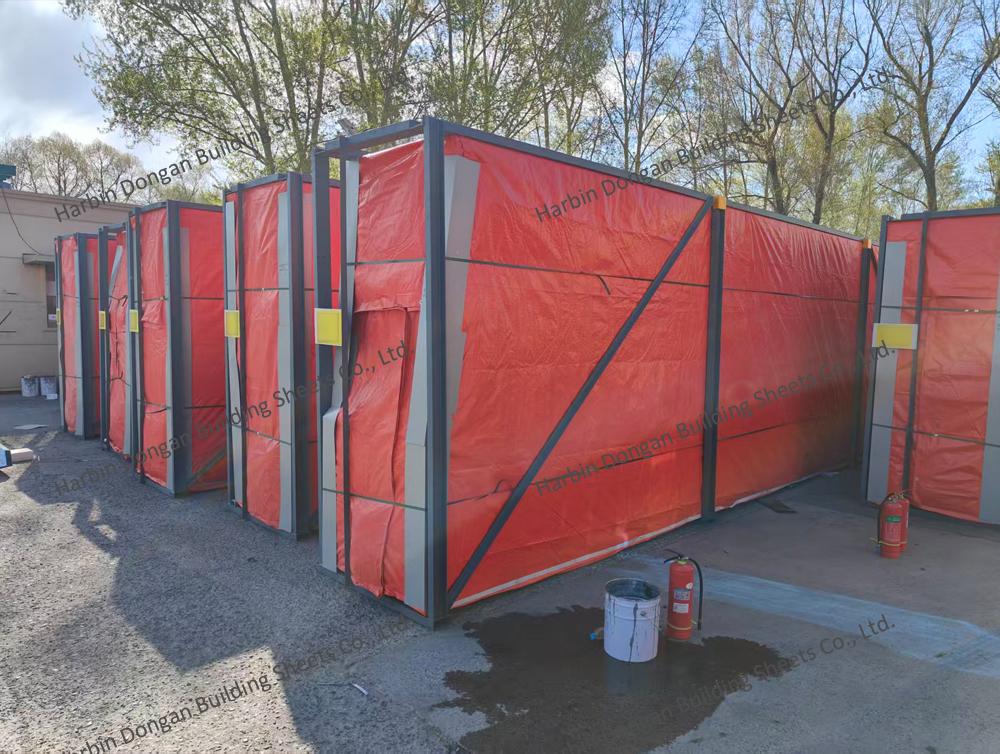
Surface damage presents another challenge. Panels may rub against each other when cargo shifts during transportation. Repeated movement can scratch painted metal surfaces, especially when protective separation is insufficient.
Panel edges and corners also need attention. A minor impact during loading or unloading can dent the metal sheets or damage the panel edges. Such damage may complicate installation, particularly when workers need to align long wall or roof sections.
These problems do not always appear serious in shipping records. Yet once the materials reach the site, damaged panels may require additional inspection, sorting, or replacement. This can disrupt installation plans and increase costs.
Good packaging is not simply about adding more protective materials. It should address the actual risks during storage, transportation, and handling.
Moisture protection comes first. Multiple layers of waterproof and moisture-resistant packaging can help isolate metal surfaces from external humidity. However, packaging materials alone cannot eliminate condensation inside a container. Proper cargo preparation, container inspection, and moisture-control measures also matter.
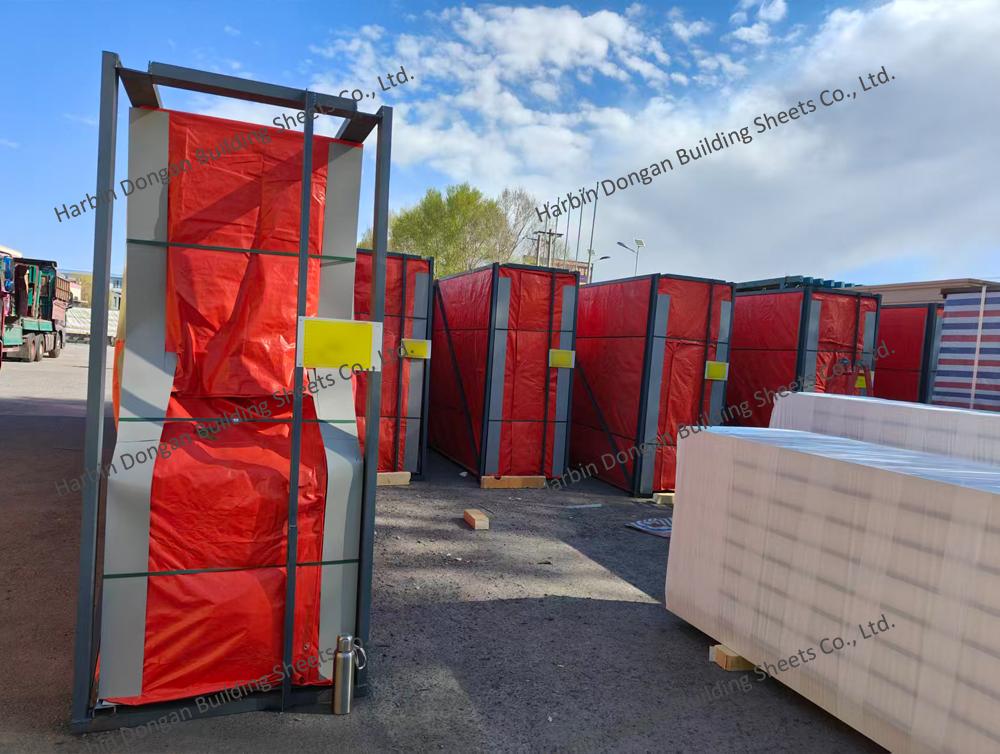
Mechanical protection requires a different approach. Protective separators can reduce direct contact between panels, while reinforced frames help prevent shifting and edge damage. The packaging structure should also account for the weight and dimensions of the cargo.
Container loading is equally important. Poorly arranged cargo may leave unnecessary gaps or create uneven pressure points. Excessive stacking pressure can damage panel surfaces and edges. A suitable loading plan should consider panel dimensions, weight distribution, unloading sequence, and available container space.
Packaging frames also influence freight efficiency. A poorly designed frame may occupy too much space, leaving less room for the actual building materials. On the other hand, a well-planned frame can secure multiple panels into organized units, making stacking and container loading more efficient.
The goal is to balance protection with space utilization. Higher container loading efficiency means more usable material can fit into each shipment, potentially reducing the freight cost allocated to every panel. This is particularly important for overseas projects with large material quantities and long shipping distances.
DongAn’s Belgian clean mine building envelope renovation project provides a practical example of how these considerations influence overseas delivery.
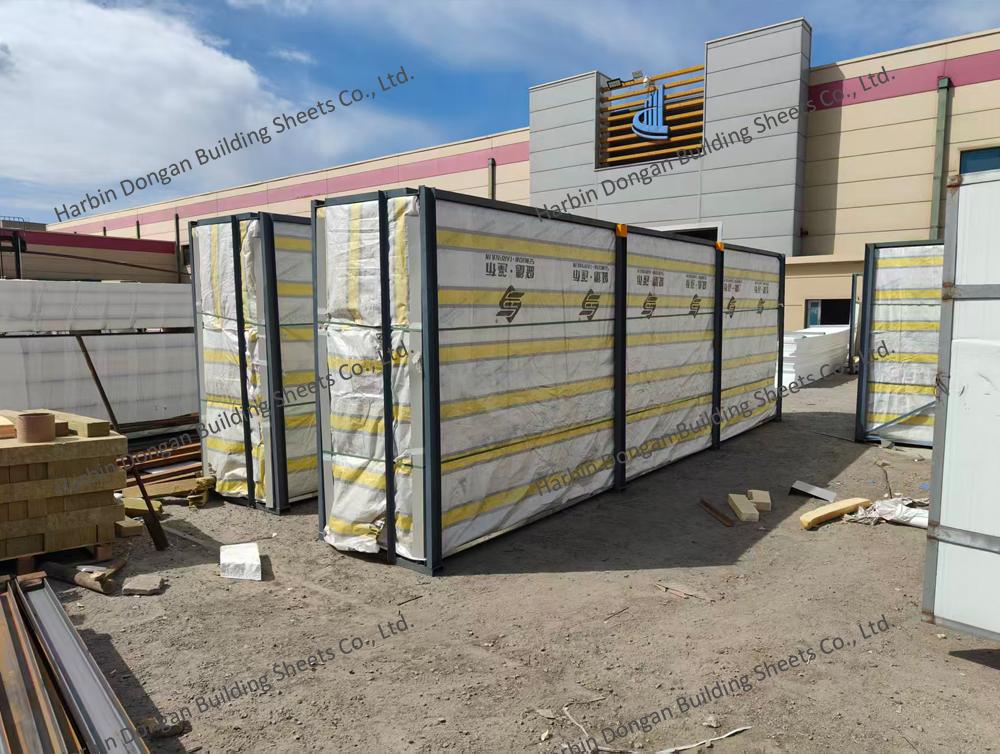
The project involved supplying building envelope materials for the renovation of a clean mine facility in Europe. Given the long sea transportation route, the company needed to reduce the risk of corrosion, surface abrasion, and edge damage before the panels reached the destination.
Instead of relying on standard packaging alone, DongAn developed a dedicated packaging and container loading arrangement for the shipment.
First, the panels received multiple layers of waterproof and moisture-resistant wrapping. This provided an additional barrier against external moisture during the long journey and helped reduce the risk of corrosion on the metal surfaces.
The company also addressed the problem of mechanical damage. It designed packing frames using welded high-quality angle steel. These reinforced frames provided external support, helped protect vulnerable edges and corners, and reduced the risk of damage during transportation and handling. Additional separation and securing measures helped limit friction and unwanted movement between panels.
The frame design also considered container space. By organizing the panels into more manageable and compact loading units, the arrangement helped improve container utilization while maintaining adequate protection. This reduced wasted space and helped customers save on shipping costs.
The rigid frames offered another practical benefit. Their structure made forklift handling during loading and unloading more convenient, reducing the need for repeated manual handling.
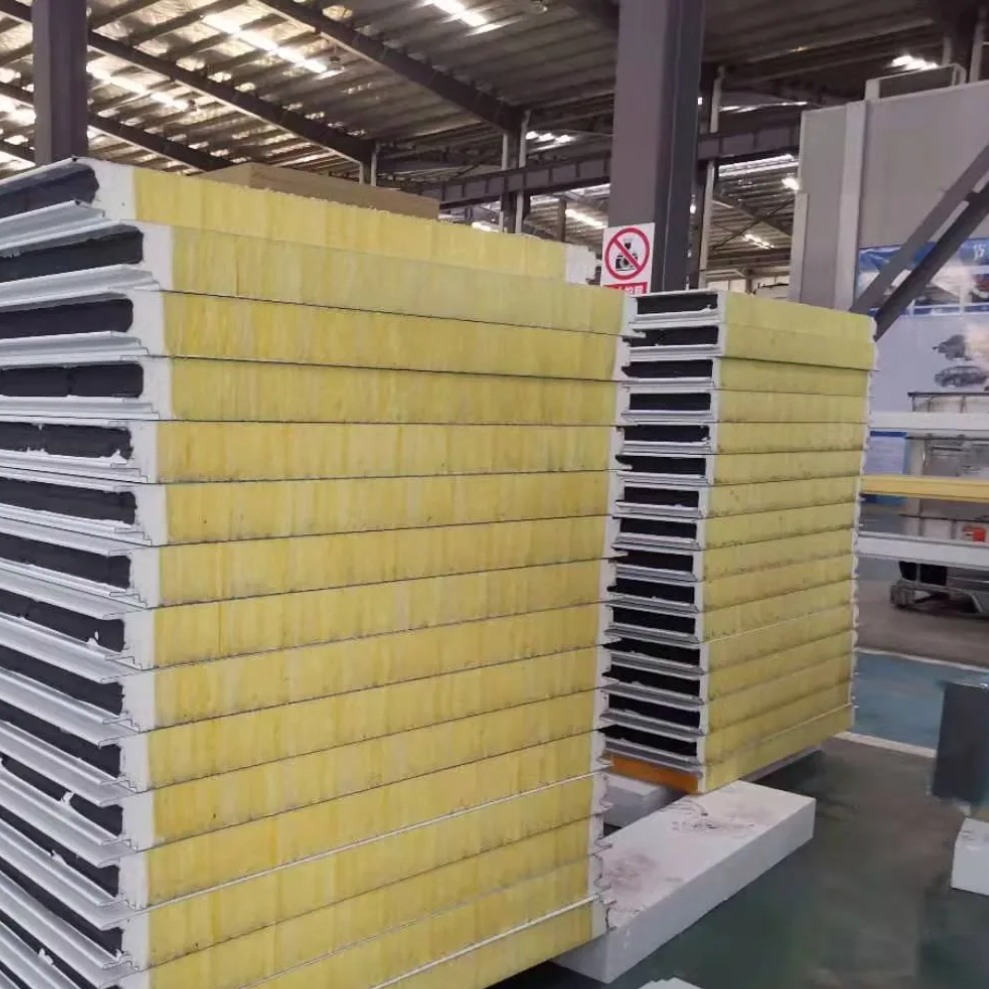
This approach connected three important delivery considerations: material protection, loading efficiency, and handling convenience. Rather than treating packaging as an isolated step, the project considered it part of the overall transportation plan.
Overseas material delivery involves more than meeting production specifications and arranging vessel space. Packaging, cargo protection, and loading methods all influence what arrives at the construction site.
For sandwich panel shipments, these details deserve attention early in the project. The required packaging should reflect the transportation distance, product dimensions, surface finish, handling conditions, and unloading arrangements.
A well-prepared shipment cannot eliminate every transportation risk. However, it can reduce avoidable damage, make better use of container space, and help control unnecessary freight expenses. In overseas projects, these factors are an important part of delivery quality.
„Thanks to the LUVIR technology, the solder resist process could be switched directly from the previously used mask exposure to direct exposure. As an outstanding digital solution on the market, this technology has been able to demonstrate fast process times and superior quality on our certified conventional ink in production. This allowed us to fully digitize the solder mask process at low cost – without process or ink adjustments. An excellent benefit to our production in Rot am See.“
Ralf Göhringer (Head of Production WE Rot am See)
I would definitely recommend the Limata machine and team for a future company purchase
Michael Greenaway
Compunetics Inc.
“The Limata ldi has been amazing!! Best thing we did was buy this machine”
Richard Brady
GM
Circuitlabs
“Since 2019, we have been running the Limata X1000 LDI system (including LUVIR for solder mask imaging) in daily production as an addition to our current process with film. The machine was capable of properly exposing Taiyo PSR-4000 BN (DI) solder mask types on normal to high-copper boards using a new and unique direct imaging process. The machine operating interface is very user friendly which allowed for a quick technical training curve. The pre-registration processing reduced several seconds of production time at every print. Limata support and service staff is incomparable. They supported our team every step of the way at basically any time of the day or night, with literally, an immediate response time, customizing the software interface to best fit our Operations and needs.
We have exposed more than 8,000 prints since end of October, on various solder mask colors and some resist film panels. Limata, has proven to be very capable and innovative. They are a strong contender in the industry.
We have very much enjoyed this project, and working with the team!
Thank you Limata for the continued support and being a part of our growth.”
Bill Sezate
Vice President, GM
Summit Interconnect
As a replacement to our current contact exposure process with film, the LIMATA X2000 system including LUVIR-Technology was capable of properly exposing non-LDI solder mask types using a direct imaging process. The machine offers cutting edge software with a very intuitive operating interface which allowed for quick technician training curve. The dual drawer system combined with pre-registration processing reduced several seconds of production time at every machine cycle. Limata support and service staff is world class. They added software patches to keep production running at shortest possible response times, customized the software interface to best fit our in-house Operations system, and even wrote a step-by-step machine processing manual. As a result of the project, we have exposed more than 16,000 times on various product types and solder mask brands/colors. Limata, in a very short timeframe as a company, has definitely shown they are truly innovative and will be challenging the industry of direct imaging for the top spot.
Kevin Beattie
Process Engineer
TTM Technologies
Forest Grove Division
