Choosing a Facial Tissue Cutting Machine in 2026 means balancing output, cut quality, flexibility, and operating cost—not simply chasing the highest speed. Grand View Research valued the global tissue paper market at USD 82.9 billion in 2022 and projected a 5.7% compound annual growth rate from 2023 to 2030. This market outlook points to continued investment, but it does not tell buyers which machine fits their production floor. That depends on real conditions: tissue basis weight, ply count, sheet dimensions, shift patterns, and space for maintenance.
Start with the product. A clean stack should have even edges, consistent sheet counts, and minimal dust. Ask suppliers to demonstrate the machine using your own tissue stock, not only a sample roll selected for an easy run. Check cutting accuracy at your target speed. Then examine blade life, changeover time, guarding, spare-part availability, and operator access. Small details matter. A slow roll change can quietly reduce daily output.
Industry market reports describe demand; they do not verify a machine’s performance. Request documented acceptance-test results, energy and compressed-air requirements, and references from comparable plants. Compare total cost of ownership alongside purchase price. A high-speed line may look impressive, yet create waste if downstream packing cannot keep pace. Be skeptical of perfect projections. Real production has interruptions, and even a well-specified machine can underperform when maintenance or training is overlooked. The right choice is the one that reliably meets your product and staffing needs.
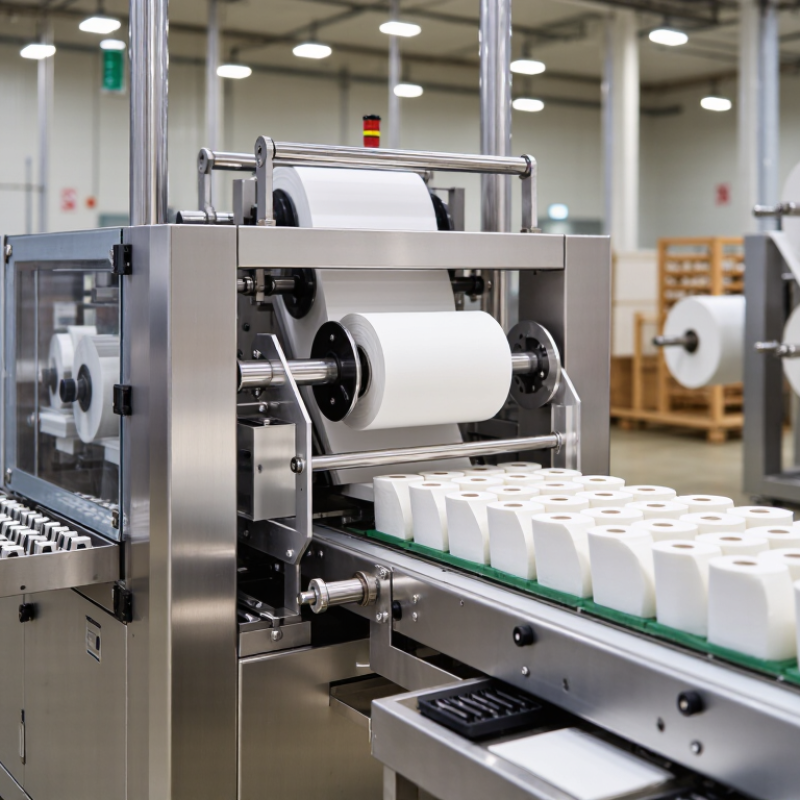
Define your production needs before comparing a facial tissue cutting machine. Start with real orders, not the biggest output figure in a brochure. Record daily volume, shift length, changeover frequency, and the pack sizes you sell. A line producing 8,000 boxes per shift may suit steady demand, while shorter custom runs need flexible settings. Allow for seasonal peaks, but avoid capacity your material supply and staffing cannot support.
Tips: Bring samples of your actual tissue to a machine trial. Check cut edges, stack alignment, and output speed together. Measure twice. Note the sheet count per pack and the number of packs per case.
Tissue specifications affect cutting performance. List sheet length and width, ply count, basis weight, embossing, and expected stack height. Soft, bulky tissue can shift or compress differently from denser stock, so advertised speed alone is not a reliable comparison. Ask how operators adjust blade clearance and feeding tension for different grades. One detail teams sometimes miss is changeover time; it can quietly reduce daily output. Your first estimate may be off, so verify it against a realistic production trial.
Facial tissue converting lines commonly use log-saw cutters, band-saw cutters, or compact reciprocating-knife systems. A log saw cuts compressed tissue logs into stacks for boxes. It suits higher-volume production and can deliver consistent lengths when blades, pressure, and feed speed are controlled. A band saw is simpler and often easier to maintain, but blade condition can affect edge quality. Reciprocating systems offer flexible cutting for smaller runs, though output may be lower. Check the machine against your folding format, stack height, target speed, and available floor space—not just its rated capacity.
Market growth makes this choice increasingly practical. Fortune Business Insights’ Tissue Paper Market report valued the global market at about USD 87.9 billion in 2023 and projected continued growth through 2032. That figure covers tissue products broadly, not facial tissue cutters alone. Still, it signals why converters may need reliable, adaptable equipment. Ask suppliers for measured samples using your own tissue grade. Inspect the cut edges, dust level, and stack alignment. Small details matter.
Tips: Compare hourly output at your required cut length, and request a changeover demonstration. Check blade replacement time and spare-part availability. I would also test softer, thinner tissue before committing; specifications can look convincing, but real sheets sometimes behave differently.
Choosing a facial tissue cutting machine means checking cut quality at production speed, not only in a showroom. Measure sheet length across 30 consecutive logs, then inspect edge squareness, ply separation, and dust. Small errors matter. Repeat the test with your tissue grade, roll width, and blade condition. A clean demonstration may hide drift.
Speed figures need context. The International Federation of Robotics reported 4.28 million industrial robots operating worldwide in 2023, 10% more than in 2022, in its World Robotics 2024 report. This shows automation’s wider reach, not proof that a tissue line will run faster. Compare saleable packs per minute after rejects, stoppages, and changeovers—not the unloaded rate.
Check whether controls maintain cut length as blades wear and whether alarms flag jams early. Test recipe recall, changeover steps, and recovery from a simulated sensor fault. Then test again. Request logged results across several shifts, including waste and operator interventions. Easy adjustment is valuable, but automation does not remove the need for skilled operators. That distinction is easy to miss.
How to Choose a Facial Tissue Cutting Machine in 2026?
Check Safety Features, Compliance, and After-Sales Support
A fast machine is not automatically a safe or suitable one. Inspect the blade enclosure, access doors, and emergency-stop buttons in person. Guards should stay secure during operation, and interlocks should stop the cutter when a door opens. Ask the supplier to demonstrate these functions, rather than relying on a brochure. Check whether the operator manual explains safe cleaning and blade replacement. Small details matter. A poorly placed stop button can be hard to reach when an operator is wearing gloves.
Tips: Request current safety documents and confirm which standards or certifications apply in your country and workplace. Requirements can vary. Ask for a written list of included safeguards, operator training, and routine inspection tasks. If a document is unclear, get clarification before purchase.
After-sales support deserves the same scrutiny as the machine itself. Ask how quickly technical staff usually respond, and whether remote troubleshooting is available. Confirm the cost and lead time for commonly replaced parts, such as blades, belts, and sensors. A spare part that takes weeks to arrive can disrupt production. Request practical training using your tissue stock, since real materials may behave differently from samples. No checklist catches every awkward reach or confusing control. Walk through a normal shift with the proposed setup, and note anything that still feels uncertain.
Compare more than the purchase price. A lower quote may exclude installation, operator training, spare blades, or freight. Estimate the cost per finished pack using your expected shifts, tissue size, changeover frequency, and production speed. Include electricity, routine maintenance, blade replacement, and the cost of material lost during setup. Small costs add up. Ask suppliers to explain which figures are measured and which are estimates; real production rarely matches a perfect spreadsheet.
Verify the supplier with evidence, not promises. Request a live demonstration using tissue close to your own product’s ply, sheet count, and dimensions. Check cut quality, stack alignment, jam frequency, and changeover time. Ask for contact details of recent customers with comparable output needs, and confirm what the warranty covers. Get response times, spare-part availability, and service charges in writing. One overlooked detail can delay commissioning. I would also leave room in the budget for unexpected adjustments; initial estimates are not always complete.
Tips: Compare written quotations line by line. Request sample packs and a factory acceptance test before shipment. Confirm that manuals, electrical requirements, and recommended spare parts are included. Record any promised upgrades in the contract. If a supplier avoids specific answers, pause and verify the claims independently.
„Thanks to the LUVIR technology, the solder resist process could be switched directly from the previously used mask exposure to direct exposure. As an outstanding digital solution on the market, this technology has been able to demonstrate fast process times and superior quality on our certified conventional ink in production. This allowed us to fully digitize the solder mask process at low cost – without process or ink adjustments. An excellent benefit to our production in Rot am See.“
Ralf Göhringer (Head of Production WE Rot am See)
I would definitely recommend the Limata machine and team for a future company purchase
Michael Greenaway
Compunetics Inc.
“The Limata ldi has been amazing!! Best thing we did was buy this machine”
Richard Brady
GM
Circuitlabs
“Since 2019, we have been running the Limata X1000 LDI system (including LUVIR for solder mask imaging) in daily production as an addition to our current process with film. The machine was capable of properly exposing Taiyo PSR-4000 BN (DI) solder mask types on normal to high-copper boards using a new and unique direct imaging process. The machine operating interface is very user friendly which allowed for a quick technical training curve. The pre-registration processing reduced several seconds of production time at every print. Limata support and service staff is incomparable. They supported our team every step of the way at basically any time of the day or night, with literally, an immediate response time, customizing the software interface to best fit our Operations and needs.
We have exposed more than 8,000 prints since end of October, on various solder mask colors and some resist film panels. Limata, has proven to be very capable and innovative. They are a strong contender in the industry.
We have very much enjoyed this project, and working with the team!
Thank you Limata for the continued support and being a part of our growth.”
Bill Sezate
Vice President, GM
Summit Interconnect
As a replacement to our current contact exposure process with film, the LIMATA X2000 system including LUVIR-Technology was capable of properly exposing non-LDI solder mask types using a direct imaging process. The machine offers cutting edge software with a very intuitive operating interface which allowed for quick technician training curve. The dual drawer system combined with pre-registration processing reduced several seconds of production time at every machine cycle. Limata support and service staff is world class. They added software patches to keep production running at shortest possible response times, customized the software interface to best fit our in-house Operations system, and even wrote a step-by-step machine processing manual. As a result of the project, we have exposed more than 16,000 times on various product types and solder mask brands/colors. Limata, in a very short timeframe as a company, has definitely shown they are truly innovative and will be challenging the industry of direct imaging for the top spot.
Kevin Beattie
Process Engineer
TTM Technologies
Forest Grove Division
