Choosing a Glass Machine Manufacturer in 2026 is not just a matter of comparing prices or attractive catalog images. A glass tempering line, cutting table, or insulating-glass system must fit your product mix, floor space, staffing, and production targets. Small mismatches can become costly: a loading area may be too narrow, a control interface may slow new operators, or spare parts may take weeks to arrive. Details matter.
A credible supplier should explain machine capacity, tolerances, energy use, safety features, installation needs, and maintenance intervals in clear terms. Ask to see performance data from comparable installations, not only a demonstration video. References from plants with similar glass thicknesses and daily output can reveal how equipment performs after the first months. Check how training, commissioning, remote support, and warranty claims are handled. Promises are easy.
The strongest evaluation also looks beyond the machine itself. Review component brands, software updates, documentation, service response times, and wear-part availability. If possible, watch a live production run and inspect finished edges, cycle consistency, and operator access. Compare total ownership costs over several years, including power, consumables, downtime, and planned upgrades. A lower purchase price may not mean lower operating costs.
Still, no checklist removes every uncertainty. Your factory may change, and support quality can vary by region. Record assumptions, request written answers, and involve operators and maintenance staff before signing. The goal is not to find a perfect machine. It is to choose a manufacturer whose engineering and after-sales support fit your production conditions—and whose limitations are discussed openly.
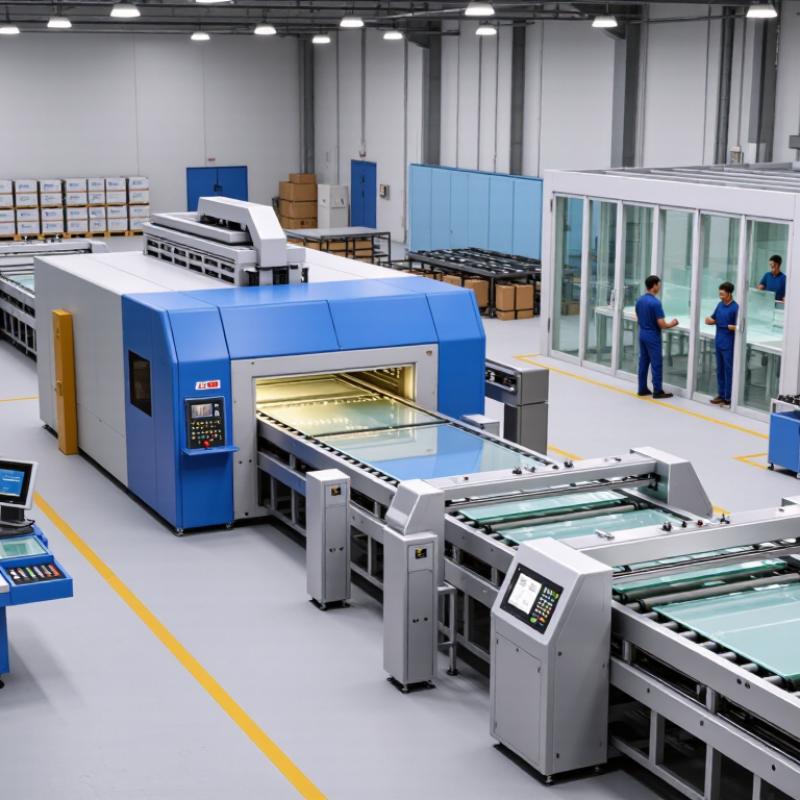
Before comparing glass machine manufacturers, define the products and the work each line must perform. Will you cut architectural panels, drill appliance glass, or finish small custom batches? Record glass type, thickness range, maximum sheet size, edge profile, hole positions, and required tolerances. Include daily output and how often product sizes change. Small details matter. A 2-millimeter thickness variation can affect handling, tooling, and downstream fit.
Industry data can help frame the scale. Glass Alliance Europe’s 2022 industry figures report approximately 36 million tonnes of glass production in Europe in 2021, across several product segments. That diversity is a reminder: “glass processing” is not one standard duty. Ask manufacturers to demonstrate your actual product mix, not just a single fast cycle. Specify acceptable breakage rates, changeover time, operator skill, floor space, and available power and compressed air. The European Commission’s 2013 Glass BREF describes melting temperatures around 1,500°C; while that concerns furnaces, it underlines why upstream glass condition and thermal history matter to later processing. One assumption deserves checking: peak speed may look impressive, yet be less useful than stable output across a mixed shift. Keep some requirements provisional until sample runs expose what the specification missed.
| Processing Need | Typical Products | Key Machine Requirements | Typical Material Range | Production Requirements to Define | Questions to Ask the Manufacturer |
|---|---|---|---|---|---|
| Glass cutting and optimization | Architectural panels, furniture glass, appliance components | Automatic cutting table, loading system, cutting bridge, break-out support, and optional shape cutting | Commonly 3–19 mm flat glass; confirm the machine’s supported sheet size and glass type | Sheets per shift, average part size, cutting pattern complexity, loading method, and required yield | What sheet sizes and thicknesses can it process? Can the software optimize cutting patterns and export production data? |
| Edge grinding and polishing | Shower enclosures, shelves, doors, furniture panels | Straight-line or shape edging machine matched to the required edge finish and workpiece geometry | Thickness capability varies by machine; many production models handle approximately 3–25 mm | Edge type, panel dimensions, number of edges, finish quality, cycle time, and operator handling | Which edge profiles can be produced? What are the minimum workpiece dimensions and achievable finish? |
| Glass drilling and machining | Hardware-ready doors, partitions, balustrades, and fittings | Single- or double-sided drilling system, with optional milling, notching, or CNC machining | Confirm supported thickness, hole diameter, glass size, and minimum distance between holes and edges | Hole count per panel, hole-position tolerances, tool-change frequency, and mix of product designs | Can the machine process the required hole patterns and shapes? How are positioning accuracy and breakage controlled? |
| Glass tempering | Safety glazing for buildings, doors, showers, and appliances | Horizontal tempering furnace sized for the largest panels and required heating, quenching, and cooling performance | Many lines process approximately 4–19 mm glass; minimum and maximum sizes depend on the furnace design | Daily output by thickness and size, product mix, allowable distortion, energy supply, and operating schedule | What output is achievable for our actual product mix? What are the utility requirements and applicable safety-glass standards? |
| Laminated glass production | Safety glazing, skylights, canopies, and acoustic glazing | Glass washing and assembly equipment, interlayer handling, pre-pressing, and an autoclave or other qualified processing system | Configurations may include common builds such as 3+3 mm or 6+6 mm; confirm total thickness and interlayer compatibility | Panel size, laminate build-up, interlayer type, batch size, cycle time, and traceability requirements | Which interlayers and laminate constructions are supported? What validated process controls and quality records are provided? |
| Insulating glass unit assembly | Double- or triple-glazed units for windows and façades | Glass washing, spacer application, assembly, pressing, and sealing equipment appropriate to the chosen unit design | Define pane dimensions, cavity width, total unit thickness, spacer type, and any special gas-filling requirements | Units per shift, maximum unit size, product mix, sealant process, and required inspection or data capture | Which unit constructions can the line handle? How are washing quality, spacer placement, sealing, and gas filling verified? |
| Integrated production line | Mixed architectural or commercial glass products processed across multiple stages | Linked machines, conveyors, buffers, controls, and production software designed around the factory layout | Set requirements for every process, including glass type, thickness, dimensions, and finished-product tolerances | Target throughput, bottleneck process, shifts per day, floor space, staffing, expansion plans, and material flow | Can the supplier provide a documented line layout, capacity assumptions, installation plan, operator training, and after-sales support? |
Note: Material ranges and production capacity are indicative planning references, not guaranteed specifications. Confirm performance against your actual glass type, dimensions, product mix, quality standards, and operating conditions before purchase.
A glass machine manufacturer’s experience is visible in the questions it asks. Does its team ask about glass thickness, sheet size, edge quality, and daily production volume? Specific questions suggest a stronger grasp of real operating conditions. Ask to see machines running comparable jobs, not only polished demonstration pieces. Request references from customers with similar workflows. Small details matter.
Technology should solve a production problem, not just look modern. During a demonstration, watch how sheets are loaded, positioned, processed, and removed. Check safety systems, measurement accuracy, control settings, and changeover time. Ask how faults are diagnosed and which spare parts are commonly needed. Test the basics. A touchscreen alone proves little.
Compare the equipment range with your actual process, from cutting and edging to drilling or finishing where needed. A broader catalog can simplify integration, but it may also mean less depth in a specific machine category. This comparison is not perfect; supplier claims can be difficult to verify from a showroom visit. Review technical drawings, service response terms, training plans, and acceptance-test criteria before deciding. Look for clear answers, including honest limits.
A glass machine can look impressive in a showroom and still struggle with daily production. Ask for current quality certificates and check that their scope covers the actual equipment. Request inspection records for key parts, such as spindle runout, conveyor alignment, and electrical cabinets. Look closely at welds and cable routing during a factory visit. Small details matter. A polished brochure cannot replace a measured test.
Customization should begin with your glass sizes, thickness range, edge requirements, and expected output per shift. Send drawings and ask the manufacturer to mark technical limits clearly. Confirm which changes affect price, delivery time, maintenance, or spare parts. Then request a trial using glass similar to yours. Watch the finished edges under direct light. A sample may reveal chips or uneven polishing that a specification sheet misses. I would not assume every requested feature is useful; some add complexity without improving the process.
Factory capability is more than floor space. Observe whether technicians assemble, calibrate, and test machines on site. Ask to see a machine running, and note cycle time, noise, and operator access. Check whether essential components are stocked and whether service staff can explain common faults plainly. One uncomfortable question is worth asking: what happens when a critical part fails? The answer may be imperfect, but it should be specific and supported by a realistic service plan.
When comparing glass machine manufacturers in 2026, look beyond the equipment specification sheet. Ask who answers when a furnace temperature fluctuates or a cutting head loses alignment during a shift. A useful support plan names contact routes, service hours, and expected response times. Ask for examples of common faults and the steps technicians use to diagnose them remotely. Realistic detail matters. A promise of “fast support” means little without a process.
Training should match the machine and the people operating it. Request a practical session covering startup, routine checks, safe shutdown, and basic fault finding. Confirm whether instruction includes operators and maintenance staff, and whether manuals are clear enough to use beside the machine. Spare parts deserve the same scrutiny. Ask for a recommended stock list, typical lead times, and details on parts that wear frequently, such as seals, belts, or cutting components. Check how replacements are identified and ordered. These questions can feel tedious before installation, but they are harder to resolve after production starts. A detailed answer is reassuring, though it is not proof of dependable service; verify references where possible. Even then, estimates can change, so record agreed support terms in writing.
Choosing a glass machine manufacturer in 2026 starts with total cost, not the headline price. Add installation, tooling, operator training, spare parts, energy use, and expected downtime. Small items add up. Ask for an itemized quotation that states its assumptions. Then compare options against your actual glass thickness, production shifts, and required output—not a best-case estimate.
Delivery terms deserve the same scrutiny. Request a schedule with clear milestones for design approval, factory testing, shipment, installation, and commissioning. Dates matter. Confirm what happens if a key component is delayed, and ask how often the supplier will report progress. Lead times can change with customization, so vague promises are hard to plan around. Packaging and on-site support should also be specified.
Long-term reliability is more than a warranty period. Check service response times, spare-parts availability, maintenance instructions, and references from operations with similar workloads. If possible, review a test run using representative glass and inspect the finished edges, cut accuracy, and cycle consistency. One successful demonstration is not proof. It is easy to overvalue a polished test and overlook routine upkeep, so ask what operators must do each week and what failures typically stop production. A cheaper machine may still suit a low-volume shop, but the assumptions should be written down.
„Thanks to the LUVIR technology, the solder resist process could be switched directly from the previously used mask exposure to direct exposure. As an outstanding digital solution on the market, this technology has been able to demonstrate fast process times and superior quality on our certified conventional ink in production. This allowed us to fully digitize the solder mask process at low cost – without process or ink adjustments. An excellent benefit to our production in Rot am See.“
Ralf Göhringer (Head of Production WE Rot am See)
I would definitely recommend the Limata machine and team for a future company purchase
Michael Greenaway
Compunetics Inc.
“The Limata ldi has been amazing!! Best thing we did was buy this machine”
Richard Brady
GM
Circuitlabs
“Since 2019, we have been running the Limata X1000 LDI system (including LUVIR for solder mask imaging) in daily production as an addition to our current process with film. The machine was capable of properly exposing Taiyo PSR-4000 BN (DI) solder mask types on normal to high-copper boards using a new and unique direct imaging process. The machine operating interface is very user friendly which allowed for a quick technical training curve. The pre-registration processing reduced several seconds of production time at every print. Limata support and service staff is incomparable. They supported our team every step of the way at basically any time of the day or night, with literally, an immediate response time, customizing the software interface to best fit our Operations and needs.
We have exposed more than 8,000 prints since end of October, on various solder mask colors and some resist film panels. Limata, has proven to be very capable and innovative. They are a strong contender in the industry.
We have very much enjoyed this project, and working with the team!
Thank you Limata for the continued support and being a part of our growth.”
Bill Sezate
Vice President, GM
Summit Interconnect
As a replacement to our current contact exposure process with film, the LIMATA X2000 system including LUVIR-Technology was capable of properly exposing non-LDI solder mask types using a direct imaging process. The machine offers cutting edge software with a very intuitive operating interface which allowed for quick technician training curve. The dual drawer system combined with pre-registration processing reduced several seconds of production time at every machine cycle. Limata support and service staff is world class. They added software patches to keep production running at shortest possible response times, customized the software interface to best fit our in-house Operations system, and even wrote a step-by-step machine processing manual. As a result of the project, we have exposed more than 16,000 times on various product types and solder mask brands/colors. Limata, in a very short timeframe as a company, has definitely shown they are truly innovative and will be challenging the industry of direct imaging for the top spot.
Kevin Beattie
Process Engineer
TTM Technologies
Forest Grove Division
