Choosing aluminium casement door & windows in 2026 means balancing daylight, ventilation, security, and energy performance. Slim frames can create broad, clear openings. Yet appearance alone tells you little about comfort or durability. Check the full product specification.
The U.S. Department of Energy’s Energy Saver guidance estimates that heat gain and heat loss through windows account for about 25–30% of residential heating and cooling energy use. The actual impact varies with climate, glazing, orientation, and installation quality. That figure makes glass and frame performance worth comparing, not guessing. Look for tested U-factor and solar heat gain coefficient ratings, such as those reported through the National Fenestration Rating Council’s certification program. Lower U-factor generally means better insulation; the right solar gain depends on your climate and room exposure. Small details matter.
For a coastal home, ask about corrosion-resistant finishes and suitable hardware. For a street-facing room, compare acoustic glazing options and secure locking points. Also check drainage paths, seals, and the installer’s method of fixing the frame to the wall. Aluminium itself is strong, but poor installation can still cause drafts or water ingress. That part is often underestimated. This guide explains how to compare frame design, glass, thermal breaks, security features, and warranties before you choose. No single specification suits every home; even a high-rated unit can disappoint when it is poorly matched to the site.
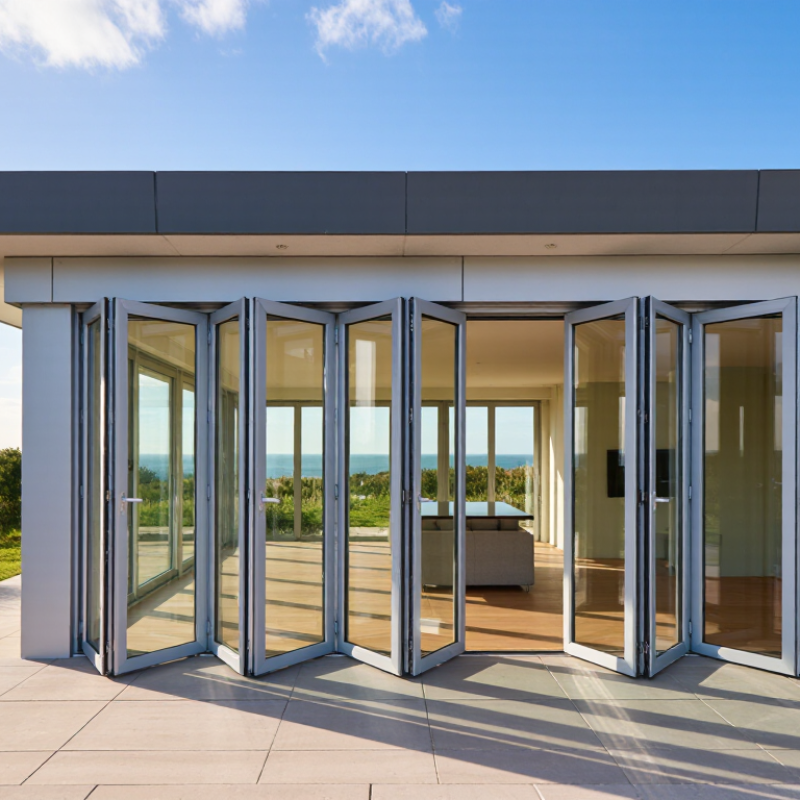
Choosing aluminium casement doors and windows for 2026 starts with a climate-based Uw target, not a catalogue headline. Uw measures heat transfer through the complete unit; lower values generally mean less heat loss. In cold regions, compare low-Uw options and check frame insulation, glazing, and warm-edge spacers. Small details matter. A strong glass-only rating may not represent the whole window.
In hot, sunny climates, Uw still matters, but it is only part of the decision. Check solar heat gain and shading, especially for large south- or west-facing openings. Casement sashes can seal tightly when correctly adjusted, yet poor installation may leave drafts around the frame. A neat spreadsheet can miss that. Even a well-chosen unit can underperform if the opening is out of square.
Before ordering, confirm the energy code adopted by your local authority for 2026. Requirements can vary by region, building type, and renovation scope, and a published national standard may not be the rule in your area. Ask the supplier for whole-product Uw data and verify the stated test method. Compare it with the code’s required value, not just a marketing claim. If the target seems unclear, request written guidance from a qualified local energy professional; guessing here can be expensive.
For aluminium casement doors and windows, compare whole-window figures, not glass-only claims. Uw measures heat transfer through the complete unit, including frame and glazing; lower values mean better insulation. SHGC, or the European g-value, indicates how much solar heat enters. Higher values can help in cold, sunny climates, but may increase summer cooling needs. Check the rating system and units: NFRC labels report U-factor and SHGC, while EN 14351-1 declarations commonly list Uw and solar factor g. They are related, but not always directly interchangeable.
The U.S. Department of Energy’s Energy Saver guidance estimates that windows account for 25–30% of residential heating and cooling energy use. That makes whole-window comparison practical, not merely technical. NFRC ratings use standardized testing and calculation procedures; EN product declarations use European assessment methods. Compare the same opening size and configuration where possible. A narrow fixed window and a large opening casement may not perform alike. Small detail, big difference.
Tips: Ask for the complete rated assembly, including frame, glazing, and spacer. Match Uw and SHGC to your climate, orientation, and shading. Convert units before comparing NFRC U-factor with metric Uw. Also check the actual declaration documents; sales summaries can omit key conditions. I once focused too much on glass performance. The frame changed the result. A useful reminder.
When choosing aluminium casement doors and windows, check the air-permeability class, not just the frame profile. Under EN 12207, Class 4 limits area-based air leakage to no more than 3 m³/(h·m²) at 100 Pa. That figure gives you a useful comparison point. Ask for a test report covering the same opening type and configuration you plan to buy. A fixed window and a hinged casement do not seal in the same way. Check that the report identifies the tested sample and measurement basis.
In practice, Class 4 performance depends on more than aluminium. Continuous gaskets, firm locking points, and accurate installation all matter. Small gaps matter. On site, inspect the gasket corners and the meeting edge where the sash closes; uneven compression can leave a fine path for air. A laboratory result does not guarantee the same performance after installation, especially if the frame is out of square or the seal is damaged. That is easy to overlook. I would compare the test evidence, then ask how installers check frame alignment and sash compression. Even a strong rating on paper can disappoint when those details are rushed.
2026 How to Choose Aluminium Casement Doors and Windows
Verify Water Tightness and Wind Resistance Under EN 12208 and EN 12210
For aluminium casement doors and windows, check test evidence rather than relying on phrases such as “weather resistant.” EN 12208 classifies water tightness, while EN 12210 addresses resistance to wind load. Ask for the test report and confirm it covers the same opening style, frame configuration, and comparable dimensions. A small test sample may not reflect a wide door installed in an exposed location.
Look closely at corners, seals, drainage paths, and the meeting point between the sash and frame. These details can affect performance, especially when wind-driven rain hits the opening. Proper installation matters too; a strong laboratory result cannot correct poorly fitted seals or blocked drainage slots. Higher ratings can be reassuring, but they do not guarantee identical performance in every building. That distinction is easy to overlook.
Tips: Match the tested class to your site’s exposure, and ask who conducted the test. Keep the report with your project documents. If the opening is unusually large, ask whether its dimensions fall within the tested range. Check the installer’s sealing details before work begins.
When comparing aluminium casement doors and windows, look beyond frame thickness. A thermal break separates the inner and outer aluminium sections, reducing heat transfer. Ask for whole-window performance figures, not just frame data. Glazing matters too: double glazing, low-emissivity coatings, and suitable gas-filled cavities can improve comfort. The right combination depends on climate, room orientation, and local conditions. Small details matter. Check whether the glass specification also addresses noise or strong afternoon sun.
Open and close the hardware several times. The handle should move smoothly, and the sash should sit evenly against its seals. Multi-point locks can improve compression, but only when aligned correctly. Ask how hinges and rollers can be adjusted or replaced. I sometimes overlook drainage paths when focusing on appearance; that is a mistake worth avoiding. Water should be able to leave the frame through clear, unobstructed openings.
Finish quality is easiest to judge at corners, cut edges, and less visible surfaces. Look for an even coating without chips or rough patches. Installation can undo good product choices. Confirm that the opening is square, the frame is securely fixed, and the perimeter is sealed without blocking drainage. Ask who checks the work after fitting. A neat bead of sealant looks reassuring, but it cannot correct a twisted frame.
„Thanks to the LUVIR technology, the solder resist process could be switched directly from the previously used mask exposure to direct exposure. As an outstanding digital solution on the market, this technology has been able to demonstrate fast process times and superior quality on our certified conventional ink in production. This allowed us to fully digitize the solder mask process at low cost – without process or ink adjustments. An excellent benefit to our production in Rot am See.“
Ralf Göhringer (Head of Production WE Rot am See)
I would definitely recommend the Limata machine and team for a future company purchase
Michael Greenaway
Compunetics Inc.
“The Limata ldi has been amazing!! Best thing we did was buy this machine”
Richard Brady
GM
Circuitlabs
“Since 2019, we have been running the Limata X1000 LDI system (including LUVIR for solder mask imaging) in daily production as an addition to our current process with film. The machine was capable of properly exposing Taiyo PSR-4000 BN (DI) solder mask types on normal to high-copper boards using a new and unique direct imaging process. The machine operating interface is very user friendly which allowed for a quick technical training curve. The pre-registration processing reduced several seconds of production time at every print. Limata support and service staff is incomparable. They supported our team every step of the way at basically any time of the day or night, with literally, an immediate response time, customizing the software interface to best fit our Operations and needs.
We have exposed more than 8,000 prints since end of October, on various solder mask colors and some resist film panels. Limata, has proven to be very capable and innovative. They are a strong contender in the industry.
We have very much enjoyed this project, and working with the team!
Thank you Limata for the continued support and being a part of our growth.”
Bill Sezate
Vice President, GM
Summit Interconnect
As a replacement to our current contact exposure process with film, the LIMATA X2000 system including LUVIR-Technology was capable of properly exposing non-LDI solder mask types using a direct imaging process. The machine offers cutting edge software with a very intuitive operating interface which allowed for quick technician training curve. The dual drawer system combined with pre-registration processing reduced several seconds of production time at every machine cycle. Limata support and service staff is world class. They added software patches to keep production running at shortest possible response times, customized the software interface to best fit our in-house Operations system, and even wrote a step-by-step machine processing manual. As a result of the project, we have exposed more than 16,000 times on various product types and solder mask brands/colors. Limata, in a very short timeframe as a company, has definitely shown they are truly innovative and will be challenging the industry of direct imaging for the top spot.
Kevin Beattie
Process Engineer
TTM Technologies
Forest Grove Division
