Choosing Drawn Steel Wire Equipment in 2026 is a process decision, not a catalogue exercise. The right line must match the wire material, incoming rod, target diameter, reduction schedule, and required surface finish. It must also fit the factory floor. A compact machine can look attractive until its pay-off, cooling, and take-up systems crowd the production area.
The World Steel Association’s World Steel in Figures 2024 reports global crude steel production of 1.892 billion tonnes in 2023. That figure describes the wider steel supply base, not wire-drawing equipment demand. Still, it highlights why buyers should evaluate equipment against real operating conditions rather than sales claims. Compare achievable output, die-change time, energy use, tension control, maintenance access, and the availability of spare parts. Ask suppliers for trial data using comparable wire and reduction ratios. A brochure’s maximum speed is not a production guarantee.
Details matter.
A reliable buying guide should also address commissioning, operator training, safety systems, and support after installation. One limitation deserves attention: no source material was supplied for a verifiable quotation from a named Drawn Steel Wire Equipment expert. Rather than invent an attribution, this introduction avoids presenting an unsourced quote as fact. Buyers should request references from plants with similar products, then check performance records and service response times. A little skepticism helps. The cheapest line may cost more when downtime, scrap, or difficult changeovers enter the calculation.
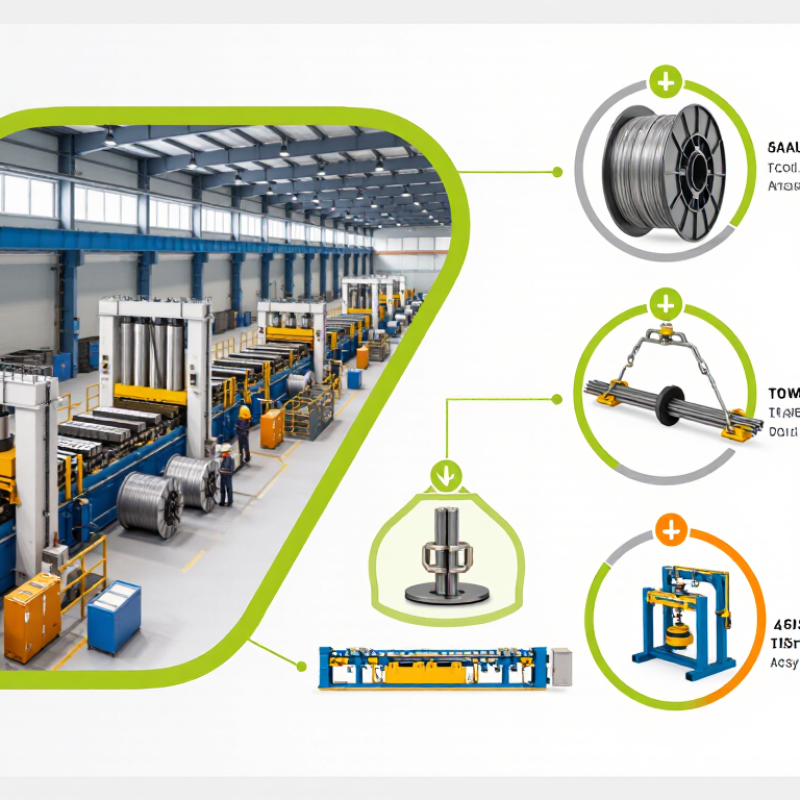
Define the product before comparing drawn steel wire equipment. Record the steel grade, incoming rod diameter, target wire diameter, tolerance, coil weight, and annual volume. Note whether the wire needs a bright, clean surface or later heat treatment. A 1.2 mm finished wire and a 6 mm product can require very different die sequences and handling.
World Steel Association’s World Steel in Figures 2024 reports 1,892 million tonnes of crude steel production in 2023. That figure describes the broader steel market, not wire demand, but it highlights the range of feedstock conditions equipment may face. Specify expected rod quality and verify it with supplier certificates and sample inspection. Small variations matter.
Translate the order plan into net output per shift, not the machine’s advertised peak speed. Include changeovers, die replacement, setup, and downtime. Check whether the line can control tension across each capstan, maintain lubrication, and handle the required reduction schedule. The uncomfortable detail: capacity estimates often assume steady running. Real shifts do not. Ask for a production trial using your actual rod grade and target diameter, then measure finished dimensions, surface defects, break frequency, and energy use. Keep the trial conditions on record; otherwise, the comparison may be misleading.
Choosing drawn steel wire equipment means matching the process to wire diameter, material, finish, and production volume. World Steel Association’s World Steel in Figures 2024 reports 1,888.2 million tonnes of crude steel production in 2023. That figure shows the industry’s scale, but it does not predict demand for any individual drawing line.
Single-block machines suit straightforward reductions and smaller batches; operators can inspect each pass, though handling takes time. Multi-block machines draw wire through several dies in sequence, supporting continuous output and more consistent throughput. They need careful speed coordination. A mismatch can cause breaks or uneven tension. Dry drawing is common for larger diameters, while wet drawing helps manage heat and surface finish on finer wire. The right lubricant, die geometry, and cooling setup matter as much as machine speed.
Compare the actual route. A high-carbon wire may need controlled reductions and intermediate heat treatment; stainless grades can demand different lubrication and die materials. Measure incoming rod diameter, target tolerance, coil weight, and expected changeovers before comparing equipment quotes. Check power use and maintenance requirements under the same operating conditions. There is no perfect line. A catalog rating rarely captures a dusty shop floor, and I would verify claims with a production trial.
Compare typical die-station counts across common steel wire drawing equipment types.
The ranges are indicative, not universal specifications: single-block equipment uses one die per pass, while continuous multi-die and wet-drawing lines commonly use several dies in sequence. The suitable setup depends on the starting and finished wire diameters, reduction schedule, material, and required surface quality.
Choosing drawn steel wire equipment in 2026 starts with the wire you actually produce, not a catalog’s maximum speed. Compare inlet and finished diameters, daily output, and coil weight before sizing the machine. Check whether rated capacity applies to your alloy and reduction schedule. A line that barely meets demand leaves little room for grade changes or maintenance. Peak speed isn’t output.
Precision depends on the whole line, not one control panel. Ask how the capstans, die box, and take-up manage tension across each pass. Look for stable speed control, accessible alignment checks, and diameter measurements you can record. Small errors compound. A polished sample may hide variation during a full shift, so request a sustained trial. I wouldn’t treat a brochure figure as proof; that’s an easy mistake.
Material compatibility deserves equal attention. Confirm the machine’s working range against the wire’s grade, tensile strength, and surface condition. Stainless and high-carbon wire may need different die choices, lubrication, and cooling practices. Ask how operators change dies and clean lubricant from contact areas. Then test a representative coil, checking for scratches, diameter drift, and breaks. The first trial may reveal an inconvenient mismatch, but finding it early is useful.
Choosing drawn steel wire equipment in 2026 means judging performance across a full shift, not just advertised speed. Automation should fit the product mix and operators’ skills. Look for stable tension control, clear alarms, and recipe storage that reduces repeated manual adjustments. Ask operators to perform a real changeover. A polished demonstration can hide awkward steps.
Check that guards, emergency stops, and threading points are practical to use. Review noise, heat, and access around moving components, not only the safety documentation. Small details matter. For energy use, compare actual consumption during production, startup, and idle periods. Efficient drives help, but cooling systems and compressed-air leaks can quietly raise operating costs. If possible, measure a representative run.
Maintenance access affects uptime. Inspect whether guides, dies, and lubrication points can be reached without lengthy disassembly. Ask about diagnostic records, routine service intervals, and the availability of common wear parts. More automation can reduce manual handling, yet add sensors and software that require support. One trade-off remains. A slightly slower line may prove more dependable if it is easier to clean, adjust, and repair. Check the assumptions against your own wire sizes, shift patterns, and maintenance capacity.
Verify Standards, Supplier Support, and Total Ownership Cost
A line’s purchase price says little about its cost per tonne. The IEA’s Energy Efficiency 2023 report estimates that industry uses about 37% of global final energy consumption. For a drawing line, compare motor demand, standby power, cooling needs, and output at your actual wire diameters. Ask for measured acceptance-test results, not just rated speed. Small differences matter.
Check that the machine documentation identifies applicable standards, including ISO 12100 for machinery risk assessment and IEC 60204-1 for electrical equipment. Confirm editions, certificate scope, guarding details, and emergency-stop layout. A certificate alone is not proof that the supplied configuration matches it. Inspect the die boxes, capstan surfaces, and lubrication system. These details affect wear, wire breaks, and changeover time.
Supplier support belongs in the cost model. Request commissioning hours, operator training, spare-part lead times, and a named service contact. Ask how quickly critical components can arrive, and whether common wear parts are stocked locally. Calculate ownership cost across energy, dies, maintenance labor, scrap, and planned downtime. I would still challenge optimistic uptime figures; they often assume ideal shifts and perfect material. Get assumptions in writing.
„Thanks to the LUVIR technology, the solder resist process could be switched directly from the previously used mask exposure to direct exposure. As an outstanding digital solution on the market, this technology has been able to demonstrate fast process times and superior quality on our certified conventional ink in production. This allowed us to fully digitize the solder mask process at low cost – without process or ink adjustments. An excellent benefit to our production in Rot am See.“
Ralf Göhringer (Head of Production WE Rot am See)
I would definitely recommend the Limata machine and team for a future company purchase
Michael Greenaway
Compunetics Inc.
“The Limata ldi has been amazing!! Best thing we did was buy this machine”
Richard Brady
GM
Circuitlabs
“Since 2019, we have been running the Limata X1000 LDI system (including LUVIR for solder mask imaging) in daily production as an addition to our current process with film. The machine was capable of properly exposing Taiyo PSR-4000 BN (DI) solder mask types on normal to high-copper boards using a new and unique direct imaging process. The machine operating interface is very user friendly which allowed for a quick technical training curve. The pre-registration processing reduced several seconds of production time at every print. Limata support and service staff is incomparable. They supported our team every step of the way at basically any time of the day or night, with literally, an immediate response time, customizing the software interface to best fit our Operations and needs.
We have exposed more than 8,000 prints since end of October, on various solder mask colors and some resist film panels. Limata, has proven to be very capable and innovative. They are a strong contender in the industry.
We have very much enjoyed this project, and working with the team!
Thank you Limata for the continued support and being a part of our growth.”
Bill Sezate
Vice President, GM
Summit Interconnect
As a replacement to our current contact exposure process with film, the LIMATA X2000 system including LUVIR-Technology was capable of properly exposing non-LDI solder mask types using a direct imaging process. The machine offers cutting edge software with a very intuitive operating interface which allowed for quick technician training curve. The dual drawer system combined with pre-registration processing reduced several seconds of production time at every machine cycle. Limata support and service staff is world class. They added software patches to keep production running at shortest possible response times, customized the software interface to best fit our in-house Operations system, and even wrote a step-by-step machine processing manual. As a result of the project, we have exposed more than 16,000 times on various product types and solder mask brands/colors. Limata, in a very short timeframe as a company, has definitely shown they are truly innovative and will be challenging the industry of direct imaging for the top spot.
Kevin Beattie
Process Engineer
TTM Technologies
Forest Grove Division
