Choosing the right Plain Bearing Housing is crucial for machinery performance. A suitable housing optimizes bearing function and enhances overall efficiency. However, many users overlook this important aspect.
Understanding the specifications of Plain Bearing Housings can be challenging. Several factors influence your choice, including load capacity, materials, and dimensions. A poor selection can lead to downtime and increased maintenance costs. Users may falter when assessing their specific needs.
Experience matters when selecting a housing. Experts recommend consulting manufacturers for detailed specifications and recommendations. Test results and real-world applications can guide your decision. Reviewing choices thoughtfully is essential. Ignoring the importance of the right housing can lead to performance issues. Take the time to make an informed decision; it pays off in the long run.
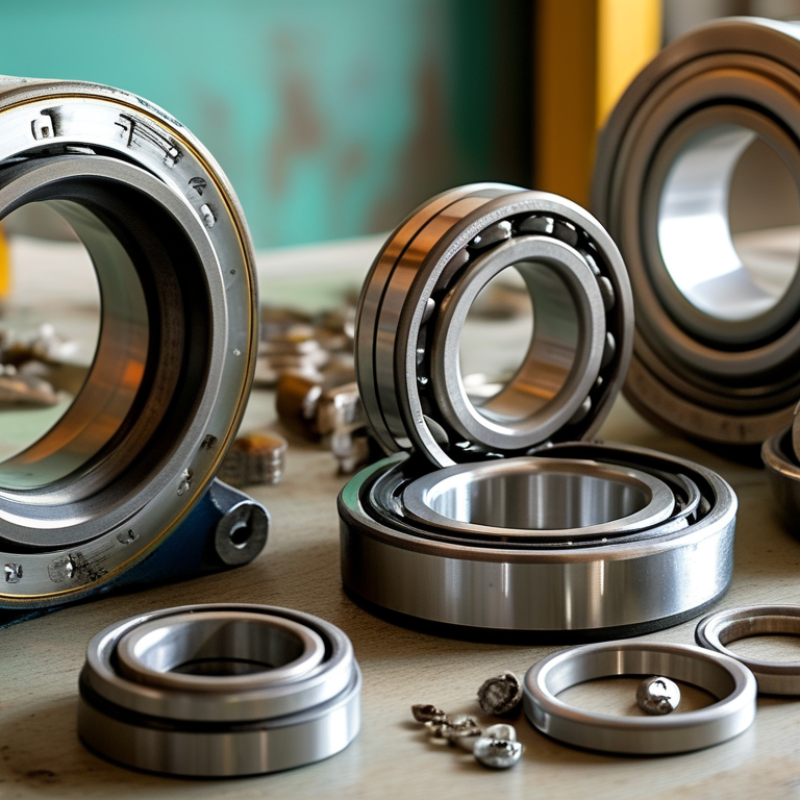
When choosing the right plain bearing housing, it's essential to understand the different types available. Plain bearings come in various designs, including spherical, cylindrical, and flanged configurations. Each type offers unique advantages depending on application needs. According to a 2022 report by Industry Research, plain bearings account for nearly 35% of the global bearing market due to their reliability and cost-effectiveness.
A spherical bearing housing, for instance, allows for angular misalignment, making it suitable for dynamic applications. On the other hand, cylindrical types provide stability and support, ideal for high-load environments. Data shows that the performance of these bearings significantly impacts machinery lifespan. Companies have reported a 20% increase in efficiency after optimizing bearing housing options.
However, selecting the right type isn't always straightforward. Misjudgments can lead to operational issues. Some manufacturers overlook the nuances in housing material, which directly affects durability. A reliable housing must match the operational environment. Investing in the right type can mitigate risks, but the trade-offs between cost and quality must be weighed carefully.
Choosing the right plain bearing housing is essential for optimal equipment performance. When examining material considerations, durability and thermal stability are critical. Common materials include cast iron, aluminum, and polymer composites, each with unique benefits. For example, cast iron offers excellent wear resistance but can be heavy. Meanwhile, aluminum is lighter and provides good thermal conductivity.
Research from the International Journal of Mechanical Engineering indicates that the maximum operating temperature often influences material selection. For applications with fluctuating temperatures, polymers may outperform metals due to their lower thermal expansion coefficients. Ensuring compatibility with lubricants is another crucial point. Some materials may react adversely with specific lubricants, leading to premature failure.
**Tip:** Always consult with material data sheets before finalizing a selection.
Regularly reviewing the performance of your bearing housings can prevent costly downtime. Maintenance insights suggest that wear patterns can provide clues on material performance and choice. If a housing shows signs of corrosion or excessive wear, it might be necessary to reconsider the material used.
**Tip:** Monitor bearing life cycles to inform future selections. A proactive approach enhances reliability in the long run.
When selecting a plain bearing housing, evaluating load capacity and performance metrics is crucial. Load capacity determines how much weight a bearing can support without failure. It's essential to consider both static and dynamic loads. Static load refers to the weight when stationary, while dynamic load involves weights in motion. Choosing the right load rating can prevent premature wear or catastrophic failure.
Performance metrics such as friction coefficient and wear rate directly affect efficiency. A lower friction coefficient means less energy loss. However, manufacturers may test conditions that don’t replicate real-world scenarios. This discrepancy can lead to unexpected performance issues. Therefore, always review test data closely, ensuring it aligns with specific application conditions.
**Tips:**
1. Analyze environment factors. Temperature, lubrication, and contaminants impact performance.
2. Consult with manufacturers. They can provide insights into suitable materials and designs.
3. One size doesn’t fit all. Each application may demand unique specifications. Consider doing additional research.
| Bearing Type | Load Capacity (kN) | Maximum Speed (rpm) | Material | Operating Temperature (°C) |
|---|---|---|---|---|
| Bronze Plain Bearing | 20 | 1800 | Bronze Alloy | -40 to 250 |
| Plastic Plain Bearing | 5 | 3000 | Polymer | -30 to 100 |
| Stainless Steel Plain Bearing | 15 | 1500 | Stainless Steel | -40 to 300 |
| Composite Plain Bearing | 25 | 2000 | Metal-Polymer Composite | -50 to 250 |
| Ceramic Plain Bearing | 30 | 3500 | Ceramic | -100 to 1200 |
When selecting the right plain bearing housing, environmental factors play a crucial role. Temperature, humidity, and exposure to contaminants can significantly impact bearing performance. For instance, a study from the International Journal of Precision Engineering highlights that up to 30% of bearing failures are linked to environmental conditions. Choosing materials that can withstand specific environments enhances durability.
Moreover, the choice of lubrication method is influenced by environmental considerations. According to the American Society of Mechanical Engineers, proper lubrication can reduce friction and wear by 50%. In dusty or wet environments, sealed or shielded housings might be needed to prevent contamination. However, not all manufacturers provide adequate information about their products' environmental tolerance.
Designing a bearing housing without considering these factors can lead to failures. It's essential to analyze the operating conditions before making a decision. Many engineers overlook these details, leading to increased maintenance costs. Therefore, combining scientific research with practical insights ensures that the chosen bearing housing aligns with operational demands.
When selecting a plain bearing housing, understanding industry standards is crucial. The design must accommodate load requirements, thermal effects, and lubrication needs. As per a 2021 report by the International Journal of Engineering, approximately 30% of bearing failures are linked to improper housing selection. The temperature tolerance and material compatibility are vital for optimal performance.
Tips: Always consider operating conditions. Conduct thorough analyses to ensure the housing will endure in its environment.
The right design should align with recognized standards, such as ISO 281, which provides guidelines for rating dynamic loads in bearings. These standards help ensure the reliability and longevity of the housing. Notably, bearings operating beyond recommended load limits tend to fail early, highlighting the importance of careful calculations.
Tips: Regularly review load data and adjust housing specifications accordingly. Seek expert opinions when in doubt.
„Thanks to the LUVIR technology, the solder resist process could be switched directly from the previously used mask exposure to direct exposure. As an outstanding digital solution on the market, this technology has been able to demonstrate fast process times and superior quality on our certified conventional ink in production. This allowed us to fully digitize the solder mask process at low cost – without process or ink adjustments. An excellent benefit to our production in Rot am See.“
Ralf Göhringer (Head of Production WE Rot am See)
I would definitely recommend the Limata machine and team for a future company purchase
Michael Greenaway
Compunetics Inc.
“The Limata ldi has been amazing!! Best thing we did was buy this machine”
Richard Brady
GM
Circuitlabs
“Since 2019, we have been running the Limata X1000 LDI system (including LUVIR for solder mask imaging) in daily production as an addition to our current process with film. The machine was capable of properly exposing Taiyo PSR-4000 BN (DI) solder mask types on normal to high-copper boards using a new and unique direct imaging process. The machine operating interface is very user friendly which allowed for a quick technical training curve. The pre-registration processing reduced several seconds of production time at every print. Limata support and service staff is incomparable. They supported our team every step of the way at basically any time of the day or night, with literally, an immediate response time, customizing the software interface to best fit our Operations and needs.
We have exposed more than 8,000 prints since end of October, on various solder mask colors and some resist film panels. Limata, has proven to be very capable and innovative. They are a strong contender in the industry.
We have very much enjoyed this project, and working with the team!
Thank you Limata for the continued support and being a part of our growth.”
Bill Sezate
Vice President, GM
Summit Interconnect
As a replacement to our current contact exposure process with film, the LIMATA X2000 system including LUVIR-Technology was capable of properly exposing non-LDI solder mask types using a direct imaging process. The machine offers cutting edge software with a very intuitive operating interface which allowed for quick technician training curve. The dual drawer system combined with pre-registration processing reduced several seconds of production time at every machine cycle. Limata support and service staff is world class. They added software patches to keep production running at shortest possible response times, customized the software interface to best fit our in-house Operations system, and even wrote a step-by-step machine processing manual. As a result of the project, we have exposed more than 16,000 times on various product types and solder mask brands/colors. Limata, in a very short timeframe as a company, has definitely shown they are truly innovative and will be challenging the industry of direct imaging for the top spot.
Kevin Beattie
Process Engineer
TTM Technologies
Forest Grove Division
